
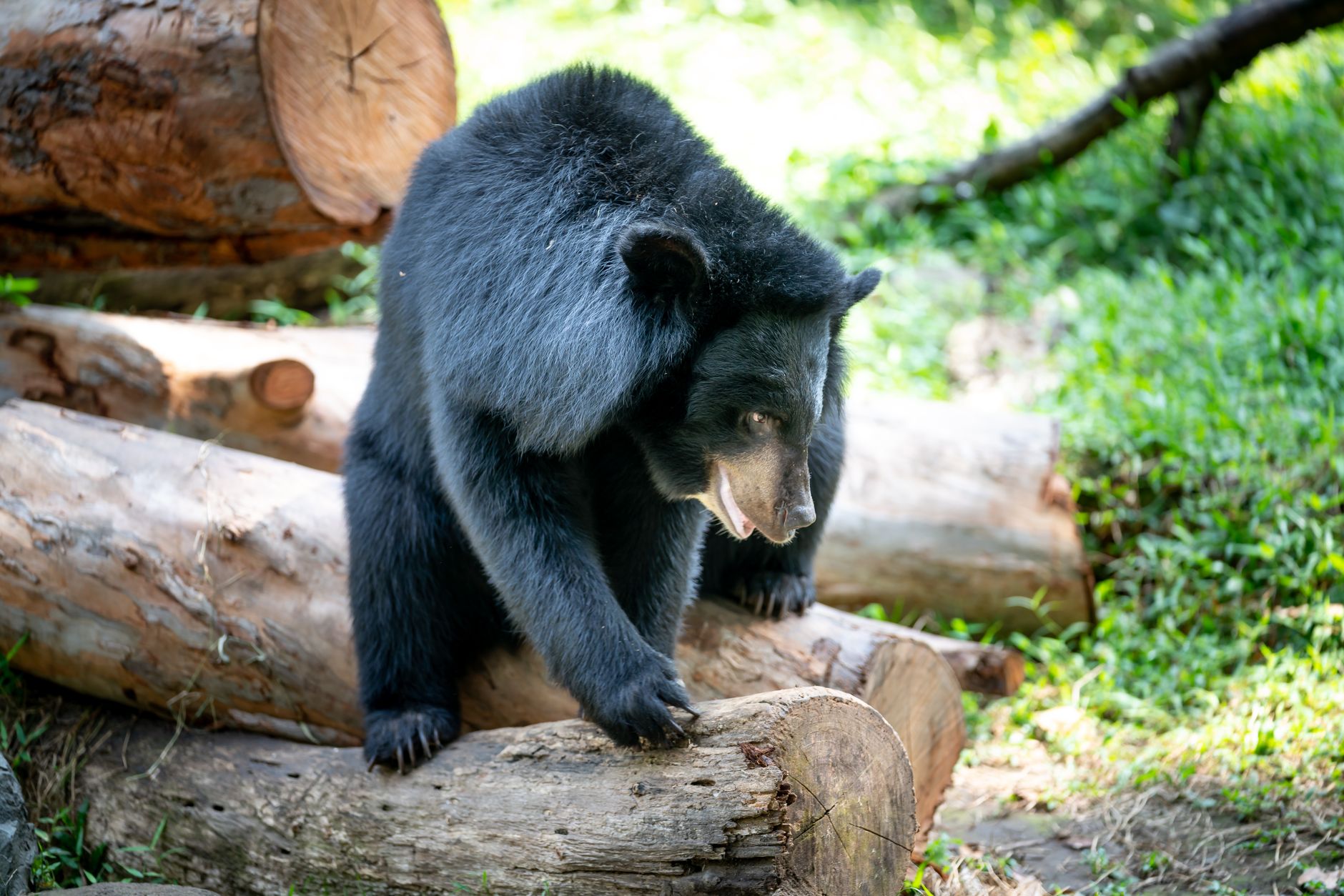
Can Black Bears See Color? Exploring Ursine Vision
Black bears can indeed see color, but their vision differs from human vision. Their color perception is dichromatic, meaning they see a world similar to people with red-green colorblindness, which is very effective for finding food in the natural world.

Understanding Black Bear Vision
The visual world of a black bear is a fascinating study in adaptation. While often perceived as creatures relying primarily on their sense of smell, black bears actually possess a surprisingly complex visual system, though distinctly different from our own. Understanding the nuances of can black bear see color? requires examining the structure of their eyes and how their brains process visual information. This comprehension gives valuable insight into how these animals navigate their environment and find their food.
What colours are fish most attracted to?
Can you put your finger in a trout's mouth?
Is methylene blue anti bacterial?
Does aquarium salt raise pH in aquarium?
The Dichromatic World of the Black Bear

Unlike humans, who possess trichromatic vision (seeing red, green, and blue), black bears have dichromatic vision. This means they only have two types of color-detecting cones in their eyes, sensitive primarily to blue and green wavelengths. This limitation affects can black bear see color in much the same way as it would affect a person with red-green colorblindness.
- Reduced Red-Green Perception: Bears struggle to distinguish between reds and greens.
- Enhanced Blue-Yellow Perception: Their ability to differentiate shades of blue and yellow is well-developed.
- Contrast Sensitivity: Bears excel at detecting contrast, making them adept at spotting objects against their backgrounds.
The dichromatic vision of black bears is very helpful when looking for food. Because they eat a variety of foods, the dichromatic vision helps them see contrasting colors for their food.
How Black Bear Vision Aids in Survival
Despite their limited color perception, black bear vision is perfectly suited to their ecological niche.
- Foraging Efficiency: The ability to detect contrast enhances their ability to find berries and other food sources amongst foliage. A red berry against green leaves is easily seen with the high contrast sensitivity they possess.
- Predator Avoidance: Their good depth perception aids in navigating complex terrain and escaping potential threats.
- Navigation: While not as crucial as their sense of smell, their vision plays a role in finding their way through their territories.
Comparing Black Bear Vision to Human Vision
| Feature | Human Vision | Black Bear Vision |
|---|---|---|
| Color Perception | Trichromatic | Dichromatic |
| Cone Types | 3 (Red, Green, Blue) | 2 (Blue, Green) |
| Depth Perception | Excellent | Good |
| Night Vision | Good | Very Good |
| Acuity | High | Moderate |
While humans excel at seeing a wide range of colors, bears compensate with superior night vision and contrast sensitivity, making them well-adapted to their environment.
Common Misconceptions About Black Bear Vision
- Myth: Black bears are colorblind. This is incorrect. They see color, but in a limited range compared to humans.
- Myth: Black bears have poor eyesight. Their eyesight is reasonably good and particularly effective for their specific needs.
- Myth: Bears rely solely on their sense of smell. While smell is their primary sense, vision is also important for foraging and navigation.
FAQ:
What is dichromatic vision?
Dichromatic vision means having only two types of color-detecting cones in the eyes. This restricts the range of colors that can be perceived, typically resulting in difficulty distinguishing between red and green. Can black bear see color because it possesses dichromatic vision and has two color-detecting cones.
How does black bear vision compare to dog vision?
Both black bears and dogs have dichromatic vision, but their visual acuity (sharpness) differs. Dogs generally have poorer visual acuity than bears, but both have similar color perception limitations.
Do black bears have good night vision?
Yes, black bears have excellent night vision. Their eyes have a high concentration of rod cells, which are sensitive to low light levels, and a tapetum lucidum, a reflective layer behind the retina that enhances light detection.
How does color vision help a bear find food?
While they can’t see all colors, their ability to distinguish between blues and yellows, along with their high contrast sensitivity, helps them spot berries and other food sources against foliage. The contrast between colors is very important to how can black bear see color.
Are black bears near-sighted or far-sighted?
Black bears are thought to be slightly near-sighted, which means they can see nearby objects more clearly than distant ones.
What is the tapetum lucidum?
The Tapetum lucidum is a reflective layer behind the retina in the eyes of many animals, including black bears. It reflects light back through the retina, effectively increasing the amount of light available to the photoreceptors, which enhances night vision.
How important is vision compared to smell for a black bear?
Smell is undoubtedly the most important sense for black bears. They can detect scents from great distances, allowing them to find food, locate mates, and avoid danger. However, vision plays a supporting role in foraging and navigation.
Can black bears see ultraviolet (UV) light?
There is no definitive evidence to suggest that black bears can see UV light. Their visual system is primarily adapted for detecting blue and green light. This is a very important factor to note in how can black bear see color.
Do black bears have good depth perception?
Yes, black bears have good depth perception, which is essential for navigating complex terrains and assessing distances when climbing or foraging.
How do scientists study black bear vision?
Scientists use several methods to study black bear vision, including:
- Anatomical studies: Examining the structure of their eyes to determine the types and distribution of photoreceptors.
- Behavioral experiments: Testing their ability to discriminate between colors and patterns in controlled settings.
- Electroretinography (ERG): Measuring the electrical activity of the retina in response to light stimulation.
Does age affect a black bear’s vision?
Like humans, a black bear’s vision can decline with age. Older bears may experience a reduction in visual acuity and contrast sensitivity.
Does habitat influence black bear vision?
Yes, habitat can influence how a black bear uses its vision. Bears living in dense forests may rely more on close-range vision and contrast sensitivity, while those in open areas may benefit from better distance vision.