
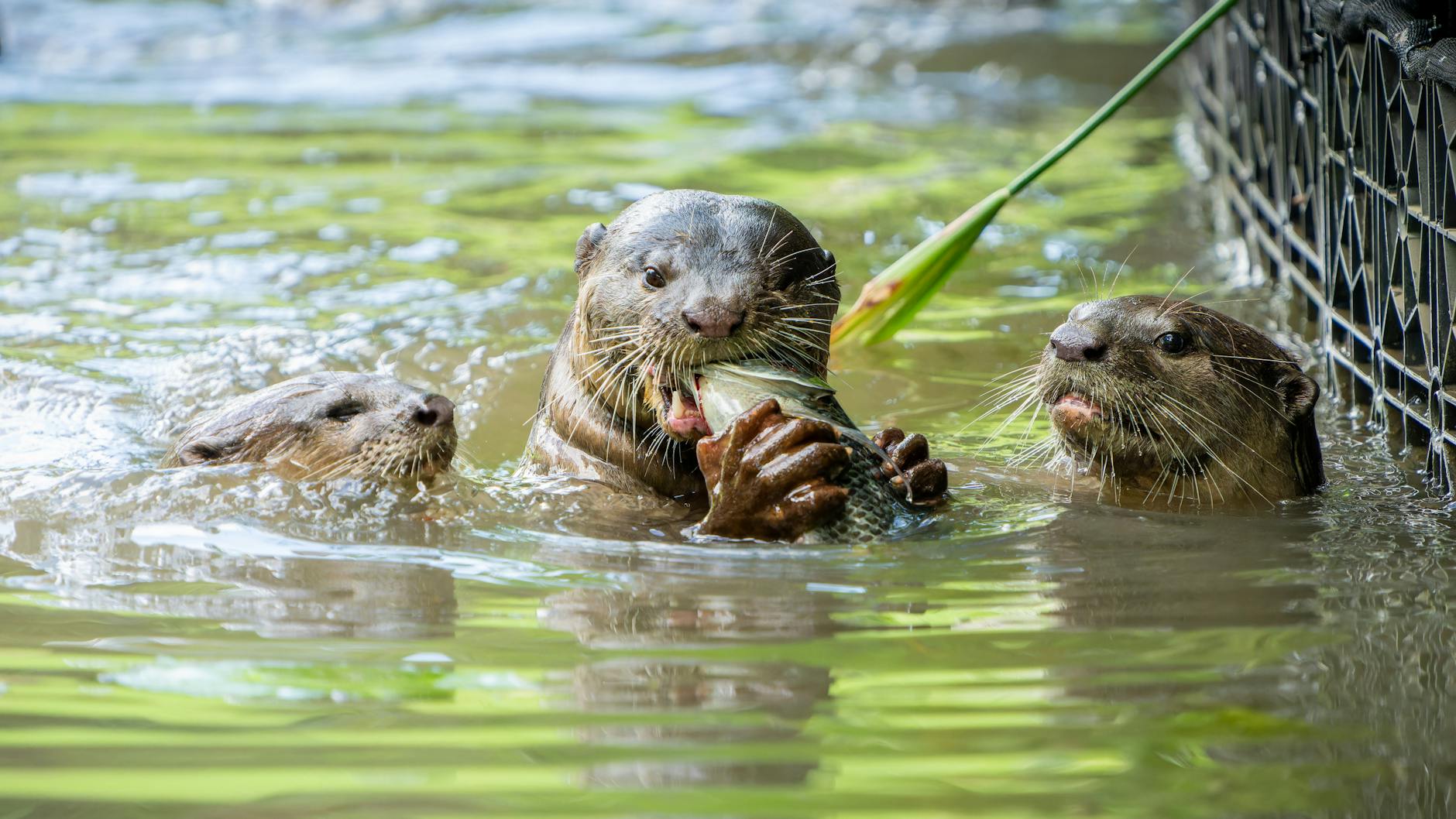
Why Do Otters Spin While Eating? The Curious Case of the Aquatic Whirlwind
The reason otters spin while eating? It’s a fascinating behavior, primarily done to clean and manage their food and, in some cases, deter theft! Otters have evolved this spinning technique to efficiently process their meals in the water.

A Dive into the World of Otter Dining Etiquette
Otters are renowned for their playful nature and intelligence, and this extends to their unique feeding habits. Understanding why do otters spin while eating requires exploring their environment, prey, and social dynamics. They live in a world where efficiency and resourcefulness are key to survival, and their spinning behavior is a prime example of this.

What colours are fish most attracted to?
Can you put your finger in a trout's mouth?
Is methylene blue anti bacterial?
Does aquarium salt raise pH in aquarium?
The Dual Benefits: Cleaning and Deterrence

The spinning behavior isn’t just a quirky habit; it serves crucial purposes:
- Cleaning: Many of the otter’s preferred meals, like crustaceans and mollusks, are buried in mud or sand. Spinning helps them to remove dirt, shells, and other unwanted materials before consumption. The rapid rotation creates centrifugal force, flinging away debris.
- Deterrence: In social settings, otters may spin to discourage other otters from stealing their food. The spinning motion, combined with the food’s size and slippery nature, makes it more difficult for another otter to snatch the meal.
This behavior is a mix of innate instinct and learned skill. Younger otters often mimic their elders, gradually refining their spinning technique over time.
The Spinning Process: A Step-by-Step Breakdown
While it might look chaotic, the otter’s spinning maneuver is a coordinated effort:
- Secure the Food: The otter firmly grasps its prey, typically using both paws.
- Initiate the Rotation: The otter begins to rotate its body in the water, using its tail as a rudder for stabilization.
- Increase Speed: The spinning speed gradually increases, creating the centrifugal force needed to dislodge debris.
- Selective Consumption: The otter continues to spin while carefully biting off and swallowing portions of the cleaned food.
- Repeat as Necessary: The entire process is repeated until the food is completely consumed or deemed clean enough.
Variations Across Species and Environments
The intensity and frequency of the spinning behavior can vary depending on the otter species and its environment. For example:
| Species | Habitat | Spinning Intensity | Food Type |
|---|---|---|---|
| Sea Otter | Coastal Waters | High | Sea urchins, crabs, clams |
| River Otter | Rivers, Lakes | Moderate | Fish, crustaceans, amphibians |
| Asian Small-Clawed Otter | Freshwater | Lower | Insects, mollusks, small fish |
The diet and the clarity of the water significantly influence the extent to which an otter spins its food.
Common Misconceptions about Otter Spinning
One common misconception is that otters spin while eating solely for play. While otters are indeed playful animals, their spinning behavior has a much more practical basis in food preparation and resource protection. Another misconception is that all otter species spin their food. While it’s a widespread behavior, some species may rely more on other cleaning methods depending on their diet and environment. Understanding why do otters spin while eating dispels these myths and highlights the adaptability of these fascinating creatures.
Frequently Asked Questions
Why do otters spin their food?
Otters spin their food primarily to remove dirt, sand, and shells from their prey before eating it. This spinning also acts as a deterrent to other otters who might try to steal their food.
Do all types of otters spin their food?
While many otter species exhibit this behavior, the frequency and intensity can vary. Species that consume prey with shells or those living in murky waters tend to spin more frequently. The environment dictates the behavior.
Is the spinning behavior learned or innate?
The spinning behavior is likely a combination of both innate instinct and learned behavior. Young otters often observe and mimic their parents, refining their technique over time.
What kind of food do otters spin the most?
Otters are most likely to spin foods that are covered in mud, sand, or shells, such as clams, crabs, and sea urchins.
How fast do otters spin while eating?
The spinning speed can vary depending on the size and type of food, but otters can achieve relatively high rotational speeds, creating significant centrifugal force.
Is spinning a sign of stress or playfulness in otters?
While otters are known for their playfulness, spinning while eating is primarily a functional behavior related to food preparation and protection. It is not directly linked to stress, though stress could indirectly influence feeding habits.
Do otters only spin food in water?
Yes, otters primarily spin their food while in the water. The water provides the necessary buoyancy and space for effective rotation.
Do otters ever drop their food while spinning?
Yes, sometimes otters do drop their food while spinning, especially if the prey is particularly slippery. This is a risk they take to ensure their meal is clean and safe to eat.
Can baby otters spin their food?
Baby otters, or pups, need to develop the coordination and strength to effectively spin their food. They learn by observing and imitating their mothers and other adult otters.
Does spinning food help with digestion?
While spinning primarily cleans the food, removing grit and shells can indirectly aid digestion. By making the food easier to process, spinning can contribute to better nutrient absorption.
How else do otters clean their food besides spinning?
Besides spinning, otters may also rub their food against rocks or other surfaces to remove debris. The method used often depends on the type of prey and the available resources.
Why is understanding otter feeding habits important?
Understanding otter feeding habits, including why do otters spin while eating, is crucial for conservation efforts. It helps us assess their dietary needs, habitat requirements, and overall health, allowing us to better protect these important members of the ecosystem.