
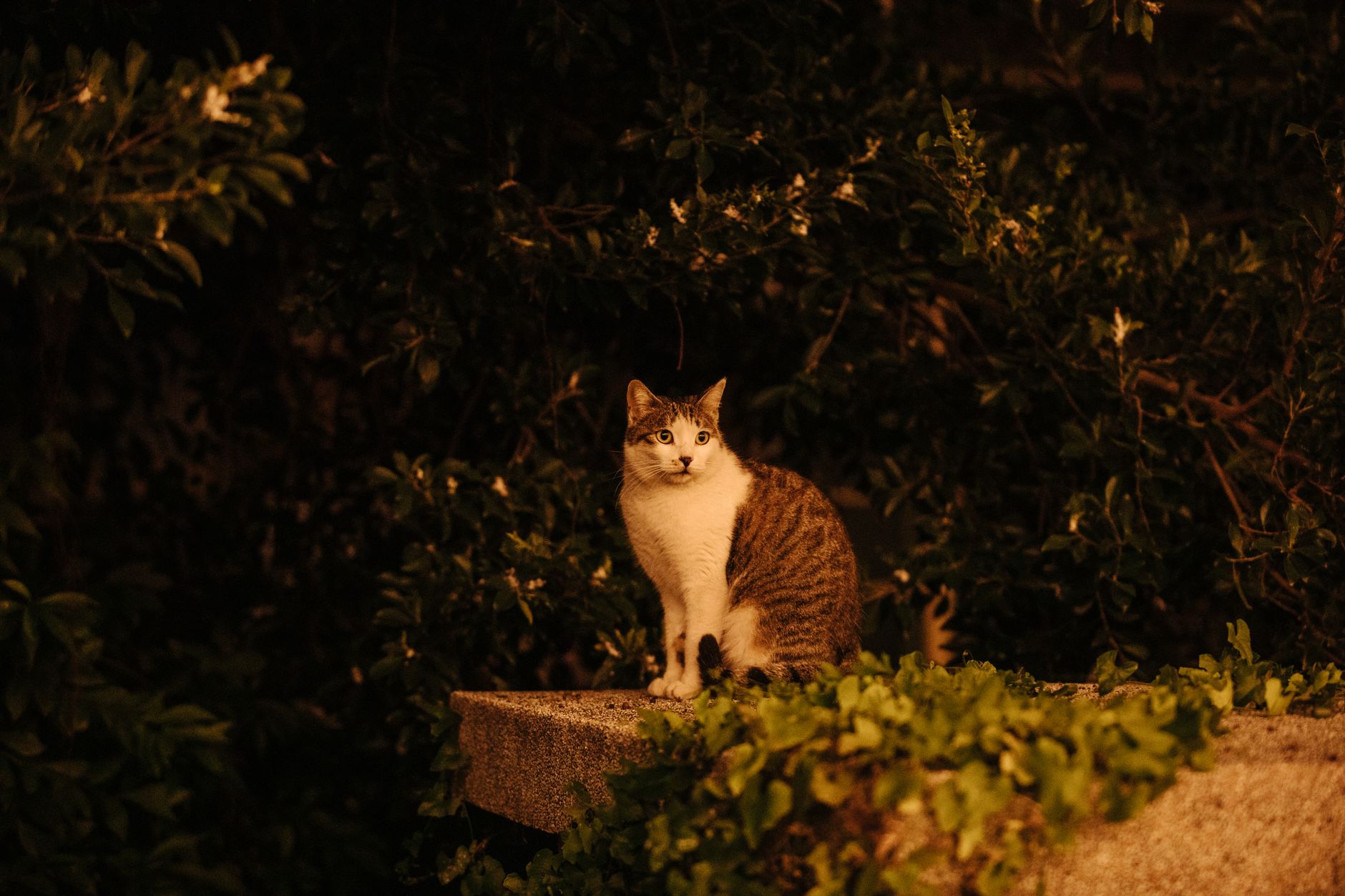
Why Are Cats Alert at Night? Unveiling the Nocturnal Nature of Felines
Cats are naturally crepuscular, meaning they are most active at dawn and dusk, due to evolutionary adaptations for hunting and survival; this ingrained biological clock explains why they are often alert at night even in a domesticated environment.

Understanding the Crepuscular Nature of Cats
Why are cats alert at night? The answer lies deep within their evolutionary history. Unlike truly nocturnal animals that are active throughout the night, cats are crepuscular. This means they are most active during the twilight hours of dawn and dusk. This pattern aligns perfectly with the hunting behaviors of their prey, such as rodents and small birds, which are also most active during these periods. Domesticated cats still retain this ingrained behavior, even when food is readily available.

What colours are fish most attracted to?
Can you put your finger in a trout's mouth?
Is methylene blue anti bacterial?
Does aquarium salt raise pH in aquarium?
The Evolutionary Basis for Crepuscularity

The crepuscular behavior of cats offers significant advantages in the wild.
- Enhanced Vision: Cats have exceptional night vision, allowing them to see well in low-light conditions, giving them an edge over prey.
- Temperature Regulation: Dawn and dusk typically offer more moderate temperatures, making hunting more comfortable and energy-efficient.
- Predator Avoidance: These times of day may also provide a degree of protection from larger predators that are primarily active during daylight hours.
Physiological Adaptations for Nocturnal Activity
Cats possess several physiological adaptations that contribute to their nighttime alertness.
- Tapetum Lucidum: This reflective layer behind the retina amplifies light, allowing cats to see more clearly in dim conditions.
- Vertical Pupils: The slit-shaped pupils of cats can contract dramatically in bright light and dilate widely in darkness, maximizing light intake.
- High Rod-to-Cone Ratio: Cats have a higher proportion of rod cells in their retinas, which are responsible for detecting motion and light levels. This explains their excellent night vision and sensitivity to movement.
The Impact of Domestication on Feline Activity
While domestication has altered many aspects of feline behavior, the underlying crepuscular rhythm remains. Even indoor cats retain a natural tendency to be more active during the twilight hours, often engaging in play, exploration, or hunting imaginary prey. It’s important to acknowledge that while domesticated, the deep-rooted why are cats alert at night? question remains tied to their wild ancestry.
Managing Your Cat’s Nighttime Activity
Understanding your cat’s natural activity patterns can help you manage any disruptive nighttime behavior.
- Provide Enrichment: Offer plenty of toys and opportunities for play during the day to tire your cat out.
- Scheduled Feeding: Feeding your cat at consistent times, especially before bedtime, can help regulate their internal clock.
- Interactive Play: Engage in interactive play sessions during the evening to satisfy their hunting instincts.
Common Mistakes Owners Make
Many cat owners unintentionally exacerbate their cat’s nighttime activity.
- Ignoring Daytime Needs: Insufficient daytime stimulation can lead to pent-up energy that is released at night.
- Reacting to Nighttime Demands: Responding to your cat’s nighttime demands (e.g., feeding, playing) can reinforce this behavior.
- Lack of Routine: A consistent routine can help regulate your cat’s sleep-wake cycle.
Frequently Asked Questions (FAQs)
Why are cats alert at night and suddenly start running around?
This behavior, known as the “zoomies,” is a common phenomenon in cats, particularly younger ones. It’s simply a way for them to release pent-up energy and engage their hunting instincts. It’s more common at dawn and dusk due to their crepuscular nature.
Can I train my cat to sleep through the night?
While you can’t completely change a cat’s natural instincts, you can encourage more sleep at night through consistent routines, plenty of daytime stimulation, and appropriate feeding schedules. Consistency is key to any training regime with your feline friend.
Is it normal for my cat to meow loudly at night?
Excessive nighttime meowing can have several causes, including hunger, boredom, attention-seeking, or underlying medical conditions. If the meowing is new or persistent, it’s important to consult with a veterinarian. Rule out medical causes first.
What can I do if my cat wakes me up every night?
Avoid rewarding the behavior. Don’t give in to their demands for food or attention. Instead, try ignoring them or gently redirecting their attention to a toy. Consistency is important.
Do indoor cats still retain their crepuscular instincts?
Yes, indoor cats still have a strong crepuscular instinct, even if their access to the outdoors is limited. This explains why are cats alert at night and more active during dawn and dusk.
Does my cat’s age affect their nighttime activity?
Kittens and young cats tend to have higher energy levels and may be more active at night. Older cats may be less active overall, but they can still experience nighttime restlessness. Older cats also have medical considerations.
Should I leave food out for my cat at night?
Free-feeding can contribute to weight gain and disrupt your cat’s natural eating habits. It’s generally better to feed your cat at scheduled meal times. Portion control is essential.
Are certain cat breeds more nocturnal than others?
While all cats share a crepuscular nature, some breeds may be more prone to nighttime activity than others. However, individual personality and environment play a more significant role.
Is my cat bored if they are active at night?
Boredom can certainly contribute to nighttime activity. Providing plenty of toys, scratching posts, and interactive play sessions can help alleviate boredom.
Can I use a night light to help my cat see better at night?
Cats have excellent night vision and don’t typically need a night light. In fact, too much light at night can disrupt their natural sleep-wake cycle.
My cat sleeps all day and is then active at night. Is this normal?
Cats naturally sleep for a significant portion of the day. If your cat is sleeping excessively during the day and active at night, it could be a sign of boredom or a disruption in their sleep-wake cycle. Ensure daytime stimulation.
Is there a medical reason why are cats alert at night?
Sometimes, medical conditions like hyperthyroidism or cognitive dysfunction can cause nighttime restlessness and increased activity. If you suspect a medical issue, consult with your veterinarian. A vet visit is always the best first step.