

What Is the Fastest Reproducing Bacteria?: Understanding Bacterial Growth Rates
The title of the fastest reproducing bacteria is fiercely contested, but under ideal conditions, Escherichia coli (E. coli) often takes the crown, with a doubling time potentially as low as 20 minutes.

Introduction: The Microbial Race Against Time
The bacterial world is a fascinating realm of constant competition, driven by the need to survive and proliferate. Reproduction is key to this survival, and the speed at which bacteria can multiply is a significant evolutionary advantage. Different bacterial species have evolved to thrive in various environments, resulting in a wide range of growth rates. But what is the fastest reproducing bacteria? The answer is complex, depending on factors like nutrient availability, temperature, and the presence of inhibiting substances.
What colours are fish most attracted to?
Can you put your finger in a trout's mouth?
Is methylene blue anti bacterial?
Does aquarium salt raise pH in aquarium?
Understanding Bacterial Growth
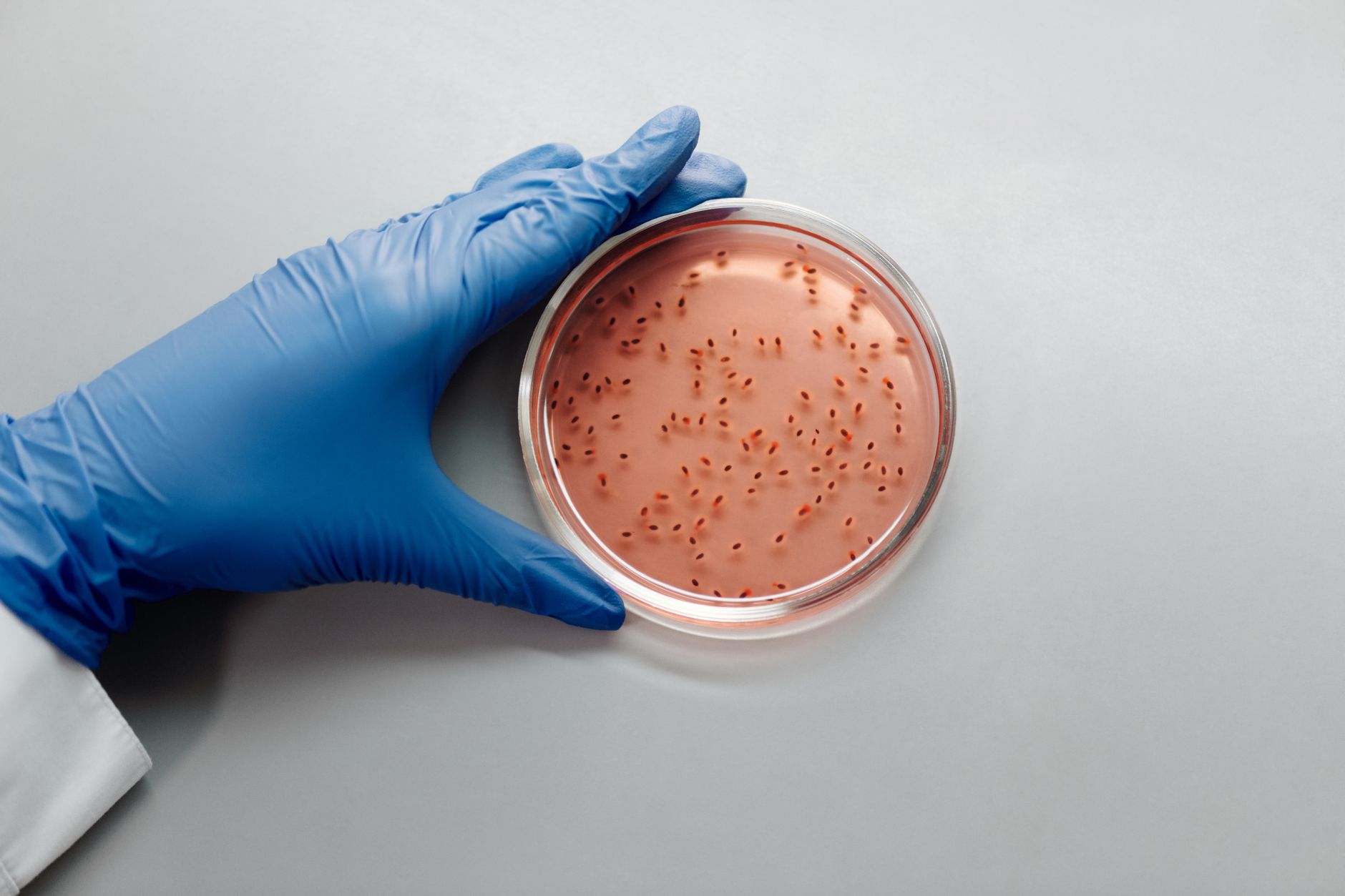
Bacterial growth doesn’t occur linearly; it follows an exponential pattern. This means that under optimal conditions, one cell divides into two, those two divide into four, and so on, leading to rapid population increases. This growth is typically measured by doubling time, the time it takes for a bacterial population to double in number. Several factors impact this doubling time:
- Nutrient Availability: Bacteria need a readily available supply of nutrients like sugars, amino acids, and vitamins to synthesize new cellular components and fuel cell division.
- Temperature: Each bacterial species has an optimal temperature range for growth. Outside this range, growth slows or stops altogether.
- pH Levels: Similar to temperature, pH affects the enzymes necessary for growth. Most bacteria thrive in a neutral or slightly acidic pH.
- Oxygen Availability: Some bacteria are aerobic (requiring oxygen), while others are anaerobic (oxygen is toxic), and others are facultative anaerobes (can grow with or without oxygen).
- Presence of Inhibitory Substances: Antibiotics, disinfectants, and other toxic compounds can inhibit bacterial growth, slowing or even halting reproduction.
The Contenders: Rapidly Dividing Bacteria
While E. coli is a strong contender for the title of fastest reproducing bacteria, other species can also exhibit remarkable growth rates under specific conditions:
- Escherichia coli (E. coli): As mentioned, this bacterium can achieve a doubling time of approximately 20 minutes in a nutrient-rich environment at an optimal temperature.
- Vibrio natriegens: This marine bacterium is gaining attention for its exceptionally rapid growth. Some studies suggest it can potentially double its population in as little as 10 minutes under ideal conditions. This makes it a serious contender for the title of what is the fastest reproducing bacteria?
- Bacillus subtilis: While generally slower than E. coli, Bacillus subtilis can exhibit rapid growth under specific conditions and is known for its ability to form endospores, allowing it to survive harsh environments.
E. coli and Vibrio natriegens Growth Comparison
| Feature | Escherichia coli | Vibrio natriegens |
|---|---|---|
| Doubling Time | ~20 minutes (optimal conditions) | ~10 minutes (optimal conditions) |
| Natural Habitat | Intestine of warm-blooded animals | Marine environments |
| Salt Tolerance | Low | High |
| Research Use | Widely used model organism | Emerging model organism |
Challenges in Determining the Fastest Reproducing Bacteria
Determining definitively what is the fastest reproducing bacteria is surprisingly challenging:
- Laboratory vs. Natural Conditions: Growth rates observed in controlled laboratory settings often differ significantly from those in the more complex and dynamic natural environment.
- Strain Variation: Even within a single species, different strains can exhibit varying growth rates.
- Measurement Techniques: Different methods for measuring bacterial growth can yield slightly different results.
- Defining “Fastest”: Does it refer to the theoretical minimum doubling time, or the typical doubling time under a broad range of conditions?
The Importance of Bacterial Growth Rates
Understanding bacterial growth rates is crucial in a variety of fields:
- Medicine: Knowing how quickly pathogenic bacteria can multiply is essential for developing effective treatments for infections.
- Food Safety: Predicting the growth of spoilage bacteria helps prevent foodborne illnesses and extend shelf life.
- Biotechnology: Manipulating bacterial growth rates is important for producing valuable products like enzymes, antibiotics, and biofuels.
- Environmental Science: Understanding bacterial growth in various environments helps researchers understand nutrient cycling and bioremediation processes.
Common Misconceptions About Bacterial Growth
- All bacteria grow at the same rate: This is false. Different species and strains have vastly different growth rates.
- Faster growth is always better: While rapid growth can be advantageous in some situations, it can also lead to nutrient depletion and the accumulation of toxic waste products, ultimately limiting population size.
- Growth rate is solely determined by genetics: While genetics play a role, environmental factors are often the dominant determinant of growth rate.
The Future of Bacterial Growth Research
Future research is likely to focus on:
- Developing more accurate and high-throughput methods for measuring bacterial growth rates.
- Investigating the genetic and metabolic factors that control growth rate.
- Exploring the potential of manipulating bacterial growth rates for various applications.
- Further exploring organisms such as Vibrio natriegens and their capabilities in diverse conditions to determine the answer to what is the fastest reproducing bacteria?
Frequently Asked Questions (FAQs)
What exactly is doubling time?
Doubling time refers to the amount of time it takes for a bacterial population to double in size. This is a crucial measurement for understanding bacterial growth dynamics and is influenced by environmental conditions and the specific bacterial species.
Is E. coli always the fastest-growing bacteria?
No, E. coli is not always the fastest-growing bacteria. While it can achieve very rapid growth under ideal conditions, other species, such as Vibrio natriegens, can potentially grow even faster under certain circumstances. The title of what is the fastest reproducing bacteria is constantly shifting with new discoveries.
How do scientists measure bacterial growth rates?
Scientists use a variety of methods to measure bacterial growth rates, including:
- Turbidity measurements: Measuring the cloudiness of a culture.
- Plate counts: Counting the number of viable cells on agar plates.
- Microscopy: Directly counting cells under a microscope.
- Flow cytometry: Using lasers and detectors to count and characterize cells.
Why is Vibrio natriegens considered a contender for the fastest-growing bacteria?
Vibrio natriegens has garnered attention because it exhibits remarkably rapid growth rates, potentially doubling in as little as 10 minutes under optimal conditions. Its unique metabolic capabilities and adaptation to marine environments contribute to its rapid growth. This characteristic makes it a strong candidate when considering what is the fastest reproducing bacteria.
Does the size of a bacterium affect its growth rate?
There isn’t a direct, simple correlation between bacterial size and growth rate. While smaller bacteria might have a slight advantage in terms of nutrient uptake efficiency, other factors like metabolic efficiency and environmental adaptation play a much larger role.
Can antibiotics affect bacterial growth rates?
Yes, antibiotics are designed to inhibit or kill bacteria, and they can significantly affect bacterial growth rates. Different antibiotics target different bacterial processes, leading to varying effects on growth.
What happens to bacterial growth rates in harsh environments?
In harsh environments (e.g., extreme temperatures, pH, or nutrient scarcity), bacterial growth rates typically slow down dramatically or even cease altogether. Some bacteria form spores to survive such conditions.
How does oxygen availability impact bacterial growth rates?
Oxygen availability is crucial for some bacteria. Aerobic bacteria require oxygen for growth, while anaerobic bacteria cannot tolerate oxygen. Facultative anaerobes can grow with or without oxygen, potentially impacting their growth rate depending on the conditions.
Why is understanding bacterial growth rates important in medicine?
Understanding bacterial growth rates is vital in medicine for several reasons:
- It helps in predicting the progression of infections.
- It aids in determining appropriate antibiotic dosages and treatment durations.
- It facilitates the development of new antimicrobial strategies.
What role do nutrients play in bacterial reproduction?
Nutrients are essential for bacterial reproduction. They provide the building blocks and energy required for synthesizing new cellular components and fueling cell division. The availability of nutrients significantly influences bacterial growth rate.
Are there any bacteria that don’t reproduce by binary fission?
While binary fission is the most common mode of reproduction in bacteria, some species reproduce through other mechanisms, such as budding or fragmentation.
How is bacterial growth rate important for bioremediation?
In bioremediation, bacteria are used to break down pollutants. A faster growth rate of these bacteria often means a faster and more efficient breakdown of pollutants, making bioremediation processes more effective. The understanding of what is the fastest reproducing bacteria, and how to leverage its capabilities, can significantly impact environmental cleanup.