
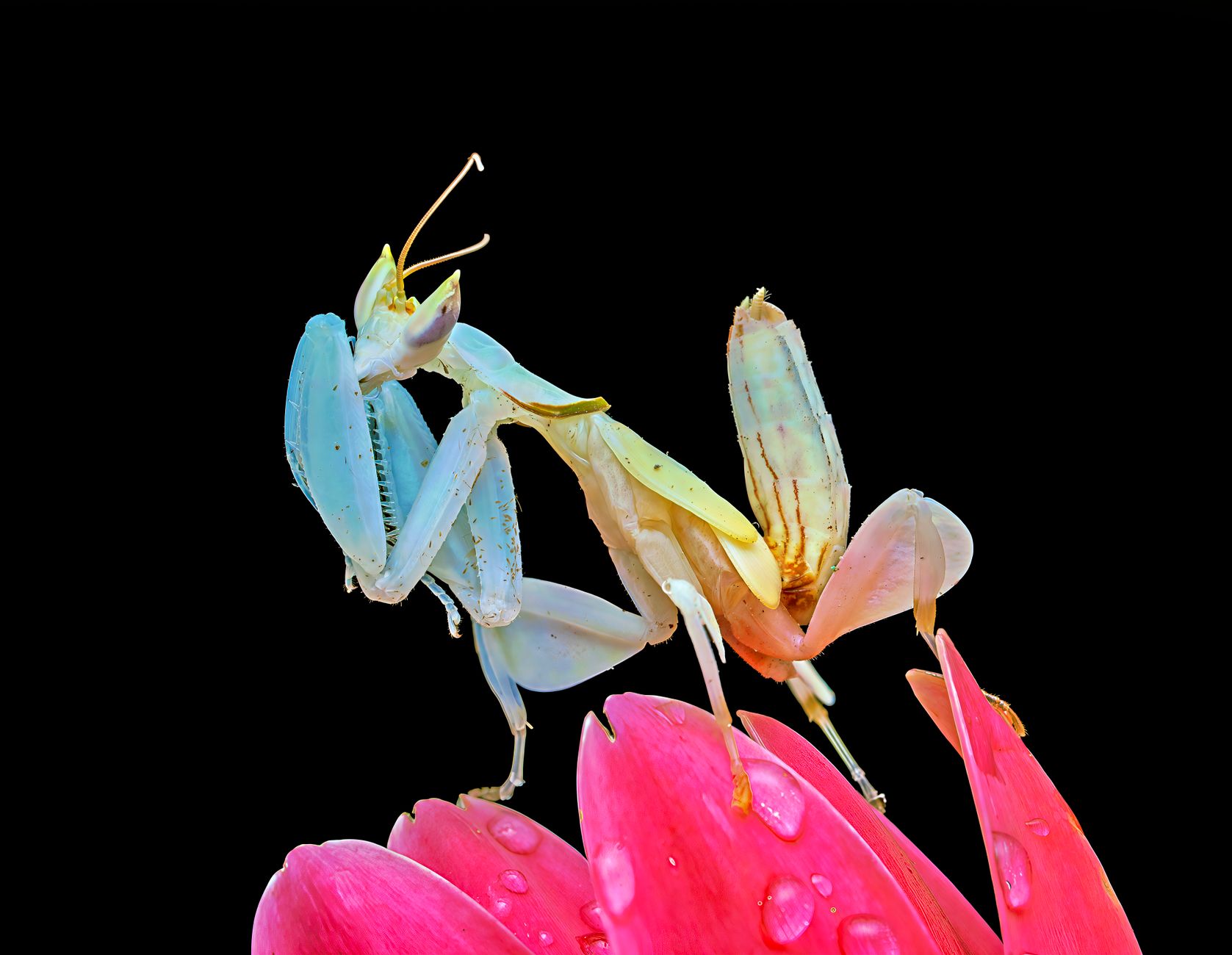
What Does the Color of a Praying Mantis Mean?: Unveiling the Secrets of Mantid Hues
The color of a praying mantis primarily functions as camouflage, aiding in both predator avoidance and ambush predation; however, it can also signal maturity or indicate diet. In essence, what the color of a praying mantis means is survival.

Decoding the Rainbow: An Introduction to Mantis Coloration
Praying mantises, those fascinating ambush predators with their iconic folded forelimbs, exhibit a remarkable range of colors. From vibrant greens to mottled browns, pale pinks to even striking oranges, their coloration is far more than mere aesthetics. It’s a crucial element in their survival strategy. Understanding what the color of a praying mantis means requires exploring the intricate interplay between genetics, environment, and behavior. They are masters of disguise, blending seamlessly into their surroundings to stalk prey undetected and evade potential predators.

What colours are fish most attracted to?
Can you put your finger in a trout's mouth?
Is methylene blue anti bacterial?
Does aquarium salt raise pH in aquarium?
Camouflage: The Primary Function of Mantis Color

The most significant role of color in praying mantises is camouflage. Cryptic coloration, as it’s known, allows them to disappear into their environment. This is particularly important for:
- Ambush Predation: Mantises are sit-and-wait predators. Their camouflage enables them to remain unseen by potential prey, allowing them to strike with lightning-fast precision. Imagine a green mantis perfectly concealed among the leaves of a plant, waiting for an unsuspecting insect to wander within striking distance.
- Predator Avoidance: Mantises are vulnerable to birds, reptiles, and even larger insects. Camouflage helps them avoid detection, giving them a significant survival advantage. A brown mantis clinging to a tree branch is far less likely to be spotted than one with contrasting colors.
Diet and Coloration
Interestingly, a mantis’s diet can sometimes influence its color, especially in juveniles and some species. Dietary pigments can be incorporated into their exoskeleton during molting. This is more pronounced in some species than others. This isn’t a direct cause and effect in all cases; genetics and environment play a larger role. However, nutrition can certainly impact the vibrancy and hue of a mantis.
Genetic Factors in Mantis Color
Genetic factors also play a critical role in determining a mantis’s base color. A praying mantis can have genetic predispositions to be green, brown, pink, or even a particular shade within these hues. While environmental factors can influence the expression of these genes, the underlying genetic makeup is the primary determinant. Selective breeding of specific colors in captivity demonstrates this clearly. Some breeders have focused on producing vibrant color morphs based on underlying genetic variations.
Environmental Influences: Molting and Color Adaptation
Praying mantises are not chameleons; they can’t instantly change color. However, the color of their environment can influence the color they develop during molting. If a nymph is surrounded by green foliage while molting, it is more likely to develop a green exoskeleton. Conversely, if it molts in a brown or beige environment, it is more likely to develop a similar coloration.
| Environmental Factor | Potential Color Outcome |
|---|---|
| Green Foliage | Green Exoskeleton |
| Brown/Beige Surfaces | Brown/Beige Exoskeleton |
| Pink Flowers | Pink Exoskeleton (in some species) |
Beyond Camouflage: Signaling and Mimicry
While camouflage is the dominant function, mantis coloration can also serve other purposes:
- Mimicry: Some mantises mimic other insects or objects, such as flowers or sticks, to attract prey or deter predators. Orchid mantises (Hymenopus coronatus), for example, closely resemble orchids, attracting pollinating insects.
- Aposematism (Warning Coloration): Rarely, very bright colors can serve as aposematism, warning predators of the mantis’s unpalatability or toxicity.
Common Misconceptions about Mantis Color
A common misconception is that mantises can change color instantly to match their surroundings. As stated before, while the environment influences color during molting, they cannot rapidly shift hues like chameleons. Another misconception is that all mantises are green. While green is a common color, they come in a wide range of colors, influenced by genetics and environment. Also, people may assume that the change is solely based on environment, but the underlying genetics and nutrition also play a huge role in the overall outcome.
Frequently Asked Questions about Praying Mantis Color
Why are some praying mantises green and others brown?
The difference in color is primarily due to a combination of genetic predisposition and environmental influence during molting. Green mantises typically develop in environments dominated by green foliage, while brown mantises develop in environments with brown or beige backgrounds.
Can a praying mantis change color to match its surroundings?
Praying mantises cannot change color instantly like chameleons. However, the color of their environment can influence their color during molting.
Does the color of a praying mantis indicate its species?
While color can sometimes be a clue to identifying a species, it’s not always definitive. Many species exhibit color variations, and similar colors can occur across different species. Other morphological features are needed for definitive identification.
Do praying mantises eat different foods based on their color?
Not directly. Their color is primarily for camouflage, aiding them in ambushing whatever prey is available in their environment. Diet is more opportunistic than color-dependent.
Are there any brightly colored praying mantises?
Yes! Some praying mantises, like the orchid mantis, are brightly colored, often mimicking flowers to attract prey. Others may have vibrant colors for aposematism.
Does the color of a praying mantis affect its survival rate?
Yes, effective camouflage increases a praying mantis’s survival rate by allowing it to ambush prey more successfully and avoid predators. If the color doesn’t match the environment, their chances of survival may be negatively impacted.
Can you tell if a praying mantis is healthy based on its color?
Generally, a vibrant and even color suggests good health. Dull or patchy coloration could indicate illness or poor nutrition, but this is not always the case.
How long does it take for a praying mantis to change color when molting?
The molting process itself takes several hours, but the color change isn’t immediate. It develops gradually over the following days as the new exoskeleton hardens and the pigments are deposited.
Is it possible to breed praying mantises for specific colors?
Yes, selective breeding can be used to enhance or maintain certain color morphs in captive-bred praying mantises. This involves selecting individuals with the desired color traits and breeding them together.
Does the color of a praying mantis’s eyes have any significance?
The eye color in praying mantises can vary and may sometimes correlate with overall body color or species. However, it’s not generally considered a primary indicator of anything other than species-specific characteristics or individual variation.
What does it mean when a praying mantis turns brown late in the season?
A mantis may turn brown later in the season because it has aged and is preparing for the winter or because its environment has changed. Leaves change from green to brown, and the mantis may adapt accordingly.
What does the color of a praying mantis mean when seen in dreams?
Dream interpretations are subjective, but seeing a praying mantis in a dream is often associated with patience, focus, and awareness. The specific color of the mantis in the dream may add another layer of meaning, based on symbolic color associations (e.g., green for growth, brown for grounding). In essence, what the color of a praying mantis means in a dream depends heavily on the individual’s experiences.