
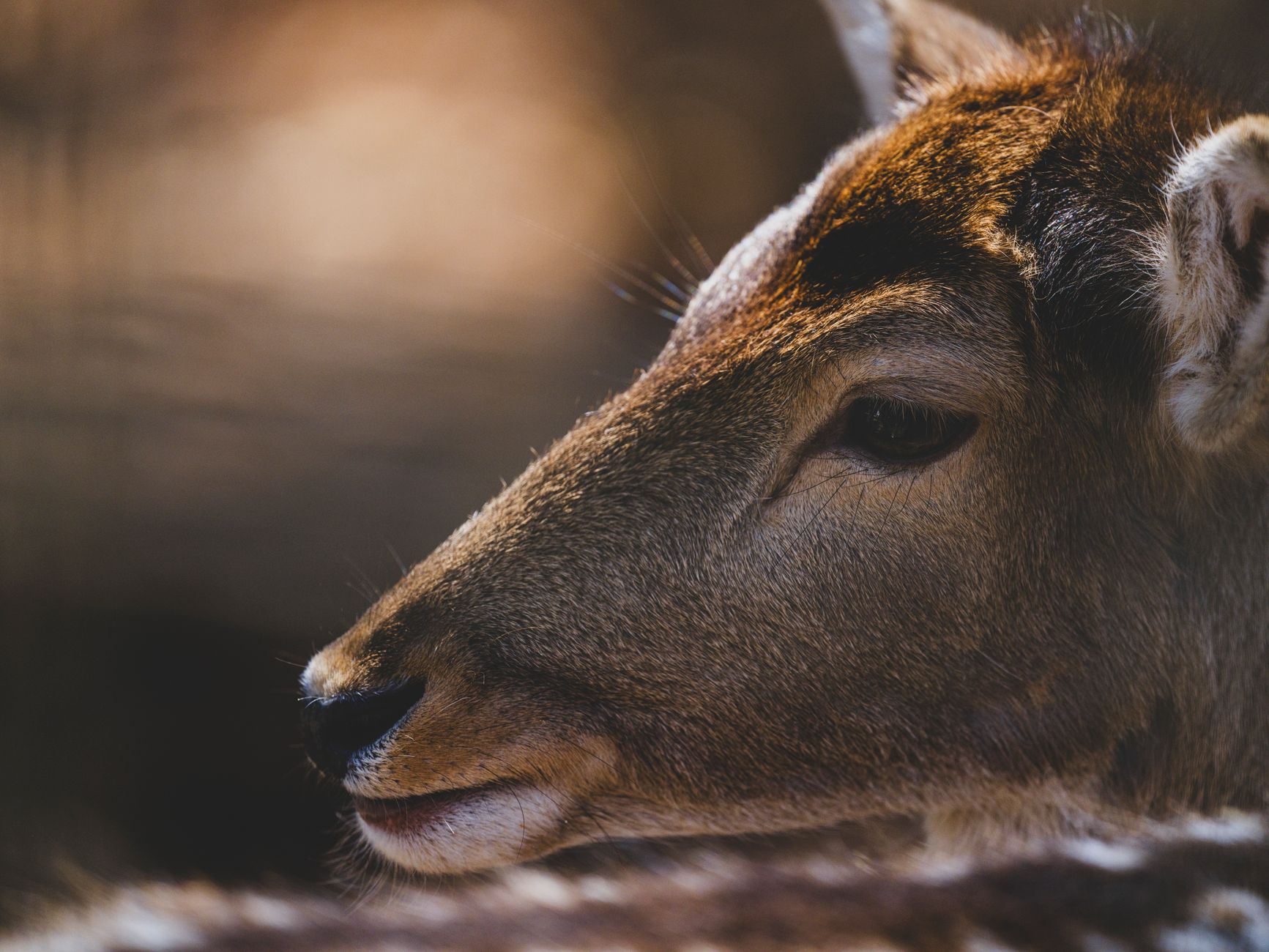
What Does it Mean When a Deer Dips Its Head? Unveiling Deer Behavior
When a deer dips its head, it often signals a complex interplay of communication and dominance behavior within their social structure. This action can indicate submission, an invitation to groom, or, more subtly, a challenge within a hierarchical ranking.

Understanding deer behavior can offer fascinating insights into their world. The seemingly simple act of a deer dipping its head is far from arbitrary. It’s a nuanced form of communication within their tightly-knit social structures, revealing details about their relationships, hierarchies, and even their willingness to interact. This article delves into the various interpretations of this gesture, offering a comprehensive look at what does it mean when a deer dips its head?
Deer Society: Understanding the Basics
Deer are social animals, living in herds or family groups. These groups are typically matriarchal, led by an older, experienced female. Within these groups, a hierarchy exists, especially amongst the females. Understanding this social structure is crucial for interpreting their behavior, including head dipping.
- Matriarchal Structure: The oldest, most experienced doe usually leads.
- Hierarchical Ranking: Dominance is established and maintained through subtle cues and behaviors.
- Communication: Deer communicate primarily through visual cues, scents, and vocalizations.

What colours are fish most attracted to?
Can you put your finger in a trout's mouth?
Is methylene blue anti bacterial?
Does aquarium salt raise pH in aquarium?
Interpreting the Head Dip: Submission and Invitation

One of the most common interpretations of a deer dipping its head is as a sign of submission. A younger or less dominant deer might lower its head in the presence of a more dominant individual to avoid conflict. This signals that they acknowledge the other deer’s higher status.
- Avoidance of Conflict: Head dipping can prevent escalation of aggression.
- Acknowledgement of Dominance: It signals that the deer understands its place in the hierarchy.
Another interpretation is as an invitation to groom. Deer often groom each other, particularly in areas that are difficult to reach themselves, such as the head and neck. A head dip can be a way of presenting this area to another deer, soliciting mutual grooming. This behavior strengthens social bonds within the herd.
Dominance Challenges and Aggressive Displays
While head dipping can signify submission or invitation, it can also be a subtle form of challenge, particularly between bucks during the breeding season (the rut). This is often accompanied by other behaviors, such as ear pinning, stiff leg movements, and direct staring. The head dip in this context is a preliminary step to assess the opponent before potentially escalating to physical confrontation.
- Preliminary Assessment: The head dip can gauge the opponent’s reaction.
- Accompanying Behaviors: Ear pinning, stiff leg movements, and direct staring are often present.
- Escalation to Physical Confrontation: If neither deer backs down, a fight may ensue.
Beyond Social Interactions: Other Possible Explanations
While social dynamics are the primary reason for head dipping, other factors can also play a role. A deer might dip its head simply to get a better look at something on the ground, to smell something intriguing, or to adjust its balance, especially on uneven terrain. Context is critical when interpreting this behavior. Consider the surrounding environment and the deer’s overall posture and movements.
Environmental Factors Influencing Behavior
The environment significantly influences deer behavior. Food availability, predator presence, and weather conditions can all affect how deer interact with each other. For instance, in areas with limited food resources, competition for resources may lead to more frequent displays of dominance, including head dipping as a sign of challenge.
- Food Availability: Scarce resources can increase competition.
- Predator Presence: Heightened alertness may influence social interactions.
- Weather Conditions: Extreme weather can affect energy levels and behavior.
Observing Deer: Tips for Interpretation
Accurate interpretation of deer behavior requires careful observation and an understanding of the context.
- Observe Closely: Pay attention to the deer’s overall body language.
- Consider the Context: Note the surrounding environment and other deer present.
- Look for Patterns: Observe the deer’s behavior over time to identify any patterns.
Frequently Asked Questions (FAQs) about Deer Head Dipping:
What does it mean when a deer dips its head and then looks up quickly?
This behavior is often indicative of alertness and caution. The quick head dip could be a way to assess the ground or to smell something, followed by a rapid look up to check for potential threats. It suggests the deer is slightly uneasy or suspicious.
Is head dipping more common in bucks or does?
Head dipping is observed in both sexes, but the context and interpretation can differ. Bucks are more likely to dip their heads as part of dominance displays during the rut, while does may use it as a sign of submission or an invitation to groom within their social group.
Can head dipping be a sign of illness or injury?
In some cases, yes. If a deer is constantly dipping its head or exhibiting other unusual behaviors, it could be a sign of a neurological problem, injury, or illness. However, it’s important to consider other symptoms before drawing conclusions. Observe the deer for other signs of distress, such as limping, lethargy, or discharge from the eyes or nose.
How important is body language in deer communication?
Body language is extremely important in deer communication. Deer rely heavily on visual cues to convey messages and maintain social order. Head position, ear position, tail movements, and overall posture all contribute to their complex communication system.
Does the age of the deer affect the interpretation of a head dip?
Yes, age is a significant factor. Younger deer are more likely to exhibit submissive head dips towards older, more dominant deer. Older deer, especially does leading the herd, may use a subtle head dip to assert their authority.
What role does scent play in conjunction with head dipping?
Scent plays a complementary role. Deer have scent glands on their heads and faces. When a deer dips its head, it may be depositing or detecting scents, further clarifying the message it’s conveying. Rubbing their head on objects or other deer can also transfer scent.
How can I tell the difference between a submissive head dip and a challenge head dip?
The key difference lies in the accompanying behaviors. A submissive head dip is usually accompanied by a lowered body posture, a relaxed ear position, and an avoidance of direct eye contact. A challenge head dip is often paired with a stiff posture, ear pinning, and direct staring.
Are there regional variations in deer head-dipping behavior?
While the basic principles of deer communication are generally consistent across different regions, there might be subtle variations due to environmental factors, population density, and learned behaviors within specific herds. More research is needed in this area.
How does habitat loss affect deer communication and behavior, including head dipping?
Habitat loss can significantly disrupt deer communication and behavior. When deer are forced into smaller areas, competition for resources increases, leading to more frequent aggressive encounters and potentially altering the frequency and intensity of head-dipping displays. Increased stress levels can also impact their ability to communicate effectively.
Can human interaction influence deer head-dipping behavior?
Yes, it can. Over time, deer that frequently interact with humans might become habituated and exhibit altered behaviors, including head dipping. For example, a deer that is accustomed to being fed by humans may dip its head in anticipation of food. However, this should not be encouraged as it can disrupt natural foraging behaviors.
What is the best way to ethically observe deer behavior in the wild?
The best way to observe deer behavior ethically is to maintain a safe distance, minimize disturbance, and avoid interfering with their natural activities. Use binoculars or a spotting scope to observe them from afar. Avoid making loud noises or sudden movements that could startle them. Remember, observation should be passive and respectful.
What resources are available to learn more about deer behavior?
Several resources are available to expand your knowledge about deer behavior: wildlife biology textbooks, scientific journals, nature documentaries, and reputable online resources from wildlife agencies and conservation organizations. Local nature centers and wildlife rehabilitators can also provide valuable insights.