

Can You Get Blue Koi? Exploring the Elusive Azure Hue
The answer is a nuanced yes, but with caveats. While true, vibrant blue koi are extremely rare and not typically what hobbyists envision, variations of blue in koi exist due to underlying skin layers and optical effects.

Understanding Koi Coloration: A Foundation
Koi coloration is a fascinating interplay of genetics, environmental factors, and the structure of the skin itself. Unlike birds or butterflies, koi don’t possess true blue pigments in their scales. Instead, the appearance of blue arises from light scattering and refraction, specifically the Tyndall effect.
Think of it like the sky – it appears blue not because it contains blue pigment, but because of how sunlight interacts with the atmosphere. Similarly, in koi, certain arrangements of guanines (crystals within the iridophores, a type of pigment cell) can scatter light in a way that results in a blueish hue.

What is the GREY African clawed frog?
Is distilled water good for goldfish?
What colours are fish most attracted to?
Can you put your finger in a trout's mouth?
The Role of Skin Layers
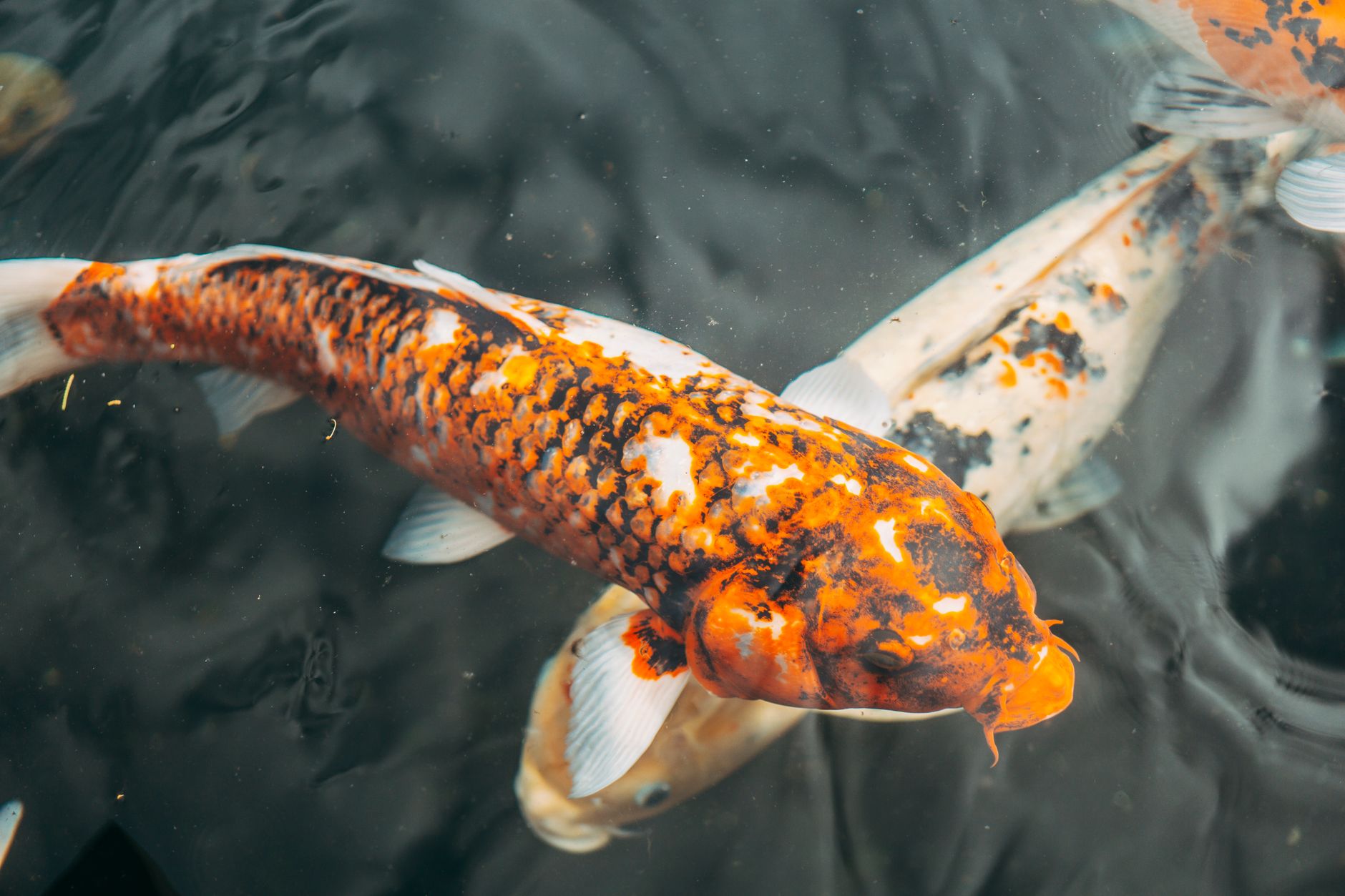
Koi skin is comprised of several layers, each containing different types of pigment cells:
- Epidermis: The outermost layer, providing a protective barrier. It is generally transparent.
- Dermis: Contains the melanophores (black), xanthophores (yellow), erythrophores (red), and iridophores (reflective/metallic).
- Hypodermis: A deeper layer of connective tissue and fat.
The depth and arrangement of these pigment cells play a crucial role in the overall coloration. The blueish effect is often seen when melanophores (black pigment) are positioned beneath the iridophores (reflective cells). The black background enhances the scattering of light, creating the illusion of blue.
Varieties Exhibiting Blue Tones
While a uniformly blue koi is virtually nonexistent, certain varieties can exhibit blueish or blue-grey tones. These include:
- Asagi: This variety is renowned for its netted scale pattern, where the dark (often blueish-grey) net contrast with the lighter (usually reddish) scales below. The blue is most prominent on the back and fades towards the belly.
- Shusui: A Doitsu (scaleless) version of Asagi, Shusui typically displays a blueish-grey pattern along the dorsal fin.
- Goshiki: Meaning “five colors,” Goshiki koi often exhibit subtle blueish or blue-grey hues mixed with red, black, and white.
Factors Influencing Perceived Blue Color
Several factors can influence how blue a koi appears:
- Water Quality: Optimal water conditions (pH, ammonia, nitrite, nitrate) are essential for vibrant coloration. Poor water quality can stress the fish and diminish their colors.
- Diet: A balanced diet rich in carotenoids can enhance red and yellow pigments, indirectly influencing the perception of blue.
- Lighting: The type of lighting used in the pond or aquarium can significantly alter the perceived coloration. Natural sunlight often brings out the best colors.
- Genetics: The genetic lineage of the koi is paramount. Certain bloodlines are more prone to exhibiting blueish tones.
The Difficulty in Breeding “True Blue” Koi
Despite the attempts by breeders to produce consistently blue koi, the genetic complexity of color inheritance makes it incredibly challenging. The blueish effect relies on specific arrangements of pigment cells and underlying skin layers, which are not easily controlled through selective breeding. While breeders can enhance the existing blueish tones in varieties like Asagi and Goshiki, creating a true, consistently blue koi remains elusive.
Are You Sure You Really Want Blue Koi?
It’s worth considering what you really want. Are you focused on the literal blue, or the effect of blue. Remember that the beauty of Koi ponds is the contrast. You might prefer to keep red, white and black koi to highlight the beauty of your existing water features.
Blue Koi, the Mythical Fish
The dream of achieving a blue koi is one that has captured the imaginations of pond owners and collectors for years.
Frequently Asked Questions (FAQs)
What is the difference between Asagi and Shusui koi?
Asagi is a scaled koi variety recognized for its netted blueish-grey pattern. Shusui is the Doitsu (scaleless) version of Asagi, meaning it lacks scales except for a row of scales along the dorsal fin and sometimes along the lateral line.
Why are true blue koi so rare?
True, vibrant blue koi are rare because koi lack the genes to produce blue pigments. The appearance of blue is an optical illusion created by light scattering and refraction from the underlying skin layers and the position of melanophores.
How can I enhance the blue tones in my Asagi or Goshiki koi?
Maintain optimal water quality, provide a balanced diet, and use lighting that enhances the colors. Good genetics are the starting point, but environment can make all the difference in showing off the subtle blueish hues.
Can I breed blue koi?
You can breed koi exhibiting blueish tones (like Asagi or Goshiki), but there is no guarantee of consistently producing offspring with the desired color. Color inheritance in koi is complex, and genetics plays a critical role. Careful selection of breeding stock might improve your chances.
Are there any blue koi varieties that are easier to find?
Asagi and Shusui are the most commonly available varieties that exhibit blueish tones. However, the intensity and quality of the blue can vary significantly between individual fish.
What is the best environment for a koi to show off its blue coloration?
A clean pond with natural sunlight or full-spectrum artificial lighting, combined with a well-balanced diet, is optimal. Avoid excessive shade or poor water quality.
What are the common problems when breeding koi, related to blue color?
The biggest challenge is the unpredictable nature of color inheritance. Even breeding two blueish koi does not guarantee that the offspring will exhibit the same coloration. Often, fry will revert to dominant colors like red, black, or white.
How much do blue koi cost?
Koi exhibiting blueish tones, like Asagi and Shusui, can range in price from a few dollars to hundreds or even thousands of dollars, depending on the quality, size, and lineage. The more prominent the blue, the higher the price. Truly exceptional specimens are rare and command a premium.
What are the most important factors to consider when buying a koi that has some blue?
Look for a clear, well-defined blueish-grey pattern, healthy skin, and good body conformation. Consider the koi’s lineage and reputation of the breeder.
Is there a disease that makes koi become blue?
No, there is no known disease that causes koi to become blue. Changes in color can be a sign of stress or poor water quality, but they are not directly related to a specific disease. Blueish tones are genetically determined and enhanced by environmental factors.
Where can I find a reputable koi breeder that specializes in blue koi?
While no breeder specializes in purely blue koi, some specialize in Asagi and Goshiki, which are the varieties most likely to exhibit blueish tones. Online koi forums and clubs can be valuable resources for finding reputable breeders.
Does the time of year influence the blue color of koi?
Yes, it can. The blue appearance of Asagi can change slightly with the seasons. Color appears more pronounced during cooler periods due to changes in the koi’s physiology.