
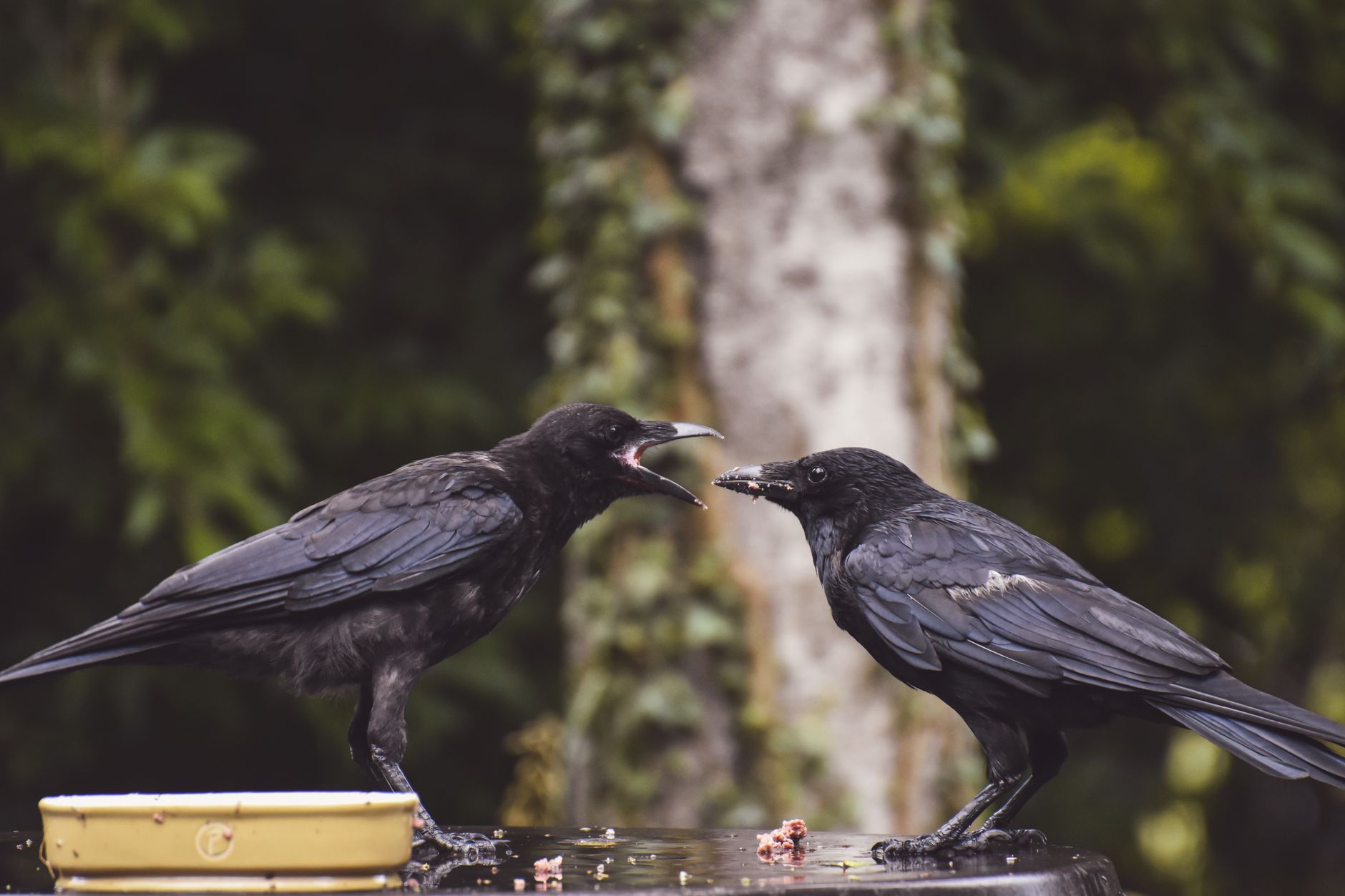
Can Crows Hold a Grudge? The Long Memory of a Clever Bird
Yes, evidence strongly suggests crows can hold a grudge, remembering and reacting negatively to individuals who have threatened or harmed them, and even teaching others to do the same. Their remarkable cognitive abilities and social complexity contribute to this fascinating behavior.

The Intelligence of Corvids: A Foundation for Grudges
Crows are members of the corvid family, which also includes ravens, jays, and magpies, renowned for their intelligence. They possess cognitive abilities comparable to those of primates, including tool use, problem-solving, and advanced communication skills. This intellectual capacity is crucial for their ability to form and maintain grudges.
- Brain Size: Crows have relatively large brains for their body size, indicating a high level of cognitive processing power.
- Social Complexity: They live in complex social groups with intricate hierarchies and communication systems.
- Learning and Memory: Crows are exceptional learners and have remarkable long-term memory, allowing them to remember faces and associate them with positive or negative experiences.

What colours are fish most attracted to?
Can you put your finger in a trout's mouth?
Is methylene blue anti bacterial?
Does aquarium salt raise pH in aquarium?
The Science Behind Crow Grudges

Research has shown that crows are capable of recognizing individual human faces and associating them with specific events. Studies involving researchers wearing masks have demonstrated that crows will react negatively to individuals wearing a mask they associate with past negative interactions. This is not a general fear of humans but a specific, learned response to a particular individual.
- Mask Studies: These studies involve researchers wearing different masks while interacting with crows, either positively (e.g., offering food) or negatively (e.g., trapping or scaring them).
- Facial Recognition: Crows are capable of distinguishing subtle differences in facial features, allowing them to identify individuals even after long periods.
- Neural Basis: While the exact neural mechanisms are still being investigated, it’s believed that crows’ brains have specialized regions for facial recognition and emotional memory.
How Crows Teach Grudges to Others
Perhaps the most fascinating aspect of crow grudges is their ability to teach others to recognize and react negatively to specific individuals. This social learning allows grudges to be passed down through generations, creating long-lasting animosity towards specific humans.
- Social Learning: Crows learn by observing the behavior of others, particularly their parents and other members of their social group.
- Alarm Calls: Crows use specific alarm calls to warn others about potential threats, including humans they associate with negative experiences.
- Mobbing Behavior: When a perceived threat is present, crows will often engage in mobbing behavior, collectively harassing the individual to drive them away. This behavior can be learned from others.
Potential Benefits of Holding Grudges
While holding a grudge may seem like a negative trait, it can be beneficial for survival. In the harsh realities of the natural world, remembering and avoiding threats can significantly increase an animal’s chances of survival.
- Threat Avoidance: Remembering individuals who have posed a threat allows crows to avoid future encounters with them.
- Protection of Offspring: Crows will fiercely protect their nests and offspring, and holding a grudge against potential predators can help ensure their survival.
- Social Cohesion: In some cases, shared grudges can strengthen social bonds within a group.
Differentiating Grudges from Fear
It’s important to distinguish between a genuine grudge and simple fear or learned avoidance. A grudge implies a more complex cognitive process involving memory, emotional association, and a targeted response. Fear may be a more generalized reaction to a perceived threat.
| Feature | Grudge | Fear |
|---|---|---|
| Trigger | Specific individual or associated cue | General threat or unknown stimulus |
| Memory | Long-term memory of a past event | Immediate response to a present threat |
| Response | Targeted negative reaction | Avoidance or generalized alarm response |
| Social Transmission | Can be taught to others | Less likely to be socially transmitted |
Mitigating Crow Grudges
If you suspect that a crow holds a grudge against you, there are steps you can take to improve the situation. Building positive associations through consistent, positive interactions can gradually change their perception of you.
- Positive Reinforcement: Offering food or other rewards can create positive associations.
- Consistent Behavior: Avoid sudden movements or actions that might be perceived as threatening.
- Patience and Persistence: It may take time to overcome a crow’s negative perception of you.
Common Mistakes When Interacting With Crows
Many well-intentioned actions can inadvertently lead crows to develop negative associations. Understanding these common mistakes can help you avoid unintentionally creating a grudge.
- Disturbing Nests: Getting too close to nests or disturbing eggs can trigger a defensive response.
- Harassing Crows: Chasing or scaring crows, even playfully, can create negative associations.
- Inconsistent Behavior: Inconsistent or unpredictable behavior can make it difficult for crows to trust you.
Frequently Asked Questions (FAQs)
Can crows really recognize individual human faces?
Yes, studies have conclusively demonstrated that crows possess the ability to recognize individual human faces. This remarkable capability is based on their complex cognitive abilities and well-developed visual processing skills.
How long can crows remember a grudge?
Evidence suggests that crows can remember a grudge for several years, potentially even a lifetime. Their long-term memory is exceptionally strong, allowing them to retain information about past encounters and associate them with specific individuals.
Do all crows hold grudges?
Not all crows hold grudges in the same way or to the same extent. Individual personalities and experiences play a significant role in determining whether a crow will develop a grudge against a particular person.
Are crow grudges specific to humans, or can they hold grudges against other animals?
Crows can hold grudges against other animals, although grudges against humans are the most commonly studied. They are capable of remembering negative interactions with various species that threaten their safety or food sources.
What is the best way to avoid making a crow hold a grudge against me?
The best way to avoid earning a crow’s ire is to treat them with respect and avoid any actions that might be perceived as threatening. This includes refraining from disturbing their nests, chasing them, or engaging in other forms of harassment.
Can you undo a crow’s grudge?
Yes, it is possible to undo a crow’s grudge, although it may require time and effort. Consistently positive interactions, such as offering food or engaging in non-threatening behavior, can gradually change their perception of you.
Is it ethical to study crow grudges?
Studying crow grudges can be ethical as long as it is done in a way that minimizes harm and disturbance to the crows. Researchers must prioritize the well-being of the animals and avoid causing unnecessary stress or suffering.
What is mobbing behavior in crows, and why do they do it?
Mobbing behavior is a defensive tactic in which crows collectively harass a perceived threat. They do this to drive away predators or other perceived dangers from their territory and protect their nests and offspring.
Are crow grudges the same as revenge?
While crow grudges may appear similar to revenge, it is important to note that revenge implies a conscious desire for retribution. It is difficult to determine whether crows possess this level of cognitive awareness. Their behavior is more likely driven by learned avoidance and defensive instincts.
How do researchers study crow grudges?
Researchers study crow grudges using a variety of methods, including mask experiments, observational studies, and tracking devices. These methods allow them to observe how crows react to different individuals and situations, and to track their movements and social interactions.
Do crow calls change depending on who they are warning others about?
Yes, evidence suggests that crows use different calls depending on the specific threat they are warning others about. This includes variations in alarm calls that are specific to particular individuals or types of predators.
If I accidentally harm a crow, what should I do to try to make amends?
If you accidentally harm a crow, the best course of action is to offer it food and avoid any further interaction that might be perceived as threatening. Consistently providing food over time may help to rebuild trust.