
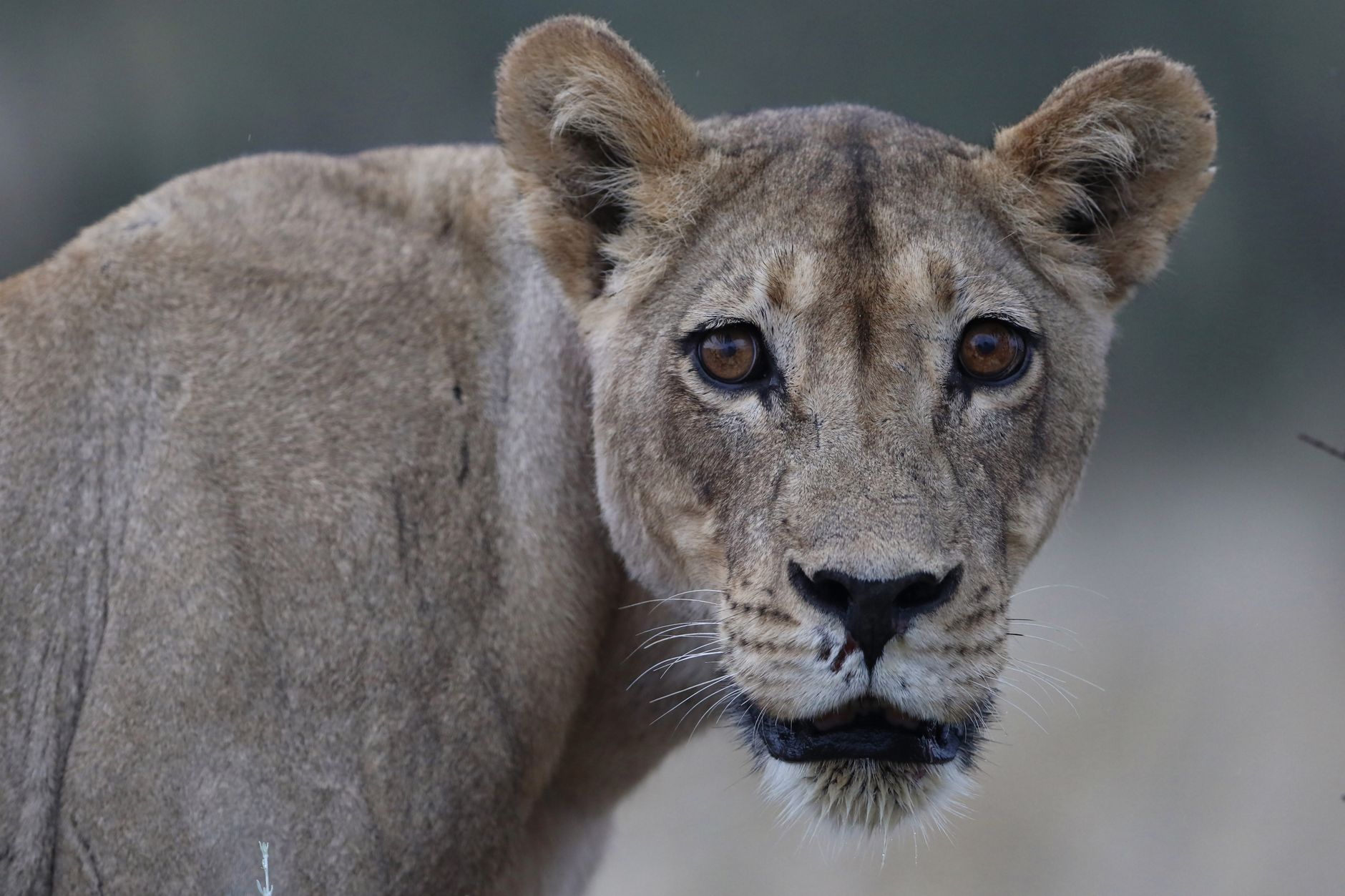
Why Lions Fear Hyenas: Unveiling the Truth Behind the Predator-Prey Paradox
Lions aren’t typically afraid of individual hyenas, but large groups of hyenas can pose a significant threat. The real question is why lions are afraid of hyenas en masse – a matter of strategic advantage, numerical superiority, and the constant calculation of risk versus reward.

A Shifting Perspective: Beyond Fear
The common perception of lions as unquestionably dominant predators often overshadows the complex dynamics of the African savanna. While lions are apex predators, the reality is far more nuanced. The relationship between lions and hyenas is less about straightforward fear and more about calculated risk assessment. Individual lions rarely display fear of single hyenas, but the equation changes dramatically when hyenas operate in large clans. This shift isn’t necessarily driven by fear, but by a primal understanding of the potential for injury or even death in a confrontation.

What colours are fish most attracted to?
Can you put your finger in a trout's mouth?
Is methylene blue anti bacterial?
Does aquarium salt raise pH in aquarium?
Hyena Clans: Strength in Numbers

The spotted hyena, in particular, is known for its highly organized social structure. These clans, often numbering in the dozens, are formidable. Their strength lies in their ability to coordinate and cooperate during hunts and confrontations. Their collective strength allows them to challenge lions for kills, steal prey, and even, in rare circumstances, injure or kill lions, especially cubs or weakened individuals.
- Hyena clans operate with sophisticated communication, using vocalizations, scent marking, and body language to coordinate their actions.
- Their collective hunting success means they have the resources to challenge lions for dominance over carcasses.
- The sheer number of hyenas can overwhelm even a pride of lions in certain situations.
Territory and Resources: The Constant Battle
The competition for territory and resources is a constant driver of conflict between lions and hyenas. Both species require large hunting grounds to sustain their populations. This naturally leads to overlap and competition for prey. Carcasses become the focal point of these conflicts, with both species vying for ownership. While lions often initially control a kill, a sufficiently large hyena clan can successfully usurp the prize. Why lions are afraid of hyenas? It’s not always fear, but a pragmatic decision to conserve energy and avoid unnecessary risk, especially if they are outnumbered.
The Risk-Reward Calculation: When to Fight, When to Flee
For a lion, engaging in a confrontation with a large hyena clan is a calculated risk. The potential for injury is significant, and an injured lion is a vulnerable lion. A severe injury can impair their ability to hunt, defend their territory, or even protect their young. Therefore, lions often weigh the potential benefits of engaging in a fight against the potential costs. If the risk of injury outweighs the reward (e.g., a relatively small amount of food compared to the risk of fighting a large clan), lions may choose to avoid the confrontation altogether.
Why Lions Aren’t Always Dominant
The image of the lion as the undisputed king of the jungle is a pervasive myth. While lions are powerful predators, their dominance is far from absolute. Several factors contribute to this:
- Habitat: Lions share their habitat with numerous other predators, including hyenas, wild dogs, leopards, and cheetahs.
- Competition: These predators compete for resources, leading to complex interactions and shifting power dynamics.
- Opportunism: Hyenas, in particular, are highly opportunistic scavengers and hunters, constantly seeking to exploit any weakness or advantage.
Evidence of Hyena Attacks on Lions
While rare, there are documented instances of hyenas attacking and even killing lions. These attacks usually target cubs, weakened individuals, or lions that are already injured. In some cases, large hyena clans have been known to mob and kill even healthy adult lions. Such events contribute to the understanding of why lions are afraid of hyenas, especially of large groups.
| Situation | Likelihood of Hyena Attack on Lions |
|---|---|
| Lion Cubs | High |
| Injured Lions | High |
| Solitary Lions | Moderate |
| Weakened Lions | High |
| Adult Pride Lions | Low (unless outnumbered) |
The Crucial Role of Lionesses
Lionesses play a critical role in defending the pride from hyenas. They are often more aggressive and willing to confront hyenas than male lions, especially when protecting their cubs. Their collective defense is a vital factor in maintaining the pride’s territory and protecting its resources. A key aspect of why lions are afraid of hyenas is often related to the lionesses’ absence – leaving cubs vulnerable.
The Impact of Human Interference
Human activity, such as habitat loss and hunting, can exacerbate the conflict between lions and hyenas. Reduced prey populations force both species to compete even more fiercely for resources, increasing the likelihood of confrontations. Additionally, habitat fragmentation can isolate lion populations, making them more vulnerable to hyena attacks.
Adapting to Coexistence: A Delicate Balance
Despite the constant competition and occasional conflict, lions and hyenas have coexisted for millennia. Both species have adapted to the challenges of the African savanna, developing strategies for hunting, defending their territory, and raising their young. Understanding the complex relationship between these two apex predators is essential for effective conservation efforts.
Conservation Implications
Understanding why lions are afraid of hyenas and the intricate dynamics between the two species is critical for effective conservation strategies. Recognizing the importance of both predators in maintaining ecosystem balance, and addressing human-induced challenges such as habitat loss and illegal hunting, is essential for ensuring the long-term survival of both lions and hyenas.
Frequently Asked Questions (FAQs)
Are lions truly afraid of all hyenas?
No, lions aren’t typically afraid of single hyenas. The key is the numerical advantage that hyena clans possess. The presence of a large group of hyenas is what prompts a cautious response from lions.
What are the primary reasons why lions might avoid hyenas?
The primary reasons are to avoid potential injury and conserve energy. Engaging in a fight with a large hyena clan carries a significant risk of injury, which could impair the lion’s ability to hunt or defend itself.
Do hyenas ever actively hunt lions?
While rare, hyenas do occasionally attack and kill lions, particularly cubs, weakened individuals, or lions that are already injured. These instances usually involve large clans of hyenas.
Are hyenas more intelligent than lions?
Determining which species is “more intelligent” is difficult. Hyenas exhibit complex social behavior and problem-solving skills, while lions rely on strength and coordinated hunting strategies. They excel in different domains.
How do lions and hyenas compete for food?
Lions and hyenas compete directly for carcasses. Lions often initially control a kill, but a large enough hyena clan can successfully usurp it.
What role do lionesses play in the lion-hyena dynamic?
Lionesses are often more aggressive than male lions when it comes to defending the pride and their cubs from hyenas. Their collective defense is vital.
Does the size of the hyena clan influence lion behavior?
Absolutely. The larger the hyena clan, the more cautious a lion is likely to be. A numerical disadvantage is a significant deterrent to confrontation.
How does habitat loss affect the lion-hyena relationship?
Habitat loss increases competition for resources, leading to more frequent and intense conflicts between lions and hyenas.
Can a single lion defend a kill against a large hyena clan?
It’s highly unlikely that a single lion can successfully defend a kill against a large, determined hyena clan. The hyenas’ numbers provide a significant advantage.
What is the most common outcome when lions and hyenas clash?
More often than a fight, standoffs and displays of aggression are the most common outcomes. A direct fight is risky for both sides.
Do lions and hyenas ever cooperate with each other?
Rarely, if ever, do lions and hyenas cooperate. Their relationship is primarily competitive and antagonistic. However, the benefits of such a relationship could include avoiding the hassle and physical harm of fights.
How has human interference impacted the population dynamics of lions and hyenas?
Human activities such as habitat destruction, trophy hunting, and poisoning campaigns aimed at predators often dramatically alter population dynamics, impacting lions and hyenas differently.