
The Lifeblood of Civilization: Why the Nile River Was Everything to Ancient Egypt

The Nile River wasn’t just important to Ancient Egypt; it was Ancient Egypt. Its predictable floods provided fertile land, transportation, and a source of life that shaped every aspect of their civilization.

The Foundation of Egyptian Civilization
The answer to why the Nile was so central to Ancient Egypt lies in its unique geographical context. Egypt is essentially a desert. Without the Nile, the land would have been uninhabitable. The river’s annual inundation, or flooding, was a natural event that brought life-giving water and nutrient-rich silt to the otherwise barren land. This fertile soil, known as kemet (the black land), allowed the Egyptians to cultivate abundant crops, sustaining a large population and enabling the development of a complex society.
Furthermore, the Nile served as the primary transportation artery of the region. It allowed for the efficient movement of goods, people, and materials between Upper and Lower Egypt, uniting the kingdom and facilitating trade and communication. The predictable nature of the Nile also fostered a sense of stability and order that permeated Egyptian culture and religion.
Agricultural Abundance: The Gift of the Nile
Egyptian agriculture, the cornerstone of their economy, was entirely dependent on the Nile. The flood cycle was crucial:
- Akhet (Inundation): From June to September, the Nile flooded, depositing fertile silt across the floodplains.
- Peret (Emergence): From October to February, the waters receded, and farmers planted their crops in the rich soil.
- Shemu (Harvest): From March to May, the crops were harvested, ensuring a plentiful supply of food.
This predictable cycle allowed for surplus production, which freed up a portion of the population to pursue other activities such as craft specialization, construction, and governance. This surplus was also essential for supporting the pharaoh and the priestly class, who played a crucial role in maintaining social order.
Spiritual Significance: The Nile as a Divine Entity
The Nile was not merely a source of practical sustenance; it was deeply intertwined with Egyptian religion and mythology. The river was personified as the god Hapi, a symbol of abundance and fertility. The Egyptians believed that Hapi controlled the floods and ensured the prosperity of the land.
Temples were built along the banks of the Nile to honor Hapi and other deities associated with the river. Festivals were held to celebrate the annual inundation and to ensure a bountiful harvest. The pharaoh, considered a divine ruler, was responsible for maintaining the balance of nature and ensuring the continued flow of the Nile. The entire Egyptian worldview was shaped by their profound connection to the river and its life-giving properties.
Nile Navigation: Unifying a Kingdom
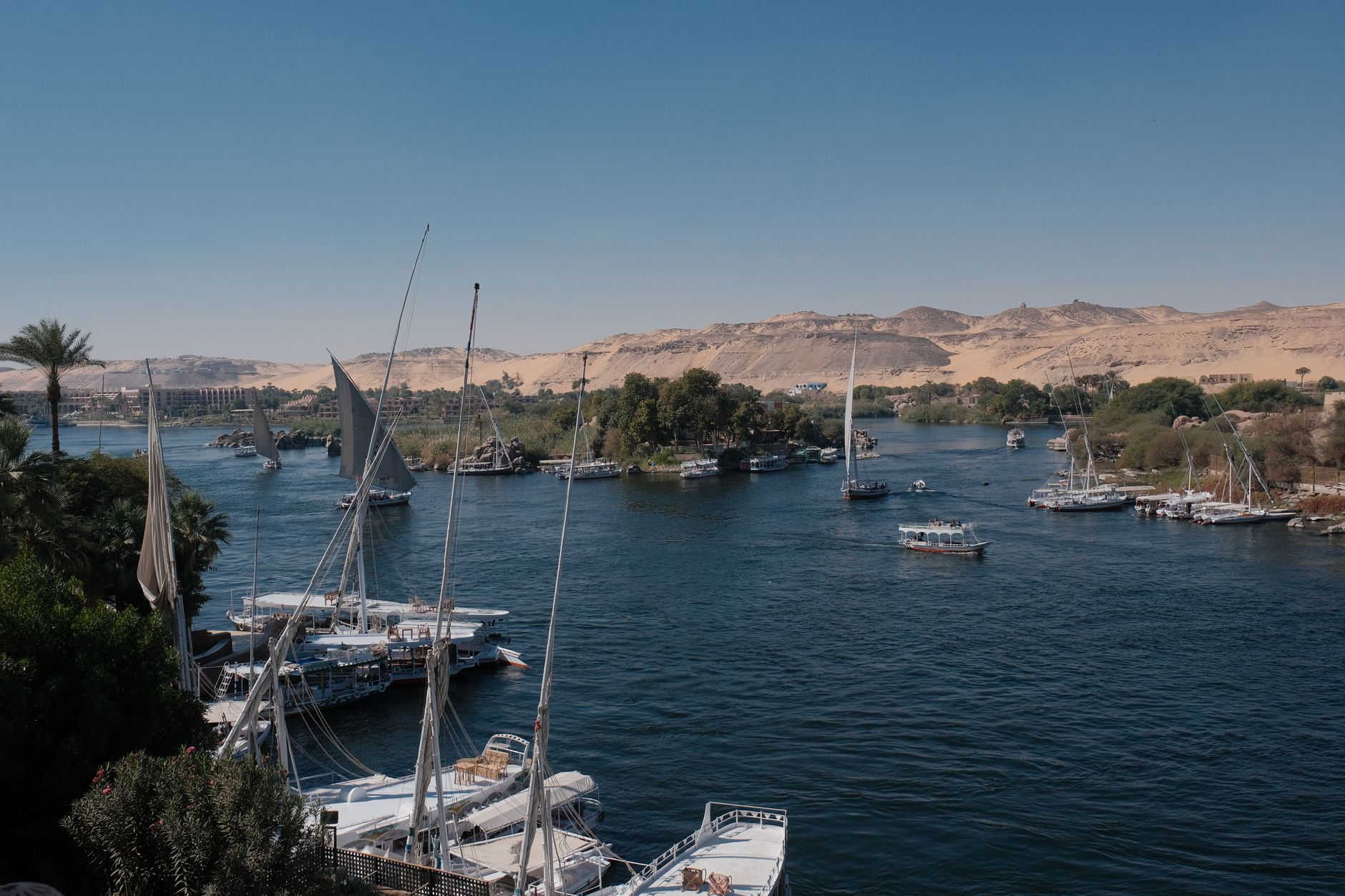
The Nile was not just a source of water and fertile land; it was also the primary means of transportation and communication throughout Ancient Egypt. The prevailing winds blew from north to south, allowing boats to sail upstream, while the current flowed downstream, making it easy to travel in the opposite direction. This natural transportation system facilitated trade, communication, and the movement of troops and resources, unifying Upper and Lower Egypt into a cohesive kingdom.
The Nile also served as a highway for transporting massive stone blocks used in the construction of pyramids and temples. Without the Nile, it would have been virtually impossible to move these materials across the desert landscape.
FAQs: Delving Deeper into the Nile’s Importance
Here are some frequently asked questions to further explore the critical role of the Nile River in Ancient Egyptian society:
FAQ 1: What would have happened if the Nile didn’t flood?
If the Nile had failed to flood, or if the floods were insufficient, it would have resulted in widespread famine and social unrest. The lack of fertile silt would have drastically reduced crop yields, leading to food shortages and starvation. This would have weakened the pharaoh’s authority and potentially led to the collapse of the Old Kingdom, as happened during periods of drought.
What colours are fish most attracted to?
Can you put your finger in a trout's mouth?
Is methylene blue anti bacterial?
Does aquarium salt raise pH in aquarium?
FAQ 2: How did the Egyptians control the Nile’s flooding?

While the Egyptians couldn’t completely control the Nile’s flooding, they developed sophisticated systems for irrigation and water management. They built canals, dikes, and reservoirs to divert water during the flood season and store it for use during dry periods. These engineering feats allowed them to maximize the benefits of the Nile’s flooding and to mitigate its potential negative effects.
FAQ 3: What crops did the Egyptians grow along the Nile?
The Egyptians cultivated a variety of crops along the Nile, including wheat, barley, flax, vegetables, and fruits. Wheat and barley were the primary staple crops, used to make bread and beer. Flax was used to produce linen, a common fabric for clothing. Vegetables such as onions, garlic, and lentils provided essential nutrients, while fruits like dates, figs, and grapes added variety to the Egyptian diet.
FAQ 4: How did the Nile influence Egyptian religion?
The Nile influenced Egyptian religion in profound ways. As mentioned earlier, the river was personified as the god Hapi, and the annual inundation was seen as a divine gift. The sun god Ra was believed to travel across the sky each day in a boat, mirroring the movement of boats along the Nile. Many Egyptian myths and rituals were connected to the river and its cycles of flooding and renewal.
FAQ 5: How did the Nile affect the location of Egyptian cities?
Most Egyptian cities were located along the banks of the Nile, as this provided easy access to water, fertile land, and transportation. Major cities such as Thebes, Memphis, and Luxor were all situated along the river, allowing them to flourish as centers of trade, administration, and religion.
FAQ 6: What types of boats did the Egyptians use on the Nile?
The Egyptians used a variety of boats on the Nile, ranging from small reed boats used for fishing to large wooden ships used for trade and transportation. These boats were essential for moving people and goods throughout the kingdom.
FAQ 7: How did the Nile contribute to the development of Egyptian science and mathematics?
The predictable nature of the Nile’s flooding allowed the Egyptians to develop advanced systems of measurement and surveying. They needed to accurately measure the land after each flood to re-establish property boundaries. This led to the development of sophisticated mathematical techniques, including geometry and trigonometry.
FAQ 8: What was the significance of the Aswan Dam in relation to the Nile?
The Aswan Dam, built in the 20th century, was designed to control the Nile’s flooding and provide hydroelectric power. While it has provided benefits in terms of water management and electricity generation, it has also had negative consequences, such as reducing the amount of silt deposited on the floodplains and disrupting the natural ecosystem.
FAQ 9: How did the Egyptians use the Nile for fishing?
The Nile was a rich source of fish, which provided an important source of protein for the Egyptian diet. Egyptians used nets, spears, and hooks to catch a variety of fish, including tilapia, catfish, and carp. Fishing scenes are frequently depicted in Egyptian art, reflecting the importance of fishing in their daily lives.
FAQ 10: How did the Nile help in building the pyramids?
The Nile River was crucial for the transportation of the massive stone blocks used in the construction of the pyramids. The blocks were quarried upstream and then transported by boat to the pyramid construction sites. Without the Nile, it would have been impossible to move these heavy materials.
FAQ 11: How did Ancient Egyptians measure the height of the Nile flood?
The Ancient Egyptians used a Nilometer to measure the height of the Nile flood. A Nilometer was typically a well or a series of steps leading down to the river, marked with measurements. By observing the water level, they could predict the success of the coming harvest and adjust their planting strategies accordingly.
FAQ 12: Is the Nile still important to Egypt today?
Absolutely. Although modern technology has altered how Egyptians interact with the Nile, it remains a vital resource. It provides drinking water, irrigation for agriculture, and hydroelectric power. The Nile continues to be a crucial part of Egypt’s economy and culture. While the Aswan Dam has mitigated some of the traditional benefits of flooding, the Nile remains the lifeblood of Egypt, past and present.