

Why is the Honey Badger So Feared? Delving into the Ferocious Reputation
The honey badger is feared due to its remarkable combination of fearlessness, thick skin, powerful bite, and tenacity, allowing it to take on animals much larger and more dangerous than itself; its aggressive nature and resilience in the face of adversity contribute significantly to its formidable reputation. Why is the honey badger so feared? Because it simply doesn’t back down.
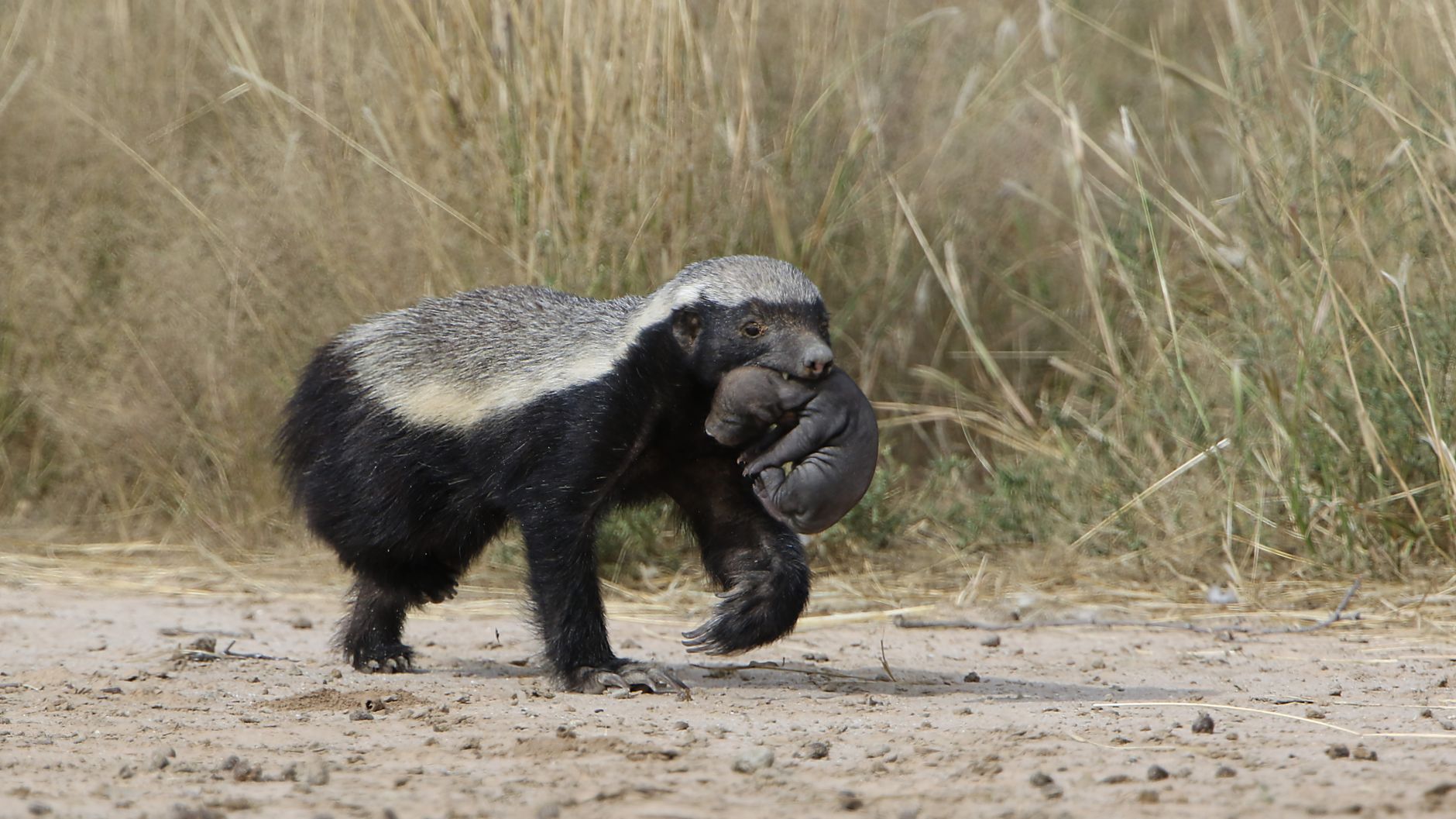
Introduction: More Than Just a Sweet Tooth
The honey badger, Mellivora capensis, is a creature of fascinating contradictions. Named for its apparent love of honey (though insects are a more staple part of its diet), this member of the weasel family punches far above its weight class. While its small size might suggest vulnerability, the honey badger has earned a reputation as one of the most fearless and tenacious animals on the planet. This begs the question: Why is the honey badger so feared? Understanding this fear requires delving into its unique physical attributes, behavioral traits, and ecological role.

What colours are fish most attracted to?
Can you put your finger in a trout's mouth?
Is methylene blue anti bacterial?
Does aquarium salt raise pH in aquarium?
Physical Attributes: Built for Battle

The honey badger possesses several physical adaptations that contribute to its fearsome reputation. These adaptations make it incredibly resilient and difficult to injure, let alone kill.
-
Thick Skin: The honey badger’s skin is exceptionally thick – about 1/4 inch – and loose. This allows it to move freely within its skin, even when grabbed by a predator. It can literally turn around and bite its attacker while being held.
-
Powerful Jaws and Teeth: Its jaws are incredibly strong, allowing it to crush bones and even turtle shells. Its teeth are designed for both tearing flesh and grinding insects.
-
Sharp Claws: Its strong claws are used for digging burrows, tearing apart logs in search of food, and, of course, defense.
-
Small Size, Low Center of Gravity: This makes the honey badger incredibly agile and difficult to knock over.
Behavioral Traits: Fearless and Tenacious
Physical adaptations are only half the story. The honey badger’s behavior is equally crucial to understanding its fearsome reputation.
-
Fearlessness: Honey badgers seem to lack the instinct to flee. They will readily confront animals much larger and more dangerous than themselves, including lions, leopards, and even snakes.
-
Aggressiveness: They are known for their aggressive nature and will readily attack if threatened or provoked.
-
Tenacity: Once engaged in a fight, honey badgers rarely give up. They will fight to the death, even when severely injured.
-
Intelligence: Some studies suggest that honey badgers are highly intelligent and capable of problem-solving. They have been observed using tools and outsmarting predators.
Ecological Role: A Keystone Species
The honey badger plays an important role in its ecosystem, primarily through its foraging habits.
-
Insect Control: As an insectivore, it helps control populations of insects and other invertebrates.
-
Prey for Larger Predators: While formidable, honey badgers are occasionally preyed upon by larger predators, such as lions and leopards. This helps maintain a healthy balance within the food chain.
-
Seed Dispersal: By consuming fruits and berries, they contribute to seed dispersal.
The Honey Badger’s Arsenal: A Deadly Combination
The combination of these physical and behavioral traits makes the honey badger a truly formidable opponent. It’s not just one single factor that makes it feared; it’s the synergy of thick skin, powerful bite, fearless aggression, and unwavering tenacity. This is why is the honey badger so feared.
Comparative Analysis: Honey Badger vs. Other “Tough” Animals
| Feature | Honey Badger | Wolverine | Tasmanian Devil |
|---|---|---|---|
| Size | Small | Medium | Small-Medium |
| Skin Thickness | Very Thick | Medium | Medium |
| Bite Force | Strong | Strong | Extremely Strong |
| Aggressiveness | Very High | High | High |
| Fearlessness | Extremely High | High | Moderate |
| Temperament | Tenacious/Relentless | Fierce/Territorial | Aggressive/Voracious |
| Primary Defense | Thick Skin, Bite | Claws, Bite | Bite |
This table helps illustrate that while other animals possess similar qualities, the honey badger’s combination of traits, particularly its exceptional fearlessness and thick skin, set it apart.
Frequently Asked Questions
Why are honey badgers immune to snake venom?
Honey badgers are not entirely immune to snake venom, but they do possess a remarkable degree of resistance. This resistance is due to a combination of factors, including variations in the acetylcholine receptors targeted by some snake venoms. The level of resistance can vary depending on the type of venom.
Are honey badgers really that aggressive?
Yes, honey badgers are known for their aggressive nature. They are not afraid to attack animals much larger than themselves, and they will defend their territory and young fiercely. This aggression is a key component of why is the honey badger so feared.
What do honey badgers eat?
The diet of honey badgers is incredibly diverse. They are omnivores, consuming insects, reptiles, small mammals, birds, eggs, fruits, roots, and, of course, honey. This adaptability allows them to thrive in a wide range of environments.
How big do honey badgers get?
Honey badgers are relatively small animals. They typically weigh between 15 and 35 pounds and measure between 22 and 30 inches in length, excluding the tail.
Where do honey badgers live?
Honey badgers are found in a wide range of habitats across Africa, the Middle East, and the Indian subcontinent. They are highly adaptable and can live in grasslands, forests, and even deserts.
Do honey badgers live in groups?
Honey badgers are generally solitary animals, except when mating or raising young. They are territorial and will defend their territories against intruders.
How long do honey badgers live?
In the wild, honey badgers typically live for 7 to 10 years. In captivity, they can live much longer, sometimes up to 24 years.
Are honey badgers endangered?
Honey badgers are currently listed as Least Concern by the International Union for Conservation of Nature (IUCN). However, their populations are threatened by habitat loss, poaching, and persecution by farmers.
Can honey badgers be kept as pets?
While it is technically possible to keep a honey badger as a pet, it is highly discouraged. They are wild animals with strong instincts and require specialized care. They can also be dangerous and unpredictable.
How do honey badgers find honey?
Honey badgers often form mutualistic relationships with honeyguides, birds that lead them to beehives. The honey badger then breaks open the hive, allowing both the badger and the honeyguide to feast on the honey and larvae.
How does the honey badger’s skin protect it?
The loose and thick skin of the honey badger provides it with significant protection. It allows the badger to twist and turn even when gripped by a predator, and the thickness of the skin makes it difficult for predators to inflict serious injuries. It’s a vital reason Why is the honey badger so feared?
Why is the honey badger so fearless?
The exact reasons for the honey badger’s fearlessness are not fully understood. Some suggest it may be due to a combination of genetic factors, hormonal influences, and learned behavior. Regardless of the cause, this fearlessness is a defining characteristic of the species.