

Why Do Staffies Walk Sideways? Decoding the “Crab Walk” of Staffordshire Bull Terriers
The Staffie’s distinctive sideways gait, often called the “crab walk,” isn’t just a quirk; it’s a fascinating blend of muscle structure and gait mechanics, influenced by breed standards and individual variations. Why do Staffies walk sideways? This unique movement stems from their powerful build and relatively short legs, forcing them to adopt this efficient, if somewhat comical, locomotion.

Understanding the Staffordshire Bull Terrier Build
The Staffordshire Bull Terrier, affectionately known as the Staffie, is a breed characterized by its impressive muscularity and compact stature. Developed in England, they were originally bred for bull-baiting and later dogfighting, requiring immense strength and agility in a relatively small package. This history has profoundly shaped their anatomy and, consequently, their gait.
- Muscular Build: Staffies are renowned for their dense musculature, particularly in the shoulders and hindquarters. This powerful build contributes significantly to their unique movement patterns.
- Short Legs: Compared to their body mass, Staffies have relatively short legs. This disproportion can affect their stride length and overall gait efficiency.
- Wide Chest: Their broad chest provides a stable base and accommodates their strong cardiovascular system, necessary for strenuous activities.
- Low Center of Gravity: The combination of a muscular build and short legs gives them a low center of gravity, enhancing their stability and power.

What colours are fish most attracted to?
Can you put your finger in a trout's mouth?
Is methylene blue anti bacterial?
Does aquarium salt raise pH in aquarium?
The Mechanics of the “Crab Walk”
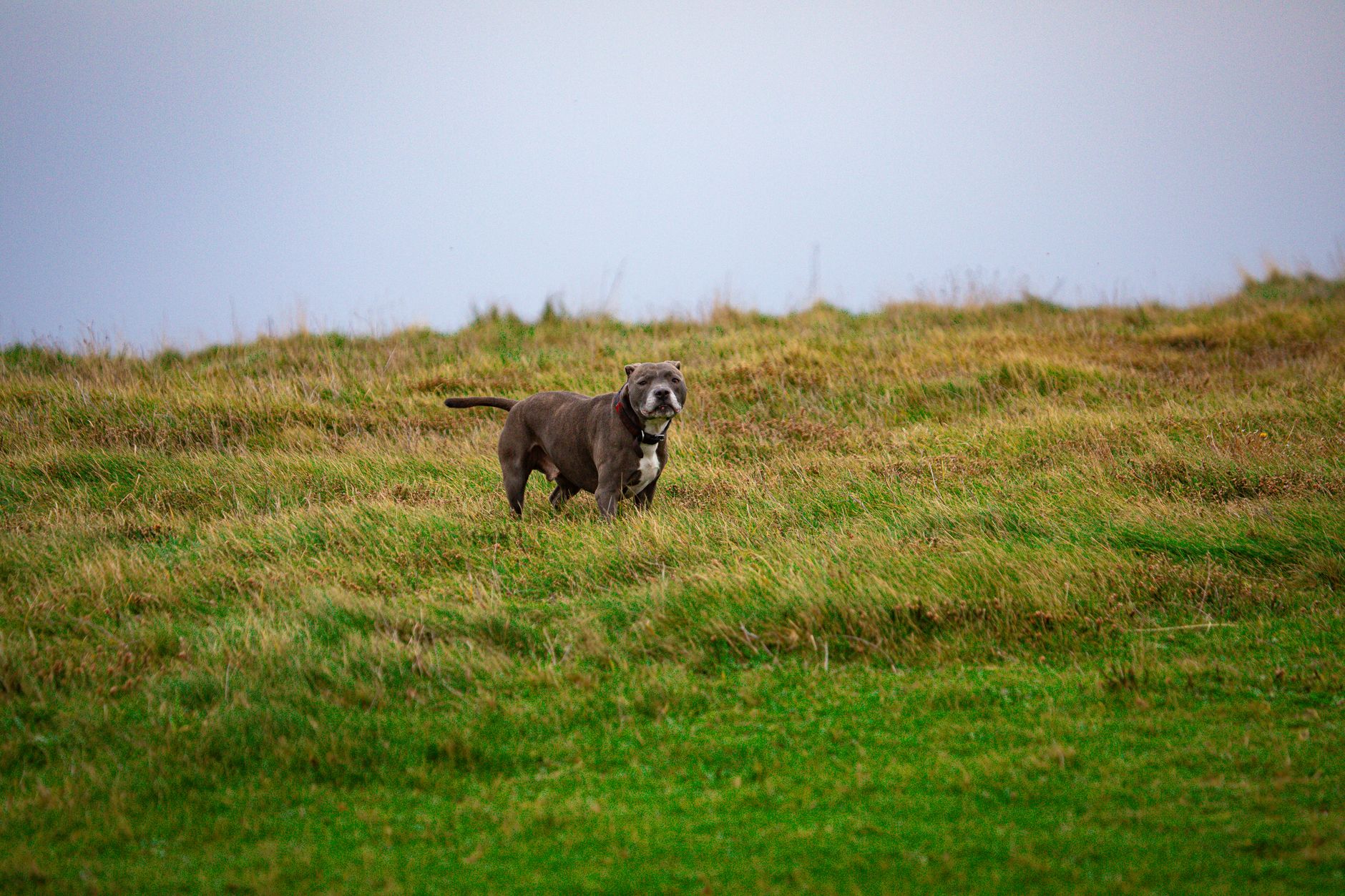
The Staffie’s sideways walk, or “crab walk,” is a compensation mechanism that allows them to move efficiently despite their stocky build. It’s not necessarily a problem but rather a characteristic often seen in the breed.
- Shoulder and Hip Movement: The large shoulder muscles and powerful hip drive influence their gait. To avoid clipping their own legs, they often swing their hindquarters slightly outward, resulting in a sideways movement.
- Leg Length and Stride: Due to their shorter legs, Staffies take more steps per unit of distance than dogs with longer legs. The “crab walk” can help compensate for this by allowing for a slightly wider stance and more efficient use of their power.
- Individual Variation: Not all Staffies exhibit the “crab walk” to the same degree. Factors such as muscle development, individual conformation, and training can influence their gait.
Breed Standards and Gait
Breed standards play a role in shaping the overall conformation of the Staffie, which in turn can influence their gait. While the standard doesn’t explicitly encourage or discourage the “crab walk,” certain aspects of the build can contribute to it.
- Emphasis on Muscularity: Breed standards often prioritize a muscular and well-defined physique. This can indirectly contribute to the sideways gait.
- Balanced Proportions: Judges look for a balance between the different parts of the body. However, the emphasis on a powerful build can sometimes lead to conformation choices that accentuate the “crab walk.”
Potential Health Concerns
While the “crab walk” is often a normal characteristic of the breed, it’s crucial to distinguish it from gait abnormalities caused by underlying health issues.
- Hip Dysplasia: In some cases, a pronounced sideways gait can be a sign of hip dysplasia, a condition where the hip joint doesn’t develop properly.
- Elbow Dysplasia: Similar to hip dysplasia, elbow dysplasia can cause pain and lameness, leading to altered gait patterns.
- Arthritis: As Staffies age, they may develop arthritis in their joints, which can also affect their gait.
- Muscle Imbalances: Overdeveloped muscles in some areas can lead to biomechanical problems.
If you notice any sudden changes in your Staffie’s gait, especially if accompanied by pain, stiffness, or reluctance to move, it’s essential to consult with a veterinarian.
Why do Staffies walk sideways?: A Comprehensive Summary
In essence, the Staffie’s sideways gait, or “crab walk,” arises from a combination of their powerfully muscular build, relatively short legs, and gait mechanics adapted for efficiency. Breed standards that prioritize muscularity can indirectly contribute to this unique locomotion.
Frequently Asked Questions (FAQs)
What exactly is the “crab walk”?
The “crab walk” refers to a sideways gait pattern seen in some Staffies, where their hindquarters swing slightly outward as they walk. This movement resembles the sideways motion of a crab, hence the name. It’s usually a natural adaptation to their unique body structure.
Is it normal for a Staffie to walk sideways?
Yes, it’s often considered normal for Staffies to exhibit a slight sideways gait. It’s usually not a cause for concern unless it’s accompanied by other symptoms like pain, limping, or stiffness. However, a significant change in gait should always be evaluated by a vet.
How can I tell if my Staffie’s sideways walk is a problem?
If the sideways gait is sudden, pronounced, or accompanied by signs of pain (whining, limping, reluctance to move, sensitivity to touch), it’s crucial to consult a veterinarian. These could be signs of underlying issues like hip dysplasia or arthritis. Early detection is key.
Does the “crab walk” affect a Staffie’s agility?
While the sideways gait may look awkward, it doesn’t necessarily impact a Staffie’s agility. In fact, their powerful build and low center of gravity can make them surprisingly agile and quick. They are often very strong jumpers and climbers.
Can training correct a Staffie’s sideways walk?
Training typically cannot “correct” the sideways walk because it’s often linked to their bone structure and muscle development. However, targeted exercises can help strengthen muscles and improve overall balance, potentially minimizing the gait. Consult with a professional dog trainer.
Is the “crab walk” more common in male or female Staffies?
There’s no definitive evidence to suggest that the “crab walk” is more common in one sex over the other. It’s more likely influenced by individual conformation and muscle development. Both male and female Staffies can exhibit this gait.
At what age do Staffies typically start exhibiting the “crab walk”?
The “crab walk” is typically noticeable from a young age, as their bodies develop and their gait patterns become established. However, it may become more pronounced as they mature and their muscles become more defined. This is a gradual process.
Can diet affect a Staffie’s gait?
Yes, diet plays a crucial role in a Staffie’s overall health and can indirectly affect their gait. A balanced diet rich in protein, vitamins, and minerals is essential for muscle development and joint health. Obesity can exacerbate gait issues.
Does the “crab walk” mean my Staffie will develop hip dysplasia?
No, the “crab walk” doesn’t automatically mean a Staffie will develop hip dysplasia. While it can sometimes be a symptom, it’s not a definitive indicator. Diagnostic tests like X-rays are needed to confirm hip dysplasia. Consult your vet for concerns.
Can supplements help with a Staffie’s sideways gait?
Supplements like glucosamine and chondroitin can help support joint health and may alleviate symptoms of arthritis or other joint problems that can affect gait. However, supplements alone are not a cure and should be used in conjunction with veterinary care. Always consult your vet before starting any supplements.
What other dog breeds might exhibit a similar gait?
Other muscular breeds with short legs, such as Bulldogs and French Bulldogs, may also exhibit a similar sideways gait due to their conformation. It is not entirely unique to Staffies.
Why do Staffies walk sideways? Is it painful for them?
Why do Staffies walk sideways? In most cases, the “crab walk” is not painful for Staffies. It’s simply a consequence of their muscular build and short legs. However, if the gait is associated with underlying health problems like hip dysplasia or arthritis, it can cause pain and discomfort. If you suspect any health issues, consult a veterinarian immediately.