
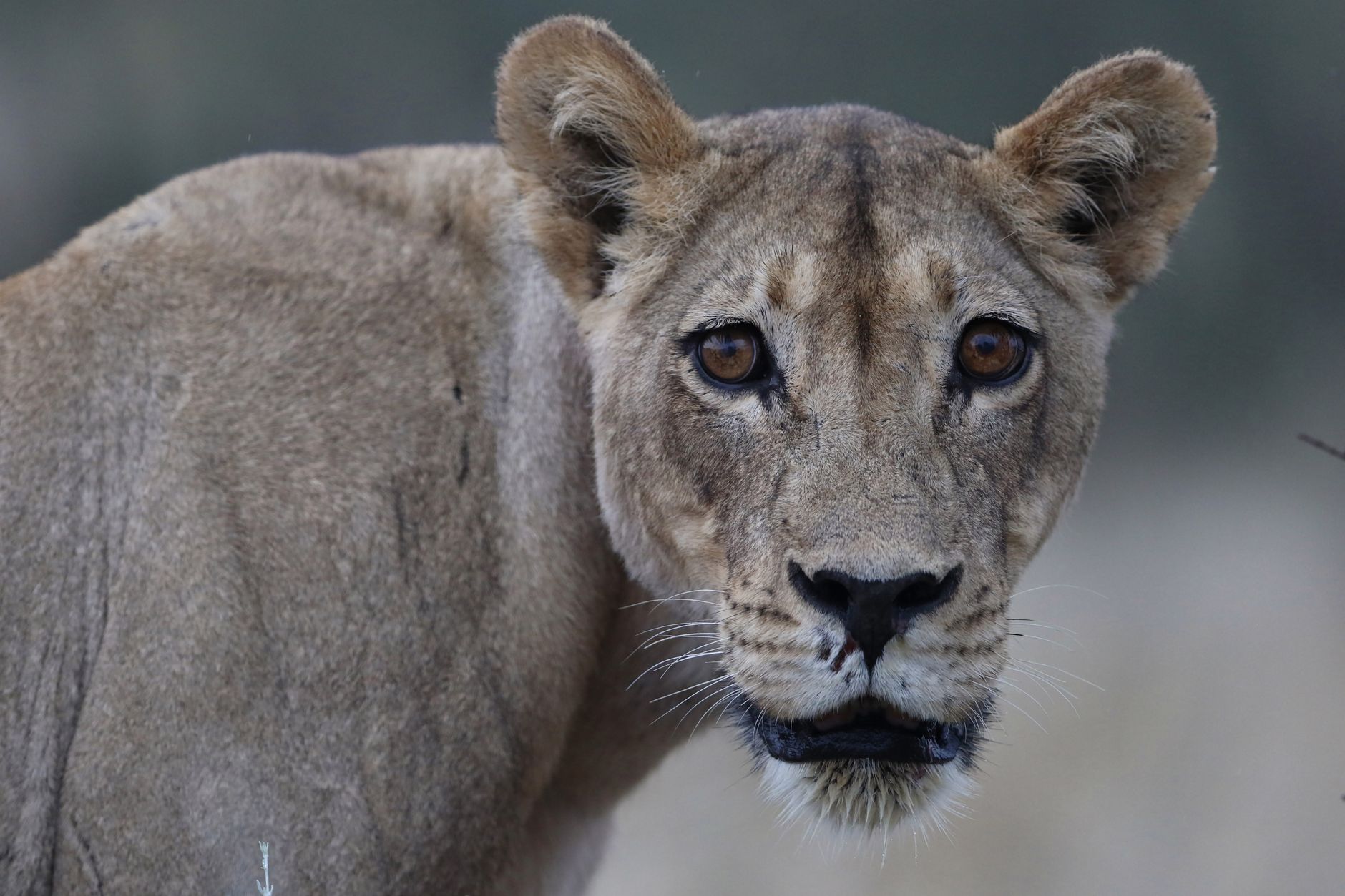
Why Do Hyenas Fear Male Lions?
Hyenas fear male lions due to the significant size, strength, and aggressive nature of male lions, which often results in fatal confrontations and the loss of food resources.

Introduction: The Apex Predator Dynamic
The African savanna is a theater of constant power struggles, where predators compete for survival. Among these interactions, the dynamic between spotted hyenas and African lions is particularly fascinating, filled with rivalry and, yes, fear. Why do hyenas fear male lions? Understanding this relationship requires a closer look at the ecological context, the physical attributes of each species, and the behaviors that shape their interactions. Lions and hyenas occupy similar niches as apex predators, leading to frequent clashes over territory, carcasses, and dominance. However, it’s not a simple case of mutual disdain. The fear displayed by hyenas, especially towards male lions, is rooted in a very real threat to their lives and livelihoods.

What colours are fish most attracted to?
Can you put your finger in a trout's mouth?
Is methylene blue anti bacterial?
Does aquarium salt raise pH in aquarium?
Physical Disparity and Fighting Prowess

The most immediate reason for hyenas’ apprehension towards male lions lies in the clear disparity in size and power.
- Size and Weight: Adult male lions are significantly larger than hyenas. A male lion can weigh between 330 and 550 pounds, while an adult spotted hyena typically weighs between 88 and 190 pounds. This difference in mass translates to a significant advantage in physical confrontations.
- Strength and Bite Force: Lions possess immense strength, allowing them to overpower hyenas in direct combat. While hyenas boast a powerful bite, lions’ superior musculature and fighting techniques often prove decisive.
- Aggression and Predatory Behavior: Male lions are inherently more aggressive than female lions or hyenas. They are often more inclined to initiate conflict and use their size and strength to assert dominance. This aggressiveness acts as a deterrent to hyenas, who are less likely to challenge a male lion directly.
Competition for Resources
Both lions and hyenas are opportunistic predators, and their diets often overlap. This leads to intense competition for prey, particularly large herbivores like wildebeest and zebra.
- Scavenging Opportunities: Both species scavenge regularly, often competing for the same carcasses. Male lions, due to their size and strength, can easily displace hyenas from a kill, depriving them of a vital food source.
- Direct Predation: While hyenas are capable hunters, they are also susceptible to predation by lions. Male lions have been known to kill hyenas, not necessarily for food, but to eliminate competition.
- Territorial Defense: Lions fiercely defend their territories, and hyenas that venture too close risk encountering a male lion and facing potentially fatal consequences.
Social Structure and Group Dynamics
The social structure of both species plays a crucial role in their interactions.
- Lion Prides: Lions live in prides, typically consisting of related females and their offspring, along with one or more adult males. The males are responsible for defending the pride’s territory and protecting it from intruders, including hyenas.
- Hyena Clans: Hyenas live in clans, which can be quite large and complex. While hyenas are known for their coordinated hunting strategies and social intelligence, they are often no match for a determined male lion.
- Numerical Advantage vs. Individual Power: While hyenas can sometimes overwhelm a lone lion through sheer numbers, a male lion is capable of inflicting significant damage, making such encounters risky. The risk is amplified if the clan members are younger, less experienced and weaker.
The Role of Fear in Survival
The hyenas’ fear of male lions isn’t simply a matter of instinct; it’s a learned behavior that has evolved to enhance their survival. By avoiding confrontations with male lions, hyenas minimize the risk of injury or death.
- Avoidance Behavior: Hyenas typically avoid areas where male lions are present, and they are quick to flee if they encounter one.
- Alarm Calls: Hyenas use specific alarm calls to warn other clan members of the presence of lions, allowing them to take evasive action.
- Reduced Competition: By avoiding direct confrontations, hyenas can reduce the risk of injury and maintain their hunting efficiency.
Frequency of Interactions: A Statistical Perspective
Quantifying the frequency and outcome of lion-hyena interactions is crucial in understanding the balance of power.
| Interaction Type | Typical Outcome | Frequency |
|---|---|---|
| Scavenging Dispute | Lions displace hyenas, hyenas retreat | High |
| Territorial Incursion | Hyenas avoid male lion or face aggression | Medium |
| Direct Confrontation | Potential injury or death for hyenas | Low, but deadly |
| Predation | Hyena killed by male lion | Rare, but impactful |
This table illustrates that while direct confrontations might be infrequent, the potential consequences for hyenas are severe, reinforcing their fear response.
Cultural Transmission and Learned Behavior
Hyenas don’t just instinctively fear lions; they also learn this fear from their elders. Young hyenas observe the behavior of older clan members and quickly learn to associate male lions with danger. This cultural transmission of knowledge is crucial for the survival of the clan.
- Observational Learning: Young hyenas watch how adult hyenas react to the presence of lions and mimic their behavior.
- Social Reinforcement: Hyenas are more likely to avoid lions if they observe other clan members doing the same.
- Early Experiences: Early encounters with lions, even if they are non-lethal, can create a lasting fear response.
Frequently Asked Questions (FAQs)
Are female lions less dangerous to hyenas than male lions?
While female lions are formidable predators and can certainly kill hyenas, they are generally less aggressive and less inclined to initiate conflict compared to male lions. Female lions primarily focus on hunting to feed their pride, whereas male lions are more concerned with defending territory and asserting dominance, which can sometimes involve killing hyenas purely to eliminate competition.
Can hyenas ever win a fight against a male lion?
In very rare circumstances, a large group of hyenas might be able to overwhelm a weakened or injured male lion. However, this is an exception rather than the rule. A healthy adult male lion possesses the strength and aggression to inflict significant damage, even against a large number of hyenas, making such a victory highly improbable.
Do lions specifically hunt hyenas as prey?
Lions occasionally prey on hyenas, but it is not their primary food source. Lions are more likely to target larger herbivores such as wildebeest, zebra, and buffalo. Hyenas are primarily targeted as rivals in the predator food chain and killed due to territorial disputes and competition over carcasses.
How do hyenas avoid lions?
Hyenas employ several strategies to avoid lions, including remaining vigilant, using alarm calls to warn other clan members, and avoiding areas where lions are known to be present. They also tend to be more active during twilight and nighttime hours when lions are less active.
Are all hyena species equally afraid of lions?
Spotted hyenas, the largest and most common hyena species, are the ones that most frequently interact with lions and exhibit the greatest fear. Other hyena species, such as striped hyenas and brown hyenas, have less overlap in habitat with lions and, therefore, may not display the same level of fear.
What happens when a hyena clan encroaches on lion territory?
When a hyena clan encroaches on lion territory, the lions, especially the resident male lions, will aggressively defend their territory. This can result in direct confrontations, with the lions chasing and potentially killing hyenas. The hyenas will typically retreat to avoid further conflict.
Do hyenas and lions ever cooperate?
Cooperation between lions and hyenas is extremely rare, if it happens at all. Their relationship is primarily one of competition and antagonism. While they may occasionally scavenge on the same carcass, they are more likely to fight over it than cooperate.
Why do male lions tolerate female hyenas more than other male hyenas?
Male lions are inherently more territorial and competitive with other males, regardless of species. They view other male predators as direct threats to their dominance and access to resources. Female hyenas, while still potential competitors, are perceived as less of a direct threat, resulting in less aggression.
How does the presence of lions affect hyena populations?
The presence of lions can have a significant impact on hyena populations. Lions can reduce hyena numbers through direct predation and territorial aggression. Hyenas are also forced to expend energy avoiding lions, which can reduce their hunting efficiency and reproductive success.
Is the fear of lions instinctive or learned behavior for hyenas?
The fear of lions in hyenas is a combination of both instinctive and learned behavior. Hyenas may be born with a natural aversion to large predators, but this is reinforced through observational learning and direct experiences with lions. Young hyenas learn to associate lions with danger by watching the behavior of older clan members.
What role do hyena alarm calls play in avoiding lions?
Hyena alarm calls are crucial for alerting clan members to the presence of lions, allowing them to take evasive action. These calls are specific to different types of threats, enabling hyenas to differentiate between a lion and another potential danger.
Has climate change impacted the lion-hyena dynamic?
Climate change could potentially affect the lion-hyena dynamic by altering prey availability and distribution. Changes in rainfall patterns and vegetation can impact the populations of large herbivores, leading to increased competition between lions and hyenas for scarce resources. This competition could exacerbate their existing conflict and potentially alter the balance of power between the two species.