

Why Are Oceans Blue? Unveiling the Secrets of the Deep Blue Sea
The oceans appear blue due to a phenomenon called selective absorption and scattering, where water molecules absorb longer wavelengths of light like red and orange, while preferentially scattering shorter wavelengths like blue, making the sea appear predominantly blue.

Introduction to the Ocean’s Hue
The vast expanse of our oceans, covering over 70% of the Earth’s surface, presents a mesmerizing palette of blues. From the turquoise shallows to the deep indigo trenches, the color of the ocean has captivated artists, scientists, and explorers for centuries. But why are oceans blue? The answer, while seemingly simple, involves a complex interplay of light, water, and the fundamental properties of physics. Understanding this phenomenon not only enhances our appreciation of the natural world but also provides valuable insights into how light interacts with matter. This article delves into the scientific explanation behind the ocean’s blue color, exploring the mechanisms involved and addressing common misconceptions.

Is distilled water good for goldfish?
What colours are fish most attracted to?
Can you put your finger in a trout's mouth?
Does aquarium salt raise pH in aquarium?
The Science Behind the Blue
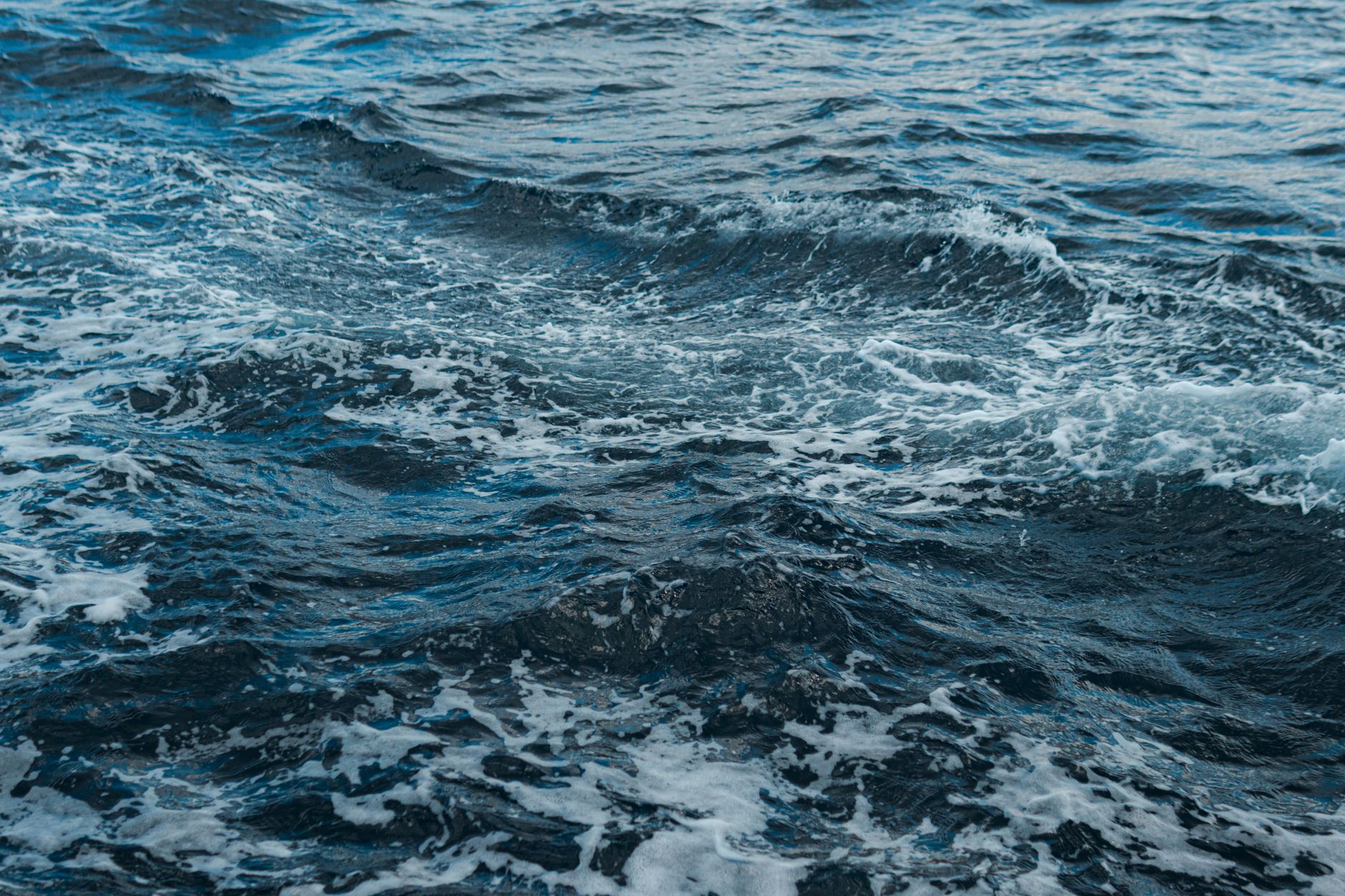
The color of an object is determined by the wavelengths of light that it reflects or emits. When sunlight, which comprises all colors of the visible spectrum, enters the ocean, it interacts with water molecules. This interaction leads to two key processes: absorption and scattering.
- Absorption: Water molecules efficiently absorb longer wavelengths of light, such as red, orange, and yellow. These wavelengths are converted into heat energy within the water. This is why are oceans blue? because the longer wavelengths are being removed from the light spectrum as it passes through the water.
- Scattering: Shorter wavelengths of light, such as blue and green, are scattered by water molecules. This scattering process, known as Rayleigh scattering, is more efficient for shorter wavelengths.
Rayleigh Scattering: The Key Player
Rayleigh scattering occurs when light interacts with particles that are much smaller than the wavelength of the light. In the case of water, these particles are individual water molecules. Rayleigh scattering is responsible for the blue color of the sky as well, because air molecules also scatter blue light more effectively than other colors.
The intensity of Rayleigh scattering is inversely proportional to the fourth power of the wavelength. This means that blue light, with its shorter wavelength, is scattered much more strongly than red light. This is a primary contributor to the question, Why are oceans blue?
Factors Influencing Ocean Color
While Rayleigh scattering is the primary reason for the ocean’s blue color, other factors can influence its appearance:
- Depth: The deeper the water, the more absorption of longer wavelengths occurs, resulting in a more intense blue hue. In very deep water, even blue light is absorbed, making the water appear almost black.
- Particles and Dissolved Substances: The presence of particles, such as sediment, algae, and dissolved organic matter, can alter the ocean’s color. These substances can absorb or scatter light differently, leading to variations in color from blue to green, brown, or even red.
- Algae Blooms: Large blooms of algae can change the color of the water dramatically. Some algae contain pigments that absorb green light and reflect other colors, causing the water to appear red or brown.
- Sun Angle: The angle of the sun affects the amount of light that enters the water and the path it takes. At sunrise and sunset, when the sun is low on the horizon, more of the blue light is scattered away before it reaches the observer, resulting in warmer colors.
Comparing Ocean Color to Other Phenomena
The principles behind the ocean’s blue color are similar to those that explain the blue color of the sky. Both phenomena are primarily due to Rayleigh scattering. However, there are some key differences.
| Feature | Ocean | Sky |
|---|---|---|
| Main Cause | Rayleigh scattering by water molecules | Rayleigh scattering by air molecules |
| Influencing Factors | Depth, particles, algae, sun angle | Pollution, clouds, sun angle |
Addressing Common Misconceptions
- The ocean is not blue because it reflects the sky: While reflection does play a minor role, the dominant factor is the selective absorption and scattering of light by water molecules.
- All oceans are the same shade of blue: As discussed earlier, various factors can influence the color of the ocean, resulting in a range of blues, greens, and even other colors.
- The ocean floor is blue: The color we perceive is due to the properties of the water itself, not the bottom. The seabed can influence the color slightly in shallow areas, but the water’s absorption and scattering properties are paramount.
Frequently Asked Questions About Ocean Color
What is the difference between absorption and scattering of light?
Absorption is the process where light energy is converted into another form of energy, such as heat. Scattering, on the other hand, is the process where light is redirected in different directions without changing its energy. Water absorbs red light and scatters blue light, contributing to Why are oceans blue?
Why isn’t the ocean violet since violet has a shorter wavelength than blue?
While violet light has a shorter wavelength than blue, sunlight contains less violet light. Additionally, water absorbs violet light more readily than blue light. This means that even though violet light is scattered more efficiently, there’s simply less of it to be scattered compared to blue light. So while violet might theoretically scatter more, the overall effect of scattering blue light dominates.
How do pollutants affect the color of the ocean?
Pollutants can significantly affect the ocean’s color. For instance, excessive nutrient runoff can lead to algal blooms, which can turn the water green, brown, or even red. Industrial pollutants can also introduce colored compounds that absorb or scatter light differently, altering the ocean’s appearance. It changes how light interacts with the water, thus masking the natural phenomenon of Why are oceans blue?
What role does chlorophyll play in ocean color?
Chlorophyll, a pigment found in algae and phytoplankton, absorbs red and blue light and reflects green light. This is why areas with high concentrations of phytoplankton often appear green. The green pigment is a result of light being processed by living organisms in the water and interferes with the natural blue hue associated with the ocean.
Can the color of the ocean indicate its health?
Yes, the color of the ocean can provide insights into its health. For example, a shift from blue to green might indicate an algal bloom, which could be caused by nutrient pollution. Similarly, an increase in sediment runoff can make the water appear brown and reduce light penetration, impacting marine life. Observing changes in ocean color is an important part of monitoring ocean health and understanding Why are oceans blue?
Does the ocean look different from space?
Yes, the ocean’s appearance from space can vary significantly depending on factors such as atmospheric conditions, sun angle, and the presence of clouds and aerosols. Satellites equipped with specialized sensors can capture detailed images of ocean color, providing valuable data for monitoring phytoplankton concentrations, water quality, and other environmental parameters.
Why do some lakes and rivers appear blue?
The same principles that explain why are oceans blue? apply to lakes and rivers. If the water is relatively pure and free of sediment, it will absorb longer wavelengths of light and scatter blue light, making the water appear blue. However, lakes and rivers often contain more sediment and dissolved organic matter than oceans, which can alter their color.
How does climate change affect ocean color?
Climate change can impact ocean color in several ways. For example, increased ocean temperatures can lead to changes in phytoplankton populations, which can alter the color of the water. Melting glaciers and ice sheets can also increase sediment runoff, further affecting ocean color. Changes in ocean currents can also affect the distribution of nutrients and phytoplankton, impacting ocean color in different regions.
Is the ocean’s blue color constant throughout the day?
The ocean’s blue color can vary slightly throughout the day depending on the angle of the sun and atmospheric conditions. During sunrise and sunset, when the sun is low on the horizon, more of the blue light is scattered away, resulting in warmer colors. At midday, when the sun is overhead, the blue color is typically more intense.
How do clouds affect the color of the ocean?
Clouds can affect the color of the ocean by blocking sunlight and altering the amount of light that reaches the water. Cloudy days tend to result in a darker, less vibrant blue color, while sunny days produce a brighter, more intense blue. Reflections from the clouds can also introduce variations in color.
What other colors can the ocean be besides blue?
Besides blue, the ocean can appear green, brown, red, yellow, or even black. These variations in color are typically caused by the presence of particles, algae, or dissolved substances that absorb or scatter light differently. For example, high concentrations of sediment can make the water appear brown, while algal blooms can turn the water green or red.
Are there any creatures that are also blue for the same reason as the ocean?
Some marine animals, such as certain jellyfish and crustaceans, exhibit blue coloration due to structural coloration rather than pigments. This involves microscopic structures that selectively reflect blue light, similar to how Rayleigh scattering works in water. While the mechanism is different from absorption, the resulting blue color showcases the versatility of light interaction in nature and echoes the essence of understanding Why are oceans blue?.