

Why Are Dolphins Closest to Humans?
Dolphins are perceived as close to humans due to a complex interplay of factors including their high intelligence, complex social structures, playful behavior, and apparent altruism; these qualities, combined with our shared mammalian heritage, foster a unique sense of connection and empathy.

Understanding the Affinity: Why Dolphins Resonate With Us
The question, Why are dolphins closest to humans?, is more than just a query about animal behavior. It delves into our understanding of intelligence, social dynamics, and our own perception of connection to the natural world. Dolphins occupy a unique position in the animal kingdom, often seen as possessing qualities that resonate deeply with our own humanity. Their captivating smiles, playful antics, and documented instances of assisting humans in distress all contribute to this perception. But the bond runs deeper than mere anthropomorphism.

What colours are fish most attracted to?
Can you put your finger in a trout's mouth?
Is methylene blue anti bacterial?
Does aquarium salt raise pH in aquarium?
Cognitive Prowess: Mirroring Human Intelligence
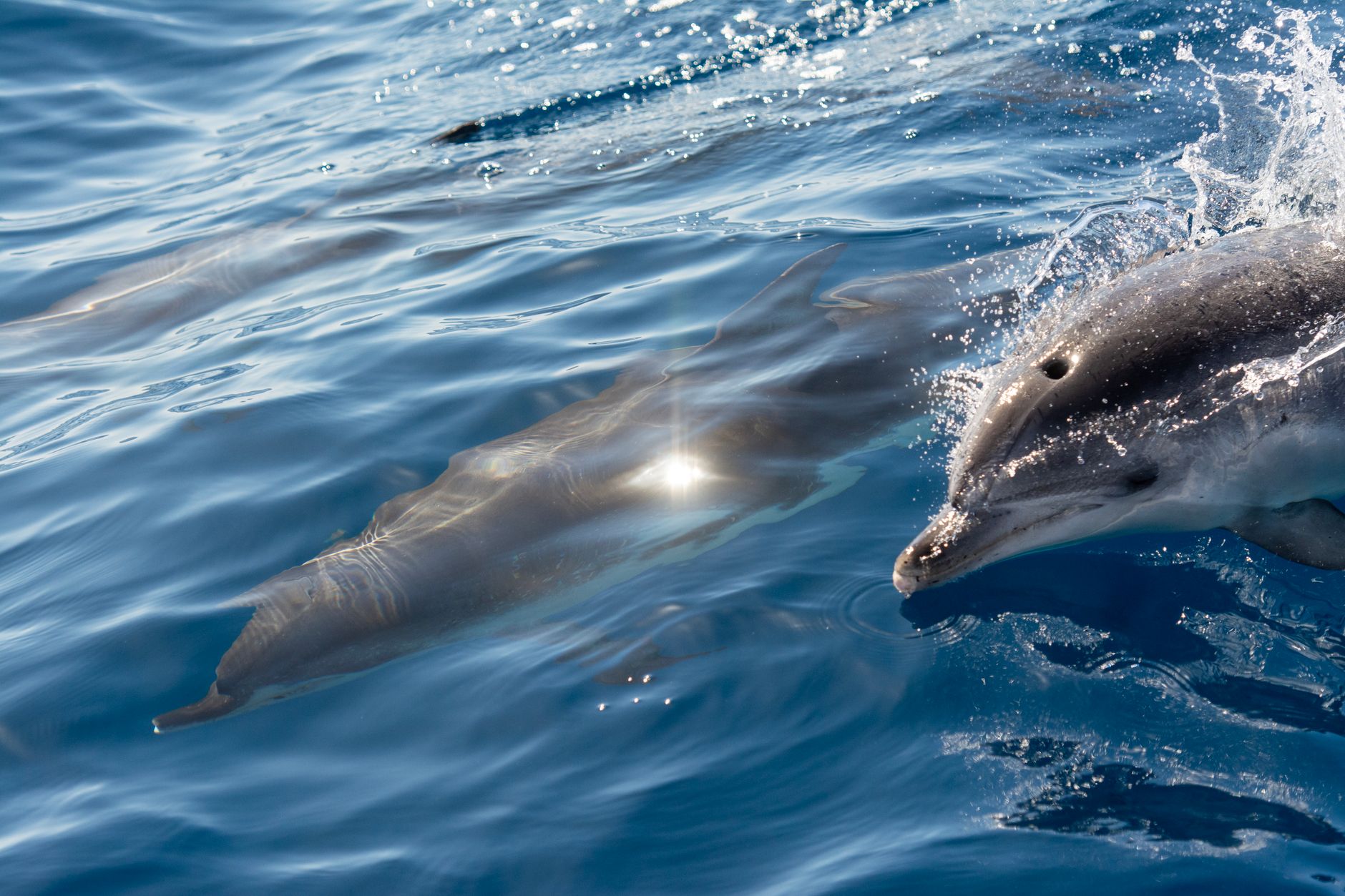
One of the primary reasons for the perceived closeness between humans and dolphins is their remarkable intelligence. Dolphins possess:
- Large brains: Relative to their body size, dolphins have significantly large brains, comparable to humans and other great apes. This brain size is often correlated with higher cognitive abilities.
- Complex social structures: Dolphins live in sophisticated social groups, communicating through a complex system of whistles, clicks, and body language. They form strong bonds, cooperate in hunting, and exhibit a level of social awareness rarely seen in other animals.
- Self-awareness: Dolphins are among the few animals that have demonstrated self-awareness in mirror tests, recognizing themselves as individuals separate from their environment.
This level of intelligence allows dolphins to engage in complex problem-solving, learn new tasks readily, and even display a sense of humor, further solidifying the perception of a shared intellectual capacity.
Social Sophistication: Echoes of Human Society
Dolphins’ complex social structures are strikingly similar to human societies. They demonstrate:
- Cooperation: Dolphins work together to hunt, protect each other from predators, and raise their young.
- Communication: Their sophisticated communication system allows them to share information, coordinate activities, and maintain social bonds.
- Empathy: There are numerous documented accounts of dolphins assisting injured or distressed individuals, both dolphins and humans, suggesting a capacity for empathy.
This intricate web of social interactions, characterized by cooperation, communication, and empathy, further bridges the perceived gap between human and dolphin societies. It addresses the core of Why are dolphins closest to humans?, showing the parallels.
Playfulness and Curiosity: Shared Joy of Discovery
Dolphins are renowned for their playful behavior. They:
- Engage in games: Dolphins are often observed playing with objects, riding waves, and interacting playfully with other animals.
- Exhibit curiosity: They are naturally curious creatures, often approaching boats and humans with apparent interest.
- Show creativity: Dolphins have been observed using tools and inventing new ways to play.
This playful nature and innate curiosity resonate with the human spirit, fostering a sense of shared joy and connection.
Altruism and Assistance: Acts of Kindness
Perhaps the most compelling reason Why are dolphins closest to humans? is the documented evidence of their apparent altruism and assistance towards humans in distress. These instances include:
- Protecting swimmers from sharks: Dolphins have been known to form protective barriers around swimmers to shield them from shark attacks.
- Guiding lost boats to shore: There are stories of dolphins leading lost or stranded boats back to safety.
- Assisting in rescue operations: Dolphins have been used by the Navy to locate underwater mines and assist in rescue operations.
While the motivations behind these actions are not fully understood, they are often interpreted as acts of kindness and empathy, further strengthening the bond between humans and dolphins.
The Mammalian Connection: Shared Ancestry
Finally, we share a common mammalian heritage with dolphins. Both humans and dolphins are warm-blooded, air-breathing mammals that nurse their young. This shared ancestry may contribute to a subconscious sense of kinship.
| Feature | Humans | Dolphins |
|---|---|---|
| Breathing | Lungs, conscious breathing | Lungs, conscious breathing |
| Body Temp. | Warm-blooded | Warm-blooded |
| Reproduction | Live birth | Live birth |
| Social Structure | Complex, varied societies | Complex, hierarchical pods |
This table highlights just a few of the shared traits that reinforce the mammalian bond and contribute to our feeling that dolphins are closest to humans.
Frequently Asked Questions (FAQs)
Are dolphins truly more intelligent than other animals?
While intelligence is difficult to quantify, dolphins consistently score high on tests of cognitive ability. They exhibit complex problem-solving skills, self-awareness, and communication abilities, suggesting a high level of intelligence comparable to some primates.
Do dolphins understand human emotions?
It’s difficult to say definitively whether dolphins understand human emotions in the same way we do. However, their responses to human behavior suggest that they are capable of interpreting our actions and intentions, potentially exhibiting empathy.
Why do dolphins help humans in distress?
The motivations behind dolphins’ altruistic behavior are still debated. It could be driven by instinct, empathy, or a combination of both. Some researchers believe it may be a form of reciprocal altruism, as they also benefit from positive interactions with humans.
Are all species of dolphins equally intelligent?
There are various species of dolphins, and while all dolphins are intelligent, there may be variations in cognitive abilities among different species. Bottlenose dolphins are often cited as one of the most intelligent species, but more research is needed to fully understand the nuances.
Is it safe to swim with dolphins in the wild?
While dolphins are generally friendly, it’s important to remember that they are still wild animals. It’s crucial to maintain a respectful distance and avoid harassing or feeding them. Always follow local guidelines and regulations when interacting with dolphins in their natural habitat.
How do dolphins communicate with each other?
Dolphins communicate through a complex system of whistles, clicks, and body language. Each dolphin has a unique signature whistle that serves as its identity. They also use echolocation to navigate and locate prey.
Do dolphins have a language?
While dolphins don’t have a “language” in the same way humans do, their communication system is highly sophisticated and may contain elements of syntax and grammar. Researchers are still working to decipher the full complexity of dolphin communication.
What is the lifespan of a dolphin?
The lifespan of a dolphin varies depending on the species, but many species can live for 30-50 years or even longer.
Are dolphins endangered?
Some species of dolphins are endangered due to habitat loss, pollution, and entanglement in fishing gear. Conservation efforts are crucial to protect these vulnerable populations.
What can I do to help protect dolphins?
You can support organizations that are working to protect dolphins and their habitats. You can also reduce your consumption of seafood that is harvested using unsustainable fishing practices.
Do dolphins get lonely?
Given their complex social structures, it’s reasonable to assume that dolphins can experience loneliness when separated from their pod. Social interaction is crucial for their well-being.
Is it ethical to keep dolphins in captivity?
The ethics of keeping dolphins in captivity is a complex and controversial issue. While some argue that it allows for education and research, others believe that it is inherently cruel and limits their natural behaviors. Many animal welfare organizations advocate for improved conditions and phasing out dolphin captivity. This directly relates to Why are dolphins closest to humans? because our ethical considerations stem from empathy and an understanding of their complex needs.