

Who Slept with Medusa? Unraveling the Myth
The tragic tale of Medusa centers around her transformation into a Gorgon; the answer to who slept with Medusa is the sea god Poseidon (also known as Neptune). This act of violation is a key element in understanding Medusa’s transformation and the complexities of her myth.
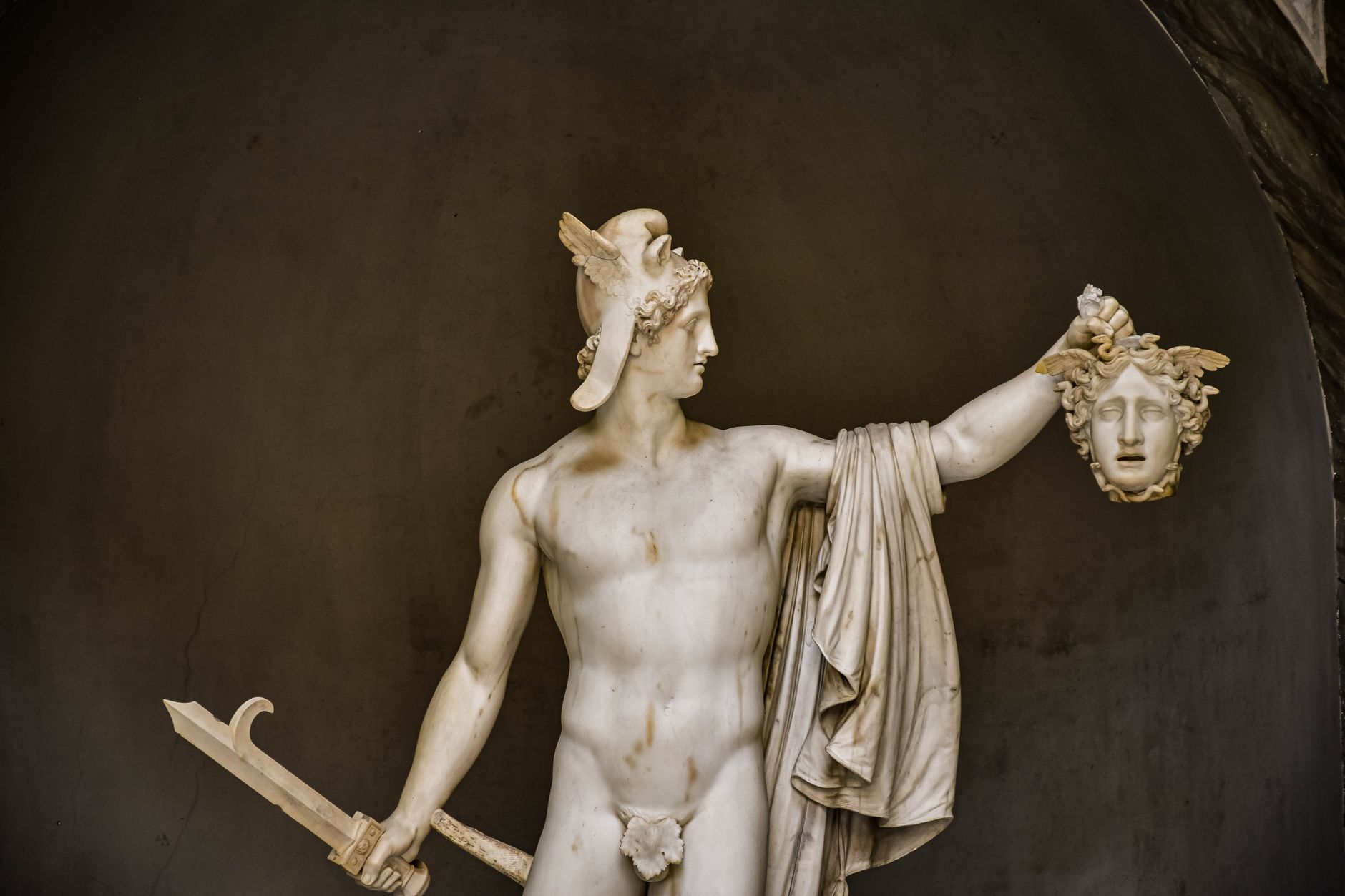
The Pre-Transformation Medusa: A Tale of Beauty
Before her monstrous transformation, Medusa was renowned for her stunning beauty. Originating in ancient Greek mythology, accounts paint her as a priestess dedicated to the goddess Athena. This highlights the importance of understanding Medusa’s original state before delving into the circumstances of her encounter with Poseidon and subsequent curse.
- Her beauty was said to rival even the goddesses, a detail often emphasized in artistic representations and literary accounts.
- As a priestess, she served in Athena’s temple, a sacred space symbolizing purity and devotion.
This initial purity contrasts sharply with her later monstrous image.

What colours are fish most attracted to?
Can you put your finger in a trout's mouth?
Is methylene blue anti bacterial?
Does aquarium salt raise pH in aquarium?
Poseidon’s Violation and Athena’s Wrath

The central event in Medusa’s story involves a violation by Poseidon within the sacred confines of Athena’s temple. This act is pivotal because it triggers a series of events that transform Medusa’s life forever. The narratives vary slightly across different versions of the myth, but the core details remain consistent:
- The Violation: Poseidon, a powerful god, forces himself upon Medusa inside Athena’s temple. Some accounts suggest Medusa was a willing participant, but the dominant narrative portrays it as a non-consensual act.
- Athena’s Retribution: Enraged by the defilement of her temple, Athena does not punish Poseidon (a fellow god with immense power). Instead, she turns her wrath on Medusa. This decision highlights the patriarchal dynamics present in Greek mythology, where women are often held responsible for the actions of men.
Medusa’s Transformation: A Curse or a Protection?
As punishment for the temple’s desecration, Athena transforms Medusa into a monstrous Gorgon. This transformation is not merely a physical alteration but a complete shift in her identity and fate.
- Serpents for Hair: Medusa’s most iconic feature, her hair of venomous snakes, replaces her once beautiful locks. This symbolizes her corrupted beauty and the danger she now represents.
- Petrifying Gaze: Anyone who looks directly into Medusa’s eyes is instantly turned to stone. This power makes her a formidable monster, feared by all. Some interpretations suggest this gaze is a metaphor for the silencing and dehumanization Medusa experiences as a result of her violation.
The question of whether this transformation is a curse or a form of protection is a complex one. Some argue it is a cruel punishment, stripping Medusa of her humanity. Others propose that the monstrous form provides her with a defense against further violation, rendering her untouchable.
The Legacy of Medusa
Medusa’s story continues to resonate today, inspiring countless works of art, literature, and film. Her image has evolved from a symbol of terror to one of female rage and empowerment. Understanding the circumstances surrounding who slept with Medusa is crucial to interpreting these evolving interpretations.
- Feminist Interpretations: In recent years, Medusa has been reclaimed as a feminist icon, representing female victims of sexual assault and their struggle for justice.
- Artistic Representations: From ancient sculptures to contemporary paintings, Medusa’s image has been reinterpreted countless times, reflecting changing societal attitudes towards female power and victimhood.
Frequently Asked Questions (FAQs)
Was Medusa willingly involved with Poseidon?
Most classical accounts depict the encounter as a violation of Medusa by Poseidon. While some modern interpretations explore the possibility of a consensual relationship, the predominant narrative portrays Medusa as a victim.
Why did Athena punish Medusa instead of Poseidon?
Athena’s decision to punish Medusa instead of Poseidon reflects the patriarchal structures inherent in ancient Greek society. Gods were often immune to punishment for their actions, while women were held responsible for transgressions, especially those involving sexual misconduct, regardless of their level of consent.
What were Medusa’s powers before her transformation?
Before her transformation, Medusa was described as a strikingly beautiful mortal woman. The power of her beauty is often emphasized. However, she did not possess any supernatural powers before the incident with Poseidon and Athena’s subsequent curse.
Did Medusa have any children?
Yes, according to the myth, Medusa was pregnant by Poseidon when Perseus beheaded her. From her severed neck sprang the winged horse Pegasus and the giant Chrysaor.
How was Medusa finally defeated?
Perseus, aided by Athena and Hermes, was able to defeat Medusa by using his shield as a mirror to avoid looking directly at her. He then beheaded her, fulfilling the quest given to him by King Polydectes.
What happened to Medusa’s head after Perseus killed her?
After Perseus beheaded Medusa, he gave her head to Athena. Athena placed it on her shield, the Aegis, to instill fear in her enemies.
Is there only one version of the Medusa myth?
No, there are several variations of the Medusa myth, each with slightly different details. However, the core elements of her beauty, violation by Poseidon, transformation by Athena, and petrifying gaze remain consistent across these versions.
What does Medusa symbolize?
Medusa has been interpreted in various ways throughout history. She can represent female rage, victimhood, monstrous femininity, and, more recently, female empowerment and resilience. Her story is complex and multifaceted.
Where did the myth of Medusa originate?
The myth of Medusa originated in ancient Greece, dating back to at least the 8th century BCE. The earliest known depictions of Medusa appear on ancient Greek pottery and sculpture.
How does Medusa’s story relate to other Greek myths?
Medusa’s story is intertwined with other Greek myths, particularly those involving gods, heroes, and monsters. Her association with Poseidon, Athena, and Perseus connects her to broader themes of divine intervention, heroic quests, and the consequences of transgression.
Who slept with Medusa and is this a significant point within the story?
Who slept with Medusa, namely Poseidon, is the very catalyst that shaped her tragic fate and fueled her transformation. This act is pivotal in understanding her role as a monstrous figure and a symbol of female rage.
How has Medusa’s image been used in modern culture?
Medusa’s image has been widely used in modern culture, appearing in movies, books, video games, and fashion. She often represents female empowerment, but can also symbolize the dangers of unchecked power and the consequences of violence against women. Her image serves as a potent and enduring symbol, sparking diverse interpretations and debates.