
When is a Meteor Going to Hit Earth?

The definitive, if somewhat unsatisfying, answer is: we don’t know precisely when. While Earth is constantly bombarded with space debris, the question of when a significant meteor – one capable of causing regional or even global damage – will strike is a matter of probability and prediction, not pinpoint accuracy. However, thanks to ongoing astronomical surveys, we are increasingly capable of identifying and tracking potentially hazardous Near-Earth Objects (NEOs) and predicting their trajectories for decades, even centuries, into the future, significantly reducing the risk of a surprise impact.
Understanding the Threat: A Look at Impact Probabilities
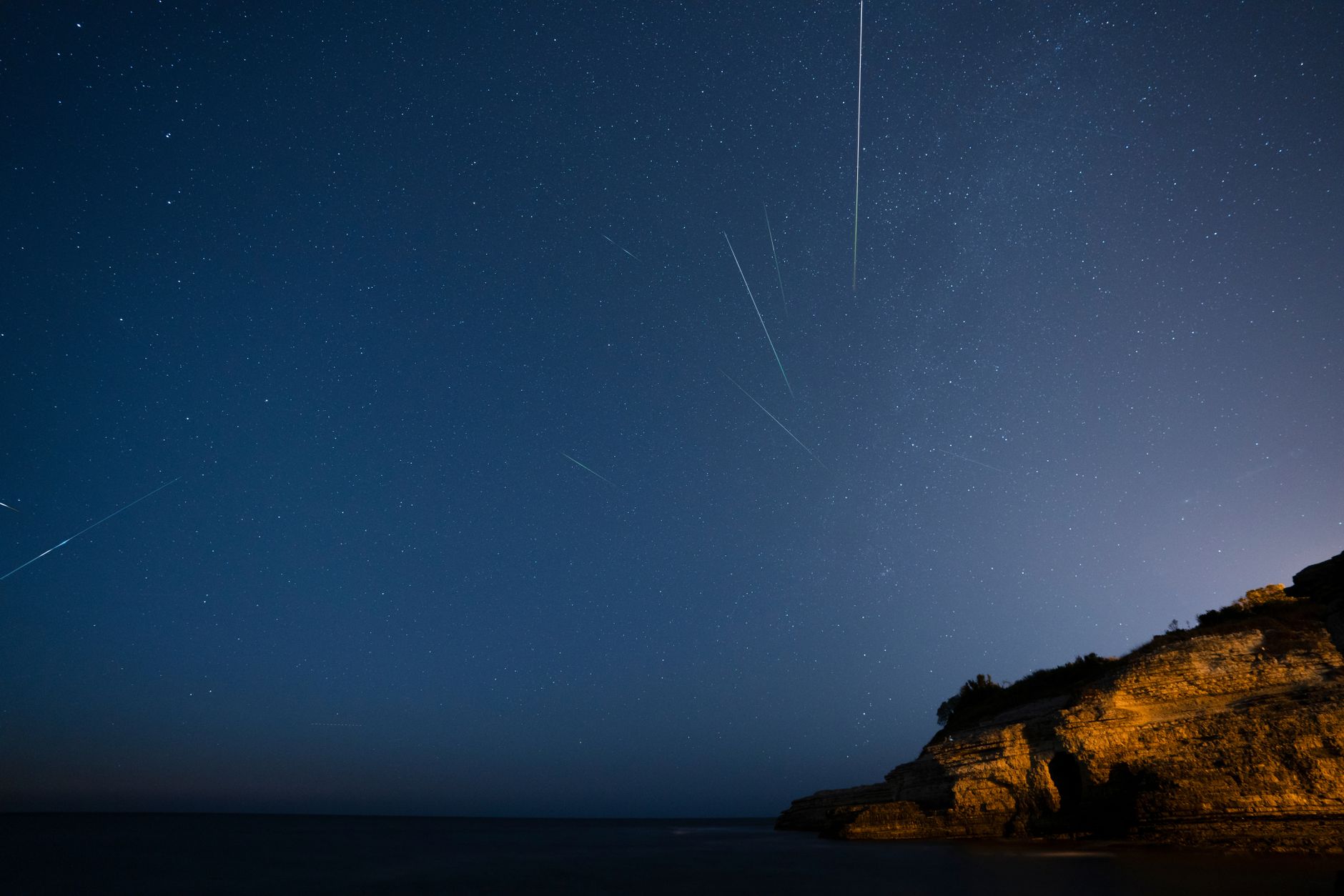
The vast majority of meteoroids – small rocks and dust grains from space – burn up in Earth’s atmosphere, creating the familiar phenomenon of shooting stars. Larger objects, like asteroids and comets, pose a more significant threat. Astronomers use sophisticated telescopes and algorithms to catalog NEOs, calculating their orbits and assessing their potential for future collisions with Earth.
The good news is that no known asteroid poses an immediate threat to Earth for at least the next century. NASA, for example, maintains a “Sentry” risk table, tracking objects that warrant close monitoring. While the probabilities of impact for individual asteroids listed are non-zero, they are generally exceedingly small. The real challenge lies in identifying and tracking all potentially hazardous NEOs, particularly those that are smaller, fainter, and more difficult to detect. Current efforts are focused on improving our detection capabilities and developing technologies for planetary defense.
FAQs: Addressing Common Concerns and Misconceptions
Here are some frequently asked questions to further clarify the complexities of meteor impacts:
H3 What’s the difference between a meteoroid, meteor, and meteorite?
These terms are often used interchangeably, but they have distinct meanings. A meteoroid is a small rock or particle in space. A meteor is the streak of light created when a meteoroid enters Earth’s atmosphere and burns up. A meteorite is a meteoroid that survives its passage through the atmosphere and lands on Earth’s surface.

What colours are fish most attracted to?
Can you put your finger in a trout's mouth?
Is methylene blue anti bacterial?
Does aquarium salt raise pH in aquarium?
H3 How often do meteorites hit Earth?

Small meteorites (weighing a few grams) hit Earth relatively frequently – perhaps hundreds of times a year. Larger meteorites (weighing several kilograms or more) are much rarer, with only a handful observed to fall each year. Most meteorites are recovered in areas like Antarctica and deserts, where they are easier to spot against the landscape.
H3 What kind of damage can a meteor impact cause?
The severity of damage depends on the size and composition of the object, as well as the location of the impact. Small meteoroids typically burn up harmlessly in the atmosphere. Larger objects can cause localized damage, such as creating impact craters and generating shockwaves. Extremely large impacts can trigger widespread wildfires, tsunamis, and even global climate change, as demonstrated by the Chicxulub impact that is believed to have contributed to the extinction of the dinosaurs.
H3 What are Near-Earth Objects (NEOs)?
Near-Earth Objects (NEOs) are asteroids and comets whose orbits bring them relatively close to Earth’s orbit. Astronomers are particularly interested in NEOs because they pose a potential impact risk. These objects are constantly monitored, and their orbits are carefully tracked to assess any future collision probabilities.
H3 How do astronomers detect and track NEOs?
Astronomers use a variety of telescopes and techniques to detect and track NEOs. Ground-based telescopes, like the Pan-STARRS survey and the Catalina Sky Survey, scan the night sky for moving objects. Space-based telescopes, such as NEOWISE, are also used to detect NEOs, particularly those that are difficult to observe from the ground. Once an NEO is detected, its orbit is carefully calculated using a process called orbit determination, which involves making repeated observations and applying the laws of physics.
H3 What is the Torino Scale, and how is it used to assess impact risks?
The Torino Scale is a system used to categorize the potential impact risk of NEOs. It assigns values from 0 to 10, based on the probability of impact and the estimated kinetic energy of the object. A Torino Scale value of 0 indicates that the object poses no threat, while a value of 10 indicates that an impact is certain to occur and is likely to cause a global catastrophe.
H3 What are some potential strategies for planetary defense?
Several planetary defense strategies are being explored to mitigate the threat of asteroid impacts. These include:
- Kinetic Impactor: Slamming a spacecraft into the asteroid to slightly alter its trajectory.
- Gravity Tractor: Using the gravitational pull of a spacecraft to gradually nudge the asteroid off course.
- Nuclear Deflection: (A controversial option) Detonating a nuclear device near the asteroid to vaporize a portion of its surface and change its trajectory.
The Double Asteroid Redirection Test (DART) mission, which successfully impacted the asteroid Dimorphos in 2022, was a demonstration of the kinetic impactor technique.
H3 How accurate are our predictions of asteroid trajectories?
Our ability to predict asteroid trajectories depends on the quality and quantity of observations. The more observations we have, the more accurate our predictions will be. However, even with the best available data, there are always uncertainties in our calculations. These uncertainties arise from factors such as the shape of the asteroid, the influence of solar radiation pressure, and the gravitational effects of other planets.
H3 Can a meteor impact cause a mass extinction event?
Yes, a large meteor impact can potentially cause a mass extinction event. The Chicxulub impact, which occurred about 66 million years ago, is widely believed to have contributed to the extinction of the dinosaurs. The impact triggered widespread wildfires, tsunamis, and a global “impact winter” caused by dust and debris blocking sunlight.
H3 What happens if a large asteroid is headed directly for Earth?
If a large asteroid is headed directly for Earth, there would be a coordinated effort to implement planetary defense strategies. The specific approach would depend on the size and trajectory of the asteroid, as well as the amount of warning time available. A kinetic impactor or gravity tractor mission could be launched to deflect the asteroid, or, as a last resort, a nuclear deflection device could be deployed.
H3 What can individuals do to help with asteroid detection and mitigation?
While individuals cannot directly deflect asteroids, they can support organizations and initiatives that are working to detect and mitigate the threat. This can involve donating to asteroid research programs, advocating for increased funding for planetary defense, and participating in citizen science projects, such as analyzing astronomical data to identify new NEOs.
H3 Is there a global organization responsible for monitoring and responding to asteroid threats?
While no single organization has absolute authority, the United Nations plays a crucial role in coordinating international efforts to address the asteroid threat. The UN’s Committee on the Peaceful Uses of Outer Space (COPUOS) has established guidelines for international cooperation in planetary defense, including information sharing, decision-making, and the coordination of mitigation efforts. Key agencies like NASA and the European Space Agency (ESA) actively monitor NEOs and develop planetary defense technologies, sharing data and expertise globally.
The Future of Planetary Defense: A Proactive Approach
The field of planetary defense is rapidly evolving, driven by advancements in technology and a growing awareness of the potential impact risk. Future efforts will focus on improving our detection capabilities, refining our trajectory prediction models, and developing more effective mitigation strategies. Missions like NEO Surveyor, a proposed space-based telescope designed to discover and characterize most of the potentially hazardous NEOs, will play a critical role in ensuring the long-term safety of our planet. While we can’t predict the exact moment of the next significant impact, ongoing research and proactive measures are dramatically increasing our chances of preventing a catastrophic event. The key is vigilance, collaboration, and a commitment to protecting Earth from the dangers lurking in the cosmos.