
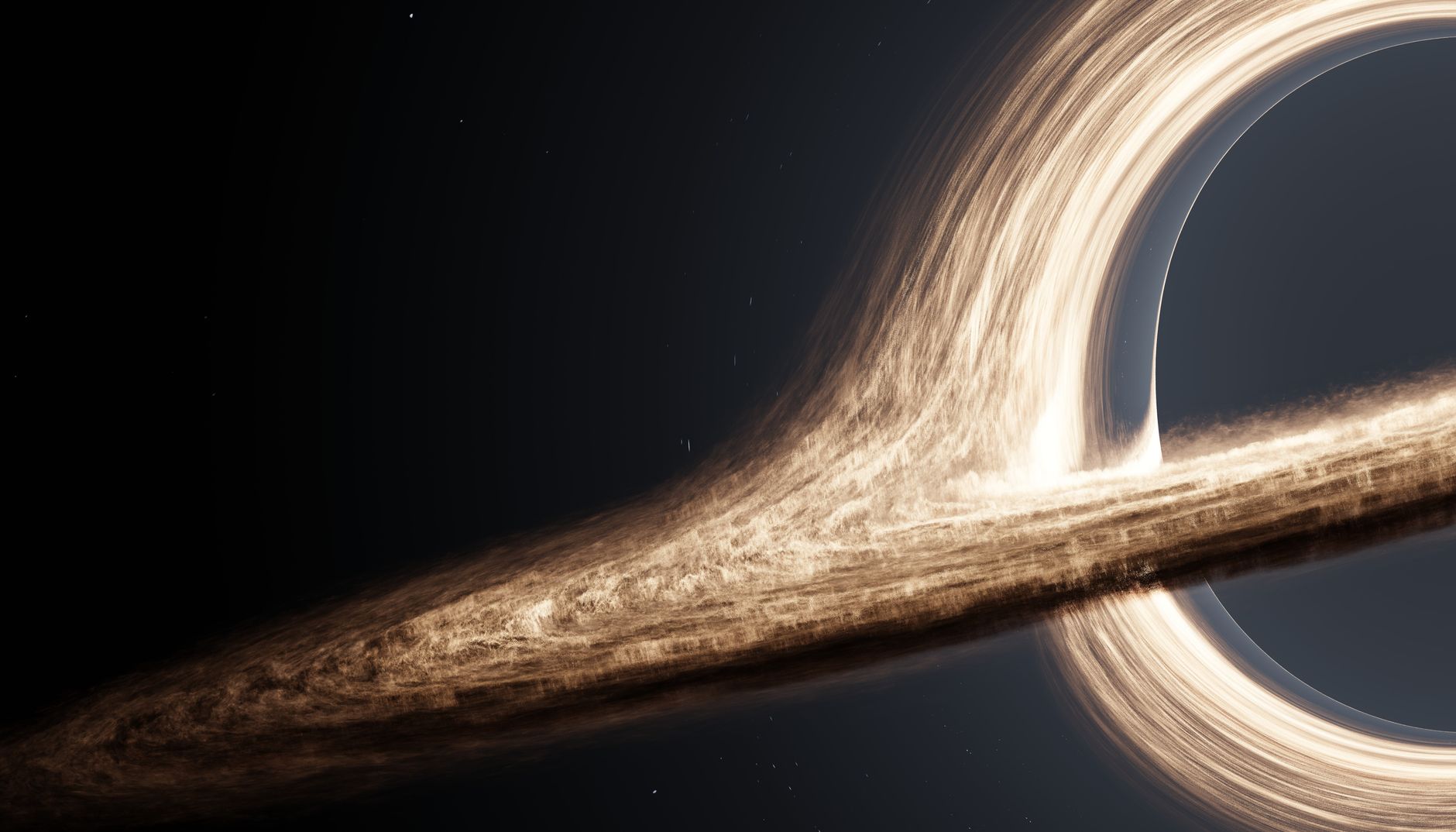
What Would a Black Hole Do on Earth? The Gravitational Cataclysm Explained
A black hole arriving on Earth would be an unmitigated disaster, initiating a process of spaghettification and consumption, ultimately leading to the planet’s destruction. This article details the terrifying implications.

Introduction: The Unimaginable Scenario
The concept of a black hole consuming Earth is a staple of science fiction, but the reality, based on our understanding of physics, would be far more dramatic and devastating than any Hollywood depiction. A black hole, a region of spacetime with gravity so strong that nothing, not even light, can escape, poses an existential threat if it were to suddenly appear on our planet. This isn’t just theoretical speculation; it’s an exploration of the consequences of fundamental physical laws. What would a black hole do on Earth? This article will delve into the specifics of this catastrophic event, exploring the physics involved, the potential effects, and the ultimate fate of our planet.
What colours are fish most attracted to?
Can you put your finger in a trout's mouth?
Is methylene blue anti bacterial?
Does aquarium salt raise pH in aquarium?
Defining the Threat: Characteristics of a Black Hole
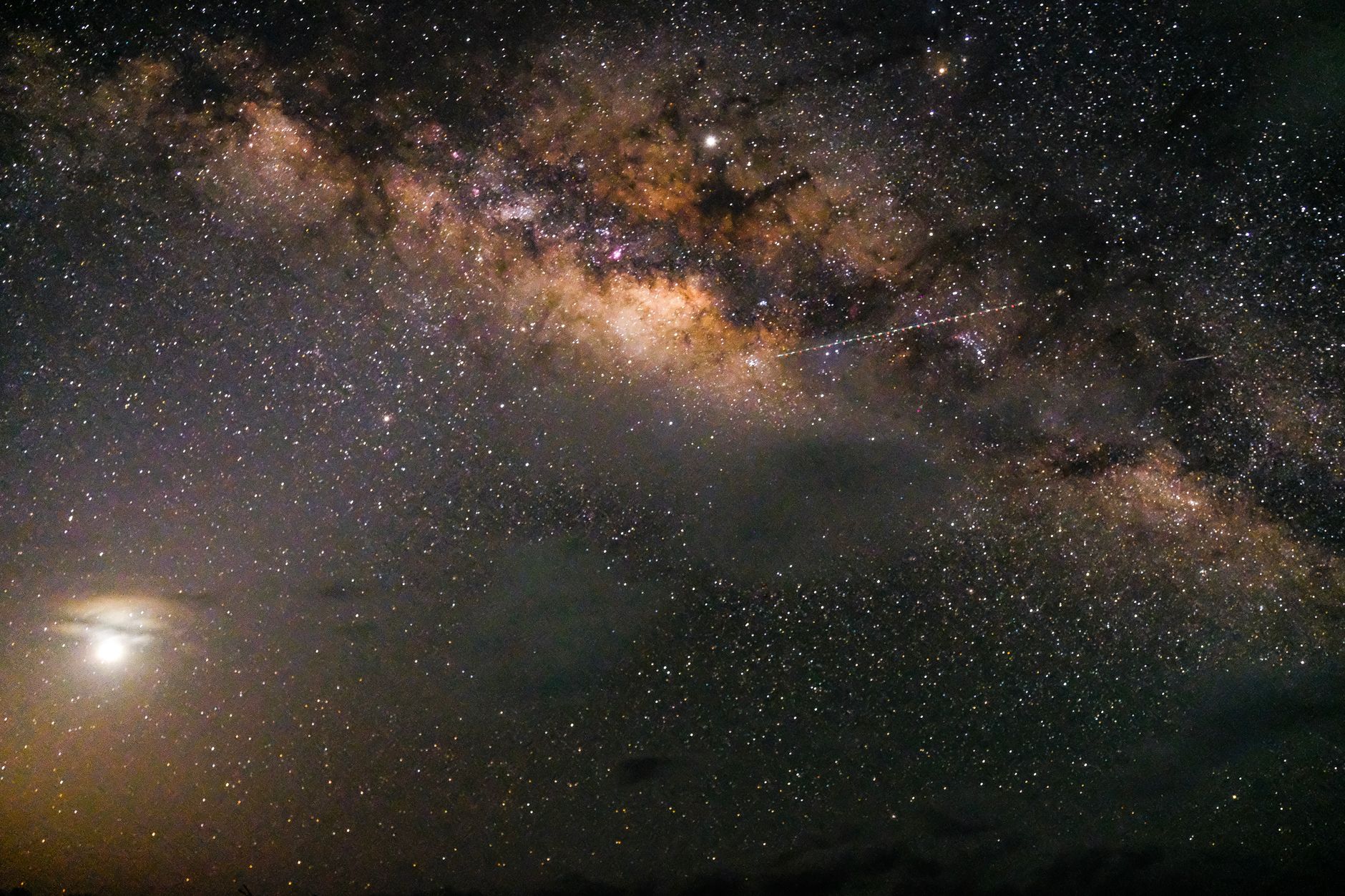
To understand the impact of a black hole on Earth, we must first understand its characteristics. A black hole is defined by its event horizon, the boundary beyond which escape is impossible.
- Mass: The amount of matter compressed into the singularity.
- Charge: A measure of the electric charge of the black hole. Astrophysically, black holes are thought to have insignificant electric charge.
- Spin (Angular Momentum): How quickly the black hole is rotating.
The size of a black hole’s event horizon is directly proportional to its mass. A black hole with the mass of the Earth would be incredibly small, roughly the size of a marble.
The Initial Impact: A Subatomic Invader
Let’s consider a scenario where a black hole, perhaps formed through exotic particle physics, with a mass comparable to a small asteroid (but still incredibly dense), suddenly appears within Earth’s core. Even at this small size, its immense density dictates its inevitable impact.
- The black hole would not remain stationary. Due to its gravitational pull, it would begin to sink towards the center of the Earth, consuming everything in its path.
- As it moves, it would accrete matter, increasing its mass and gravitational pull exponentially.
- This accretion process would generate tremendous heat and radiation.
The Spaghettification Process: Stretching and Tearing
One of the most immediate and horrifying consequences of a black hole encounter is spaghettification. This occurs because the gravitational gradient around a black hole is so extreme.
- Objects closer to the black hole experience a much stronger gravitational pull than objects farther away.
- This difference in gravitational force stretches objects vertically and compresses them horizontally, resembling a strand of spaghetti.
- The intense tidal forces would tear apart any physical structure long before it reached the event horizon.
Planetary Consumption: Earth’s Demise
The consumption of Earth by a black hole would be a gradual but relentless process.
- The black hole, now residing at the Earth’s core, continues to accrete matter.
- The Earth’s internal structure would be disrupted, leading to massive earthquakes and volcanic eruptions.
- The planet would begin to deform, losing its spherical shape as it’s drawn inward.
- As the black hole grows, its event horizon expands, swallowing more and more of the planet.
- Eventually, the entire Earth would be consumed, leaving behind nothing but a slightly larger black hole. What would a black hole do on Earth? It would consume the Earth.
The Aftermath: A Dark and Silent Void
The immediate aftermath would be the creation of a relatively small black hole, perhaps only a few centimeters in diameter. This black hole would continue to exist, following the laws of physics, until, eventually, it would evaporate due to Hawking radiation – a process that takes an extremely long time for black holes of this size.
Common Misconceptions: Black Holes as Cosmic Vacuum Cleaners
It’s a common misconception that black holes are cosmic vacuum cleaners, indiscriminately sucking up everything around them.
- Black holes exert the same gravitational pull as any other object of equal mass at a given distance.
- The danger lies in their extreme density, which allows them to compress a significant amount of mass into a very small space.
- The “vacuum cleaner” effect only occurs if an object gets close enough to the black hole to be captured by its event horizon.
Black Hole Size and Earth’s Fate: A Critical Factor
The size of the black hole significantly impacts the speed and scale of Earth’s destruction. A smaller black hole would initially consume the planet slowly, while a larger black hole could tear the planet apart much more rapidly. The rate of accretion (the speed at which the black hole consumes matter) also plays a crucial role.
| Black Hole Mass | Estimated Time to Consume Earth | Potential Initial Effects |
|---|---|---|
| Asteroid Mass | Thousands of Years | Increasing Seismic Activity, Gradual Deformation |
| Moon Mass | Hundreds of Years | Catastrophic Earthquakes, Significant Deformation |
| Earth Mass | Days/Weeks | Immediate and Total Disruption |
Hypothetical Prevention Methods: A Glimmer of Hope?
While the scenario is largely theoretical, the possibility of mitigating the effects of a black hole entering our solar system has been explored. However, preventing a direct encounter with Earth would be immensely difficult, if not impossible, with current technology. Some theoretical options include:
- Early Detection: Detecting a black hole early enough would allow for the development and implementation of defensive strategies.
- Deflection: Attempting to deflect the black hole using massive gravitational forces, though this would require an enormous amount of energy and precise calculations.
- Disruption: Potentially disrupting the black hole’s structure, although this is purely theoretical and currently beyond our technological capabilities.
The likelihood of success for any of these methods is extremely low, highlighting the existential threat posed by such an event.
Frequently Asked Questions (FAQs)
What is the smallest black hole that could exist?
The theoretical minimum mass for a black hole is known as the Planck mass, which is approximately 2.176 × 10^-8 kilograms. However, such a small black hole would evaporate almost instantly through Hawking radiation. Black holes formed in the very early universe are theorized to exist at this scale.
Could a black hole be created on Earth by accident?
The creation of a stable black hole on Earth through current scientific endeavors, like the Large Hadron Collider, is highly improbable and considered to be theoretically impossible by the vast majority of physicists. The energies required are far beyond our capabilities.
Would we see a black hole coming before it hit Earth?
A small, isolated black hole would be extremely difficult to detect before it significantly interacted with Earth. Its size and lack of light emission make it nearly invisible. We would likely only notice its presence as it began to distort spacetime around it.
How fast would Earth be destroyed by a black hole?
The rate of destruction would depend largely on the black hole’s mass. A black hole with the mass of a small asteroid would destroy Earth over thousands of years, while one with the mass of the moon would destroy it in hundreds of years. A black hole of Earth’s mass would lead to near-instantaneous destruction.
Would a black hole swallow the entire solar system?
If a black hole were to consume the Earth, it would not necessarily swallow the entire solar system. The planets in our solar system orbit the Sun, which is vastly more massive. Unless the black hole gained significant mass, it would have a limited gravitational effect on the other planets.
What is Hawking radiation and how does it affect black holes?
Hawking radiation is a theoretical process where black holes emit thermal radiation due to quantum effects near the event horizon. Over vast timescales, this radiation causes black holes to slowly lose mass and eventually evaporate. Smaller black holes evaporate much faster than larger ones.
Could a black hole be used as a power source?
Theoretically, energy could be extracted from a spinning black hole using the Penrose process or the Blandford-Znajek process. However, the technology to harness this energy is far beyond our current capabilities, and the risks are immense.
What happens if you fall into a black hole?
If you were to fall into a black hole, you would experience spaghettification and, ultimately, be crushed into a singularity. Classical physics predicts that you would be torn apart and added to the black hole’s mass. The fate of information, according to quantum mechanics, is a subject of ongoing debate.
Is there any way to protect ourselves from a black hole?
There is currently no known way to reliably protect ourselves from a black hole that is on a collision course with Earth. Any attempt to deflect or destroy it would require technology far beyond our current abilities.
How often do black holes wander through space?
Black holes exist throughout the universe, but the likelihood of one wandering close enough to Earth to pose a threat is extremely low. They are not actively searching for planets to consume.
What’s the difference between a stellar black hole and a supermassive black hole?
A stellar black hole is formed from the collapse of a massive star, typically ranging from a few to tens of times the mass of the Sun. A supermassive black hole resides at the center of most galaxies, with masses ranging from millions to billions of times the mass of the Sun.
If a black hole replaced the Sun, what would happen to Earth?
If a black hole with the same mass as the Sun replaced it, Earth would continue to orbit at the same distance, initially. However, without the Sun’s energy output, Earth would quickly freeze over and become uninhabitable. Eventually, the black hole would accrete matter from surrounding space, potentially leading to greater instability in the solar system.