

What was the Largest Extinct Elephant?
The title of largest extinct elephant arguably belongs to the Steppe Mammoth (Mammuthus trogontherii), an immense creature that roamed Eurasia during the Pleistocene epoch. This magnificent mammoth stood taller and likely weighed more than any other member of the elephant family ever known.

Introduction: Giants of the Past
The vast plains of the Pleistocene epoch, often referred to as the Ice Age, were home to a diverse array of megafauna, including some truly gigantic elephant species. Among these behemoths, the question of what was the largest extinct elephant? arises. While several mammoth and elephant species reached impressive sizes, the Steppe Mammoth (Mammuthus trogontherii) stands out as a prime contender for the title. Understanding the size and characteristics of these extinct giants provides valuable insights into the evolutionary history of elephants and the ecosystems they inhabited.

What colours are fish most attracted to?
Can you put your finger in a trout's mouth?
Is methylene blue anti bacterial?
Does aquarium salt raise pH in aquarium?
The Reign of Mammuthus trogontherii
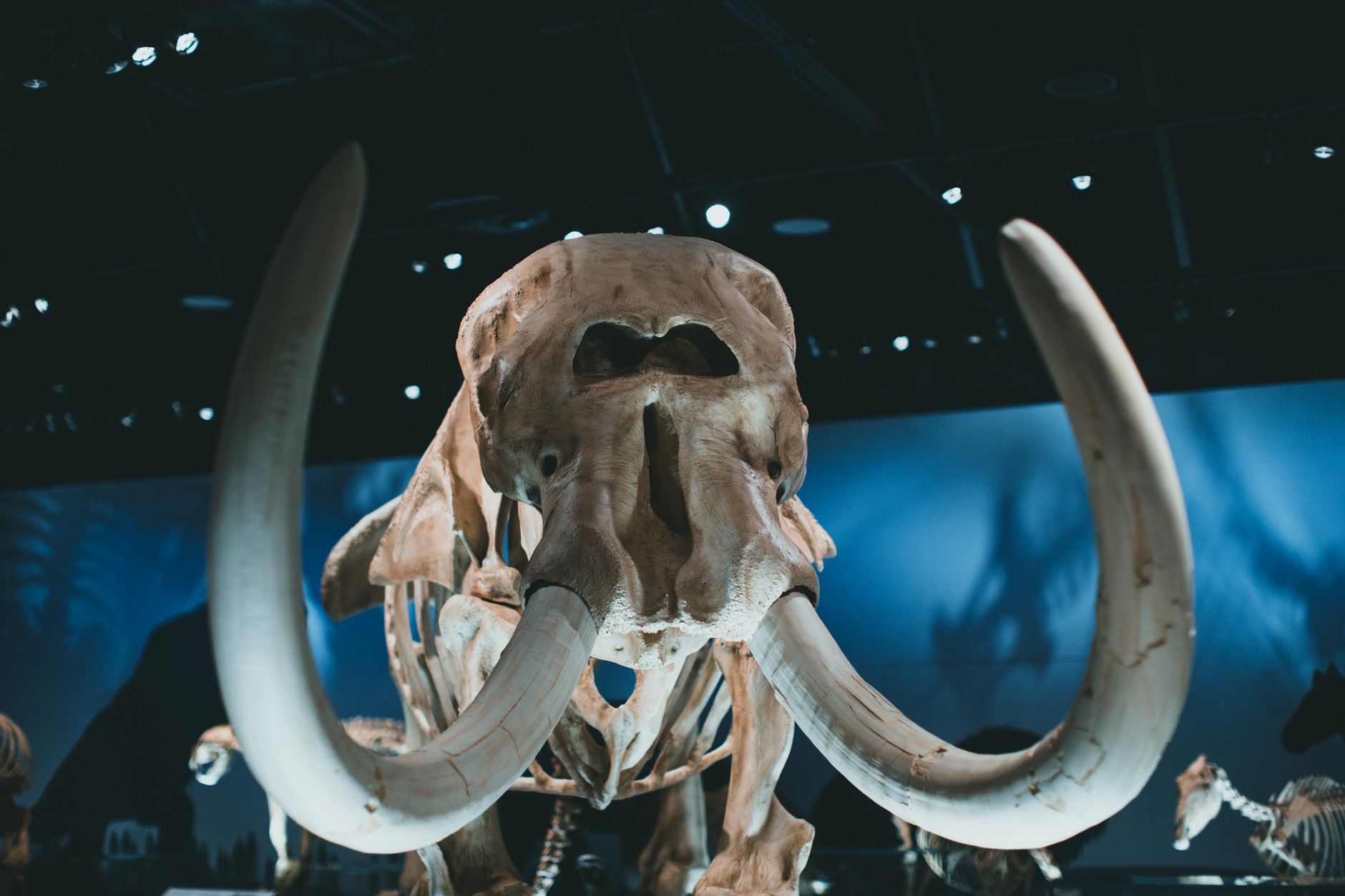
The Steppe Mammoth was a truly enormous animal. Existing from the Early to Middle Pleistocene (approximately 1.7 million to 200,000 years ago), it preceded the more well-known Woolly Mammoth. Fossil evidence indicates that Steppe Mammoths inhabited a vast range across Eurasia, from Europe to Siberia and even as far east as Japan.
- Size and Weight: Estimates based on skeletal remains suggest that Steppe Mammoths reached shoulder heights of up to 4.5 meters (14.8 feet) and weighed upwards of 10-12 tons. This surpasses the size of modern African elephants ( Loxodonta africana), which typically reach shoulder heights of 3-3.3 meters.
- Physical Characteristics: The Steppe Mammoth possessed a robust build with relatively straight tusks compared to the more curved tusks of the Woolly Mammoth. Its dental structure was also distinct, adapted for grazing on the coarse vegetation of the steppe environment.
- Evolutionary Significance: The Steppe Mammoth is considered an ancestor to the later Woolly Mammoth (Mammuthus primigenius). Studying its anatomy and geographic distribution helps scientists understand the evolutionary transition from a more generalized mammoth form to the specialized adaptations of the cold-adapted Woolly Mammoth.
Other Contenders: Imperial Mammoth and Palaeoloxodon
While the Steppe Mammoth is generally considered the largest, other extinct elephants reached impressive sizes and deserve consideration.
-
Imperial Mammoth (Mammuthus imperator): Found in North America during the Pleistocene, the Imperial Mammoth was also a giant. Although slightly shorter than the Steppe Mammoth, some specimens show evidence of being extremely heavy. Its exact size in comparison remains debated.
-
Straight-tusked Elephant (Palaeoloxodon antiquus): This European elephant, contemporary with early humans, was known for its impressively long, straight tusks. While generally smaller than the Steppe Mammoth, exceptionally large individuals likely rivaled it in size.
-
Comparison Table:
Species Estimated Shoulder Height Estimated Weight (tons) Geographic Location Mammuthus trogontherii Up to 4.5 meters 10-12 Eurasia Mammuthus imperator Up to 4 meters 8-10 North America Palaeoloxodon antiquus Up to 4 meters 6-8 Europe
Why Size Matters: Understanding Evolutionary Pressures
The immense size of these extinct elephants raises important questions about the evolutionary pressures that drove them to such gigantism. Several factors may have contributed, including:
- Climate and Environment: The Pleistocene epoch was characterized by fluctuating glacial and interglacial periods. Larger body size can be advantageous in colder climates, as it reduces heat loss.
- Competition: Competition for resources with other large herbivores may have favored larger individuals, capable of defending themselves and accessing food more effectively.
- Diet: The coarse vegetation of the steppe and tundra environments required a robust digestive system, which may have favored larger body sizes.
Frequently Asked Questions (FAQs)
What evidence supports the Steppe Mammoth being the largest extinct elephant?
Fossil discoveries across Eurasia, including complete skeletons and individual bones, indicate that Steppe Mammoths were consistently larger than other extinct elephant species. Measurements of limb bones and vertebral columns suggest a shoulder height and weight that exceeds those of other contenders.
How do we know the weight of extinct elephants?
Estimating the weight of extinct elephants involves using various methods, including scaling from modern elephants, volumetric calculations based on skeletal dimensions, and computer modeling. These methods provide approximations, but the exact weight can only be estimated.
Were Steppe Mammoths bigger than Woolly Mammoths?
Yes, Steppe Mammoths were generally larger than Woolly Mammoths. While Woolly Mammoths were also large animals, the Steppe Mammoth was significantly taller and heavier on average. The Woolly Mammoth’s size was also influenced by its adaptation to surviving shorter growing seasons.
Did humans ever encounter Steppe Mammoths?
Yes, early humans likely encountered Steppe Mammoths. Evidence suggests that early human populations coexisted with Steppe Mammoths in Eurasia. There is even some speculation, though not proven, that the Steppe Mammoth was hunted by archaic humans.
What caused the extinction of the Steppe Mammoth?
The extinction of the Steppe Mammoth is attributed to a combination of factors, including climate change, habitat loss, and potentially, hunting by early humans. The transition from glacial to interglacial periods altered vegetation patterns and reduced the availability of suitable grazing areas.
Are there any complete Steppe Mammoth skeletons on display?
Several museums across Europe and Asia exhibit Steppe Mammoth skeletons, including the Azov History, Archaeology and Paleontology Museum-Reserve in Russia. These displays provide a tangible representation of the animal’s impressive size.
How did Steppe Mammoths adapt to their environment?
Steppe Mammoths were adapted to the open steppe environment through their diet, dental structure, and possibly their thick fur (though less developed than in Woolly Mammoths). They were primarily grazers, consuming grasses and other herbaceous vegetation.
What are the main differences between Steppe Mammoths and modern elephants?
The primary differences lie in size, tusk shape, and dental structure. Steppe Mammoths were significantly larger than modern elephants, possessed straighter tusks, and had specialized molars adapted for grazing on tough vegetation. Modern elephants have distinct ears and other features.
How is the Palaeoloxodon antiquus different from Mammuthus trogontherii?
Palaeoloxodon antiquus had longer, straighter tusks and a more robust build than Mammuthus trogontherii. They also differed in their geographic distribution and the type of environment they inhabited, with Palaeoloxodon favoring warmer, more wooded areas.
Is it possible to clone a Steppe Mammoth?
Cloning a Steppe Mammoth presents immense technical challenges. While researchers have extracted DNA from mammoth remains, the DNA is often fragmented and degraded, making it difficult to reconstruct a complete genome. The possibility remains highly speculative.
Where were the best Steppe Mammoth fossils found?
Significant Steppe Mammoth fossil discoveries have been made in Russia, particularly in Siberia and the European parts of the country, as well as in other parts of Europe and Asia. These regions provide the best sites for finding well-preserved remains.
Why is it important to study extinct elephants?
Studying extinct elephants, like the Steppe Mammoth, provides crucial insights into evolutionary processes, past ecosystems, and the impact of climate change on large mammals. It also helps us understand the complex interactions between humans and megafauna, and informs conservation efforts for modern elephants.