
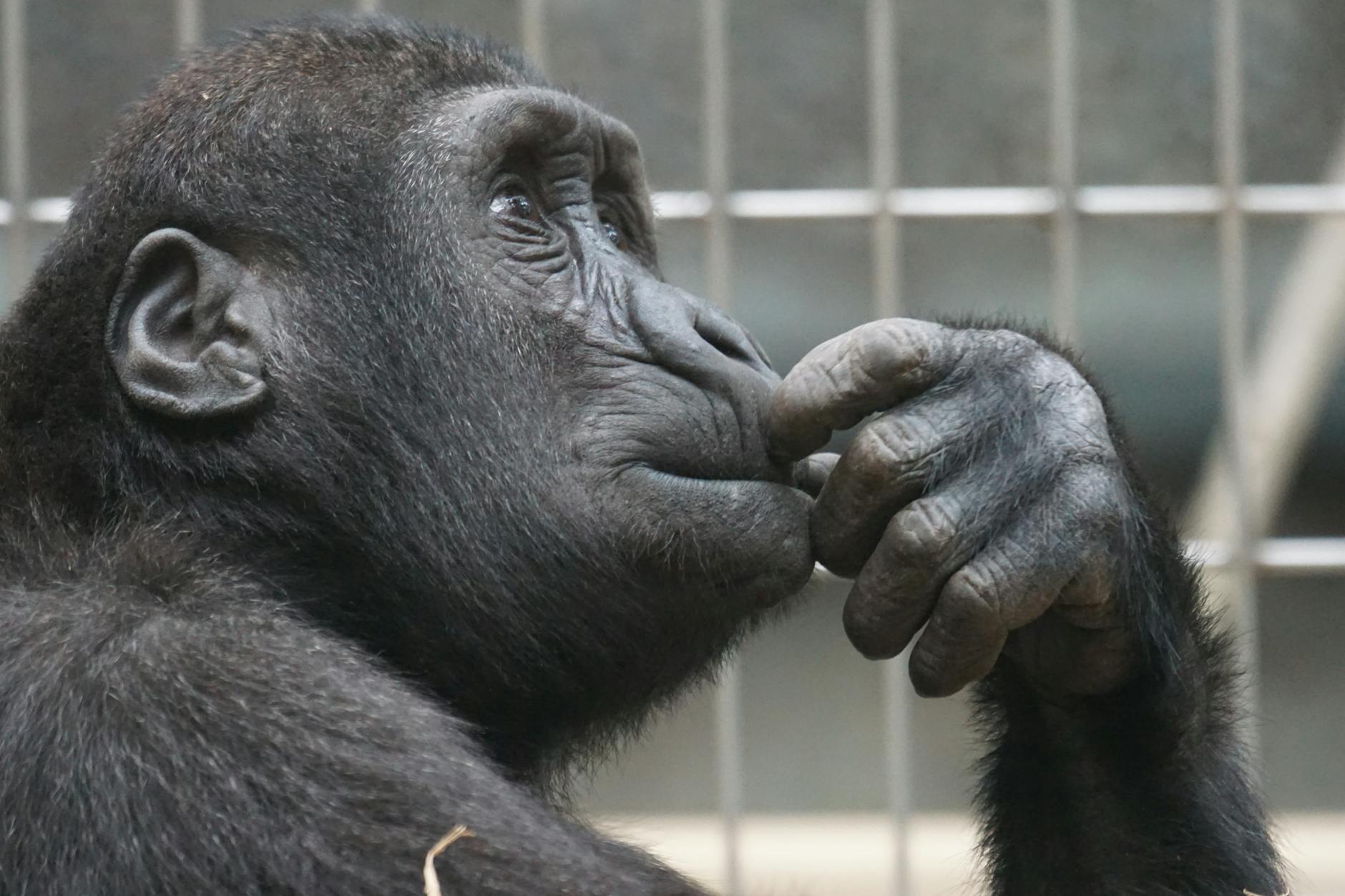
What Language Do Animals Think In?: Unlocking the Secrets of Animal Cognition
The question of what language animals think in is complex; most evidence suggests they don’t think in a human-like language, but rather in sensory experiences, emotions, and innate understandings relevant to their survival and environment. Instead of linguistic structures, they utilize internal representations of the world built through direct experience.

The Mystery of Animal Thought: Beyond Words
The human tendency is to assume that thinking requires language, but is this true for other species? The question of what language do animals think in? touches upon the very core of consciousness, and the complexities of animal cognition are far more nuanced than many realize. Exploring this field requires us to step outside our own linguistic biases and delve into the diverse sensory worlds and instinctual knowledge of the animal kingdom.

What colours are fish most attracted to?
Can you put your finger in a trout's mouth?
Is methylene blue anti bacterial?
Does aquarium salt raise pH in aquarium?
Sensory Primacy: A World of Smells, Sounds, and Sights

One of the prevailing theories is that animals primarily think in terms of sensory information. Unlike humans, who heavily rely on language to process and categorize information, many animals prioritize other senses.
- Dogs: Their world is dominated by smells, with olfactory information creating a rich tapestry of understanding. They may “think” in terms of scent maps and scent associations.
- Birds: Visual cues are crucial for birds, especially those that migrate long distances. They might rely on spatial awareness and mental images, rather than internal narratives, to navigate.
- Fish: Fish rely heavily on vibrations, pressure changes, and visual cues to orient themselves and locate food. Their “thinking” likely revolves around processing this sensory information.
The Role of Emotions and Instincts
Beyond sensory input, emotions and instincts play a pivotal role in how animals perceive and react to the world. A predator instinctively knows how to stalk its prey, and a mother animal emotionally bonds with her offspring. These behaviors are less about linguistic processing and more about ingrained responses and emotional drives.
Mental Mapping: Creating Internal Representations
While animals might not use language in the same way as humans, they demonstrably create internal representations of their environment. This is evident in their navigation skills, problem-solving abilities, and social interactions.
Consider:
- Bees: Bees perform intricate “waggle dances” to communicate the location of food sources, demonstrating a complex understanding of spatial relationships.
- Elephants: Elephants possess remarkable memories and are capable of navigating vast territories, relying on a detailed mental map built through years of experience.
- Rats: Rats can learn to navigate mazes and solve complex problems, suggesting they create mental models of their surroundings.
Cognitive Abilities: Testing Animal Intelligence
Researchers are constantly developing new methods to assess animal cognition. Studies using puzzles, tool use, and communication experiments provide insight into how animals process information and solve problems.
| Animal | Cognitive Ability | Example |
|---|---|---|
| Chimpanzee | Tool use | Using sticks to extract termites from mounds. |
| Crow | Problem-solving | Dropping stones into a pitcher to raise the water level and reach a reward. |
| Dolphin | Self-recognition | Recognizing themselves in a mirror. |
| Parrot | Mimicry & Communication | Replicating human speech and using language-like signals to communicate. |
Challenges in Understanding Animal Thought
One of the biggest challenges is the difficulty of accessing animal minds. We can observe their behavior and infer their cognitive processes, but we cannot directly experience their thoughts. This requires researchers to be creative and avoid anthropocentric assumptions.
The Importance of Studying Animal Cognition
Understanding how animals think is not just an academic exercise; it has profound implications for animal welfare, conservation, and our understanding of the evolution of intelligence. By appreciating the unique cognitive abilities of different species, we can develop more ethical and effective strategies for protecting them and their habitats. Understanding what language do animals think in? helps us to respect their intelligence.
The Future of Animal Cognition Research
The field of animal cognition is constantly evolving, with new technologies and research methods providing deeper insights into the minds of animals. Future research will likely focus on:
- Developing more sophisticated brain imaging techniques to study animal thought processes.
- Creating more realistic and engaging environments for cognitive testing.
- Collaborating with experts in animal behavior, neuroscience, and linguistics to gain a more holistic understanding of animal cognition.
Frequently Asked Questions: Deeper Insights into Animal Thought
Do all animals think in the same way?
No, the way animals think likely varies greatly depending on their species, evolutionary history, and ecological niche. A dog’s sensory world is different from a bird’s, and an insect’s cognitive abilities are different from those of a primate. Each species has evolved its own unique way of processing information and interacting with the world. Therefore, what language do animals think in? will be different for each species.
Is it possible for animals to learn human language?
While some animals, like parrots, can mimic human speech, and others, like dogs, can learn to understand commands, they do not use language in the same way as humans. They may associate words with specific actions or objects, but they do not possess the same level of grammatical understanding or abstract thinking.
Do animals have internal monologues like humans?
It’s unlikely that animals experience internal monologues in the same way as humans. Most animals do not have the capacity for complex linguistic thought that is required to generate narratives within their minds. Instead, their thoughts are likely more immediate and focused on sensory experiences and emotional states.
What role does instinct play in animal thinking?
Instinct plays a significant role in animal thinking, particularly in guiding behavior related to survival, reproduction, and social interactions. Instincts are innate behavioral patterns that are genetically programmed and do not require learning. These instincts act as shortcuts in decision-making and allow animals to respond quickly to environmental cues.
Can animals think about the future?
Some animals have demonstrated the ability to plan for the future. For example, scrub jays will cache food in locations where they anticipate needing it later. This suggests that they possess some capacity for mental time travel and can anticipate future needs.
Do animals have a sense of self?
Some animals, such as chimpanzees, dolphins, and elephants, have demonstrated self-recognition in mirror tests. This suggests that they possess a sense of self-awareness and can recognize themselves as distinct individuals. However, the extent to which other animals have a sense of self is still a subject of ongoing research.
How do scientists study animal thinking?
Scientists use a variety of methods to study animal thinking, including:
- Behavioral observations: Observing animal behavior in natural and controlled settings.
- Cognitive testing: Designing experiments to assess animal problem-solving abilities, memory, and learning.
- Brain imaging: Using techniques such as fMRI to study brain activity in animals.
What is anthropomorphism, and why is it important to avoid it when studying animal cognition?
Anthropomorphism is the tendency to attribute human characteristics, emotions, and thoughts to animals. It’s important to avoid anthropomorphism because it can lead to inaccurate interpretations of animal behavior and cognitive abilities. To understand what language do animals think in?, we should avoid projecting our thoughts.
How does animal cognition research benefit humans?
Animal cognition research can provide valuable insights into the evolution of intelligence, the nature of consciousness, and the neural basis of behavior. It can also inform the development of new technologies and therapies for neurological disorders. Additionally, it can promote a greater appreciation for the complexity and diversity of life on Earth.
Are there ethical considerations when studying animal cognition?
Yes, there are important ethical considerations when studying animal cognition. Researchers must ensure that animals are treated humanely and that their welfare is prioritized. This includes providing appropriate housing, nutrition, and veterinary care, as well as minimizing any potential stress or harm during experiments.
How does domestication affect animal cognition?
Domestication can have a significant impact on animal cognition. Domesticated animals may exhibit reduced fear responses, increased social tolerance, and altered problem-solving abilities compared to their wild counterparts. Selective breeding for specific traits can also influence cognitive abilities.
What can we learn from animals about communication?
Animals communicate using a wide range of signals, including vocalizations, body language, chemical signals, and visual displays. By studying animal communication, we can learn about the evolution of language, the nature of social interactions, and the different ways that animals convey information. Trying to understand what language do animals think in? is a part of that.