

What is the Rarest Color of Bioluminescence?
The rarest color of bioluminescence is generally considered to be yellow, although it’s less about inherent rarity and more about the complex biochemical pathways required to produce it efficiently compared to the more common blue-green bioluminescence.
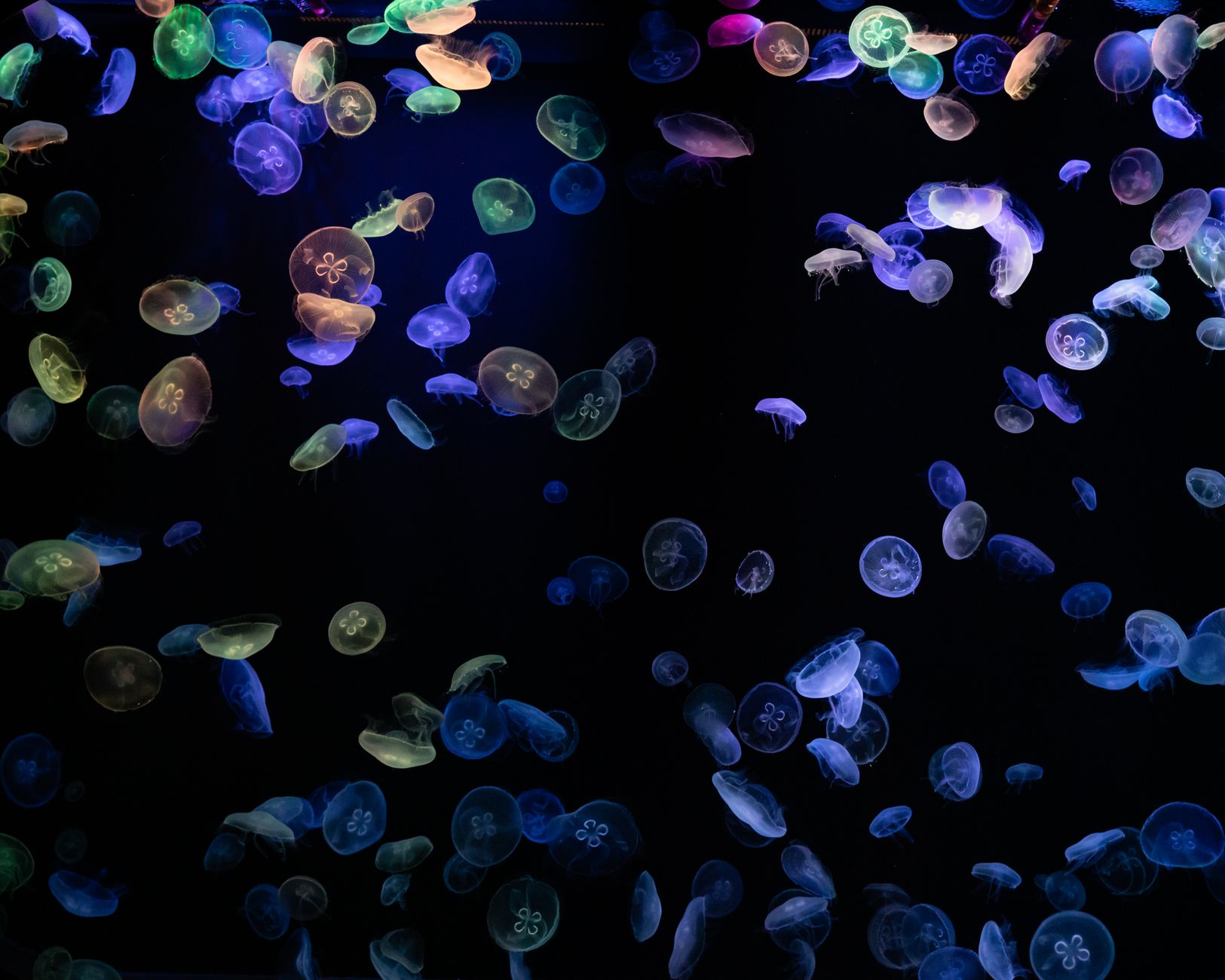
Introduction to Bioluminescence and Color
Bioluminescence, the production and emission of light by a living organism, is a fascinating phenomenon found across the tree of life. From the depths of the ocean to terrestrial ecosystems, it plays diverse roles in communication, camouflage, and predation. The colors of bioluminescence, however, are not distributed evenly. While blue and green dominate, other hues are far less common, begging the question: What is the rarest color of bioluminescence?

What colours are fish most attracted to?
Can you put your finger in a trout's mouth?
Is methylene blue anti bacterial?
Does aquarium salt raise pH in aquarium?
The Biochemistry Behind Bioluminescence Color

The colors of bioluminescence arise from complex chemical reactions, primarily involving a luciferin molecule (a light-emitting compound) and a luciferase enzyme (which catalyzes the reaction). Other factors such as pH, salinity, and the presence of fluorescent proteins can also influence the color observed. Different luciferin-luciferase systems produce different light wavelengths, resulting in the various bioluminescent colors we see. The efficiency and complexity of these biochemical pathways contribute to the varying rarity of different colors.
Why Blue and Green are Common
Blue and green bioluminescence are dominant, especially in marine environments, due to several factors:
- Water absorption: Blue and green light travel further through water than other colors, making them ideal for signaling and attracting prey in the depths where light penetration is limited.
- Luciferin availability: The luciferins required for blue and green bioluminescence may be more readily synthesized or obtained through diet.
- Evolutionary advantage: Organisms emitting blue or green light may have a selective advantage in their specific ecological niches.
Factors Influencing Color Rarity
Determining What is the rarest color of bioluminescence? requires considering several complexities.
- Depth of research: Some colors may appear rarer simply because they haven’t been as extensively studied as blue and green.
- Fluorescent proteins: Some organisms produce blue or green light, then use fluorescent proteins to shift the emitted light to other colors, making it difficult to determine the “true” bioluminescent color.
- Observer perception: The perceived color can vary depending on viewing conditions and individual perception.
A Case for Yellow Bioluminescence
While other colors like red and orange are also relatively uncommon, yellow bioluminescence stands out as exceptionally rare. The biochemical pathways needed to produce yellow light are generally more intricate and less efficient than those for blue or green. This suggests that organisms may require significant evolutionary adaptations to produce and utilize yellow bioluminescence effectively.
The limited number of organisms known to produce bona fide yellow light through bioluminescence further supports its rarity.
Other Rare Bioluminescent Colors
While yellow might be the apex of rarity, other colors are not commonly seen. Red and orange bioluminescence, typically associated with specific luciferin-luciferase systems, are examples. However, often these colors are produced by the shift in color from blue to red by fluorescing molecules.
Here’s a comparison of bioluminescent color prevalence:
| Color | Relative Prevalence | Primary Environments | Examples |
|---|---|---|---|
| Blue | Most common | Marine | Jellyfish, Dinoflagellates |
| Green | Common | Marine, Terrestrial | Fireflies, Deep-sea Fish |
| Yellow | Rarest | Limited Data | Some Fungi, Reported in some Marine Organisms (rare) |
| Orange | Rare | Primarily Marine | Lanternfish |
| Red | Relatively Rare | Deep Sea | Dragonfish, Stoplight Loosejaw |
Frequently Asked Questions about Bioluminescence Color
What exactly is luciferin and luciferase?
Luciferin is a generic term for the light-emitting molecule involved in bioluminescence. Luciferase is the enzyme that catalyzes the reaction between luciferin and oxygen (or other substrates), leading to light emission. The specific chemical structures of luciferin and luciferase vary between different species, leading to differences in bioluminescent color.
Why is blue light so prevalent in marine bioluminescence?
Blue light travels further through water than other colors. This is because water molecules absorb longer wavelengths (like red and yellow) more readily than shorter wavelengths (like blue). Organisms living in deep-sea environments often use blue light for signaling and attracting mates because it can propagate over greater distances.
Can an organism change the color of its bioluminescence?
Yes, some organisms can change the color of their bioluminescence through various mechanisms. One common method is the use of fluorescent proteins, which absorb light at one wavelength (e.g., blue) and re-emit it at a longer wavelength (e.g., green or red). This allows an organism to effectively “shift” the color of its bioluminescence.
How does bioluminescence help deep-sea creatures survive?
Bioluminescence serves various functions for deep-sea creatures, including:
- Camouflage: Counterillumination, where an organism emits light from its underside to match the downwelling sunlight, helps it blend into the background and avoid predators.
- Attracting prey: Some predators use bioluminescent lures to attract unsuspecting prey.
- Communication: Bioluminescent flashes can be used for signaling mates, attracting other organisms, or startling predators.
Are there any terrestrial organisms that produce yellow bioluminescence?
Reports exist concerning several terrestrial organisms that produce yellow bioluminescence. Some fungi are believed to exhibit yellow bioluminescence, but in general the color is quite rare.
What makes red bioluminescence relatively rare?
Red bioluminescence requires more energy and a specialized luciferin-luciferase system to produce. Since red light is quickly absorbed by water, its use is limited to short-range communication in deep-sea environments. The benefits of producing red light, such as potentially avoiding detection by predators with blue-sensitive eyes, must outweigh the energetic cost.
How is the study of bioluminescence beneficial to humans?
The study of bioluminescence has led to numerous applications in various fields, including:
- Biomedical research: Luciferase enzymes are used as reporters in gene expression studies and drug discovery.
- Environmental monitoring: Bioluminescent bacteria can be used to detect pollutants in water and soil.
- Food safety: Bioluminescence-based assays can detect bacterial contamination in food products.
Is bioluminescence the same as fluorescence or phosphorescence?
No. Bioluminescence is a chemical reaction that produces light within a living organism. Fluorescence involves the absorption of light at one wavelength and its re-emission at a longer wavelength. Phosphorescence is similar to fluorescence but involves a longer delay between absorption and emission.
What are some examples of organisms that use bioluminescence for defense?
Many marine organisms use bioluminescence for defense. For example:
- Jellyfish: Some jellyfish emit a bright flash of light to startle predators.
- Squid: Some squid release a bioluminescent cloud to confuse predators and escape.
- Dinoflagellates: These single-celled organisms emit bioluminescent flashes when disturbed, which may attract larger predators to feed on the organisms grazing on them.
Can bioluminescence be artificially replicated?
Yes. Scientists can replicate bioluminescence in the lab by mixing luciferin, luciferase, and other necessary cofactors. This is used in many research and commercial applications, like medical imaging and detecting contaminants.
What are some challenges in studying bioluminescence in deep-sea organisms?
Studying bioluminescence in deep-sea organisms is challenging because:
- They live in extreme environments: Deep-sea organisms are difficult to collect and maintain in the lab due to the high pressure and low temperature conditions.
- They are fragile: Many deep-sea organisms are delicate and easily damaged during collection.
- Their bioluminescence is easily disrupted: The bioluminescent systems of these organisms can be sensitive to changes in temperature, pressure, and light.
What is the future of bioluminescence research?
The future of bioluminescence research is promising. Advances in molecular biology, genetic engineering, and imaging technologies are allowing scientists to:
- Discover new bioluminescent systems: Researchers are continuously identifying new bioluminescent organisms and characterizing their unique biochemical pathways.
- Develop new applications of bioluminescence: Bioluminescence is being explored for use in a wide range of applications, including medical diagnostics, environmental monitoring, and renewable energy.
- Understand the evolution of bioluminescence: Scientists are using comparative genomics and phylogenetic analysis to understand the evolutionary origins and diversification of bioluminescent systems. Understanding What is the rarest color of bioluminescence? and the underlying processes contributing to this rarity will contribute to this progress.