
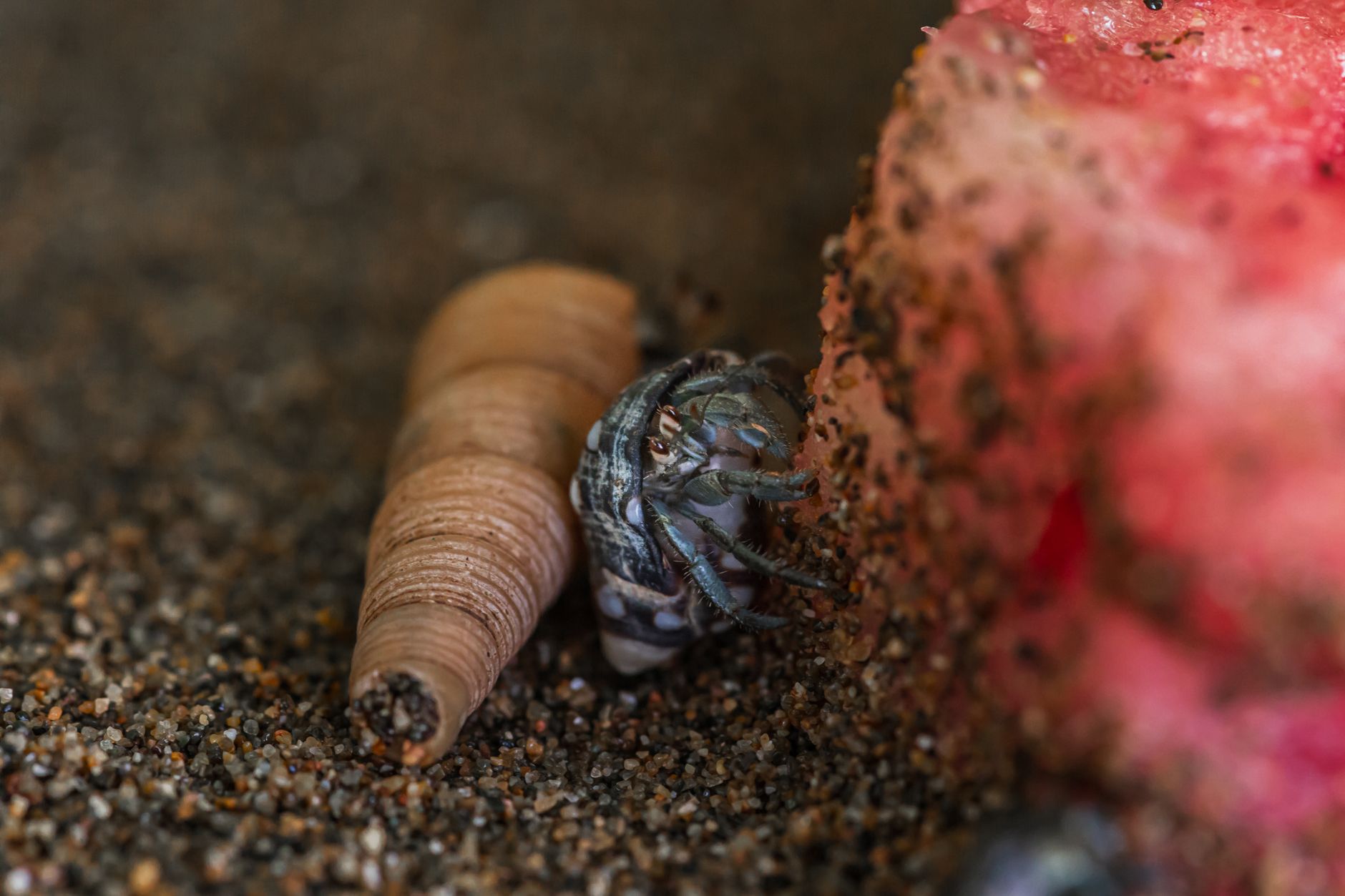
What Does a Strawberry Hermit Crab Look Like? Unveiling the Colorful Crustacean
The exquisitely colored strawberry hermit crab is easily identified by its vibrant red or orange coloration, mimicking the hue of its namesake, and is a relatively small crustacean, seeking refuge in discarded shells. Understanding what a strawberry hermit crab looks like is key to appreciating its unique adaptation and niche in its tropical habitat.

Introduction: A Tropical Treasure
The strawberry hermit crab, Coenobita perlatus, is a captivating member of the land hermit crab family. Native to the Indo-Pacific region, including islands such as Hawaii, its striking coloration makes it a favorite among enthusiasts. But beyond its beauty, understanding the crab’s physical characteristics offers insights into its behavior and ecological role. What does a strawberry hermit crab look like? is a question that goes beyond simple color; it delves into the intricacies of its anatomy and adaptations.

What colours are fish most attracted to?
Can you put your finger in a trout's mouth?
Is methylene blue anti bacterial?
Does aquarium salt raise pH in aquarium?
Identifying Characteristics: Beyond the Color

While the vibrant red or orange color is the most defining feature, other characteristics help in identifying a strawberry hermit crab.
- Coloration: The body, legs, and claws are predominantly red or orange, ranging from a pale salmon to a deep crimson. Younger crabs may exhibit a more muted coloration, intensifying with age.
- Claws: The larger claw (the cheliped) is significantly larger than the other and used for defense, digging, and feeding. Its surface is typically smooth but can have subtle textures.
- Legs: The walking legs are also red or orange, segmented and adapted for terrestrial locomotion.
- Eyes: The eyes are located on stalks, allowing for a wide field of vision. They are typically dark in color.
- Size: Strawberry hermit crabs are relatively small, reaching a maximum size of around 4 inches (10 cm) in length.
Shell Selection: A Crucial Component
Like all hermit crabs, the strawberry hermit crab requires a discarded shell for protection. They are meticulous in their shell selection, choosing shells that fit comfortably and offer adequate protection from predators and the environment. The shell is not part of the crab’s body; it’s a borrowed home.
Shells commonly used by strawberry hermit crabs include:
- Gastropod shells: These are the most common type of shell utilized.
- Variety of sizes: They will change shells as they grow, seeking larger accommodations to fit their expanding bodies.
- Shell Condition: The crabs prefer relatively intact shells, offering better defense and protection from moisture loss.
Differentiating from Similar Species
While the red coloration is distinctive, it’s essential to differentiate strawberry hermit crabs from other species. The Hawaiian hermit crab (Calcinus laevimanus), for example, can sometimes exhibit reddish hues. Careful observation of the claw shape, leg coloration, and overall size is crucial for accurate identification. Consider this comparison table:
| Feature | Strawberry Hermit Crab (Coenobita perlatus) | Hawaiian Hermit Crab (Calcinus laevimanus) |
|---|---|---|
| Coloration | Primarily red or orange | Variable; can be blue, red, or brown |
| Claw Shape | Large, smooth cheliped | Claws often display more pronounced texture |
| Typical Size | Up to 4 inches (10 cm) | Smaller, typically under 2 inches (5 cm) |
| Habitat | Indo-Pacific Islands | Hawaiian Islands |
Conservation Status
While not currently listed as endangered, the popularity of strawberry hermit crabs in the pet trade raises concerns about sustainable collection practices. Responsible sourcing and support for conservation efforts are vital to ensure the long-term survival of these vibrant creatures. It’s crucial to understand what a strawberry hermit crab looks like and their ecological importance, promoting respectful interaction with these animals.
Frequently Asked Questions
What is the lifespan of a strawberry hermit crab in captivity?
In captivity, with proper care, a strawberry hermit crab can live for several years, often exceeding 10 years. However, this depends heavily on providing the correct environmental conditions, including appropriate temperature, humidity, and diet.
What kind of shell does a strawberry hermit crab prefer?
Strawberry hermit crabs prefer smooth, gastropod shells that fit their bodies comfortably and provide adequate protection. It’s important to offer a variety of shell sizes and shapes to allow them to choose as they grow.
What is the best diet for a strawberry hermit crab?
A varied diet is essential for strawberry hermit crab health. They are omnivores and enjoy a mix of fruits, vegetables, nuts, seeds, and protein sources. Commercial hermit crab food is a good base, supplemented with fresh options.
How do I create the right environment for a strawberry hermit crab in a terrarium?
The ideal terrarium for a strawberry hermit crab includes a substrate of sand and coconut fiber, a temperature gradient (70-85°F), high humidity (70-80%), and access to both fresh and saltwater.
How often do strawberry hermit crabs molt?
Strawberry hermit crabs molt as they grow, shedding their exoskeleton. The frequency of molting decreases with age. Young crabs may molt every few months, while older crabs may only molt once a year or less.
What are the signs that a strawberry hermit crab is about to molt?
Signs of an impending molt include lethargy, loss of appetite, digging, and a dull coloration. It’s crucial not to disturb a molting crab and to provide a safe, dark place for them to bury themselves.
Can strawberry hermit crabs live with other types of hermit crabs?
While strawberry hermit crabs can coexist with other land hermit crab species, it’s essential to ensure that they have enough space and resources to avoid competition and aggression. Careful monitoring is necessary.
How do I tell the difference between a male and female strawberry hermit crab?
Sexing hermit crabs is difficult and often requires close examination. One method is to look for small pores (gonopores) on the base of the third pair of walking legs in females. However, this can be challenging without experience.
What are some common health problems in strawberry hermit crabs?
Common health problems include parasitic infestations, bacterial infections, and shell shock. Providing proper care, maintaining clean conditions, and offering a balanced diet can help prevent these issues.
Do strawberry hermit crabs need saltwater?
Yes, strawberry hermit crabs require access to both fresh and saltwater. They need saltwater for bathing, drinking, and maintaining proper electrolyte balance.
How often should I clean the terrarium of a strawberry hermit crab?
Spot cleaning should be done daily to remove uneaten food and waste. A more thorough cleaning, involving replacing the substrate and cleaning the tank, should be done every few months.
Where is the natural habitat of a strawberry hermit crab?
Strawberry hermit crabs are native to the Indo-Pacific region, including islands like Hawaii, French Polynesia, and other tropical areas. They inhabit coastal areas, sandy beaches, and rocky shores. Understanding their native environment is crucial for providing appropriate care in captivity, allowing you to appreciate what a strawberry hermit crab looks like in its natural context.