

What Do Jellyfish Do For a Living? Decoding the Jellies’ Existential Strategy
Jellyfish are more than just ocean drifters; they play a crucial role in the marine ecosystem. They feed on plankton and small animals, controlling populations, and serving as a food source for larger creatures, essentially contributing to the ocean’s delicate balance.
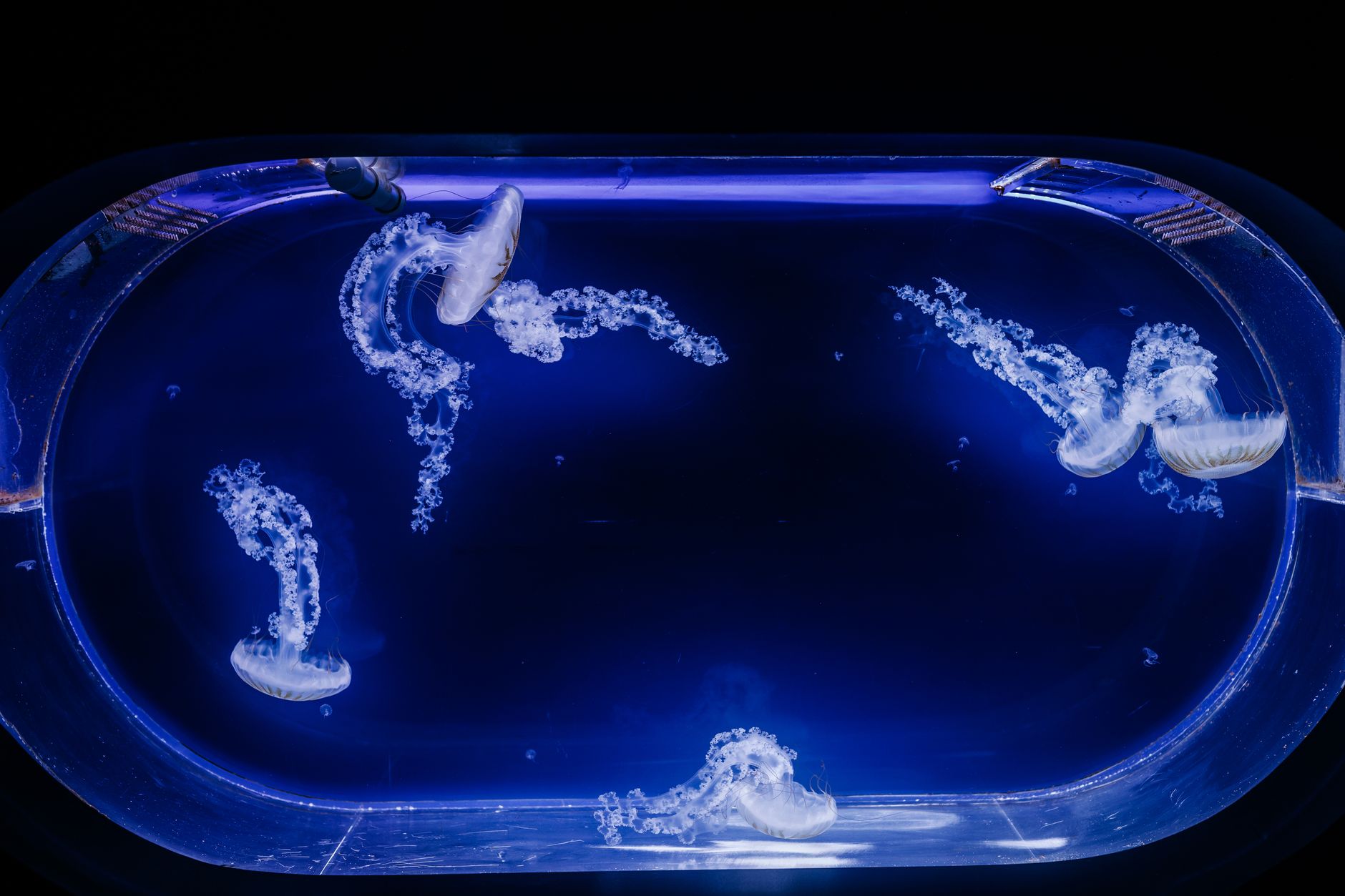
Introduction: More Than Just Jiggles
Jellyfish. The name conjures images of translucent bells pulsating through the water, sometimes beautiful, sometimes alarming. But what do jellyfish do for a living beyond drifting aimlessly? The answer is surprisingly complex and essential to the health of our oceans. They are not merely passive blobs of jelly; they are active predators, vital food sources, and crucial components of the marine food web. Understanding their role is crucial for appreciating the intricate balance of the ocean ecosystem. This article will delve into the fascinating world of jellyfish to uncover their contribution to marine life.

What colours are fish most attracted to?
Can you put your finger in a trout's mouth?
Is methylene blue anti bacterial?
Does aquarium salt raise pH in aquarium?
Jellyfish Life Cycle: A Complex Metamorphosis

The life cycle of a jellyfish is remarkably complex, involving both sexual and asexual reproduction. It goes through several distinct stages:
- Planula Larva: A free-swimming, ciliated larva that settles on a hard surface.
- Polyp (Scyphistoma): A stalk-like form that attaches to the seabed and reproduces asexually by budding or strobilation.
- Ephyra: A juvenile jellyfish that buds off from the polyp.
- Medusa: The adult, free-swimming form that we typically recognize as a jellyfish.
This multi-stage process allows jellyfish to thrive in diverse environments and adapt to changing conditions. The polyp stage, in particular, provides a survival advantage during periods of environmental stress, allowing the population to rebound when conditions improve.
Feeding Habits: Apex Predators of Plankton
Despite their gelatinous composition, jellyfish are effective predators. They primarily feed on:
- Plankton (phytoplankton and zooplankton)
- Small crustaceans
- Fish larvae
- Other jellyfish
They use their tentacles, armed with stinging cells called nematocysts, to capture and paralyze their prey. These nematocysts inject venom into the prey, rendering it immobile. The tentacles then transport the food to the jellyfish’s mouth, located on the underside of the bell. What do jellyfish do for a living? They effectively manage plankton populations!
Ecological Role: A Keystone Species?
Jellyfish play a vital role in the marine ecosystem. They are:
- Predators: They control populations of plankton and small animals.
- Prey: They serve as a food source for larger animals, such as sea turtles, some fish species, and seabirds.
- Nutrient cyclers: Their decomposition releases nutrients back into the water, supporting phytoplankton growth.
While not traditionally considered keystone species, their impact on the marine food web is significant and potentially increasing due to factors like overfishing and climate change. Some scientists argue that certain species, under certain environmental conditions, can take on keystone roles.
The Jellyfish Bloom Phenomenon
Jellyfish blooms, or swarms, are a natural phenomenon, but their frequency and intensity appear to be increasing in many parts of the world. These blooms can have significant ecological and economic consequences:
- Ecological: They can consume large quantities of plankton, impacting other plankton-feeding organisms.
- Economic: They can interfere with fishing operations, clog power plant intakes, and deter tourism.
The exact causes of jellyfish blooms are complex and not fully understood, but factors like overfishing, nutrient pollution, and climate change are believed to play a role. Understanding the factors driving these blooms is crucial for managing their impacts.
Jellyfish and Climate Change
Climate change is likely exacerbating the already complex role of jellyfish in marine ecosystems. Rising ocean temperatures, ocean acidification, and altered ocean currents can all impact jellyfish populations and their interactions with other species. Some species may thrive in warmer waters, leading to increased bloom formation, while others may decline. The changing environment could make it easier for jellyfish to dominate certain areas.
Conservation Concerns and Research Efforts
While some jellyfish species are abundant, others are facing threats from habitat destruction, pollution, and overexploitation (for food and traditional medicine). Understanding their populations is critical to developing conservation strategies. Research efforts are focused on:
- Monitoring jellyfish populations and their distribution.
- Investigating the causes of jellyfish blooms.
- Studying the ecological role of jellyfish in different ecosystems.
- Assessing the impacts of climate change on jellyfish.
Frequently Asked Questions (FAQs)
What is a jellyfish composed of?
Jellyfish are primarily composed of water – about 95% water, in fact! They also contain various proteins, salts, and other organic matter that give them their gelatinous structure. Their bodies lack bones, a brain, or blood.
Are all jellyfish venomous?
Almost all jellyfish possess nematocysts, which are stinging cells containing venom. However, the potency of the venom varies greatly between species. Some jellyfish stings are harmless to humans, while others can be extremely painful or even deadly.
How do jellyfish move?
Jellyfish move by pulsating their bell-shaped bodies, which forces water out behind them, propelling them forward. They are not strong swimmers and are largely at the mercy of ocean currents.
How do jellyfish reproduce?
Jellyfish have a complex life cycle involving both sexual and asexual reproduction. The adult medusa stage reproduces sexually by releasing eggs and sperm into the water. The fertilized eggs develop into larvae that settle on the seabed and transform into polyps, which can then reproduce asexually by budding.
Do jellyfish have predators?
Yes, jellyfish are preyed upon by a variety of animals, including sea turtles, some fish species (like ocean sunfish), seabirds, and even other jellyfish.
Are jellyfish good to eat?
In some cultures, jellyfish are considered a delicacy. They are processed and eaten in various ways, often pickled or dried. However, not all jellyfish species are edible, and proper preparation is crucial to remove toxins.
What is the lifespan of a jellyfish?
The lifespan of a jellyfish varies depending on the species. Some species live for only a few months, while others can live for several years. The immortal jellyfish, Turritopsis dohrnii, is particularly unique because it can revert to its polyp stage when stressed, potentially making it biologically immortal.
How can I treat a jellyfish sting?
The treatment for a jellyfish sting depends on the species. Generally, it is recommended to rinse the affected area with vinegar to deactivate any remaining nematocysts. Avoid rubbing the area or using fresh water, as this can cause the nematocysts to release more venom.
Are jellyfish getting more common?
In some areas, jellyfish populations appear to be increasing, possibly due to factors like overfishing, nutrient pollution, and climate change. However, this is not a universal trend, and some jellyfish species may be declining.
Do jellyfish have eyes?
While jellyfish don’t have eyes like humans, some species have simple light-sensitive organs called ocelli, which allow them to detect light and dark. These ocelli help them orient themselves and find food.
Why are jellyfish important to the ocean ecosystem?
What do jellyfish do for a living? They help maintain balance! Jellyfish play a crucial role in the marine food web by controlling plankton populations, serving as a food source for larger animals, and recycling nutrients. Their presence or absence can have cascading effects on the ecosystem.
What can be done to manage jellyfish blooms?
Managing jellyfish blooms is a complex challenge. Strategies include reducing nutrient pollution, managing fisheries to promote healthy predator populations, and developing technologies to mitigate the impacts of blooms on infrastructure and human activities. Further research is needed to fully understand the causes and consequences of jellyfish blooms and to develop effective management strategies.