
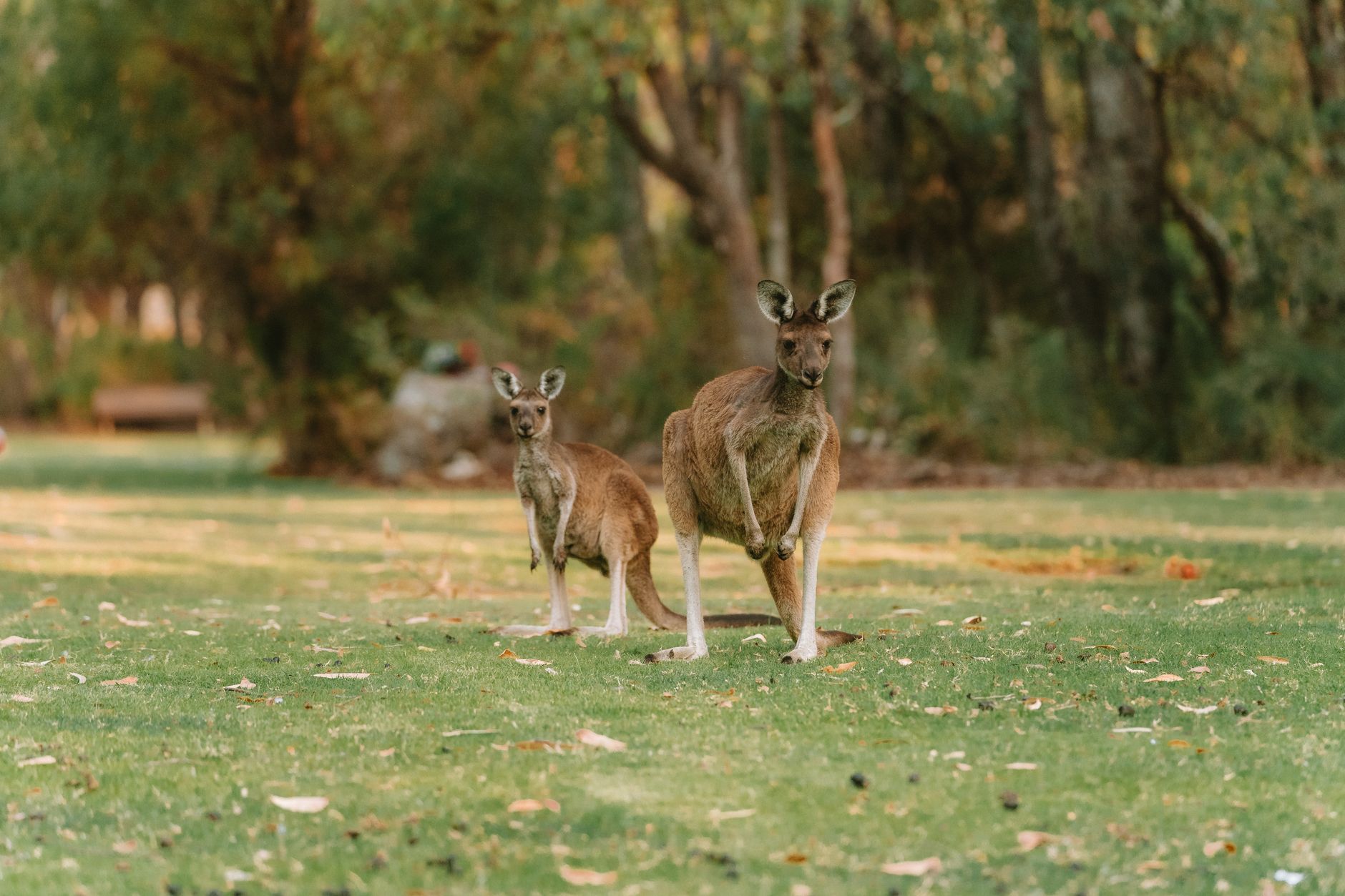
What Body Parts Do Kangaroos Use for Movement?
Kangaroos employ a fascinating array of body parts for movement, but they are most famous for their powerful hind legs and tail which are crucial for hopping and balance.

Introduction to Kangaroo Locomotion
Kangaroos, iconic symbols of Australia, are masters of locomotion, adapted to thrive in diverse environments. Their unique mode of transportation, hopping, is both energy-efficient at higher speeds and surprisingly agile. Understanding what body parts do kangaroos use for movement requires looking beyond just their powerful legs. It involves a complex interplay of muscles, bones, and tendons working in perfect synchronicity. This article delves into the specific anatomical structures and their functions contributing to the kangaroo’s remarkable mobility.

Is distilled water good for goldfish?
What colours are fish most attracted to?
Can you put your finger in a trout's mouth?
Is methylene blue anti bacterial?
The Mighty Hind Legs: The Primary Hopping Mechanism

The kangaroo’s hind legs are arguably their most defining feature and the cornerstone of their hopping ability. These limbs are significantly larger and more muscular than their forelimbs, designed for power and propulsion.
- Femur (Thigh Bone): The femur is robust and angled, providing leverage for powerful muscle attachments.
- Tibia and Fibula (Lower Leg Bones): These bones are elongated, contributing to the kangaroo’s significant stride length.
- Metatarsals: The foot is highly specialized. They are elongated, contributing to the bounding locomotion.
- Powerful Muscles: The gastrocnemius, soleus, and quadriceps are crucial for generating the force required for each hop. The Achilles tendon acts as a spring, storing and releasing energy.
The Tail: A Dynamic Balancing Act
Often overlooked, the kangaroo’s tail is more than just an appendage; it’s an integral component of their locomotion. It acts as a counterbalance, stabilizer, and even a propulsive force.
- Dynamic Counterbalance: During hopping, the tail shifts its position to maintain balance and prevent the kangaroo from tipping over.
- Fifth Limb: At slower speeds or when standing, the tail acts as a “fifth limb,” providing stability and support. The kangaroo can lift its hind legs off the ground and use its tail to form a tripod with its forelimbs.
- Propulsion Assistance (occasionally): While not the primary source of propulsion, the tail can assist in generating additional thrust, particularly when climbing or maneuvering in tight spaces.
Forelimbs: Support and Slow Movement
Unlike the powerful hind legs, the kangaroo’s forelimbs are smaller and more delicate. They play a vital role in support, grooming, and slow movement.
- Support and Stability: When grazing or moving at slower speeds, the forelimbs assist in supporting the kangaroo’s weight.
- Grooming and Manipulation: The forepaws are dexterous, allowing kangaroos to groom themselves and manipulate objects.
- Knuckle-Walking: When moving slowly, kangaroos employ a knuckle-walking gait, using their forelimbs for propulsion.
The Role of Tendons and Elastic Energy Storage
A key aspect of the kangaroo’s efficient hopping is the use of tendons to store and release elastic energy. This reduces the metabolic cost of hopping, allowing them to travel long distances with minimal effort.
- Achilles Tendon: This large tendon connects the calf muscles to the heel bone and is crucial for storing and releasing energy during each hop.
- Other Tendons: Tendons in the leg also contribute to elastic energy storage.
Muscles of the Abdomen and Back: Power Transfer and Stability
While the legs and tail are the most obvious components of kangaroo locomotion, the abdominal and back muscles also play a critical role.
- Core Stability: These muscles provide stability to the spine and pelvis, allowing for efficient transfer of power from the hind legs to the body.
- Torso Rotation Control: These muscles also control rotation of the torso during hopping, contributing to stability and balance.
How Different Kangaroo Species Use Their Anatomy
While all kangaroos share a basic anatomy, slight variations exist between species.
| Species | Primary Habitat | Forelimb Usage | Tail Size/Strength | Adaptation Emphasis |
|---|---|---|---|---|
| Red Kangaroo | Open plains | More frequent terrestrial use, weight bearing | Very strong, crucial for high speed hopping | Speed and distance across open landscapes |
| Eastern Grey Kangaroo | Forests | More arboreal use, climbing and reaching | Moderately strong, assists balance in varied terrain | Agility and maneuverability in denser vegetation |
| Tree Kangaroo | Rainforests | Primarily for climbing, grasping branches | Long and prehensile, acts as a fifth limb | Climbing trees and navigating arboreal environments |
Frequently Asked Questions (FAQs)
What makes a kangaroo’s hopping so efficient?
The kangaroo’s hopping is highly efficient due to a combination of factors, including their powerful hind legs, the elastic energy storage in their tendons, and the counterbalancing effect of their tail. This allows them to travel long distances with minimal energy expenditure.
How does the kangaroo’s tail help it balance?
The tail acts as a dynamic counterbalance. During hopping, the kangaroo adjusts the position of its tail to maintain balance and prevent tipping. When standing, the tail can also act as a fifth limb, providing additional support.
Are a kangaroo’s forelimbs useless for movement?
No, the forelimbs are not useless. While they are not used for hopping, they are essential for support, grooming, and slow movement. Kangaroos use a knuckle-walking gait when moving slowly.
Do all kangaroos hop the same way?
While the basic principle of hopping is the same, variations exist between species. Tree Kangaroos, for example, are primarily arboreal and have adapted forelimbs and tails for climbing.
What happens to a kangaroo’s movement if it loses its tail?
Losing a tail would significantly impair a kangaroo’s ability to balance during hopping. While they could still move, their agility and energy efficiency would be greatly reduced. The impact is more severe on fast moving species, with more stable and slower moving species showing less impairment.
How does a kangaroo’s anatomy help it escape predators?
The powerful hind legs enable kangaroos to hop at high speeds, allowing them to quickly escape from predators. Their excellent jumping ability also allows them to clear obstacles.
Can kangaroos walk normally?
Kangaroos can walk, but it is not their primary mode of transportation. They use a knuckle-walking gait, using their forelimbs and tail for support and propulsion at slow speeds.
What muscles are most important for a kangaroo’s hop?
The gastrocnemius, soleus, and quadriceps are crucial for generating the force required for each hop. These muscles work in conjunction with the tendons to store and release elastic energy.
How does the kangaroo’s skeleton support its hopping style?
The elongated leg bones, angled femur, and specialized foot all contribute to the kangaroo’s hopping ability. The skeleton is designed to withstand the high impact forces associated with hopping.
Are there any similarities between kangaroo locomotion and other animals?
The elastic energy storage used by kangaroos is similar to that used by other hopping animals, such as rabbits and frogs. However, the specific anatomy and biomechanics of kangaroo hopping are unique.
How does age affect a kangaroo’s movement capabilities?
Young kangaroos, or joeys, are less coordinated and less efficient hoppers than adults. Their muscles and bones are still developing, and they have not yet mastered the art of hopping. Older kangaroos may experience a decline in muscle mass and bone density, which can affect their hopping ability.
What is the evolutionary advantage of kangaroo hopping?
Hopping is an energy-efficient mode of locomotion that allows kangaroos to travel long distances in search of food and water. It also enables them to escape predators and navigate challenging terrain. This is particularly beneficial in the arid and semi-arid environments of Australia.