
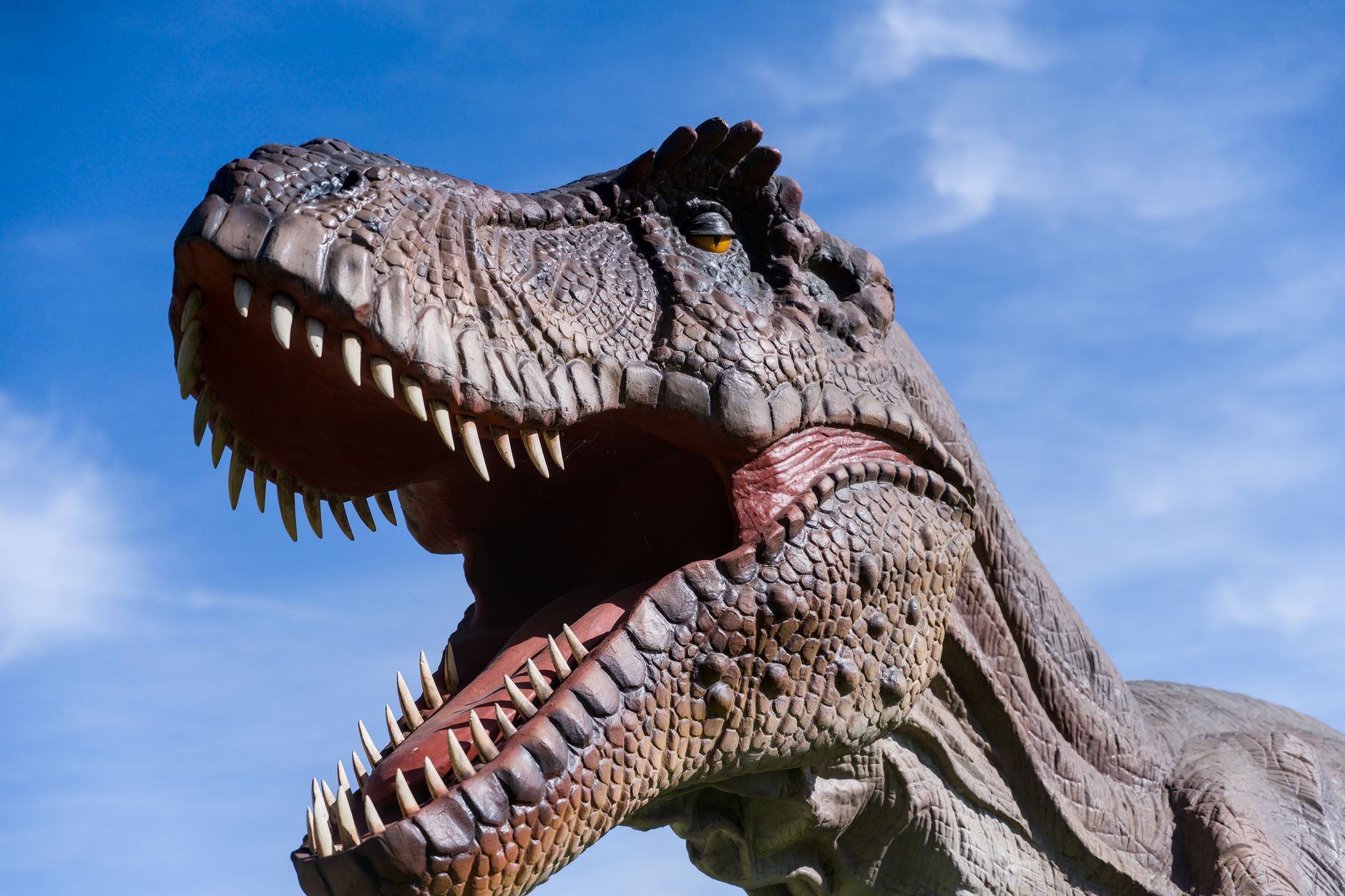
Is A T. rex Stronger Than a Megalodon? The Ultimate Prehistoric Showdown
This question ignites the imaginations of paleontology enthusiasts! While a land-based T. rex and an aquatic Megalodon never actually clashed, extrapolating from fossil evidence suggests that the T. rex possessed a stronger bite force, while the Megalodon dominated its environment with sheer size and likely overall body mass and power in water.

Background: Prehistoric Titans
The Tyrannosaurus rex and Otodus megalodon are arguably the most iconic predators in prehistoric history. One ruled the land, the other the seas. Understanding their individual strengths is key to comparing them. The question “Is A T. rex stronger than a Megalodon?” is compelling because it pits two apex predators against each other in a hypothetical battle of dominance.
- T. rex: A Late Cretaceous theropod dinosaur, known for its massive size, powerful legs, and bone-crushing jaws. Fossils have been found in western North America.
- Megalodon: A giant shark that lived from the Oligocene to the Pliocene epoch. Its enormous teeth and estimated size suggest it was a formidable marine predator. Fossil teeth have been found worldwide.

What colours are fish most attracted to?
Can you put your finger in a trout's mouth?
Is methylene blue anti bacterial?
Does aquarium salt raise pH in aquarium?
Assessing Strength: Bite Force and Beyond

When discussing strength, we need to consider different factors: bite force, overall body mass, agility, and weaponry.
- Bite Force: The force exerted by the jaws of an animal. Estimated in Newtons (N) or pounds per square inch (PSI).
- Body Mass: The overall weight of the animal, which influences its power and momentum.
- Agility: The speed and maneuverability of the animal.
- Weaponry: The physical attributes used for hunting and combat (e.g., teeth, claws, size).
T. Rex: The Tyrant Lizard King’s Arsenal
The T. rex was a formidable predator adapted for hunting large prey on land.
- Bite Force: Scientists estimate the T. rex bite force to be around 35,000-57,000 N (8,000-13,000 PSI). This bone-crushing bite allowed it to pulverize the bones of its prey.
- Leg Strength: Powerful legs provided stability and allowed for relatively swift movement, though it likely wasn’t exceptionally fast.
- Neck Muscles: Strong neck muscles enabled it to deliver powerful head thrusts and tear flesh.
- Teeth: Cone-shaped, serrated teeth designed for gripping and crushing bone.
Megalodon: The Ocean’s Leviathan
The Megalodon was a massive shark that dominated the oceans for millions of years.
- Size: Estimated to reach lengths of up to 15-20 meters (50-65 feet), significantly larger than the Great White Shark.
- Bite Force: While estimates vary, some studies suggest a bite force of up to 108,000-182,200 N (24,000-41,000 PSI) potentially exceeding that of a T. rex. Note that this is highly debated and reliant on modeling.
- Teeth: Large, serrated teeth designed for slicing through flesh.
- Body Mass: Its sheer size gave it incredible momentum and power in the water.
Is A T. rex stronger than a Megalodon?: Comparative Analysis
Comparing the strength of a T. rex and a Megalodon is complex due to their different environments.
| Feature | T. rex | Megalodon |
|---|---|---|
| Bite Force | ~35,000-57,000 N (8,000-13,000 PSI) | Potentially 108,000-182,200 N (24,000-41,000 PSI) (Debated) |
| Habitat | Terrestrial | Aquatic |
| Size | ~12 meters (40 feet) | ~15-20 meters (50-65 feet) |
| Mass | ~5-7 tons | ~50-100 tons (Estimates Vary Widely) |
| Key Strength | Bone-crushing bite, powerful legs | Sheer size, powerful swimming |
Conclusion: Different Strengths, Different Domains
While a direct comparison is impossible, the T. rex likely possessed a more focused, concentrated bite force geared towards crushing bone. However, the sheer size and potential bite force of Megalodon suggest that it was immensely powerful within its marine environment. So, Is A T. rex stronger than a Megalodon? The answer isn’t straightforward. Both animals were apex predators in their respective habitats, possessing strengths tailored to their environments. If strength is defined by bite force, the T. rex potentially wins; However, if strength is related to sheer mass and raw power in water, the Megalodon undoubtedly reigns supreme. Ultimately, comparing them is more about understanding their incredible adaptations than declaring a definitive winner.
Frequently Asked Questions (FAQs)
Could a T. rex swim?
While T. rex likely wasn’t an adept swimmer, evidence suggests they could enter water, potentially to cross rivers or hunt prey near the shoreline. Their powerful legs would have been useful for wading through shallow waters, though they were not designed for efficient swimming.
Did T. rex and Megalodon ever live at the same time?
No, T. rex lived during the Late Cretaceous period, while Megalodon lived much later, from the Oligocene to the Pliocene epoch. There’s a millions-of-years gap between their existences.
What would happen if a T. rex and Megalodon fought?
This is a completely hypothetical scenario. If a T. rex were somehow transported into the ocean, it would be at a severe disadvantage. The Megalodon’s aquatic environment would give it a significant advantage.
Was Megalodon the biggest shark ever?
Yes, Megalodon is considered to be the largest shark that ever lived, significantly larger than the modern Great White Shark.
What was the T. rex’s primary prey?
T. rex primarily preyed on large herbivorous dinosaurs, such as Triceratops and Edmontosaurus. Their powerful jaws and bone-crushing bite allowed them to take down these formidable animals.
What did Megalodon eat?
Megalodon likely preyed on large marine animals, including whales, seals, and giant sea turtles. Its enormous teeth were well-suited for slicing through the flesh of these large prey.
How do scientists estimate the bite force of extinct animals?
Scientists use several methods, including computer modeling, analyzing fossilized bite marks, and comparing the jaw structure and musculature of extinct animals to those of living relatives.
How long did Megalodon exist?
Megalodon existed for approximately 20 million years, from the Oligocene to the Pliocene epoch, before going extinct around 3.6 million years ago.
What caused the extinction of Megalodon?
The exact cause of Megalodon’s extinction is debated, but possible factors include climate change, declining prey populations, and competition from other predators, such as orcas.
Were T. rex scavengers or hunters?
T. rex was likely both a scavenger and a hunter. While it was capable of hunting live prey, it also likely scavenged carcasses when the opportunity arose.
Did T. rex have feathers?
While not all T. rex individuals necessarily had feathers, evidence suggests that juvenile T. rex at least possessed feathery plumage, which may have been lost as they matured.
What makes the question “Is A T. rex stronger than a Megalodon?” so compelling?
The appeal lies in the sheer scale and power of these creatures and the inherent fascination with pitting two apex predators against each other. It encourages speculation and highlights the evolutionary adaptations that allowed them to dominate their respective environments. The question “Is A T. rex stronger than a Megalodon?” sparks imagination and a love for prehistoric life.