
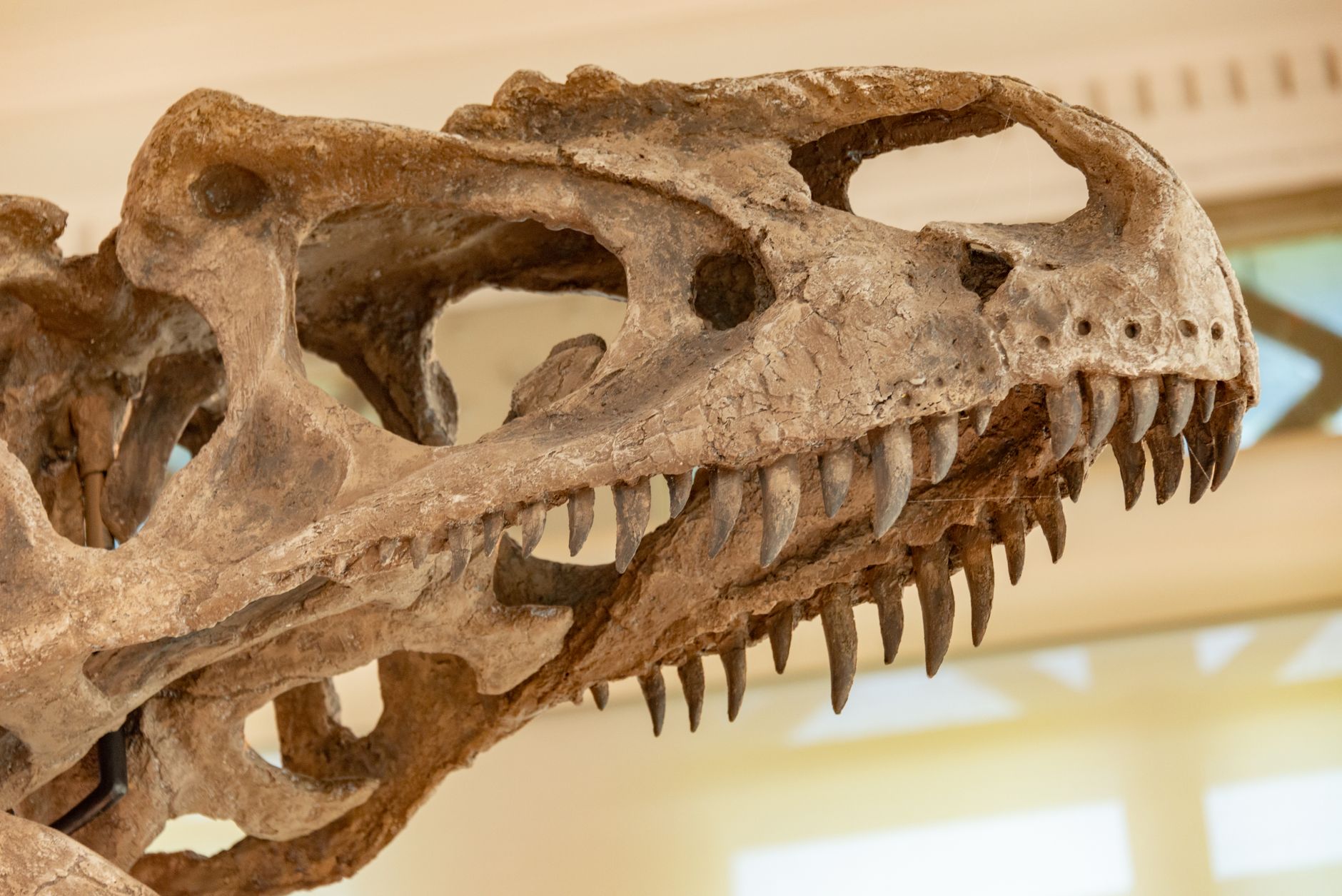
Is A Giganotosaurus A Carcharodontosaurus?: Untangling the Giant Meat-Eaters
The answer is no, a Giganotosaurus is not exactly a Carcharodontosaurus, but rather a member of the larger Carcharodontosauridae family, closely related to, but distinct from, the genus Carcharodontosaurus itself. This article clarifies the taxonomy, morphology, and significance of these apex predators.

Understanding the Carcharodontosauridae Family
The Carcharodontosauridae is a family of massive theropod dinosaurs that roamed the Earth during the Cretaceous period. Known for their immense size and serrated teeth resembling those of sharks (Carcharodon is the genus name for the Great White Shark), these dinosaurs were apex predators in their respective ecosystems. To grasp the nuances of why Is A Giganotosaurus A Carcharodontosaurus?, it’s crucial to understand the hierarchical classification of organisms. Think of it like this:
- Kingdom (Animalia)
- Phylum (Chordata)
- Class (Reptilia)
- Superorder (Dinosauria)
- Order (Saurischia)
- Suborder (Theropoda)
- Family (Carcharodontosauridae)
- Genus (Carcharodontosaurus, Giganotosaurus, Mapusaurus, etc.)
- Species (Carcharodontosaurus saharicus, Giganotosaurus carolinii, etc.)
This classification clearly shows that Giganotosaurus and Carcharodontosaurus belong to the same family, but are separate genera.

What colours are fish most attracted to?
Can you put your finger in a trout's mouth?
Is methylene blue anti bacterial?
Does aquarium salt raise pH in aquarium?
Giganotosaurus: The Southern Giant

Giganotosaurus carolinii, discovered in Argentina, is among the largest known terrestrial predators. Its estimated size rivals, and possibly exceeds, that of Tyrannosaurus rex. Fossil evidence suggests:
- Size: Up to 12-13 meters (40-43 feet) in length.
- Weight: Estimated between 6-8 tons.
- Skull: Over 1.6 meters (5.2 feet) long.
- Location: South America (Cenomanian age of the Late Cretaceous).
The discovery of Giganotosaurus provided crucial insight into the diversity and distribution of giant theropods, challenging the long-held belief that Tyrannosaurus rex was the undisputed king of the dinosaurs in terms of size.
Carcharodontosaurus: The Shark-Toothed Lizard
Carcharodontosaurus, meaning “shark-toothed lizard,” is another formidable predator within the Carcharodontosauridae family. Two species are currently recognized: Carcharodontosaurus saharicus and Carcharodontosaurus iguidensis. Key characteristics include:
- Size: Similar to Giganotosaurus, reaching lengths of up to 12 meters (39 feet).
- Weight: Estimated between 6-7 tons.
- Teeth: Long, serrated teeth designed for slicing through flesh.
- Location: North Africa (Albian to Cenomanian ages of the Late Cretaceous).
Carcharodontosaurus fossils have been found in various North African countries, indicating a wide geographic distribution during the Cretaceous period.
Key Differences Between Giganotosaurus and Carcharodontosaurus
While both genera share a common ancestry and belonged to the Carcharodontosauridae family, certain anatomical differences distinguish them. These subtle, yet significant, variations include:
- Skull Morphology: Giganotosaurus had a flatter, more elongated skull compared to the taller, more robust skull of Carcharodontosaurus.
- Braincase Structure: Differences exist in the shape and structure of the braincase between the two genera.
- Nasal Crest: Carcharodontosaurus possessed a more prominent nasal crest compared to Giganotosaurus.
- Vertebrae: Subtle differences in the structure of the vertebrae can be observed between the two genera.
| Feature | Giganotosaurus carolinii | Carcharodontosaurus saharicus |
|---|---|---|
| Skull Shape | Flatter, Elongated | Taller, More Robust |
| Nasal Crest | Less Prominent | More Prominent |
| Geographic Region | South America | North Africa |
| Geological Age | Cenomanian | Albian to Cenomanian |
The Importance of Cladistics in Dinosaur Taxonomy
Cladistics is a method of classifying organisms based on their shared evolutionary history. It uses shared derived characteristics (synapomorphies) to construct branching diagrams, or cladograms, that represent the evolutionary relationships between different groups. Cladistic analysis has been instrumental in understanding the relationships within the Carcharodontosauridae family, including the placement of Giganotosaurus and Carcharodontosaurus. It helps answer the question, Is A Giganotosaurus A Carcharodontosaurus?, by clarifying their positions within the broader family tree. The placement of the genera within the larger Carcharodontosauridae emphasizes subtle differences as the species diverged over millions of years.
The Debate Over Size and Predatory Behavior
For years, paleontologists have debated which theropod was the largest: Tyrannosaurus rex, Giganotosaurus, or Carcharodontosaurus. Estimating the size of extinct animals based on incomplete fossil remains is a challenging task. The ongoing discovery of new fossils and advancements in biomechanical modeling continue to refine our understanding of these giants. Regardless of which caracharodontosaurid was the absolute largest, all three were undoubtedly apex predators that exerted significant influence on their respective ecosystems. The debate about absolute size is less important than the understanding of how these distinct genera occupied distinct ecological niches and how their differences impacted their predatory behaviors.
The Evolutionary Significance
The Carcharodontosauridae family, including both Giganotosaurus and Carcharodontosaurus, represents a fascinating example of convergent evolution. These dinosaurs independently evolved large size and similar predatory adaptations in different parts of the world. Their existence demonstrates that similar ecological pressures can lead to the evolution of similar traits in unrelated groups. Understanding their evolutionary history helps illuminate the complex interplay between environment and evolution.
Frequently Asked Questions (FAQs)
Was Giganotosaurus bigger than Tyrannosaurus rex?
While estimates vary, many paleontologists believe that Giganotosaurus was slightly larger than Tyrannosaurus rex. However, size estimates are based on incomplete fossil remains, and definitive answer is elusive. The available evidence suggests they were in the same ballpark.
What does Carcharodontosaurus mean?
The name Carcharodontosaurus literally translates to “shark-toothed lizard,” referring to the dinosaur’s long, serrated teeth, which resemble those of sharks (Carcharodon).
Where were Giganotosaurus fossils found?
Giganotosaurus carolinii fossils have been found exclusively in the Patagonian region of Argentina, South America.
Did Giganotosaurus and Carcharodontosaurus live at the same time?
While they existed during the Late Cretaceous period, Giganotosaurus and Carcharodontosaurus lived in different geological ages. Carcharodontosaurus fossils date to the Albian and Cenomanian ages, while Giganotosaurus dates only to the Cenomanian age.
What did Giganotosaurus eat?
Giganotosaurus likely preyed on large sauropod dinosaurs that inhabited South America during the Cretaceous period. Its immense size and powerful bite force would have made it a formidable predator.
How powerful was the bite force of Giganotosaurus?
While difficult to determine precisely, estimates suggest that Giganotosaurus had a significant bite force, though possibly less than that of Tyrannosaurus rex. Its serrated teeth were designed for slicing flesh, rather than crushing bone.
Are there any complete Giganotosaurus skeletons?
Unfortunately, no complete Giganotosaurus skeletons have been discovered. Most knowledge is based on a partial skeleton, including a skull and several bones.
What other dinosaurs were related to Giganotosaurus and Carcharodontosaurus?
Besides Giganotosaurus and Carcharodontosaurus, other members of the Carcharodontosauridae family include Mapusaurus, Tyrannotitan, and Shaochilong.
What is the significance of the discovery of Giganotosaurus?
The discovery of Giganotosaurus expanded the understanding of the diversity of large theropod dinosaurs and challenged the notion that Tyrannosaurus rex was the largest predator.
How did Carcharodontosaurus become extinct?
The extinction of Carcharodontosaurus and other Carcharodontosauridae dinosaurs is likely related to major environmental changes at the end of the Cretaceous period, including rising sea levels and changing vegetation.
What does cladistics tell us about Is A Giganotosaurus A Carcharodontosaurus?
Cladistics shows that Giganotosaurus is a distinct genus within the Carcharodontosauridae family, separate from Carcharodontosaurus. This classification acknowledges their close relationship while recognizing their unique features.
What makes the Carcharodontosauridae family special?
The Carcharodontosauridae family is special due to the presence of some of the largest terrestrial predators to ever walk the earth. Their evolutionary history and anatomical features offer valuable insights into the evolution of giant theropod dinosaurs. The family is key to understanding the question of Is A Giganotosaurus A Carcharodontosaurus?, as it shows the similarities that lead to some confusion, as well as the distinct differences.