

How Old Are Raccoons When They Open Their Eyes? Unveiling the Mysteries of Raccoon Development
Raccoons, those masked bandits of the animal kingdom, develop through fascinating stages. The age at which they open their eyes is a crucial milestone: Raccoons typically open their eyes between 18 and 24 days of age, marking a significant step in their early development and dependence on their mother.

Understanding Early Raccoon Development
The early life of a raccoon is characterized by rapid growth and development. Understanding this phase is crucial for both wildlife enthusiasts and those involved in wildlife rehabilitation. Let’s delve into the specifics:
- Gestation Period: Raccoon gestation lasts approximately 63 days.
- Birth: Kits are born in the spring, typically in litters of 2-5 individuals.
- Early Dependence: Newborn raccoons are entirely dependent on their mother for warmth, food, and protection. They are born blind, deaf, and with minimal fur.
- Nest Selection: Mothers often choose den sites in tree cavities, attics, or under decks to provide safe and secure environments for their young.

What is the GREY African clawed frog?
Is distilled water good for goldfish?
What colours are fish most attracted to?
Can you put your finger in a trout's mouth?
The Importance of Sight for Raccoon Development
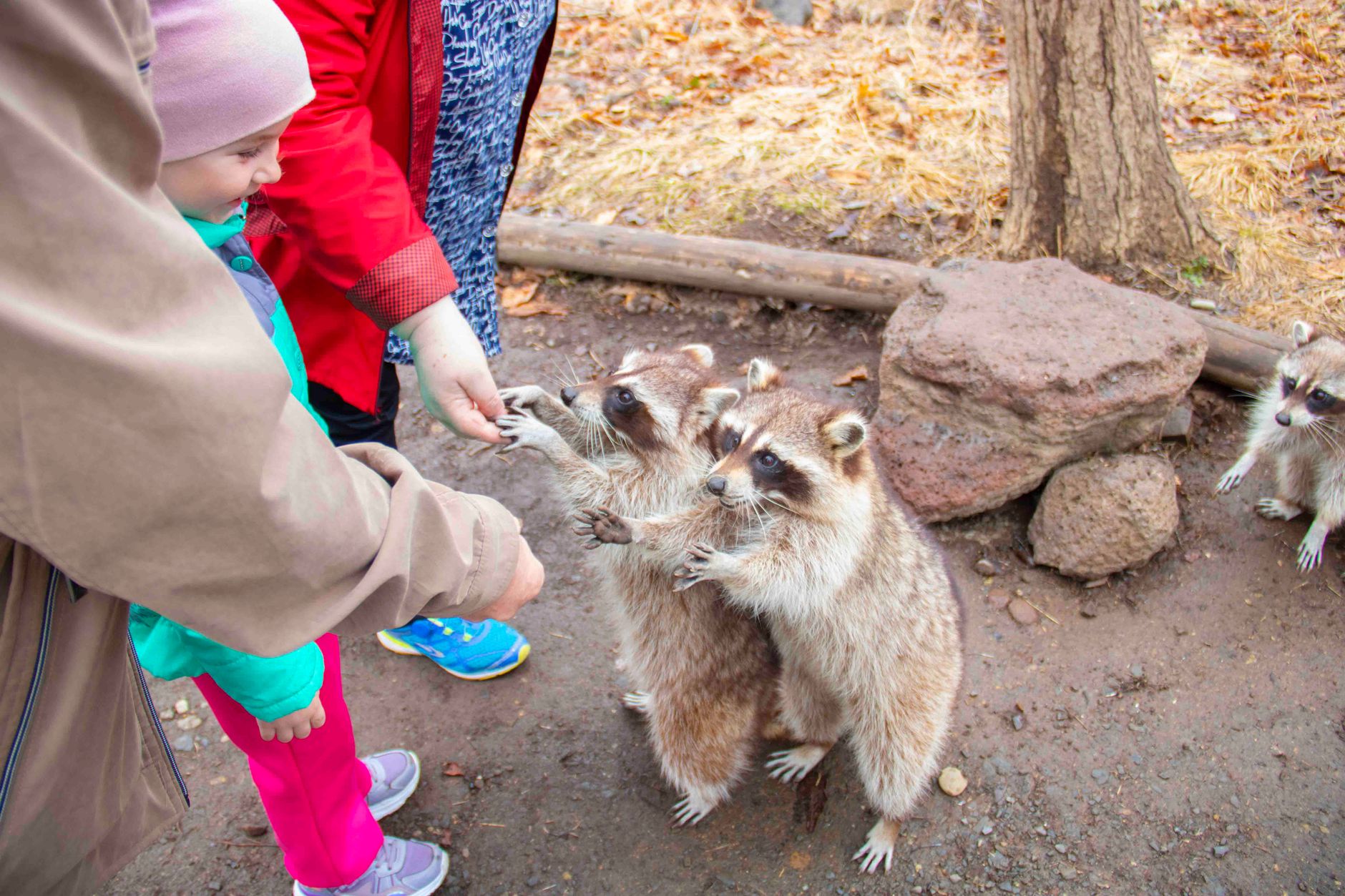
The opening of a raccoon’s eyes is a pivotal moment in its development, signifying increased awareness of its surroundings and paving the way for increased independence. Here’s why it’s so important:
- Improved Mobility: Sight allows kits to navigate their den and, eventually, explore their environment more effectively.
- Enhanced Feeding: Visual cues aid in finding food, initially relying on their mother but eventually learning to forage independently.
- Predator Avoidance: Developing eyesight is crucial for detecting potential threats and avoiding predators.
- Social Interaction: Vision facilitates social interaction with siblings and their mother, enhancing learning and bonding.
The Development Process: From Birth to Open Eyes
The journey from a blind, helpless kit to a curious, exploring young raccoon is a carefully orchestrated process. The development unfolds in stages, leading up to the momentous day when their eyes finally open.
- First Week: Kits are completely reliant on their mother, primarily sleeping and nursing.
- Second Week: Fur begins to develop, and the kits start to gain weight rapidly.
- Third Week: The first signs of eye opening may appear towards the end of this week, with a slight parting of the eyelids.
- Fourth Week: Most kits will have their eyes fully open by this point. Vision is still developing, but they can perceive light and movement.
- Fifth Week Onward: Kits begin to become more active and start exploring their immediate surroundings.
Factors Influencing Eye-Opening Age
While the typical range for when how old are raccoons when they open their eyes? is between 18 and 24 days, several factors can influence this timeline.
- Nutrition: Proper nutrition during gestation and early life is crucial for healthy development. Malnourished kits may experience delayed development.
- Genetics: Like all animals, genetics plays a significant role in the development of raccoons.
- Environmental Conditions: Extreme temperatures or stress can potentially impact development, although this is less directly linked to eye-opening than nutrition.
- Health Issues: Certain health problems or congenital defects could delay or affect the opening of their eyes.
Comparing Raccoon Development to Other Mammals
It is useful to compare raccoon development with that of other mammals to appreciate the specifics of their growth timeline.
| Animal | Gestation Period | Eye Opening (approx.) |
|---|---|---|
| Raccoon | 63 days | 18-24 days |
| Dog | 63 days | 10-14 days |
| Cat | 63 days | 7-10 days |
| Human | 280 days | Immediately |
This comparison highlights that raccoons fall somewhere in the middle of these common animals regarding eye-opening timeframe.
Wildlife Rehabilitation Considerations
Knowing how old are raccoons when they open their eyes? is vital for those involved in wildlife rehabilitation. Orphaned or injured kits require specific care tailored to their developmental stage.
- Age Assessment: Determining the age of a kit is crucial for providing appropriate care. The state of eye-opening is a key indicator.
- Nutritional Needs: Kits require specialized formulas mimicking their mother’s milk.
- Stimulation: Providing appropriate stimulation, such as soft toys or gentle handling, helps with their development.
- Release: Rehabilitated raccoons should be released back into the wild in an appropriate location and at a suitable age when they have the skills to survive on their own.
Ethical Considerations
Observing raccoons and their development is a fascinating experience. However, it’s essential to do so ethically.
- Avoid Disturbing Dens: Never disturb a raccoon den, especially during nesting season.
- Observe from a Distance: Observe wildlife from a safe distance to avoid causing stress.
- Do Not Feed Raccoons: Feeding raccoons can lead to dependency and negatively impact their natural foraging behavior.
Frequently Asked Questions about Raccoon Eye Development
What does it mean if a raccoon kit’s eyes are still closed after 24 days?
If a raccoon kit’s eyes remain closed after 24 days, it could indicate a developmental delay. This might be due to malnutrition, illness, or a congenital condition. It’s recommended to consult with a wildlife rehabilitator for assistance.
Can raccoons see clearly immediately after opening their eyes?
No, a raccoon’s vision is not fully developed immediately after their eyes open. Their eyesight will continue to improve over the following weeks as their visual cortex matures and their eyes learn to focus.
Are there any noticeable differences in behavior after a raccoon kit opens its eyes?
Yes, significant behavioral changes occur. You will often see that the raccoon begins to become more curious and explores its environment within the den. It starts reacting more strongly to its environment.
What is the best way to tell the age of a raccoon kit if you don’t know when it was born?
Besides eye opening, various physical characteristics can help estimate a raccoon kit’s age. These include body size, fur development, and the presence or absence of teeth. Wildlife rehabilitators are skilled at using these cues to determine a kit’s age.
How long do raccoon kits stay with their mother after their eyes open?
Raccoon kits typically remain with their mother for several months after their eyes open. They continue to nurse for around two to three months and learn essential survival skills from her. The kits usually stay with the mother through the winter.
Is it normal for one eye to open before the other?
Yes, it is not uncommon for one eye to open slightly before the other in raccoon kits. The time difference is usually only by a day or two.
What should I do if I find a raccoon kit with its eyes closed and seems to be alone?
First, observe from a distance for several hours to see if the mother returns. If the kit appears injured or if the mother does not return after an extended period, contact a local wildlife rehabilitator for advice.
How often do raccoon mothers check on their kits?
The frequency with which raccoon mothers check on their kits depends on various factors, including the age of the kits, the availability of food, and the presence of potential threats. Generally, the mother will spend a lot of time with the kits for the first few weeks, then start spending increasing amounts of time foraging for food and away from the den.
What kind of environment helps kits develop normally?
A safe, warm, and clean environment is crucial for normal raccoon development. The den should be protected from predators and the elements. Also, it’s helpful to provide enriching elements, like logs and toys.
Do raccoons have good vision in the dark?
Yes, raccoons have excellent night vision. Their eyes are adapted to see well in low light conditions, which aids them in foraging and navigating their environment at night. This is facilitated by a tapetum lucidum, a reflective layer behind the retina.
What happens if a raccoon’s eyes don’t open properly?
If a raccoon’s eyes don’t open properly, it can lead to vision problems and reduced chances of survival in the wild. It’s vital to seek assistance from a wildlife rehabilitator if you notice this happening.
How can I help protect raccoon families in my neighborhood?
There are several ways to help protect raccoon families, including securing garbage cans, trimming tree branches that provide access to roofs, and providing safe nesting locations such as raccoon boxes. Avoid trapping or relocating raccoons, as this can disrupt family units.