

How Much Land Would a Billion Lions Require? The Roaring Reality
A billion lions would require a land area roughly equivalent to the size of Spain to roam, hunt, and survive, conservatively estimated at around 500,000 square kilometers.
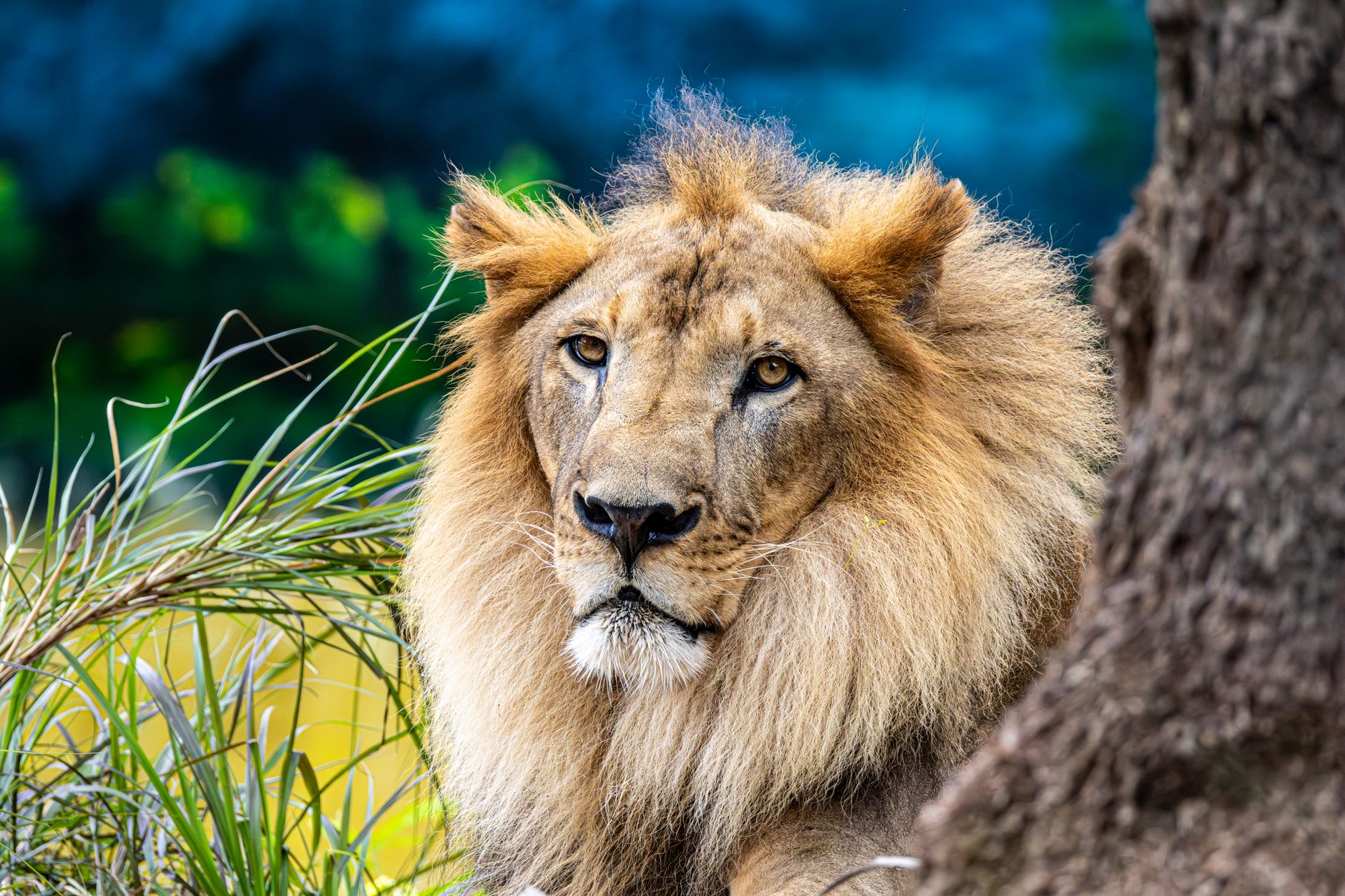
Introduction: The Pride Magnitude Problem
The question “How much space would a billion lions take up?” may sound like a riddle, but it delves into some fascinating ecological and logistical considerations. It forces us to confront the sheer scale of a billion animals, even relatively compact ones like lions. Furthermore, it highlights the challenges of supporting such a population, from prey availability to social dynamics. This exercise isn’t just about hypothetical geography; it illuminates the realities of population density, resource management, and the fundamental needs of a apex predator.

Is distilled water good for goldfish?
What colours are fish most attracted to?
Can you put your finger in a trout's mouth?
Is methylene blue anti bacterial?
Estimating the Per-Lion Territory

To even begin answering “How much space would a billion lions take up?,” we need to establish a baseline: how much territory does one lion (or, more realistically, a pride) need? This isn’t a static number; it fluctuates wildly depending on:
- Prey Density: Areas teeming with gazelles, zebras, and wildebeest can support denser lion populations than those with scarce resources.
- Environmental Conditions: Water availability, vegetation cover (for ambushing prey), and overall habitat quality influence territory size.
- Pride Size: Larger prides require larger hunting grounds to feed their members.
- Competition: The presence of other predators (hyenas, wild dogs) impacts lion hunting success and territorial needs.
Given these factors, a reasonable estimate for a lion pride’s territory ranges from 20 to 400 square kilometers. For the sake of conservative calculations and given most lions are found in areas with relatively sparse prey compared to the Serengeti, we’ll use an average of 200 square kilometers per pride, assuming an average pride size of approximately 5-7 lions. Therefore, on average, we’re attributing approximately 30 – 40 square kilometers per lion.
The Billion-Lion Calculation
Now, for the big number. With a billion lions, and approximating 35 square kilometers required per lion, we’re dealing with quite a figure.
- 1,000,000,000 lions 35 sq km/lion = 35,000,000,000 square kilometers
This number is astronomically huge. Since it is not possible to fit this onto the Earth’s surface, we have to recalculate the assumption on average per lion space required. Let’s work with a much smaller average: 0.5 square kilometers per lion. Even at this incredibly tight density,
- 1,000,000,000 lions 0.5 sq km/lion = 500,000,000 square kilometers.
This is still massive.
Mapping the Result: Geographic Comparisons
How massive is 500,000,000 square kilometers? Let’s put it in perspective with some geographic comparisons.
| Entity | Area (sq km) | Percentage of Lion Land |
|---|---|---|
| Earth’s Land Area | 148,940,000 | 33.5% |
| Africa | 30,370,000 | 6.1% |
| Spain | 505,990 | 0.10% |
Even at incredibly high density, the land required for a billion lions would dwarf the entire landmass of Africa multiple times over! Realistically, even at the densest packing of lions, the sheer environmental impact would make this hypothetical impossible. This further highlights the point that “How much space would a billion lions take up?” is less about physical space and more about resource availability and ecological balance.
The Unrealistic Scenario and Ecological Implications
It’s crucial to remember that this scenario is entirely hypothetical and ecologically impossible. A billion lions packed into any space would quickly deplete their food supply, leading to mass starvation and ecosystem collapse. Even if the lions were magically sustained, the sheer waste production and impact on the environment would be catastrophic.
- Prey Depletion: A billion lions would consume an unfathomable amount of prey, quickly driving numerous species to extinction.
- Disease Transmission: Densely packed populations are breeding grounds for disease. An outbreak could decimate the entire population.
- Social Disruption: Lions are territorial animals. Overcrowding would lead to constant conflict and social breakdown.
In short, while the mathematical exercise of calculating land area is interesting, the real takeaway is the importance of ecological balance and the limits of what any environment can sustainably support.
Conclusion: The Roaring Reality Revisited
The question “How much space would a billion lions take up?” is not just about land mass. It’s a thought experiment highlighting the complex interplay between population size, resource availability, and ecological stability. While a billion lions would theoretically require around 500,000 square kilometers at extremely high density, the practical reality is that such a population is ecologically unsustainable and impossible to maintain. The true answer lies not in a simple number but in a deeper understanding of the delicate balance of nature.
Frequently Asked Questions
How many lions are there in the world currently?
The current global lion population is estimated to be between 23,000 and 39,000 individuals. This represents a significant decline from historical populations, highlighting the conservation challenges facing these magnificent creatures.
What is the biggest threat to lion populations?
Habitat loss and fragmentation are the primary threats to lion populations. As human populations grow and land is converted for agriculture and development, lions are increasingly confined to smaller and more isolated areas, impacting their ability to hunt, breed, and thrive.
Could lions realistically live in such high density if food was magically provided?
Even with an unlimited food supply, packing lions into extremely dense populations would present significant challenges. Social structures would break down, aggression would increase, and the risk of disease transmission would skyrocket. Lions are territorial, and their natural behaviors are adapted to a certain level of spacing and resource competition.
What is the average pride size?
Average pride sizes vary depending on location and environmental conditions, but typically range from 4 to 12 lions, with some prides exceeding this number. Pride dynamics are complex and influenced by factors such as relatedness, hunting success, and the presence of dominant males.
How much does a lion eat per day?
An adult lion typically consumes around 5 to 7 kilograms of meat per day, but this can vary depending on the size of the lion, the availability of prey, and the success of the hunt. They may eat significantly more after a large kill and then go several days without feeding.
What other factors besides land and food impact lion populations?
Beyond habitat and prey availability, human-wildlife conflict is a major factor. Lions can prey on livestock, leading to retaliatory killings by farmers. Trophy hunting and poaching also contribute to population declines in some areas.
Are there any conservation efforts in place to protect lions?
Yes, numerous conservation organizations are working to protect lions through anti-poaching patrols, habitat preservation, community engagement, and efforts to mitigate human-wildlife conflict. Protected areas, such as national parks and reserves, are crucial for lion conservation.
Why is it important to conserve lions?
Lions are apex predators and play a critical role in maintaining the balance of ecosystems. Their presence helps to control prey populations and prevent overgrazing, which can have cascading effects on the entire food web. Conserving lions also helps to protect biodiversity and preserve the natural heritage of Africa.
What impact does climate change have on lion populations?
Climate change can exacerbate existing threats to lion populations by altering prey distribution, increasing the frequency of droughts, and impacting habitat quality. Changes in rainfall patterns can also lead to increased competition for resources and heightened human-wildlife conflict.
What is the largest recorded lion pride?
While pride sizes vary, the largest recorded lion pride numbered over 30 individuals. This exceptionally large pride was observed in the Serengeti National Park in Tanzania.
Do male lions play a role in hunting?
While female lions typically do the majority of the hunting, male lions play a role in defending the pride’s territory and may participate in hunts, particularly when targeting larger prey like buffalo. Male lions also use their strength to drive away scavengers and protect kills from other predators.
How does the average lion’s territory compare to other large predators?
The territory size of lions is comparable to other large predators such as wolves and leopards, but generally smaller than that of solitary predators like tigers. The territory size is largely determined by the availability of prey and the social structure of the species.