
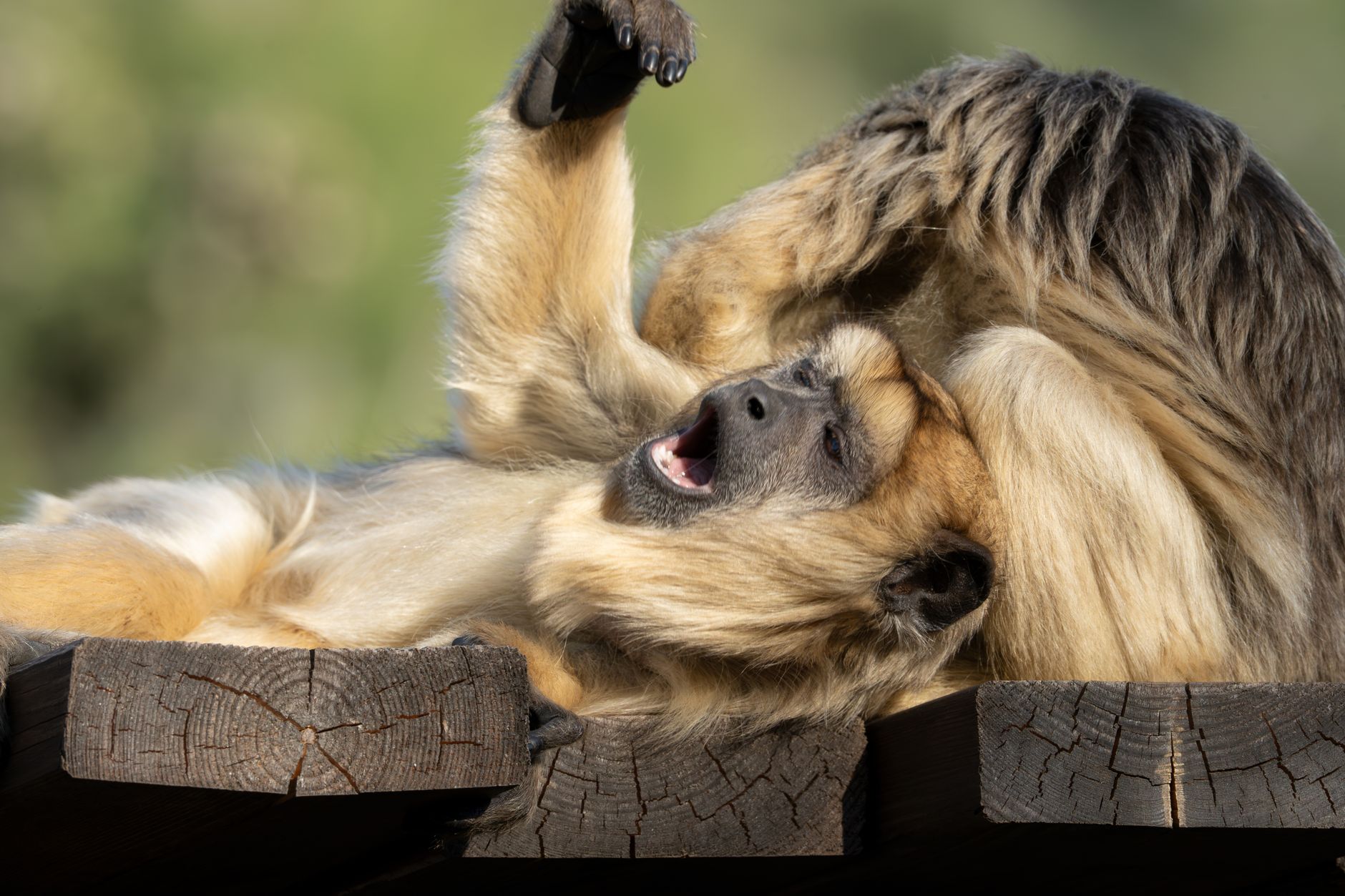
How Loud is a Howler Monkey? Unveiling Nature’s Amplifiers
The remarkable vocal prowess of the howler monkey allows them to produce sounds reaching up to 140 decibels, making them arguably the loudest land animals on Earth. But how loud is a howler monkey really?

Understanding the Howler Monkey’s Sonic Boom
Howler monkeys, belonging to the Alouatta genus, are medium-sized primates native to Central and South American forests. They are renowned not just for their physical appearance but, more significantly, for their extraordinary vocalizations. Their ability to generate such potent sounds is a product of unique anatomical adaptations, specifically within their hyoid bone.

What colours are fish most attracted to?
Can you put your finger in a trout's mouth?
Is methylene blue anti bacterial?
Does aquarium salt raise pH in aquarium?
The Anatomy of a Roar: Hyoid Bone and Vocal Power

The key to understanding how loud is a howler monkey lies in its hyoid bone. This horseshoe-shaped bone in the neck, which supports the tongue, is significantly enlarged and acts as a resonating chamber. In howler monkeys, the hyoid bone is hollow and balloon-like, allowing it to amplify sound produced by the larynx. Males generally possess larger hyoid bones than females, contributing to the difference in their vocal range and intensity.
Decibels Decoded: Putting the Volume into Perspective
To appreciate how loud is a howler monkey, it’s helpful to understand decibel levels. Decibels (dB) are a logarithmic unit used to measure sound intensity. Here’s a comparison to illustrate the point:
- Whisper: 30 dB
- Normal Conversation: 60 dB
- Lawnmower: 90 dB
- Rock Concert: 120 dB
- Howler Monkey Howl: 85-140 dB
- Jet Engine at 100 feet: 140 dB
A howl at 140 dB is comparable to the sound of a jet engine at close range, potentially causing immediate hearing damage with prolonged exposure.
Why the Racket? The Purpose of the Howl
The primary purpose of howler monkey vocalizations is territorial defense and mate attraction. Their loud calls serve as a warning to other groups, signaling their presence and asserting their claim over resources. This reduces the need for direct physical confrontation, conserving energy and minimizing the risk of injury. The calls can also be used to communicate within the group, to alert them to danger or to coordinate activities. Mating calls are another component; males often engage in howling duets and competitions to attract females.
Factors Affecting Howler Monkey Volume
While the average howl can reach impressive decibel levels, several factors can influence the actual volume:
- Species: Different Alouatta species have slightly varying vocal capacities.
- Individual Size: Larger males tend to produce louder howls.
- Location: Environmental factors, such as forest density and topography, can affect sound propagation.
- Group Dynamics: Howls might be louder during territorial disputes or mating seasons.
- Age: Younger howler monkeys may not have fully developed vocal abilities.
The Implications of Howler Monkey Loudness
The intense vocalizations of howler monkeys have implications for both the animals themselves and the surrounding ecosystem. Their howls are crucial for their survival, playing a vital role in their social structure and territorial defense. In areas where they are present, the sound of howler monkeys is an integral part of the natural soundscape. However, habitat fragmentation and human encroachment can disrupt their territories and increase the need for louder, more frequent howls, potentially impacting their well-being and energy expenditure.
Frequently Asked Questions about Howler Monkey Vocalizations
Why do howler monkeys howl so loudly?
Howler monkeys howl loudly primarily to establish and defend their territories. The intense volume of their calls allows them to communicate their presence to neighboring groups from a considerable distance, reducing the need for physical confrontations and conserving energy. This is vital for resource control and minimizing risks of injury.
What anatomical features enable such loud howls?
The enlarged hyoid bone is the key anatomical adaptation responsible for the howler monkey’s loud vocalizations. This bone acts as a resonating chamber, amplifying the sound produced by the larynx. Males typically have larger hyoid bones than females, enabling them to produce louder calls.
Are all howler monkey species equally loud?
No, there are variations in the loudness of calls among different howler monkey species. This is due to differences in their anatomical structure and social behavior. However, all howler monkey species are known for their loud vocalizations compared to other primates.
Can howler monkey howls cause hearing damage to humans?
Prolonged exposure to howler monkey howls at close range can potentially cause hearing damage in humans. The sound levels can reach up to 140 decibels, comparable to a jet engine at close proximity. It’s important to maintain a safe distance and limit exposure to these loud calls.
Do female howler monkeys howl as loudly as males?
Generally, male howler monkeys howl louder than females. This is because males typically have a larger hyoid bone, which acts as a more efficient resonating chamber. Female howls, while still loud, are generally not as intense as those of males.
How far can a howler monkey’s howl be heard?
A howler monkey’s howl can be heard from a distance of up to several kilometers (approximately 3-5 kilometers) in dense rainforest environments. The exact distance depends on factors such as forest density, wind conditions, and topography.
Do howler monkeys howl at specific times of the day?
Howler monkeys typically howl most frequently in the early morning and late evening. These periods coincide with increased activity and territorial marking. However, they may also howl throughout the day in response to disturbances or territorial challenges.
What triggers a howler monkey to start howling?
Various factors can trigger howler monkeys to start howling, including territorial intrusions, presence of predators, mating displays, and social communication within the group. The triggers may vary depending on the specific situation and the group’s dynamics.
Do howler monkeys ever damage their own hearing with their loud calls?
While it seems counterintuitive, howler monkeys have anatomical adaptations that help protect their hearing from the intense sound levels they produce. These adaptations may include specialized structures in the inner ear that dampen the vibrations.
Are howler monkeys the loudest animals on Earth?
Howler monkeys are arguably the loudest land animals on Earth. While some marine animals, such as blue whales, produce louder sounds, howler monkeys generate the loudest vocalizations among terrestrial species.
How does habitat loss affect howler monkey vocalizations?
Habitat loss can significantly impact howler monkey vocalizations. As their territories shrink and become fragmented, they may need to howl more frequently and loudly to defend their resources and communicate across greater distances, potentially leading to increased stress and energy expenditure.
Is studying howler monkey vocalizations important for conservation efforts?
Yes, studying howler monkey vocalizations is crucial for conservation efforts. Analyzing their calls can provide valuable insights into their population size, social structure, territorial boundaries, and responses to environmental changes. This information can help inform conservation strategies and protect their habitats. Understanding how loud is a howler monkey and why that is matters immensely.