

How Long Will Hermit Crabs Stay Buried? Understanding the Molting Process
Hermit crabs bury themselves for various reasons, most notably for molting, a crucial process for growth; How long they stay buried varies significantly depending on the crab’s size, age, and environmental conditions, but can range from a few weeks to several months.

Introduction: The Mysterious World of Buried Hermit Crabs
Hermit crabs, fascinating crustaceans prized for their quirky behavior and dependence on borrowed shells, often disappear beneath the substrate in their enclosures. This behavior, although sometimes alarming to new owners, is perfectly natural and usually indicates one of two things: stress or the vital process of molting. Understanding why and how long will hermit crabs stay buried is paramount for responsible hermit crab ownership. Incorrect assumptions about this period can lead to unnecessary disturbances, potentially harming the crab.

What colours are fish most attracted to?
Can you put your finger in a trout's mouth?
Is methylene blue anti bacterial?
Does aquarium salt raise pH in aquarium?
The Significance of Molting
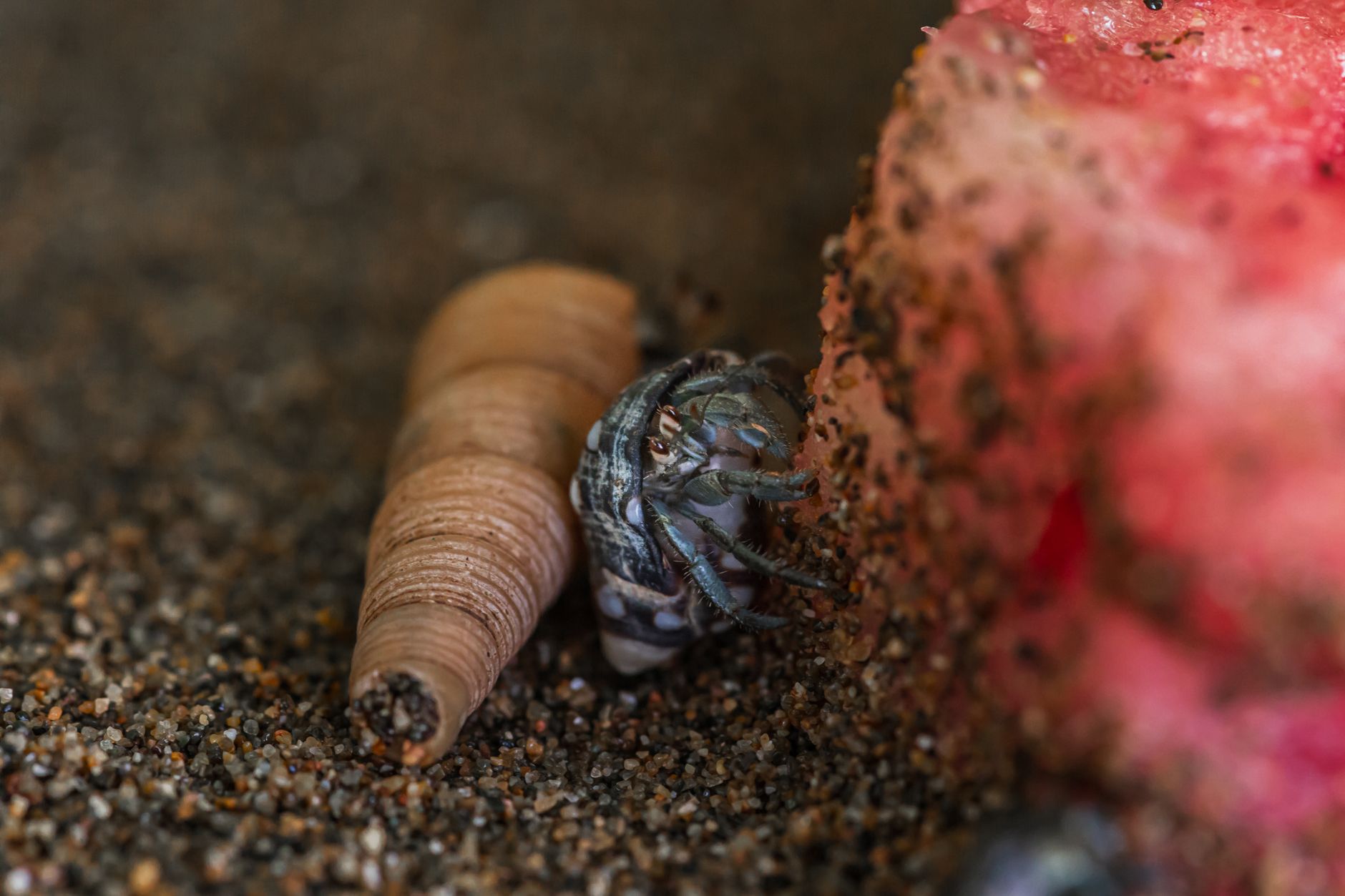
Molting is the process where a hermit crab sheds its exoskeleton to allow for growth. Since the exoskeleton is rigid, it must be replaced as the crab grows larger. This is a vulnerable period for the crab, as its new exoskeleton is soft and easily damaged. Burying themselves provides protection from predators and other hermit crabs within the enclosure.
- The molting process is essential for growth.
- The crab is extremely vulnerable during and after molting.
- A safe, undisturbed environment is crucial for successful molting.
Factors Influencing the Duration of Burial
How long will hermit crabs stay buried depends on several factors, primarily the crab’s size and age. Younger crabs typically molt more frequently and for shorter durations than older, larger crabs. Environmental conditions, such as temperature and humidity, also play a role.
- Size: Larger crabs generally molt for longer periods.
- Age: Younger crabs molt more frequently, but for shorter durations.
- Environmental Conditions: Proper temperature and humidity are critical for successful molting.
- Stress Level: A stressed crab might bury longer and even re-bury after emerging.
The Molting Process: A Step-by-Step Guide
Understanding the molting process can help you identify whether your hermit crab is indeed molting and estimate how long will hermit crabs stay buried. The entire process can be divided into several distinct phases.
- Pre-Molting: The crab may become lethargic, eat and drink excessively, and develop a cloudy appearance. They will start to dig their burrow.
- Molting: The crab sheds its old exoskeleton. This process can take hours or even days.
- Post-Molting: The crab will remain buried for a period of time, consuming its old exoskeleton to reabsorb calcium and harden its new shell. This is when the crab is most vulnerable.
Common Mistakes to Avoid
Disturbing a molting crab is a common and potentially fatal mistake. Other pitfalls include inadequate substrate depth, insufficient humidity, and incorrect temperature.
- Disturbing the crab while molting: This can cause stress and injury.
- Inadequate substrate depth: The substrate needs to be deep enough for the crab to fully bury itself.
- Insufficient humidity: Low humidity can lead to molting problems and death.
- Incorrect temperature: Too cold or too hot an environment can hinder the molting process.
Creating the Ideal Molting Environment
To ensure a successful molt, provide the ideal environment. This includes a deep substrate consisting of a mixture of play sand and coconut fiber (Eco Earth), maintaining high humidity (around 70-80%), and keeping the temperature in the mid-70s to low 80s Fahrenheit.
Monitoring the Hermit Crab Enclosure
Keep an eye on your hermit crab’s enclosure but resist the urge to dig. A slight earthy smell is normal during molting. Avoid poking or prodding the substrate. Patience is key. How long will hermit crabs stay buried? That all depends on the factors described above, so leave them undisturbed.
Understanding The Evolving Answer to “How Long Will Hermit Crabs Stay Buried?”
Research suggests some general timeframes to provide as an answer to How long will hermit crabs stay buried?, but it is not an exact science.
| Crab Size | Estimated Molting Duration |
|---|---|
| Small (dime-sized) | 2-4 weeks |
| Medium (quarter-sized) | 4-8 weeks |
| Large (golf ball-sized) | 2-4 months |
| Jumbo (tennis ball-sized) | 4-8 months |
Frequently Asked Questions (FAQs)
Is it normal for my hermit crab to bury itself?
Yes, burying is a very common and natural behavior for hermit crabs. They do it for various reasons, including molting, de-stressing, and adjusting to a new environment. If your hermit crab buries itself, it doesn’t necessarily mean something is wrong.
How can I tell if my hermit crab is molting?
Signs of molting include lethargy, increased appetite and thirst, a cloudy appearance, and digging a burrow. Avoid disturbing the crab to confirm, as this can be harmful.
What should I do if I accidentally dig up my molting hermit crab?
If you accidentally disturb a molting crab, gently rebury it in the same spot. Try to avoid touching it directly. Ensure the substrate is moist but not soaking wet.
My hermit crab has been buried for a very long time. Should I dig it up?
Unless there is a strong, foul odor indicating a dead crab, resist the urge to dig. It is better to be patient and let the crab complete its molt undisturbed.
How deep should the substrate be for my hermit crabs?
The substrate should be at least 6 inches deep, or three times the height of your largest crab, whichever is greater. This provides ample space for burrowing and molting.
What is the best substrate for hermit crabs?
A mixture of play sand and coconut fiber (Eco Earth) is considered the best substrate. The sand provides structure for burrowing, while the coconut fiber helps retain moisture.
How do I maintain proper humidity in my hermit crab enclosure?
Regularly mist the enclosure with dechlorinated water. Provide a large, shallow dish of dechlorinated water for the crabs to bathe in. A tight-fitting lid can also help retain humidity.
What temperature should I keep my hermit crab enclosure at?
The temperature should be maintained between 70 and 80 degrees Fahrenheit. Use a reliable thermometer to monitor the temperature.
Do hermit crabs need darkness to molt?
While darkness is not strictly necessary, providing a shaded area can help reduce stress. A lid on the enclosure can also help maintain darkness and reduce disturbance.
Can hermit crabs eat their old exoskeleton?
Yes, hermit crabs eat their old exoskeleton after molting. This is how they reabsorb calcium and other essential nutrients to harden their new shell. Leave the old shell where the crab can access it easily.
My hermit crab hasn’t come out of its shell in a long time. Is it dead?
Hermit crabs sometimes remain in their shells for extended periods. Signs of death include a strong, foul odor emanating from the shell and a lack of movement or response when the shell is gently tapped. Do not immediately assume the crab is dead; observe closely for any signs of life.
How do I handle a dead hermit crab?
If you are certain your hermit crab has died, remove the body from the enclosure to prevent the spread of bacteria. Dispose of the body properly. After a thorough cleaning and disinfection of the enclosure and shell, you may offer the now empty shell to your living hermit crabs.