
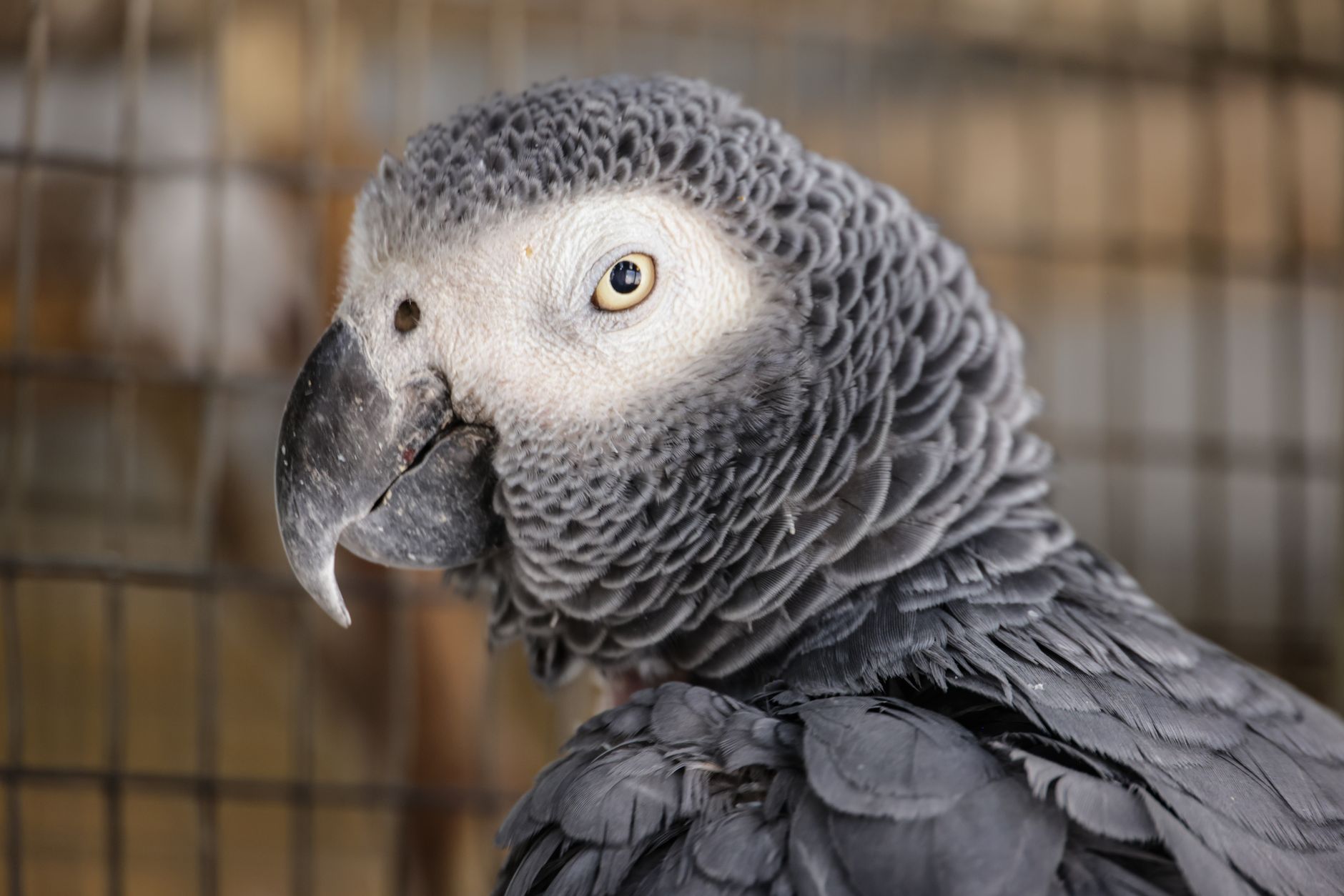
How Intelligent Are Parrots? Unveiling Avian Intellect
Parrots exhibit remarkable intelligence, demonstrating cognitive abilities comparable to those of primates and even young children; they are remarkably intelligent creatures capable of problem-solving, communication, and emotional complexity.

A Glimpse into Parrot Intelligence
Parrots, with their vibrant plumage and engaging personalities, are more than just beautiful birds. They possess a remarkable level of intelligence that continues to fascinate scientists and captivate bird lovers worldwide. Decades of research have revealed that parrots are capable of complex cognitive feats, challenging long-held assumptions about avian intelligence.
What colours are fish most attracted to?
Can you put your finger in a trout's mouth?
Is methylene blue anti bacterial?
Does aquarium salt raise pH in aquarium?
The Brainpower Behind the Beak

The key to understanding parrot intelligence lies in their brain structure. While the avian brain is structurally different from mammalian brains, parrots possess a relatively large pallium, the area responsible for higher-order cognitive functions. This region is densely packed with neurons, allowing for complex information processing. Scientists have found that the relative brain size of parrots, compared to their body size, is comparable to that of some primates.
Evidence of Intelligence: Cognitive Abilities
The intelligence of parrots manifests in a variety of ways. These abilities showcase the cognitive capabilities of these fascinating creatures:
- Problem-solving: Parrots can solve complex puzzles and manipulate objects to achieve a desired outcome. They demonstrate the ability to understand cause and effect and to plan ahead.
- Communication: Many parrot species are capable of learning and using human language, not just mimicking sounds, but actually understanding the meaning of words and using them in context. Alex, the African Grey parrot, is a famous example of this.
- Social Cognition: Parrots are highly social animals with complex social structures. They can recognize individual birds, understand social hierarchies, and engage in cooperative behavior.
- Emotional Intelligence: Parrots display a wide range of emotions, including joy, sadness, anger, and empathy. They can form strong bonds with humans and other parrots and exhibit emotional responses to various stimuli.
- Tool Use: Some parrot species have been observed using tools to access food or groom themselves. This demonstrates an understanding of the properties of objects and the ability to use them to achieve a goal.
- Numeracy: Parrots can learn to count and perform simple mathematical operations. Studies have shown that they can distinguish between different quantities and understand the concept of zero.
The Power of Mimicry: More Than Just Repeating Sounds
While parrot mimicry is often seen as a simple trick, it is actually a complex cognitive process. Parrots don’t just mindlessly repeat sounds; they can learn to associate words with objects, actions, and concepts. This ability allows them to communicate with humans and to learn about the world around them. Researchers believe that mimicry plays an important role in social bonding and communication within parrot flocks.
Challenges and Controversies in Parrot Intelligence Research
Despite the growing body of evidence supporting the intelligence of parrots, there are still challenges and controversies in the field. One challenge is designing experiments that accurately measure cognitive abilities in animals. It is important to consider the natural behavior and motivations of parrots when designing experiments. Another challenge is comparing the intelligence of different species of parrots, as their cognitive abilities can vary widely. Determining how intelligent are parrots relative to each other is an ongoing challenge.
Here’s a summary table comparing intelligence factors across species (this is a simplified illustration, specific data varies):
| Species | Problem-Solving | Language Skills | Social Complexity | Tool Use |
|---|---|---|---|---|
| African Grey | High | High | High | Low |
| Cockatoo | High | Moderate | High | Moderate |
| Macaw | Moderate | Moderate | High | Low |
| Kea | High | Low | High | High |
| Budgerigar (Parakeet) | Low | Low | Moderate | Low |
The Future of Parrot Intelligence Research
The study of parrot intelligence is a rapidly evolving field. As new technologies and research methods become available, we are likely to gain even deeper insights into the cognitive abilities of these fascinating birds. Future research may focus on identifying the specific brain regions involved in different cognitive functions, exploring the genetic basis of intelligence, and developing new methods for assessing cognitive abilities in animals. Ultimately, understanding how intelligent are parrots? will not only deepen our appreciation for these creatures but also provide valuable insights into the evolution of intelligence itself.
Frequently Asked Questions (FAQs)
What is the most intelligent parrot species?
Determining the “most intelligent” parrot species is challenging because intelligence encompasses many different cognitive abilities. However, African Grey parrots are often considered among the most intelligent due to their exceptional language skills, problem-solving abilities, and understanding of abstract concepts. Cockatoos, Kea, and some Macaw species also demonstrate high levels of intelligence.
Can parrots really understand what they are saying?
Yes, parrots can learn to associate words with objects, actions, and concepts, and use them meaningfully. While not all parrots reach the same level of understanding as Alex, the famous African Grey, many demonstrate the ability to comprehend and use language in context. It’s more than mere mimicry.
How do parrots compare to other animals in terms of intelligence?
Parrots’ intelligence is comparable to that of primates, dolphins, and corvids (crows, ravens, and jays) in many cognitive domains. They can perform complex tasks that require problem-solving, planning, and social intelligence. This highlights that bird brains, though different in structure, can achieve similar cognitive feats.
Do all parrots have the same level of intelligence?
No, there is considerable variation in intelligence among different parrot species. Factors such as brain size, social complexity, and ecological niche can influence cognitive abilities. Smaller parrot species, like budgerigars, typically exhibit lower levels of intelligence compared to larger, more complex species like African Greys.
Can parrots be trained to perform complex tasks?
Yes, parrots are highly trainable due to their intelligence and motivation. They can be trained to perform a wide range of tasks, including object manipulation, puzzle-solving, and even assisting people with disabilities. Positive reinforcement techniques are particularly effective in training parrots.
Are parrots capable of feeling emotions?
Yes, parrots display a wide range of emotions, including joy, sadness, anger, and empathy. They can form strong bonds with humans and other parrots and exhibit emotional responses to various stimuli. Their emotional complexity is often underestimated.
Do parrots have self-awareness?
Some studies suggest that parrots may possess a rudimentary form of self-awareness, as demonstrated by their ability to recognize themselves in a mirror. Further research is needed to fully understand the extent of their self-awareness.
What is the role of social interaction in parrot intelligence?
Social interaction plays a crucial role in the development of parrot intelligence. Parrots are highly social animals, and their social interactions provide opportunities for learning and problem-solving. They learn from each other through observation and imitation, which contributes to their cognitive development.
How does diet affect a parrot’s intelligence?
A nutritious and balanced diet is essential for optimal brain function and cognitive development in parrots. Deficiencies in certain nutrients can impair cognitive abilities. A varied diet that includes fruits, vegetables, seeds, and nuts is recommended for maintaining a parrot’s cognitive health.
Can parrots get bored, and what can be done to prevent it?
Yes, parrots are highly intelligent animals that require mental stimulation to prevent boredom. Boredom can lead to behavioral problems, such as feather plucking and aggression. Providing parrots with toys, puzzles, and opportunities for social interaction can help keep them mentally stimulated.
Is it ethical to keep parrots as pets, given their intelligence?
The ethics of keeping parrots as pets are complex and depend on several factors. It is crucial to provide parrots with a stimulating environment, social interaction, and proper care to meet their physical and psychological needs. If these needs cannot be met, keeping a parrot as a pet may not be ethical. Purchasing parrots from reputable breeders and adopting rescued birds are also important ethical considerations.
What can be done to further understand the intelligence of parrots?
Further research is needed to fully understand the intelligence of parrots. Future research should focus on using non-invasive methods to study parrot behavior and cognition in both captive and wild settings. Collaboration between researchers, veterinarians, and parrot owners is essential for advancing our knowledge of these fascinating birds.