

How Does a Barn Owl Locate Prey? The Silent Hunter’s Secret
The barn owl’s ability to hunt in complete darkness is legendary. How does a barn owl locate prey? Through an ingenious combination of exceptionally sensitive hearing and facial disc structure, they pinpoint even the faintest sounds emitted by rodents hidden beneath vegetation.

Introduction: The Enigmatic Hunter of the Night
The barn owl ( Tyto alba) is a master of adaptation, thriving in diverse environments across the globe. Its pale plumage and distinctive heart-shaped face are iconic, but it’s the owl’s unparalleled ability to hunt silently in the dark that truly sets it apart. How does a barn owl locate prey with such astonishing accuracy, often in total darkness? This article delves into the fascinating mechanics of the barn owl’s auditory system, revealing the secrets behind its nocturnal success. We will explore the anatomical adaptations and physiological processes that enable this remarkable predator to thrive.

What colours are fish most attracted to?
Can you put your finger in a trout's mouth?
Is methylene blue anti bacterial?
Does aquarium salt raise pH in aquarium?
The Asymmetrical Advantage: An Auditory Map
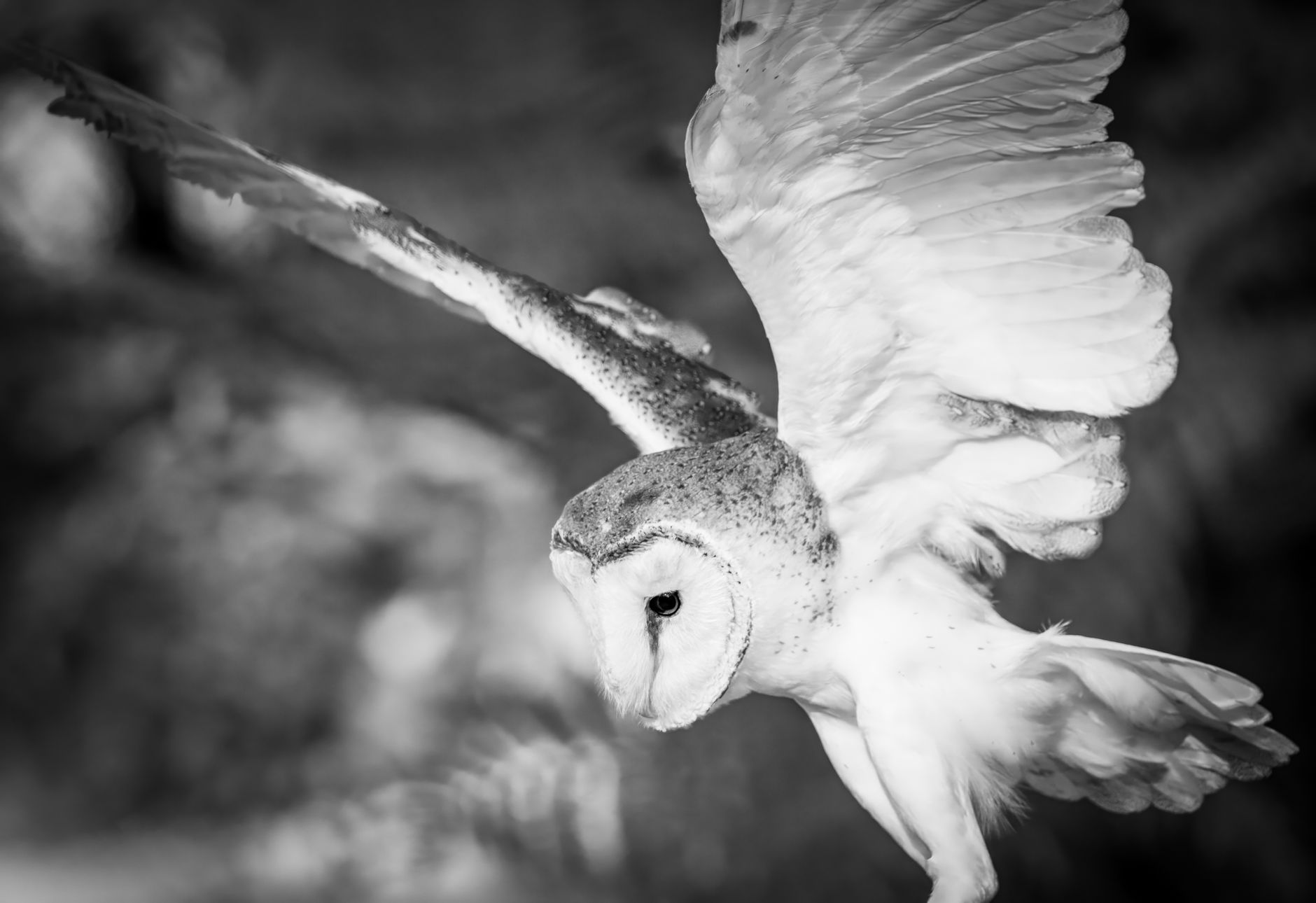
The key to understanding how a barn owl locates prey lies in its asymmetrical ear placement. Unlike most animals, including humans, a barn owl’s ears are positioned at different heights on either side of its head. This asymmetry, though subtle, creates a significant difference in the timing and intensity of sounds arriving at each ear.
- Vertical Sound Localization: The height difference allows the owl to precisely determine the vertical location of a sound. If a sound arrives at the left ear slightly before the right, the source is likely coming from below.
- Horizontal Sound Localization: The horizontal spacing of the ears, combined with the owl’s ability to rotate its head, enables it to pinpoint the horizontal location of a sound.
- Creating an Auditory Map: The owl’s brain interprets these subtle differences in timing and intensity to create a detailed “auditory map” of its surroundings. This map allows it to pinpoint the precise location of a sound source, even if it’s hidden from view.
The Facial Disc: A Sound-Collecting Antenna
The barn owl’s distinctive heart-shaped face isn’t just aesthetically pleasing; it’s a crucial component of its hunting strategy. This facial structure, known as the facial disc, acts as a parabolic reflector, channeling sound waves towards the owl’s ears.
- Amplifying Sound: The concave shape of the facial disc helps to amplify even the faintest sounds, making them easier for the owl to detect.
- Directing Sound: The feathers of the facial disc are specially arranged to direct sound waves towards the ears with minimal distortion.
- Focusing Sound: The disc focuses the sound onto the ear openings, enhancing the owl’s ability to pinpoint the source.
The combination of the asymmetrical ear placement and the facial disc allows the barn owl to build a highly detailed and accurate auditory representation of its surroundings.
Neural Processing: Decoding the Soundscape
The information gathered by the owl’s ears is processed by a specialized region of the brain called the inferior colliculus. This area contains neurons that are tuned to specific combinations of interaural time and intensity differences, allowing the owl to precisely determine the location of a sound source.
- Neural Maps: The inferior colliculus creates neural maps of space, with each neuron representing a specific location in the environment.
- Precise Calculations: The owl’s brain performs incredibly precise calculations to determine the exact location of a sound source, taking into account factors such as distance, angle, and background noise.
- Constant Calibration: The owl’s auditory system is constantly being calibrated and refined, ensuring that it remains accurate even in changing environments.
Testing for Accuracy
Scientists have performed interesting tests that helped to determine how does a barn owl locate prey.
One method involves placing barn owls in complete darkness, but with a perch and a sound source. Over time the tests show that the Owls are extremely accurate as they dive from their perch and catch the sound-emitting source (typically a mouse).
| Study | Methodology | Findings |
|---|---|---|
| Payne, 1971 | Placed owls in a dark room, with controlled sound. | Confirmed that owls could accurately strike at silent targets based on sound alone. Established their precision in horizontal and vertical planes. |
| Knudsen, 1980s | Studied the development of auditory localization in young owls, lesioning studies. | Mapped specific brain areas responsible for processing interaural time and intensity differences. Showed how experience refines auditory maps in the brain. |
| Konishi, 1973 | Conducted experiments on the neural circuitry involved in sound localization. | Identified and characterized the neurons in the inferior colliculus that are sensitive to interaural time differences, providing insight into how owls process sound. |
Silent Flight: A Stealthy Approach
Once the owl has located its prey, it needs to approach it silently to avoid being detected. Barn owls possess specially adapted feathers that minimize the noise produced during flight.
- Comb-like Serrations: The leading edges of the owl’s flight feathers have comb-like serrations that break up the airflow, reducing turbulence and noise.
- Velvety Texture: The feathers have a velvety texture that further dampens the sound of air rushing over them.
- Soft Fringes: The trailing edges of the feathers have soft fringes that absorb sound waves, making the owl’s flight even quieter.
FAQs on Barn Owl Prey Location
How accurate is a barn owl’s hearing?
Barn owls possess extremely acute hearing, far surpassing that of humans. They can detect sounds that are barely audible to the human ear and can pinpoint their source with remarkable accuracy, often within just a few degrees. This heightened sensitivity is vital for hunting in low-light conditions.
Can barn owls hunt in complete darkness?
Yes, barn owls are fully capable of hunting in complete darkness. Their ability to locate prey relies almost entirely on their auditory system, allowing them to thrive in environments where visibility is limited or non-existent.
What types of prey do barn owls typically hunt?
Barn owls primarily prey on small mammals, such as voles, mice, and shrews. They may also occasionally hunt birds, insects, or other small animals depending on availability.
How far away can a barn owl hear its prey?
The distance at which a barn owl can hear its prey depends on a number of factors, including the size of the prey, the background noise level, and the owl’s hearing sensitivity. However, they can generally detect the rustling of small rodents at distances of up to 30 meters or more.
Do barn owls use their vision at all when hunting?
While barn owls are primarily auditory hunters, they do use their vision to supplement their hearing, especially when hunting in twilight or moonlight. Their large eyes are well-adapted for low-light conditions.
How do barn owls protect their ears from damage due to loud noises?
Barn owls possess a specialized muscle in their middle ear that contracts in response to loud noises, reducing the amount of sound energy that reaches the inner ear. This helps to protect their delicate hearing from damage.
Are barn owls the only owls with asymmetrical ear placement?
While asymmetrical ear placement is most pronounced in barn owls, some other owl species also exhibit this feature to a lesser extent. This adaptation is generally found in owls that hunt in low-light conditions and rely heavily on their hearing.
How does habitat loss affect barn owl hunting success?
Habitat loss can significantly reduce barn owl hunting success by decreasing the availability of prey and increasing background noise levels. Development can create more roads, impacting the sound quality of the hunting area.
Can barn owls learn to hunt in noisy environments?
While barn owls can adapt to some extent to noisy environments, their hunting success is generally reduced in areas with high levels of noise pollution. The noise interferes with their ability to accurately locate prey.
How do young barn owls learn to hunt?
Young barn owls learn to hunt through a combination of observation, practice, and instinct. They initially rely on their parents to provide food, but gradually begin to experiment with hunting on their own.
What is the role of the barn owl in the ecosystem?
Barn owls play an important role in the ecosystem as predators of rodents, helping to control populations and prevent agricultural damage. They are a valuable asset to farmers and landowners.
How do scientists study barn owl hunting behavior?
Scientists use a variety of methods to study barn owl hunting behavior, including telemetry, observation, and sound recordings. These studies provide valuable insights into the owl’s auditory system and hunting strategies.