
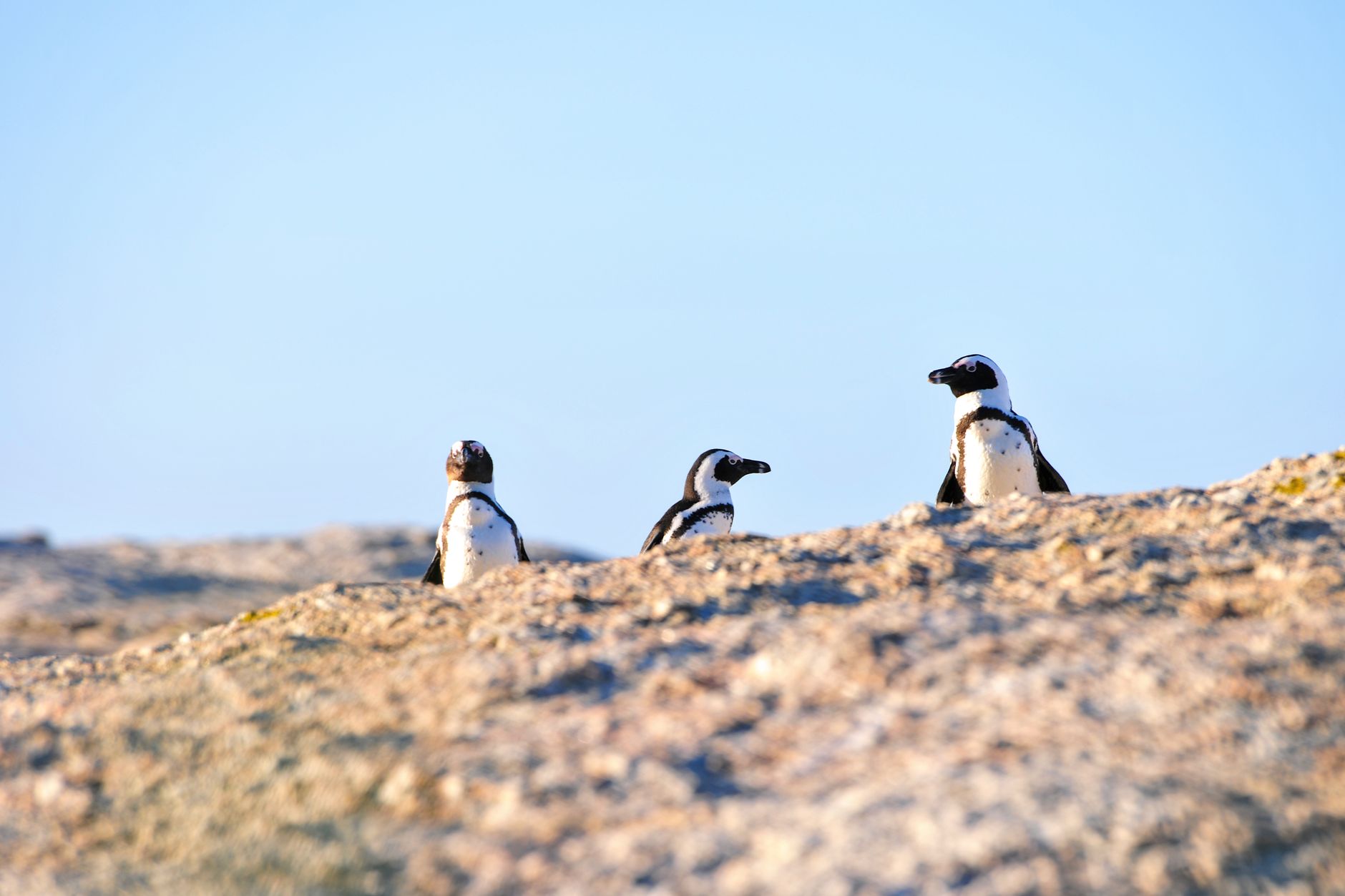
How Do Penguins Recognize Their Lifelong Love? Unveiling the Secrets of Penguin Pair Bonding
Penguins navigate the bustling chaos of colossal colonies to find their partners using a combination of visual cues, vocalizations, and spatial memory, creating a bond that can last for many years and multiple breeding seasons; this unique ability helps to maintain stable breeding pairs and ensures successful reproduction.

Introduction: The Mystery of Penguin Recognition
Imagine a packed stadium, shoulder to shoulder with individuals who look almost identical. Now, picture trying to find one specific person in that crowd, someone you haven’t seen in months. This is the daily reality for penguins during breeding season. Vast colonies teeming with thousands of birds create a seemingly impossible challenge for mate recognition. Yet, year after year, many penguins successfully reunite with their partners. How do penguins know their mate? The answer is a complex interplay of sensory clues and learned behaviors honed over millennia of evolution. This article delves into the fascinating world of penguin pair bonding, exploring the science behind their remarkable ability to find each other amidst the chaos.

What colours are fish most attracted to?
Can you put your finger in a trout's mouth?
Is methylene blue anti bacterial?
Does aquarium salt raise pH in aquarium?
The Symphony of Sound: Vocal Recognition

One of the primary ways penguins identify their mates is through vocalization. Each penguin possesses a unique call, a sort of avian fingerprint that allows partners to distinguish one another even in the deafening clamor of a large colony.
- Call Uniqueness: Penguin calls are not random squawks. They contain specific frequency modulations and rhythmic patterns that act as individual signatures.
- Mutual Recognition: Penguins learn their mate’s call during initial courtship and strengthen this recognition over subsequent breeding seasons.
- Call-and-Response: When searching for their mate, penguins will often issue a call and listen for a response, a process similar to a vocal ping.
Visual Landmarks: A Spatial Memory
While vocalizations are crucial, penguins also rely on spatial memory to navigate their colonies. They remember the specific location of their nest or territory, using it as a visual anchor point when searching for their partner.
- Nest Site Fidelity: Penguins often return to the same nest site year after year, providing a familiar meeting place.
- Landmark Recognition: They use surrounding rocks, ice formations, or even other penguins as visual landmarks to pinpoint their location.
- Combined Approach: Spatial memory works in tandem with vocal recognition, allowing penguins to narrow their search to a specific area before relying on calls.
The Dance of Courtship: Strengthening the Bond
The courtship ritual plays a crucial role in establishing and maintaining the pair bond. These elaborate displays reinforce recognition and strengthen the commitment between partners.
- Mutual Preening: Penguins engage in mutual preening, a behavior that reinforces social bonds and helps to maintain plumage health.
- Gift-Giving: Male penguins often present females with pebbles or stones, which are used to build the nest. This offering serves as a symbol of commitment.
- Synchronized Displays: Pairs perform synchronized displays, such as bowing or head-waving, which further strengthens their connection.
Colony Dynamics: Challenges to Recognition
The sheer size and density of penguin colonies present significant challenges to mate recognition. Factors such as noise pollution and visual obstruction can make it difficult for penguins to find their partners.
- Colony Size: Larger colonies increase the probability of misidentification due to the sheer number of penguins present.
- Environmental Noise: Strong winds, waves, and the calls of other penguins can interfere with vocal recognition.
- Visual Obstructions: Snowdrifts, ice formations, and even other penguins can block visual landmarks, making navigation difficult.
| Challenge | Impact | Mitigation Strategies |
|---|---|---|
| Colony Density | Increased risk of misidentification | Refined vocal and spatial recognition abilities |
| Environmental Noise | Interference with vocal communication | Shorter, louder calls; reliance on spatial memory |
| Visual Obstructions | Difficulty navigating and finding nest sites | Stronger reliance on vocal cues; alternative landmark strategies |
| Predator Presence | Disrupts routines; increases stress and potential separation | Coordinated defense strategies; vigilance during nesting |
Evolutionary Advantages: The Benefits of Pair Bonding
The ability to recognize and maintain a strong pair bond offers several significant evolutionary advantages for penguins.
- Increased Breeding Success: Established pairs are more likely to successfully raise chicks than first-time breeders.
- Efficient Nest Building: Experienced pairs can build nests more quickly and efficiently.
- Cooperative Chick Rearing: Both parents share the responsibility of incubating eggs and feeding chicks, increasing the chances of survival.
- Reduced Stress: Stable pair bonds can reduce stress levels, leading to improved health and longevity.
Frequently Asked Questions About Penguin Mate Recognition
How long do penguin pair bonds typically last?
Penguin pair bonds can last for several years, and in some species, like the Emperor penguin, the same pair may breed together for the majority of their adult lives. This longevity contributes significantly to their breeding success.
Do all penguin species recognize their mates in the same way?
While vocalization and spatial memory are common methods across species, the specific details can vary. For example, some species might rely more on visual cues, especially when colonies are less dense.
What happens if a penguin’s mate dies?
If a penguin loses its mate, it will usually seek out a new partner during the next breeding season. The process involves courtship rituals similar to those of first-time pairings.
Can penguins recognize their offspring?
Yes, penguins can recognize their offspring, primarily through vocal cues. This ability is crucial in crowded colonies where chicks can easily become separated from their parents.
Is penguin mate recognition affected by climate change?
Yes, climate change is impacting penguin mate recognition. Changes in ice conditions and colony location can disrupt established nesting sites and alter vocal landscapes, making it more difficult for penguins to find their partners.
Are there any specific penguin species known for particularly strong pair bonds?
Emperor penguins are particularly known for their strong, enduring pair bonds, which are essential for surviving the harsh Antarctic winters and successfully raising chicks.
Do penguins ever “divorce”?
Yes, penguin “divorce” does occur, although it is relatively rare. Factors contributing to divorce include breeding failure, changes in colony dynamics, or the availability of a more desirable mate.
How do penguins learn to recognize their mate’s call?
Penguins learn their mate’s call through repeated exposure during courtship and breeding. This process involves a combination of auditory learning and reinforcement.
Are there any conservation efforts focused on protecting penguin pair bonds?
Yes, conservation efforts are increasingly focused on protecting penguin habitats and mitigating the impacts of climate change to ensure the stability of breeding colonies and the preservation of pair bonds.
What role does smell play in penguin mate recognition?
While vocalization and spatial memory are the primary methods, some research suggests that smell may play a minor role, particularly in identifying nest sites and potentially recognizing individual penguins at close range.
How is penguin mate recognition studied by scientists?
Scientists study penguin mate recognition using a variety of methods, including bioacoustic monitoring (recording and analyzing calls), GPS tracking (mapping movements and nest site fidelity), and behavioral observations (analyzing courtship rituals and pair interactions).
Can human activity interfere with penguin mate recognition?
Yes, human activities such as tourism, noise pollution from shipping, and habitat destruction can interfere with penguin mate recognition. Minimizing disturbance and protecting penguin habitats are crucial for safeguarding their breeding success.