

How Flies See: Unveiling the Insect’s Unique Vision
Flies see the world through compound eyes, composed of thousands of individual lenses called ommatidia, which provide a mosaic-like perception, allowing them to detect rapid movements with exceptional efficiency. This unique visual system is crucial for their survival and adaptation.
Introduction to Fly Vision
Flies are ubiquitous insects, renowned for their agility and rapid reactions. Understanding how do flies see? is critical to appreciating their ecological success and behavior. Their visual system is vastly different from our own, built on a foundation of multiple lenses and specialized neural processing. This exploration will delve into the intricacies of fly vision, providing a comprehensive overview of its structure, function, and evolutionary significance.

What colours are fish most attracted to?
Can you put your finger in a trout's mouth?
Is methylene blue anti bacterial?
Does aquarium salt raise pH in aquarium?
The Compound Eye: A Mosaic of Perception
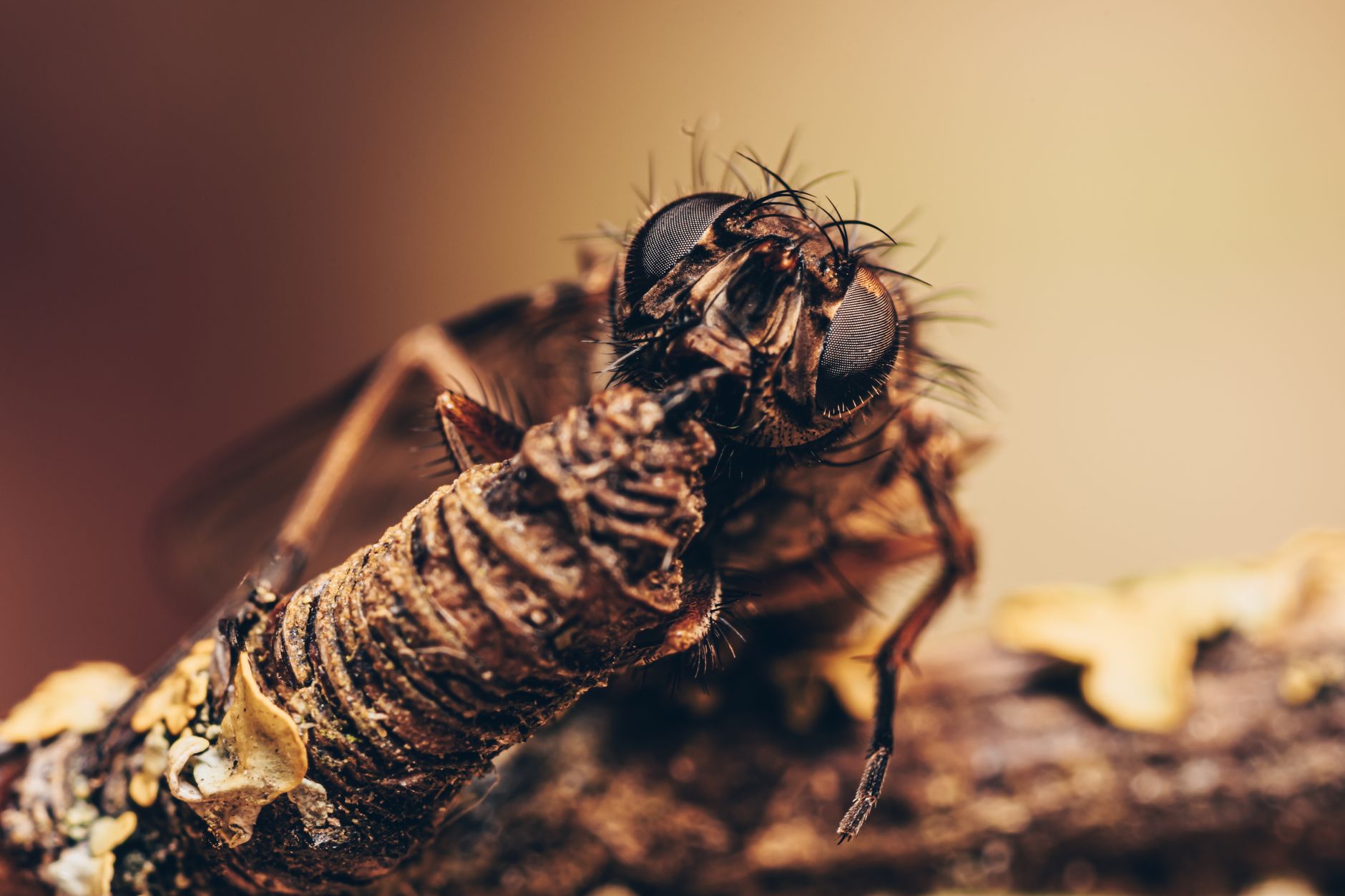
Unlike the single-lens eyes of humans and other mammals, flies possess compound eyes. These complex structures are composed of hundreds or thousands of individual visual units called ommatidia.
- Each ommatidium is a self-contained light receptor.
- Each ommatidium consists of a lens, cone cells, and photoreceptor cells (rhabdomeres).
- The combined input from all the ommatidia creates a mosaic-like image.
The number of ommatidia varies between fly species, generally correlating with the fly’s lifestyle and visual demands. For example, predatory flies often have more ommatidia than scavenging flies.
The Optical Principle: Apposition vs. Superposition
There are two main types of compound eyes: apposition and superposition. Most flies possess apposition compound eyes.
- Apposition eyes: Each ommatidium acts as an independent unit, focusing light directly onto its own photoreceptor cells. The resulting image is a mosaic of individual points of light.
- Superposition eyes: Found in nocturnal insects, these eyes allow light from multiple ommatidia to converge onto a single set of photoreceptor cells, enhancing light sensitivity in low-light conditions. Flies generally do not have superposition eyes.
Motion Detection: A Fly’s Superpower
One of the most remarkable aspects of fly vision is their exceptional ability to detect motion. This is due to their high temporal resolution, meaning they can process visual information much faster than humans.
- Flies can perceive flicker rates up to 250 Hz (cycles per second), whereas humans can only perceive flicker rates up to around 60 Hz.
- This high temporal resolution allows flies to detect even subtle movements in their environment.
- Motion detection is crucial for predator avoidance, finding mates, and navigating complex environments.
Color Vision in Flies
Flies are capable of color vision, although their color perception differs from that of humans. They possess photoreceptor cells that are sensitive to different wavelengths of light, allowing them to discriminate between colors.
- Flies typically have photoreceptors sensitive to ultraviolet (UV), blue, and green light.
- This allows them to see patterns and colors that are invisible to humans, particularly in flowers and other natural objects.
- The specific color sensitivities can vary between fly species.
Processing in the Fly Brain
The visual information collected by the ommatidia is transmitted to the fly’s brain, where it is processed and interpreted. The optic lobes of the fly brain are responsible for processing visual information.
- The optic lobes contain several layers of neurons that perform different visual processing tasks.
- These layers extract features such as edges, motion, and color.
- This processed information is then used to guide the fly’s behavior.
Limitations of Fly Vision
While fly vision is highly effective for certain tasks, it also has limitations compared to human vision.
- Flies generally have lower spatial resolution than humans. This means they cannot see fine details as clearly as we can.
- Their depth perception is also limited, relying more on motion parallax and other cues to estimate distances.
- The mosaic-like image produced by their compound eyes is less detailed and continuous than the image produced by our single-lens eyes.
Importance of Understanding Fly Vision
Understanding how do flies see? has important implications for various fields, including:
- Pest Control: Developing more effective traps and repellents that exploit the fly’s visual system.
- Robotics: Designing robots with insect-inspired vision systems for tasks such as autonomous navigation and object recognition.
- Neuroscience: Studying the neural mechanisms of visual processing in a relatively simple brain.
FAQs: Diving Deeper into Fly Vision
What is an ommatidium?
An ommatidium is the individual visual unit of a compound eye. Each ommatidium is a self-contained light receptor, consisting of a lens, cone cells, and photoreceptor cells (rhabdomeres). Thousands of these units working together create the fly’s composite vision.
How many ommatidia does a fly have?
The number of ommatidia in a fly’s eye varies depending on the species, but it typically ranges from a few hundred to several thousand. For example, the common housefly has approximately 3,000 ommatidia in each eye.
Can flies see in the dark?
Flies are not typically nocturnal, and their vision is generally not well-adapted for low-light conditions. While they can detect some light in the dark, their visual acuity is significantly reduced.
Do flies have binocular vision?
Flies lack true binocular vision in the same way that humans do. However, the overlap in the visual fields of their two compound eyes provides some degree of stereopsis, especially in the front of their field of view, aiding in depth perception for nearby objects.
Why are flies so hard to swat?
Flies are difficult to swat because of their exceptional motion detection abilities and rapid reaction times. Their high temporal resolution allows them to detect the approaching swatter much earlier than humans, giving them time to escape.
What colors can flies see?
Flies can typically see ultraviolet (UV), blue, and green light. This allows them to see patterns and colors that are invisible to humans, particularly in flowers and other natural objects. They can’t see the range of reds that humans can.
How does a fly’s vision compare to human vision?
Fly vision differs significantly from human vision. Flies have lower spatial resolution but higher temporal resolution than humans. They also perceive a wider range of colors, including ultraviolet, but have limited depth perception.
Are all flies’ eyes the same?
No, there are variations in the eye structure and visual capabilities of different fly species. These variations are often related to the fly’s lifestyle and ecological niche. For example, predatory flies may have better visual acuity than scavenging flies.
How does the brain process visual information from the compound eye?
The optic lobes of the fly brain are responsible for processing visual information from the compound eye. These lobes contain several layers of neurons that extract features such as edges, motion, and color. This processed information is then used to guide the fly’s behavior.
Can flies recognize objects?
Yes, flies can recognize objects, although their object recognition abilities are relatively simple compared to those of humans. They rely on features such as shape, size, and color to identify objects.
How do flies use vision for navigation?
Flies use vision to navigate by detecting landmarks and tracking their movement relative to those landmarks. They also use motion parallax to estimate distances and avoid obstacles.
Does being a fast flier affect how do flies see?
Yes, being a fast flier does influence fly vision. High speed requires highly effective motion detection and fast processing, to make split-second course corrections. The ability to quickly see and react to approaching obstacles is paramount to survival.