
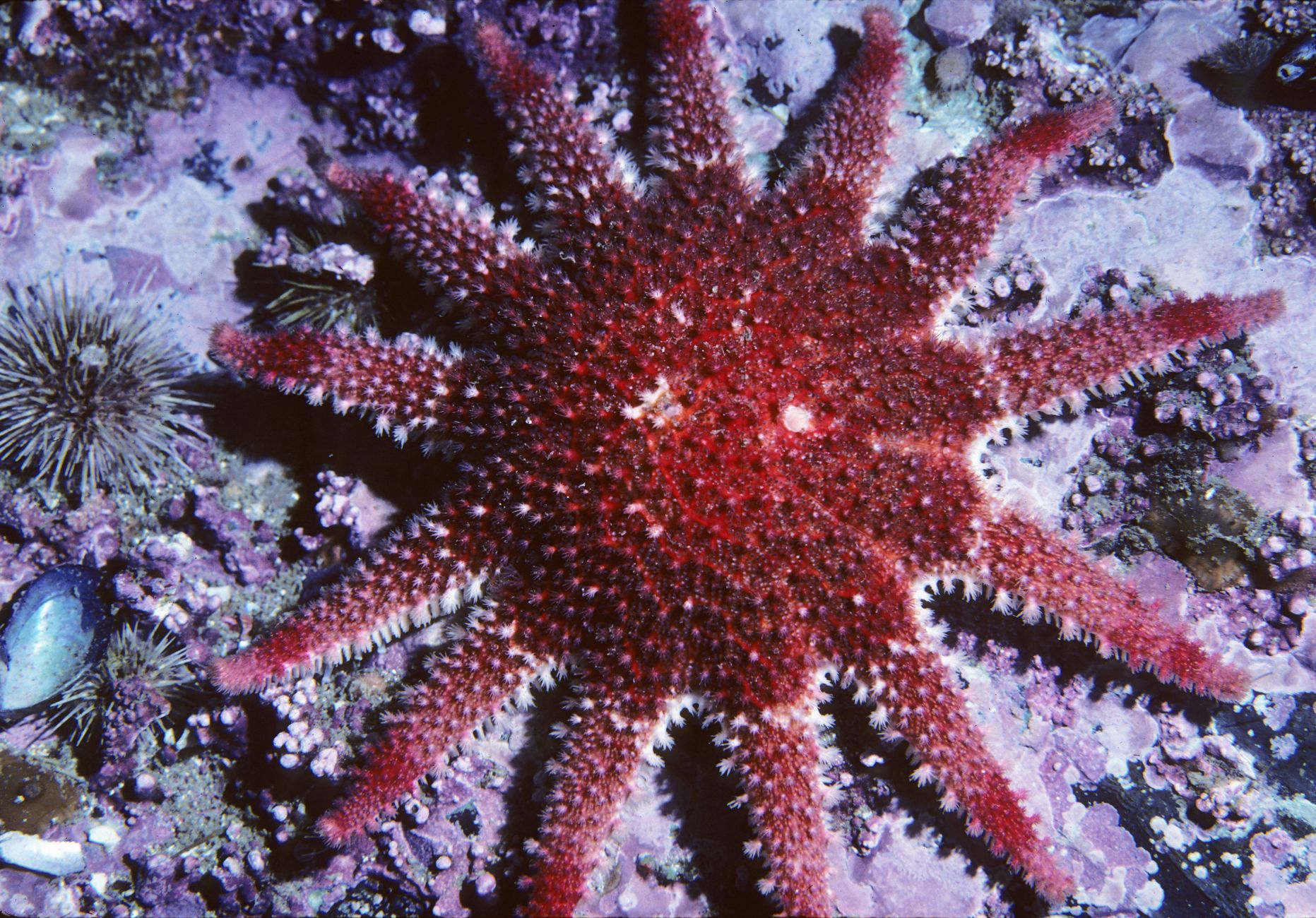
How Do Echinodermata Reproduce? A Deep Dive
Echinodermata, including starfish and sea urchins, primarily reproduce via sexual reproduction, releasing sperm and eggs into the water for fertilization, although some species can also utilize asexual reproduction through fragmentation. This article provides a detailed look at the diverse reproductive strategies employed by these fascinating marine invertebrates.

Understanding Echinoderm Reproduction: An Introduction
Echinoderms, meaning “spiny skin,” are a diverse group of marine invertebrates comprising starfish, sea urchins, sea cucumbers, brittle stars, and sea lilies. Their unique radial symmetry and water vascular system are hallmarks of their evolutionary success. While their adult forms exhibit radial symmetry, their larvae possess bilateral symmetry, hinting at their evolutionary history. One of the most captivating aspects of echinoderms is their diverse reproductive strategies, which are crucial for maintaining their populations in the complex marine environment.

What colours are fish most attracted to?
Can you put your finger in a trout's mouth?
Is methylene blue anti bacterial?
Does aquarium salt raise pH in aquarium?
Sexual Reproduction in Echinoderms: The Dominant Strategy

How do Echinodermata reproduce? Primarily, they rely on sexual reproduction. This process typically involves the release of sperm and eggs directly into the surrounding seawater, a method known as broadcast spawning.
-
Broadcast Spawning: This method increases the chances of fertilization in the vast ocean. However, it also presents challenges, such as sperm dilution and the need for precise timing and coordination. Many echinoderms release gametes simultaneously, often triggered by environmental cues like temperature, light, or even chemical signals released by other individuals.
-
Fertilization: External fertilization occurs in the water column. The successful fusion of sperm and egg leads to the formation of a zygote, which then develops into a free-swimming larva.
-
Larval Development: Echinoderm larvae are typically planktonic, drifting in the water column and feeding on microscopic organisms. These larvae exhibit bilateral symmetry, a characteristic absent in adult echinoderms. The larval stage can last from a few weeks to several months, during which the larva undergoes metamorphosis to transform into the radially symmetrical juvenile form.
Asexual Reproduction in Echinoderms: A Backup Plan
While sexual reproduction is the most common method, some echinoderm species can also reproduce asexually. The most prominent form of asexual reproduction in echinoderms is fragmentation.
-
Fragmentation: This process involves the separation of a portion of the adult body, which then regenerates into a new individual. Starfish are particularly well-known for their ability to regenerate lost arms, and in some species, a single arm can even regenerate an entire new starfish, provided it contains a portion of the central disc.
-
Fission: Some sea cucumbers reproduce through fission, where the body divides into two or more pieces, each capable of regenerating the missing parts.
Asexual reproduction is often employed when environmental conditions are challenging or when population densities are low, providing a means of survival and propagation without the need for a mate.
Factors Influencing Echinoderm Reproduction
Several factors can significantly impact echinoderm reproduction:
-
Environmental Conditions: Water temperature, salinity, and nutrient availability play critical roles in gamete development, spawning success, and larval survival. Changes in these conditions due to climate change or pollution can severely disrupt echinoderm populations.
-
Predation: Echinoderm larvae are vulnerable to predation by a variety of marine organisms, which can significantly reduce recruitment rates.
-
Pollution: Exposure to pollutants, such as pesticides, heavy metals, and oil spills, can impair gamete development, fertilization, and larval development, leading to reduced reproductive success.
-
Habitat Degradation: Loss of suitable habitat, such as coral reefs and seagrass beds, can also negatively impact echinoderm populations by reducing spawning grounds and nursery habitats.
Comparative Reproductive Strategies Across Echinoderm Classes
While the general principles of sexual and asexual reproduction apply to all echinoderms, there are variations in the specific strategies employed by different classes:
| Echinoderm Class | Primary Reproductive Strategy | Asexual Reproduction | Examples |
|---|---|---|---|
| Asteroidea (Starfish) | Sexual (Broadcast Spawning) | Fragmentation | Asterias rubens, Pisaster ochraceus |
| Ophiuroidea (Brittle Stars) | Sexual (Broadcast Spawning) | Fragmentation, Fission | Ophiothrix fragilis, Amphiura filiformis |
| Echinoidea (Sea Urchins) | Sexual (Broadcast Spawning) | Rare | Strongylocentrotus purpuratus, Paracentrotus lividus |
| Holothuroidea (Sea Cucumbers) | Sexual (Broadcast Spawning, Internal Fertilization in some) | Fission | Parastichopus californicus, Cucumaria frondosa |
| Crinoidea (Sea Lilies, Feather Stars) | Sexual (Broadcast Spawning) | Fragmentation (rare) | Antedon mediterranea, Comanthus bennettii |
Conservation Implications of Echinoderm Reproduction
Understanding how do Echinodermata reproduce? is crucial for their conservation. As these animals often play vital roles in their ecosystems – from coral reef grazers to sediment re-workers – disruptions to their reproduction can have cascading effects. Conservation strategies need to consider:
- Protecting spawning grounds from pollution and habitat destruction.
- Managing fisheries to prevent overexploitation of adult echinoderms.
- Monitoring populations and reproductive success to detect early warning signs of decline.
- Mitigating climate change impacts on water temperature and ocean acidification.
Frequently Asked Questions (FAQs)
Why do echinoderms primarily use broadcast spawning?
Broadcast spawning is an efficient way to maximize fertilization success in the open ocean. The large number of gametes released increases the probability of sperm and egg meeting, given the vastness of the marine environment. However, this method also relies on synchronization among individuals and favorable environmental conditions.
Are there any echinoderms that use internal fertilization?
Yes, some sea cucumber species exhibit internal fertilization. The male deposits sperm directly into the female’s body cavity, increasing the chances of successful fertilization.
What triggers spawning in echinoderms?
Spawning in echinoderms is typically triggered by environmental cues such as changes in water temperature, light intensity, tidal cycles, or even the release of chemical signals (pheromones) by other individuals. These cues ensure that spawning occurs at the most favorable time for fertilization and larval survival.
How long does it take for a starfish to regenerate an arm?
The regeneration time for a starfish arm varies depending on the species, size, and environmental conditions. It can take several months to a year for a starfish to fully regenerate a lost arm.
Is asexual reproduction as common as sexual reproduction in echinoderms?
No, sexual reproduction is the dominant reproductive strategy in most echinoderms. Asexual reproduction is typically employed as a backup mechanism, particularly in species that are prone to fragmentation or when environmental conditions are unfavorable for sexual reproduction.
What role do echinoderm larvae play in the marine ecosystem?
Echinoderm larvae are an important component of the plankton community. They serve as a food source for other marine organisms and contribute to nutrient cycling in the ocean.
What are the biggest threats to echinoderm reproductive success?
The biggest threats include pollution, habitat destruction, climate change, and overexploitation. These factors can impair gamete development, fertilization, larval survival, and overall population health.
Do all starfish regenerate limbs equally well?
No, the ability to regenerate limbs varies among starfish species. Some species can regenerate entire new individuals from a single arm, while others can only regenerate the lost portion of the arm. This regenerative capability is directly related to the location of the central disc in the fragment.
How does water temperature affect echinoderm reproduction?
Water temperature plays a critical role in echinoderm reproduction. Optimal temperatures are necessary for gamete development, spawning, and larval survival. Extreme temperature fluctuations can disrupt these processes and lead to reproductive failure.
Are there any invasive echinoderm species that threaten native ecosystems through their reproductive success?
Yes, the crown-of-thorns starfish (Acanthaster planci) is a prime example of an invasive echinoderm species that can devastate coral reefs. Its high reproductive rate and voracious appetite for coral polyps can lead to significant coral loss.
Can echinoderms reproduce in captivity?
Yes, many echinoderm species can be successfully reproduced in captivity under controlled conditions. This is important for research purposes, aquaculture, and conservation efforts.
What research is currently being done on echinoderm reproduction?
Current research focuses on understanding the genetic and environmental factors that regulate echinoderm reproduction, the impacts of climate change and pollution on their reproductive success, and the development of techniques for assisted reproduction and conservation.