

How Did Crabs Start? Unraveling the Origins of Carcinization
Crabs emerged through a fascinating evolutionary process called carcinization. The process of carcinization, occurring multiple times independently across different crustacean lineages, resulted in the evolution of the crab-like body form, characterized by a broad carapace and reduced abdomen tucked underneath.

A Crustacean Conundrum: Tracing the Origins of Crabs
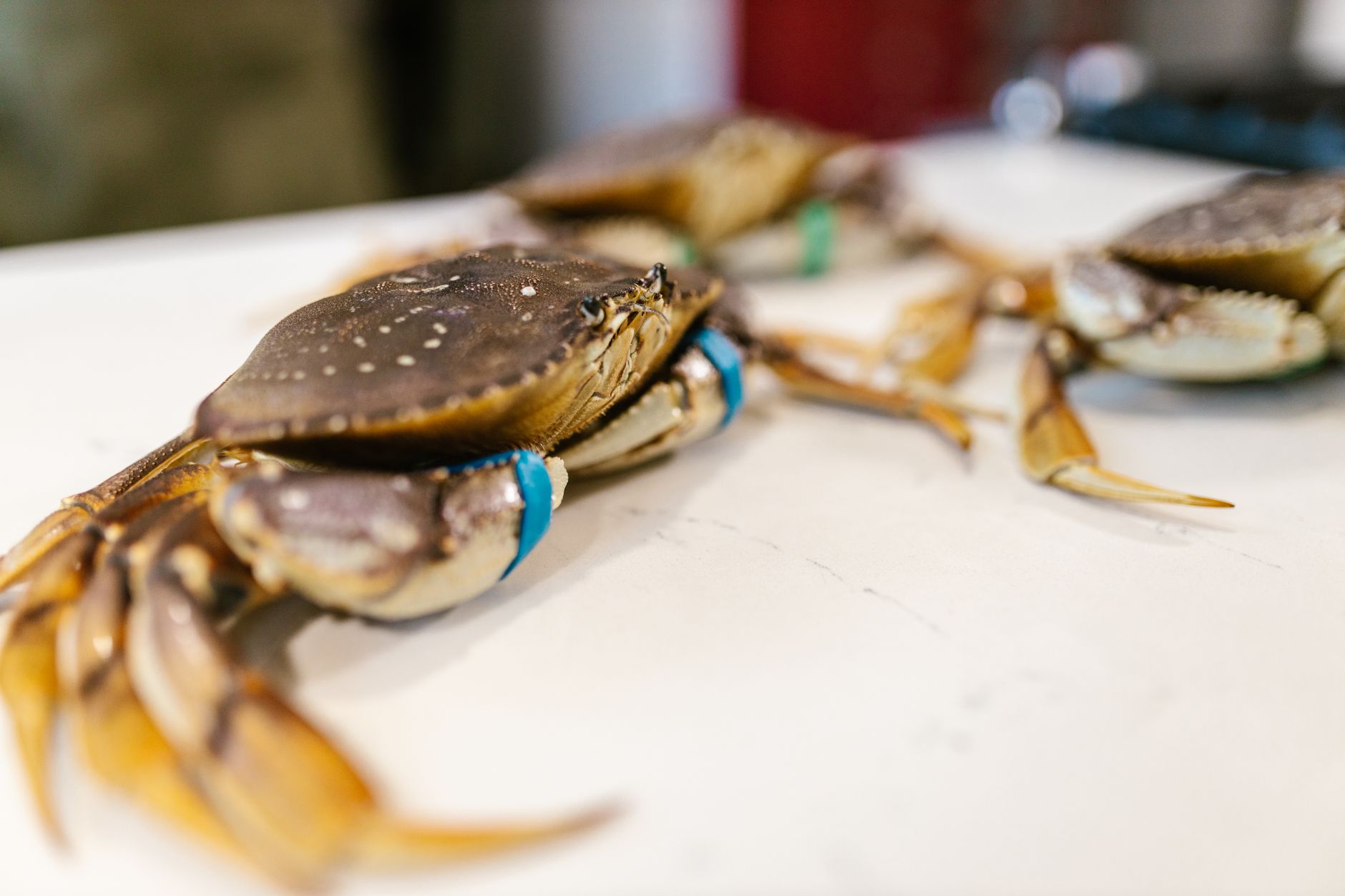
Crabs, with their distinctive sideways gait and formidable claws, are among the most recognizable inhabitants of marine and freshwater ecosystems. But how did crabs start? The story is not a simple linear progression from a single ancestor, but rather a complex tale of convergent evolution, a phenomenon where different organisms independently evolve similar traits in response to similar environmental pressures. This process, known as carcinization, has resulted in numerous lineages of crustaceans converging on the familiar crab-like body plan.
What colours are fish most attracted to?
Can you put your finger in a trout's mouth?
Is methylene blue anti bacterial?
Does aquarium salt raise pH in aquarium?
The Puzzle of Carcinization

Carcinization, a term coined by Lancelot Hogben in 1916, describes the evolutionary trend toward a crab-like morphology. It involves several key changes:
- Broadening of the carapace: The protective shell covering the cephalothorax (head and thorax) becomes wider and flatter.
- Reduction of the abdomen: The abdomen, typically segmented and elongated in other crustaceans like lobsters or shrimp, becomes significantly shorter and tucked beneath the cephalothorax.
- Development of pereiopods (walking legs): The legs are modified for walking sideways, and the first pair often evolves into large claws (chelipeds) for defense and feeding.
Identifying the Ancestors: More Than Meets the Eye
Determining the precise ancestry of crabs is a challenging endeavor due to the multiple independent instances of carcinization. Crabs, as we commonly recognize them (true crabs, or Brachyura), belong to a larger group called Decapoda, which also includes lobsters, shrimp, and prawns. Within Decapoda, true crabs likely evolved from lobster-like ancestors. However, several other decapod lineages have independently undergone carcinization, resulting in “false crabs” or crab-like forms that are not closely related to true crabs. Some examples include:
- King Crabs (Lithodidae): Often mistaken for true crabs, king crabs are actually closely related to hermit crabs. Their crab-like appearance is a result of independent carcinization.
- Porcelain Crabs (Porcellanidae): These small crabs are also not true crabs and are more closely related to squat lobsters.
- Hairy Stone Crabs (Lomisidae): Another group of crab-like crustaceans that have independently evolved the crab body plan.
These examples highlight the repeated nature of carcinization and the challenges it poses for evolutionary biologists attempting to reconstruct the phylogenetic relationships of crabs.
Environmental Pressures Driving Carcinization
The question of how did crabs start also involves understanding the selective pressures that might have favored the crab-like body form. Several hypotheses have been proposed:
- Protection from Predators: The broad carapace and tucked abdomen offer increased protection from predators, particularly in shallow-water environments where predation pressure is high.
- Improved Mobility in Confined Spaces: The flattened body and sideways walking allow crabs to navigate tight spaces, such as crevices in rocks or burrows in the seabed.
- Enhanced Feeding Efficiency: The strong claws (chelipeds) are well-suited for grasping prey, manipulating food items, and defending territories.
It’s likely that a combination of these factors contributed to the convergent evolution of the crab body plan across different crustacean lineages.
Molecular Clues: DNA’s Perspective
Modern molecular phylogenetic studies, using DNA sequence data, have provided crucial insights into the evolutionary relationships of crabs. These studies have confirmed that carcinization has occurred multiple times independently, supporting the notion that the crab body plan is a successful evolutionary adaptation. Molecular data can also help to identify the closest relatives of different crab-like lineages, clarifying their evolutionary history and shedding light on the timing of carcinization events.
| Feature | True Crabs (Brachyura) | King Crabs (Lithodidae) | Porcelain Crabs (Porcellanidae) |
|---|---|---|---|
| Evolutionary Lineage | Brachyura | Anomura (close to hermit crabs) | Anomura (close to squat lobsters) |
| Carcinization | Primary lineage | Secondary lineage | Secondary lineage |
| Abdomen | Reduced and tucked | Reduced and tucked | Reduced and tucked |
| Walking Legs | Adapted for sideways walking | Adapted for sideways walking | Adapted for sideways walking |
Why Carcinization Matters
Understanding how did crabs start through carcinization is important for several reasons:
- Illustrates Convergent Evolution: Carcinization is a prime example of how similar environmental pressures can drive the evolution of similar traits in unrelated organisms.
- Highlights Evolutionary Adaptability: The repeated evolution of the crab body plan demonstrates the adaptability of crustaceans and their ability to thrive in diverse environments.
- Provides Insights into Evolutionary Processes: Studying carcinization helps us understand the mechanisms and pathways by which evolutionary change occurs.
Frequently Asked Questions (FAQs)
Why is carcinization so common in crustaceans?
The crab-like body plan appears to be a highly successful adaptation for crustaceans. The combination of a broad carapace, reduced abdomen, and powerful claws provides protection, mobility, and feeding advantages in various aquatic environments. Therefore, when selective pressures favor these traits, different crustacean lineages tend to converge on the crab morphology.
Are all animals with a crab-like appearance closely related?
No, not at all. Carcinization is a demonstration of convergent evolution, where unrelated species independently evolve similar traits. So, while animals may look like crabs, they may not be closely related in terms of their ancestry. King crabs and porcelain crabs are a prime example.
What are the benefits of having a reduced abdomen in crabs?
A reduced abdomen tucked under the cephalothorax offers several advantages, including increased protection from predators and physical damage. It also improves maneuverability in confined spaces, such as crevices and burrows.
How do scientists determine the evolutionary relationships of crabs?
Scientists use a combination of methods, including morphological analysis (studying physical characteristics), fossil records, and molecular phylogenetics (analyzing DNA sequence data). Molecular data is especially useful for resolving complex evolutionary relationships.
Is carcinization still happening today?
Yes, evolution is an ongoing process. While major carcinization events may have occurred in the past, micro-evolutionary changes are constantly shaping the morphology of crustaceans, and it is possible that some lineages are still undergoing subtle forms of carcinization.
What are the challenges in studying carcinization?
One of the main challenges is the difficulty in reconstructing the evolutionary history of crabs due to the multiple independent instances of carcinization. It can be challenging to distinguish between homologous (shared ancestry) and analogous (convergent evolution) traits.
How does carcinization differ from other types of evolution?
Carcinization is a specific example of convergent evolution, where unrelated lineages evolve similar traits independently. Other types of evolution include divergent evolution (where related lineages evolve different traits) and parallel evolution (where related lineages evolve similar traits independently).
Can other types of animals undergo a similar process to carcinization?
Yes, convergent evolution can occur in various animal groups. For example, the evolution of wings in birds, bats, and insects is another example of convergent evolution where unrelated animals developed similar structures for flight.
What role does the environment play in driving carcinization?
The environment plays a crucial role in driving carcinization. Factors such as predation pressure, availability of resources, and habitat structure can all influence the selective pressures that favor the evolution of the crab-like body plan.
Are there any animals that are “de-carcinizing” or evolving away from a crab-like form?
While carcinization is a well-documented phenomenon, there is limited evidence of “de-carcinization” or the reversal of this evolutionary trend. Once a lineage has evolved a crab-like morphology, it is unlikely to revert to a more ancestral body plan.
What can fossils tell us about crab evolution?
Fossils provide valuable insights into the evolutionary history of crabs, allowing scientists to trace the origins of the crab body plan and identify transitional forms between ancestral crustaceans and modern crabs.
How does How did crabs start? inform our understanding of evolution in general?
The study of how did crabs start? and carcinization provides a compelling example of convergent evolution and the power of natural selection. It demonstrates how similar environmental pressures can drive the evolution of similar traits in unrelated organisms, highlighting the adaptability and plasticity of life on Earth.