
How Are Fish Adapted for Swimming? A Deep Dive into Aquatic Locomotion
Fish are marvels of evolution, exhibiting a breathtaking array of adaptations that make them incredibly efficient swimmers. Their body shape, fin structure, and even their scales are all optimized for life in the water, allowing them to navigate diverse aquatic environments with speed, agility, and grace.
Introduction: The Art of Aquatic Locomotion
From the shimmering scales of a darting trout to the powerful tail of a great white shark, fish represent a stunning diversity of forms, each exquisitely tailored to its specific aquatic niche. How are fish adapted for swimming? The answer lies in a complex interplay of morphology, physiology, and behavior, developed over millions of years of evolution. This article will explore the key adaptations that enable fish to thrive in their watery world, examining the principles of hydrodynamics, fin function, and the remarkable sensory systems that guide their movements.

Are fish heads good for the garden?
Can fish hear water?
What is cotton rot in fish?
What colours are fish most attracted to?
The Streamlined Body: Reducing Drag
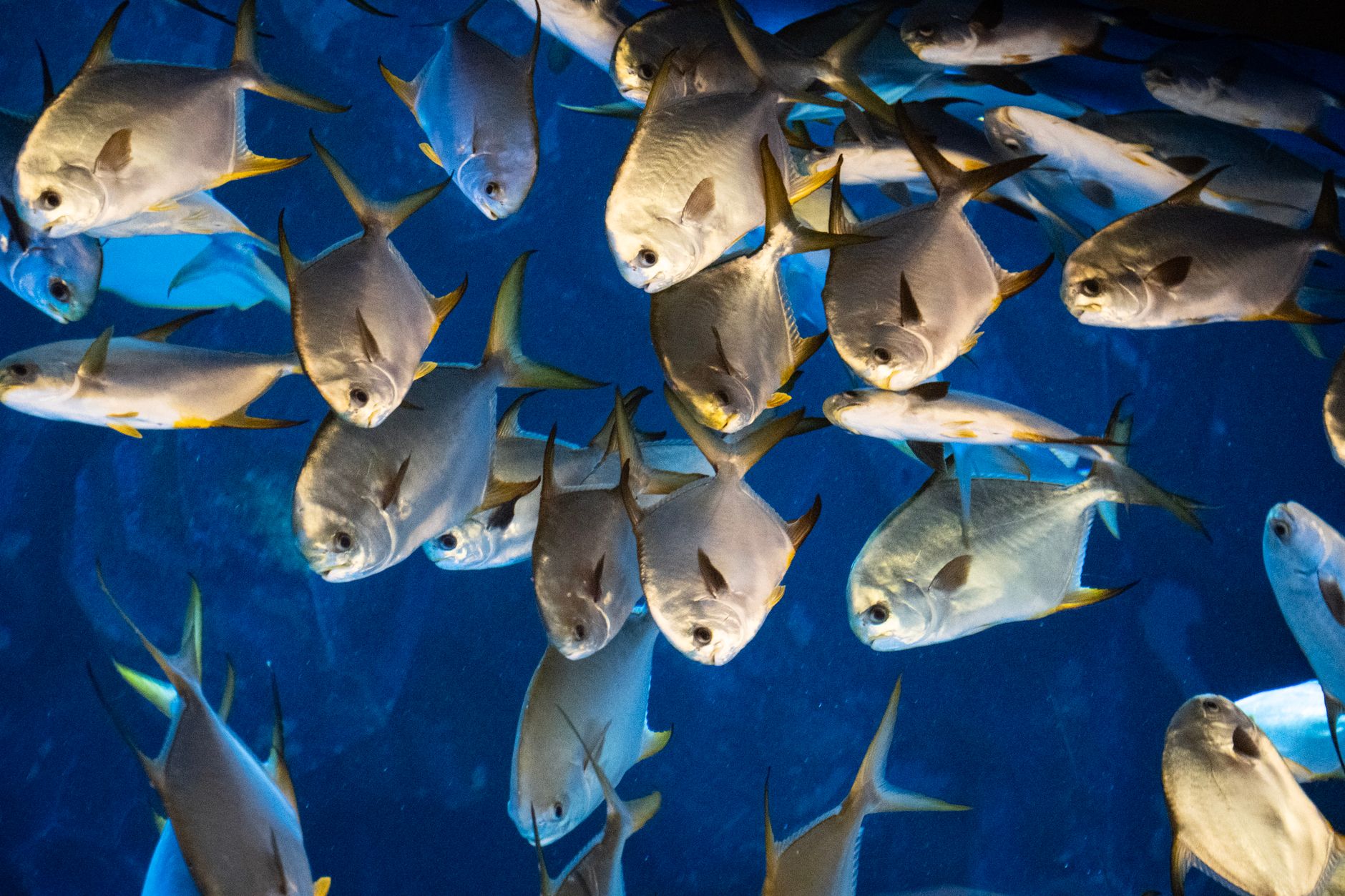
One of the most fundamental adaptations for swimming is the fusiform, or torpedo-shaped, body. This shape minimizes drag, the resistance a body encounters as it moves through water.
- Hydrodynamic Design: The streamlined shape allows water to flow smoothly around the fish, reducing turbulence and energy expenditure.
- Surface Area: A smaller surface area relative to volume reduces the frictional drag encountered as the fish moves.
- Mucus Layer: Many fish secrete a layer of mucus that further reduces friction by creating a slick surface.
The Power of Fins: Propulsion and Control
Fins are the primary appendages used for propulsion, steering, and stability. Different fin shapes and positions reflect the diverse swimming styles of various fish species.
- Caudal Fin (Tail): The primary propulsive force is generated by the caudal fin, which varies in shape from lunate (crescent-shaped) for fast, continuous swimming to truncate (square) for bursts of speed.
- Pectoral Fins: Located on the sides of the body, pectoral fins are used for maneuvering, braking, and hovering.
- Pelvic Fins: Situated ventrally, pelvic fins provide stability and can also assist in maneuvering.
- Dorsal and Anal Fins: These unpaired fins along the midline of the body provide stability and prevent rolling.
Buoyancy Control: Mastering Depth
Maintaining buoyancy is crucial for efficient swimming. Fish employ various mechanisms to control their position in the water column.
- Swim Bladder: Many bony fish possess a swim bladder, an internal gas-filled sac that allows them to adjust their buoyancy without expending energy.
- Lipid Storage: Cartilaginous fish (sharks and rays) lack a swim bladder and instead rely on lipid-rich livers to provide buoyancy.
- Fin Placement: The position and shape of the fins also contribute to buoyancy control.
Sensory Systems: Navigating the Aquatic World
Swimming efficiently requires a sophisticated sensory system to detect prey, avoid predators, and navigate complex environments.
- Lateral Line System: This unique sensory organ detects vibrations and pressure changes in the water, allowing fish to sense the presence of other organisms or objects.
- Vision: Fish eyes are adapted for underwater vision, with spherical lenses that focus light effectively in the denser medium.
- Olfaction: The sense of smell is highly developed in many fish, enabling them to detect chemical cues in the water.
- Electroreception: Some fish, such as sharks and rays, can detect electrical fields generated by other animals, allowing them to locate prey even in murky water.
The Evolution of Swimming: A Diverse Spectrum
How are fish adapted for swimming? The answer is not uniform. Evolution has shaped a remarkable array of swimming styles to suit different ecological niches.
- Anguilliform: Eel-like swimming, characterized by undulations of the entire body.
- Carangiform: Swimming primarily with the posterior half of the body, common in fast-swimming fish like tuna.
- Ostraciiform: Rigid body with only the caudal fin oscillating, seen in boxfish.
- Labriform: Rowing with the pectoral fins, often seen in coral reef fish.
Common Mistakes and Misconceptions
A common misconception is that all fish swim in the same way. As detailed above, there are numerous swimming styles. Another mistake is neglecting the role of the lateral line system; its importance is often understated.
Table: Comparing Fin Functions
| Fin Type | Primary Function | Secondary Function |
|---|---|---|
| Caudal Fin | Propulsion | Steering, Stability |
| Pectoral Fins | Maneuvering, Braking, Hovering | Stability, Buoyancy |
| Pelvic Fins | Stability | Maneuvering |
| Dorsal Fin | Stability | Steering |
| Anal Fin | Stability | Steering |
Bulleted List: Factors Affecting Swimming Efficiency
- Body shape
- Fin size and shape
- Muscle power
- Water temperature
- Salinity
- Turbulence
Frequently Asked Questions (FAQs)
What is the most important adaptation for swimming?
The streamlined body shape is arguably the most crucial adaptation. It reduces drag, allowing fish to move more efficiently through the water, conserving energy and improving speed. This adaptation is fundamental to the success of fish as aquatic creatures.
How does the swim bladder work?
The swim bladder is a gas-filled sac that allows fish to control their buoyancy. By adjusting the amount of gas in the swim bladder, fish can rise or sink in the water column without expending energy. This is a crucial adaptation for conserving energy and maintaining position.
Why do sharks have to keep swimming?
Many sharks lack a swim bladder and rely on lipid-rich livers and continuous swimming to maintain buoyancy. Forward movement generates lift, preventing them from sinking. Some shark species also possess spiracles, which allow them to breathe even when stationary.
How do fish breathe underwater?
Fish breathe using gills, which extract oxygen from the water. Water flows over the gills, and oxygen is absorbed into the bloodstream while carbon dioxide is released. This highly efficient system allows fish to thrive in aquatic environments.
What is the lateral line system?
The lateral line system is a sensory organ that detects vibrations and pressure changes in the water. It allows fish to sense the presence of other organisms or objects, even in murky water. This is crucial for hunting, avoiding predators, and schooling behavior.
How do fish see underwater?
Fish eyes are adapted for underwater vision, with spherical lenses that focus light effectively in the denser medium. Some fish also have specialized retinas that allow them to see in low-light conditions.
What is the function of mucus on fish?
The mucus layer on fish reduces friction, making it easier for them to swim. It also protects them from parasites and infections. This layer is constantly being replenished and plays a vital role in fish health.
Why are some fish shaped differently than others?
Fish shapes are diverse and reflect their specific ecological niches. Fast-swimming fish have streamlined bodies, while fish that live in coral reefs may have flattened bodies for maneuvering in tight spaces. Different environments require different adaptations.
How do fish generate thrust to swim?
The primary source of thrust is the caudal fin, which propels the fish forward. The shape and size of the caudal fin vary depending on the fish’s swimming style. Other fins also contribute to thrust generation during maneuvering.
What muscles are used for swimming?
Fish primarily use myomeres, which are segmented muscles arranged along the sides of the body. These muscles contract in a wave-like motion to propel the fish forward.
How does water temperature affect swimming performance?
Water temperature affects swimming performance because it influences metabolic rate and muscle function. Colder water can slow down metabolism and reduce muscle power, while warmer water can increase metabolic rate but also lead to overheating.
How do fish navigate in the ocean?
Fish navigate using a combination of senses, including vision, olfaction, the lateral line system, and electroreception. Some fish also use magnetic fields for navigation. These sensory cues help them find food, avoid predators, and migrate long distances.