

Does a Wolf Sound Like a Coyote? Unveiling the Vocal Differences
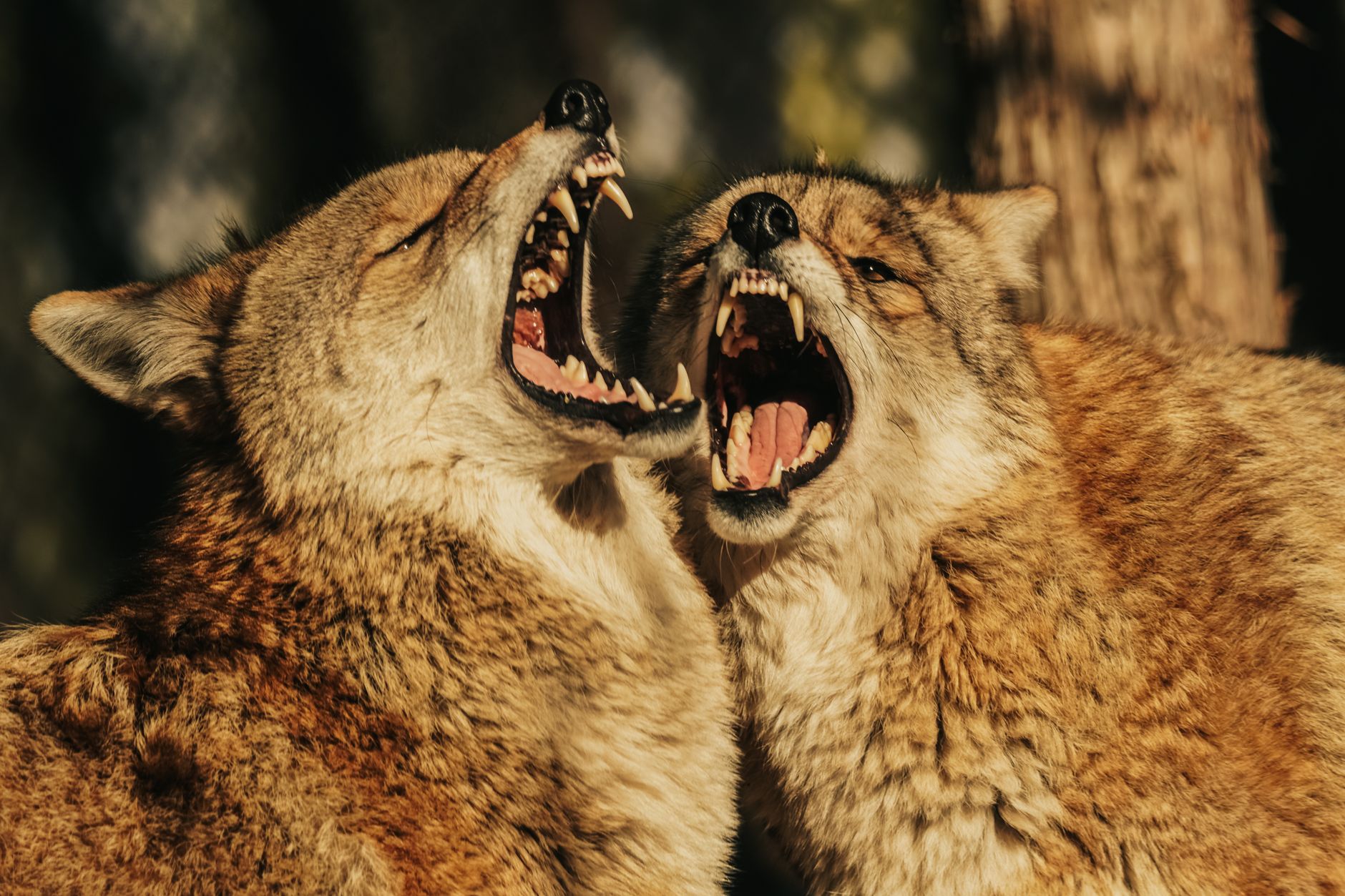
The question of Does a wolf sound like a coyote? is frequently asked, and while both are canids and their vocalizations can overlap, the answer is generally no. Distinguishing between their calls requires an understanding of their distinct vocal repertoires, tonal qualities, and social contexts.
Understanding Canid Vocalizations: A Shared Language, Different Dialects
The canid family (Canidae), which includes wolves, coyotes, dogs, foxes, and jackals, shares a common ancestry reflected in their ability to communicate through vocalizations. However, evolution and adaptation to different environments and social structures have led to distinct variations in their vocal behaviors. Think of it like human languages: while we can all speak, each language has its own unique sounds, grammar, and expressions. When discussing “Does a wolf sound like a coyote?“, it’s important to appreciate this framework.

What colours are fish most attracted to?
Can you put your finger in a trout's mouth?
Is methylene blue anti bacterial?
Does aquarium salt raise pH in aquarium?
The Wolf’s Vocal Symphony: A Deep, Resonant Howl

Wolves, highly social animals that live in packs, rely heavily on vocal communication for maintaining social bonds, defending territory, and coordinating hunting activities. Their most iconic vocalization is the howl, a long, drawn-out sound that can carry for miles.
- Characteristics of a Wolf Howl:
- Deep and resonant tone
- Sustained, unwavering pitch (though variations exist within the howl)
- Often a group effort, creating a chorus effect
- Can be used for long-distance communication and territory defense
The wolf howl is not just a singular sound. Different types of howls convey different messages. For example, a solo howl might be used to announce a wolf’s presence or reunite with the pack, while a chorus howl can signal territorial boundaries.
The Coyote’s Cackling Chorus: A Higher-Pitched Serenade
Coyotes, often solitary or living in small family groups, also use vocalizations extensively. Their calls, however, tend to be higher-pitched and more variable than those of wolves.
- Characteristics of a Coyote Vocalization:
- Higher-pitched than a wolf howl
- Characterized by yips, barks, and howls mixed together
- Often described as a cackle or yodel
- More fragmented and less sustained than a wolf howl
Coyote vocalizations are often associated with hunting, defense, and social interactions within the family group. Their yip-howls, a combination of short barks and rising howls, are especially distinctive.
Deciphering the Sounds: Key Distinctions
The core difference in answering “Does a wolf sound like a coyote?” comes down to analyzing pitch, duration, and vocal structure:
| Feature | Wolf Vocalization | Coyote Vocalization |
|---|---|---|
| Pitch | Lower, deeper | Higher, more variable |
| Duration | Longer, more sustained | Shorter, more fragmented |
| Structure | Smoother, less abrupt changes | More abrupt changes in pitch and tone |
| Common Sounds | Howls (solo and chorus), barks, growls | Yips, barks, howls, yip-howls (cackling) |
| Social Context | Pack communication, territory | Family communication, hunting, defense |
Beyond the Howl: Other Vocalizations
While the howl is the most well-known vocalization for both species, both wolves and coyotes employ a variety of other sounds. These include barks, growls, whines, and whimpers, each used in specific social situations. The nuances of these calls can further help in distinguishing between the two animals.
Environmental Influences and Hybrids
It’s important to acknowledge that environmental factors can influence vocalizations. For example, a wolf living in a more fragmented landscape may use shorter howls for communication. Furthermore, hybridization between wolves and coyotes can produce offspring with intermediate vocal characteristics, making identification more challenging. The discussion of “Does a wolf sound like a coyote?” gets much more complex with hybridized individuals.
Frequently Asked Questions (FAQs)
Why do wolves howl?
Wolves howl for a variety of reasons, primarily related to social cohesion and territory defense. Howling can help pack members locate each other, announce their presence to other packs, and reinforce their territorial boundaries. Different types of howls can convey specific messages, such as a warning or a call for help.
Why do coyotes yip?
Coyotes use yip-howls (a combination of yips and howls) for communication within their family groups. These vocalizations can serve to announce their presence, coordinate hunting activities, or maintain contact with dispersed family members. The cackling quality of the yip-howl is a distinctive feature.
Can I tell the difference between a wolf and coyote howl just by listening to a recording?
With practice and careful attention to detail, yes, it is often possible to distinguish between wolf and coyote howls based on recordings. Factors such as pitch, duration, and tonal quality can provide valuable clues. However, environmental noise and recording quality can sometimes make it challenging.
Are there regional variations in wolf and coyote vocalizations?
Yes, there can be regional variations in both wolf and coyote vocalizations. These variations can be influenced by factors such as habitat, prey availability, and the presence of other predators. This is similar to regional dialects in human languages.
Do wolves and coyotes ever howl together?
It is rare, but not impossible, for wolves and coyotes to howl together. This typically happens in areas where their territories overlap, and the howling may be a form of interspecific communication or territorial display. More often, it’s competitive signaling.
How do scientists study wolf and coyote vocalizations?
Scientists use a variety of methods to study wolf and coyote vocalizations, including acoustic recording, spectrographic analysis, and behavioral observation. By analyzing the acoustic properties of different vocalizations and correlating them with specific behaviors, they can gain insights into the function and meaning of these calls.
Are wolf and coyote vocalizations instinctive or learned?
Both instinct and learning play a role in wolf and coyote vocalizations. While certain basic vocalizations are likely instinctive, pups learn to refine their calls and use them appropriately through observation and interaction with older members of their social group.
How far can a wolf howl be heard?
Under ideal conditions, a wolf howl can be heard for several miles, potentially up to 6-8 miles. This long-range communication is essential for maintaining pack cohesion and defending territory.
What is a chorus howl?
A chorus howl is a coordinated vocalization by multiple members of a wolf pack. It serves to strengthen social bonds, reinforce territorial boundaries, and display the pack’s strength. Chorus howls are often complex and contain variations in pitch and rhythm.
Are wolf and coyote vocalizations used in human communication?
To a limited extent, wolf and coyote vocalizations are sometimes imitated by humans for various purposes, such as attracting the animals for observation or hunting. However, these imitations are often inaccurate and can be misleading to the animals.
Do wolves and coyotes have accents?
While the term “accent” might be an oversimplification, there is evidence that wolves and coyotes from different geographic regions can exhibit variations in their vocalizations. These variations may be due to differences in habitat, prey availability, or social structure. This contributes to answering the question, “Does a wolf sound like a coyote?“.
What should I do if I hear a wolf or coyote howl near my home?
If you hear a wolf or coyote howl near your home, it is generally advisable to remain calm and avoid approaching the animal. Keep pets indoors and secure any potential food sources that might attract them. If you are concerned about their presence, contact your local wildlife agency for advice.