

Do Kangaroos Walk on 4 Legs?: Unveiling the Truth About Kangaroo Locomotion
Kangaroos don’t primarily walk on four legs. While they use all four limbs for slow movement, their primary mode of locomotion is hopping using their powerful hind legs and using their tail for balance; a process better described as pentapedal locomotion.
Introduction: Beyond the Hop
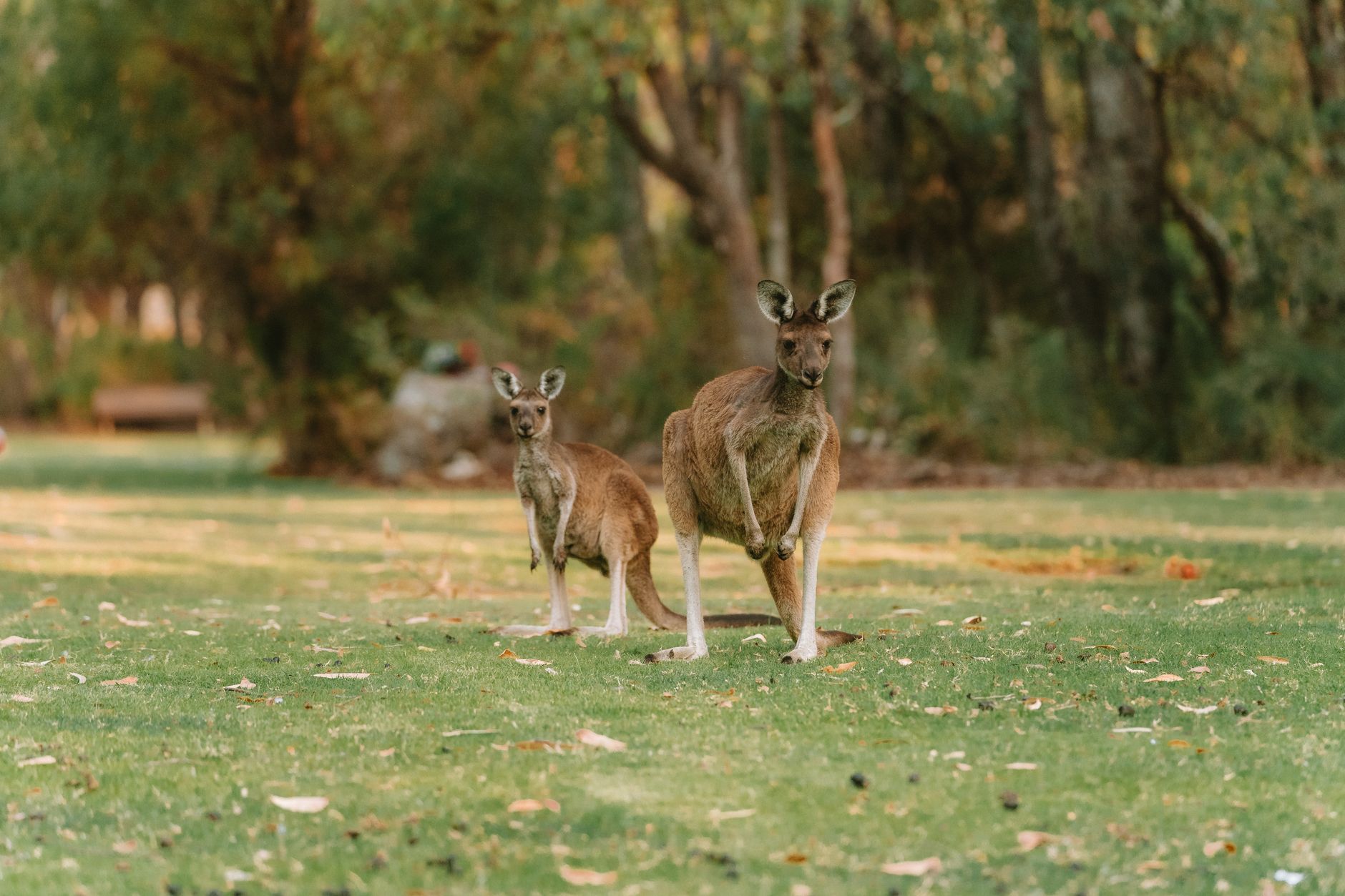
Kangaroos, iconic marsupials of Australia, are renowned for their incredible hopping ability. This image of kangaroos bounding across the outback is deeply ingrained in popular culture. However, the question of “Do kangaroos walk on 4 legs?” reveals a more complex reality about their locomotion. While they are masters of bipedal hopping, kangaroos also employ a unique four-limbed gait for slow movement, making their mode of transportation more nuanced than many realize. This article will delve into the fascinating world of kangaroo locomotion, exploring the different ways they move and the anatomical adaptations that make it all possible.

What colours are fish most attracted to?
Can you put your finger in a trout's mouth?
Is methylene blue anti bacterial?
Does aquarium salt raise pH in aquarium?
The Hopping Phenomenon: Bipedalism in Motion

Kangaroos are famous for their hopping, a highly efficient form of locomotion. This is their primary means of getting around at faster speeds. Several factors contribute to their remarkable hopping ability:
- Powerful Hind Legs: Kangaroos possess incredibly strong hind legs with elongated feet, acting as powerful springs.
- Elastic Tendons: The tendons in their legs store elastic energy during each hop, allowing them to conserve energy and travel long distances.
- Balancing Tail: The tail acts as a counterbalance, providing stability and allowing them to generate more force with each jump.
This bipedal hopping is not just a means of getting from place to place; it’s an adaptation that allows them to thrive in their environment. The energy efficiency of hopping is particularly advantageous in the arid Australian landscape.
The “Pentapedal Walk”: A Unique Form of Slow Movement
While hopping is their signature move, kangaroos also exhibit a different form of locomotion at slower speeds, often referred to as a pentapedal walk. This involves using all four limbs, along with their tail, to propel themselves forward.
Here’s how the pentapedal walk works:
- The kangaroo plants its forelimbs on the ground.
- The tail acts as a fifth limb, providing a stable base of support.
- The hind legs are then brought forward, shifting the body’s weight.
- The forelimbs are then lifted and placed forward again, and the process repeats.
This method allows kangaroos to graze, search for food, or navigate uneven terrain at a slower, more controlled pace. It requires significant muscle coordination and balance. The “Do kangaroos walk on 4 legs?” question is therefore answered with a conditional “yes,” but their tail adds another dimension.
Anatomical Adaptations for Both Gaits
The kangaroo’s anatomy is exquisitely adapted for both hopping and the pentapedal walk. The skeletal structure, musculature, and even the nervous system are finely tuned to support these distinct forms of locomotion.
| Feature | Hopping | Pentapedal Walk |
|---|---|---|
| Hind Legs | Long, powerful, specialized for jumping | Used for propulsion and support |
| Forelimbs | Relatively small, used for grasping and support | Act as weight-bearing limbs for forward movement |
| Tail | Large, muscular, acts as a counterbalance | Serves as a fifth limb, providing stability |
| Energy Efficiency | High | Lower |
These adaptations highlight the evolutionary pressures that have shaped the kangaroo’s unique mode of transportation. The ability to both hop efficiently and move slowly with the aid of the tail allows kangaroos to thrive in a variety of environments.
The Evolutionary Significance
The evolution of kangaroo locomotion is a fascinating story of adaptation. The shift towards bipedal hopping is believed to have occurred in response to the challenges of the Australian landscape.
The ability to cover large distances efficiently was crucial for finding food and water in a sparsely populated environment. The pentapedal walk, on the other hand, may have evolved as a way to conserve energy during periods of rest or when precise movements were required. This dual locomotion system has proven to be a successful strategy for kangaroos, allowing them to flourish in a diverse range of habitats. The question of “Do kangaroos walk on 4 legs?” also reveals the complexity of adaptations.
Frequently Asked Questions (FAQs)
Do kangaroos use their tails for anything besides balance?
Yes, kangaroos use their tails for several purposes. As discussed, when hopping, the tail acts as a counterbalance, allowing them to generate more force with each jump. Furthermore, during the pentapedal walk, the tail serves as a fifth limb, providing crucial support and stability. Kangaroos may also use their tails for communication, such as thumping the ground to warn others of danger.
Are there different hopping styles among different kangaroo species?
Yes, different species of kangaroos have slightly different hopping styles. Larger species, like the red kangaroo, tend to hop more frequently and at higher speeds than smaller species. Smaller species, such as wallabies, may rely more on the pentapedal walk, especially in dense vegetation. The differences in hopping styles are related to their body size, leg length, and habitat preferences.
How fast can kangaroos hop?
Kangaroos can reach impressive speeds when hopping. Red kangaroos, the largest species, can reach speeds of up to 70 kilometers per hour (43 miles per hour) over short distances. They typically hop at a more moderate speed of around 20-25 kilometers per hour (12-16 miles per hour) for longer periods.
Do baby kangaroos (joeys) hop the same way as adults?
No, baby kangaroos, also known as joeys, do not hop the same way as adults. When they first emerge from the pouch, they are still quite small and underdeveloped. They initially crawl, using their forelimbs to pull themselves along. As they grow and develop stronger hind legs, they gradually start to experiment with hopping. They eventually develop the strength and coordination necessary to hop effectively.
What muscles are most important for kangaroo hopping?
Several muscles play a crucial role in kangaroo hopping. The gastrocnemius and soleus muscles in the lower legs are responsible for generating the propulsive force during each jump. The gluteal muscles in the hips provide stability and control. The abdominal muscles are also important for maintaining balance and coordination.
How does hopping help kangaroos conserve energy?
Hopping is a highly efficient form of locomotion for kangaroos. This is because their tendons store elastic energy during each hop, allowing them to recover a significant portion of the energy used. This is similar to the way a spring stores energy when compressed and releases it when it recoils. This mechanism reduces the amount of muscle effort required to hop, allowing kangaroos to travel long distances with minimal energy expenditure.
Is the kangaroo tail prehensile?
While the kangaroo tail is incredibly strong and versatile, it is not technically prehensile, meaning it cannot be used for grasping or holding objects. However, it functions similarly to a prehensile tail during the pentapedal walk, providing a stable anchor point and allowing the kangaroo to shift its weight.
How do kangaroos use their forelimbs when hopping?
Kangaroos’ forelimbs play a minor role in hopping. While they do not actively propel themselves forward, they use their forelimbs for balance and steering. They may also use their forelimbs to groom themselves or to manipulate objects while hopping.
Are there other animals that use a similar pentapedal walking style?
While the pentapedal walk is particularly well-developed in kangaroos, some other animals may exhibit similar forms of locomotion, using their tail as a support or propulsive element. For example, some rodents and lizards may use their tails to assist with balance or movement in certain situations. However, the kangaroo’s pentapedal walk is unique in its complexity and efficiency.
Do kangaroos ever walk bipedally without hopping?
Kangaroos are capable of briefly walking bipedally without hopping, particularly when navigating uneven terrain or when they need to reach something. However, this is not their primary mode of locomotion, and they quickly revert to hopping or the pentapedal walk when possible.
What happens to kangaroos if their tail is injured?
An injury to a kangaroo’s tail can significantly affect its ability to move and balance. A damaged tail can impair its hopping ability, making it more difficult to travel long distances and escape predators. It can also affect its ability to perform the pentapedal walk. Therefore, kangaroos with tail injuries may struggle to survive in the wild.
Why have kangaroos developed their specific modes of locomotion?
Kangaroos developed their unique forms of locomotion as an adaptation to the Australian environment. The ability to hop efficiently allowed them to travel long distances in search of food and water in a dry, sparsely populated landscape. The pentapedal walk provided a slower, more controlled method of movement for grazing and navigating uneven terrain. These adaptations have allowed kangaroos to thrive in a variety of habitats across Australia. Understanding Do kangaroos walk on 4 legs? helps understand this adaptation.