
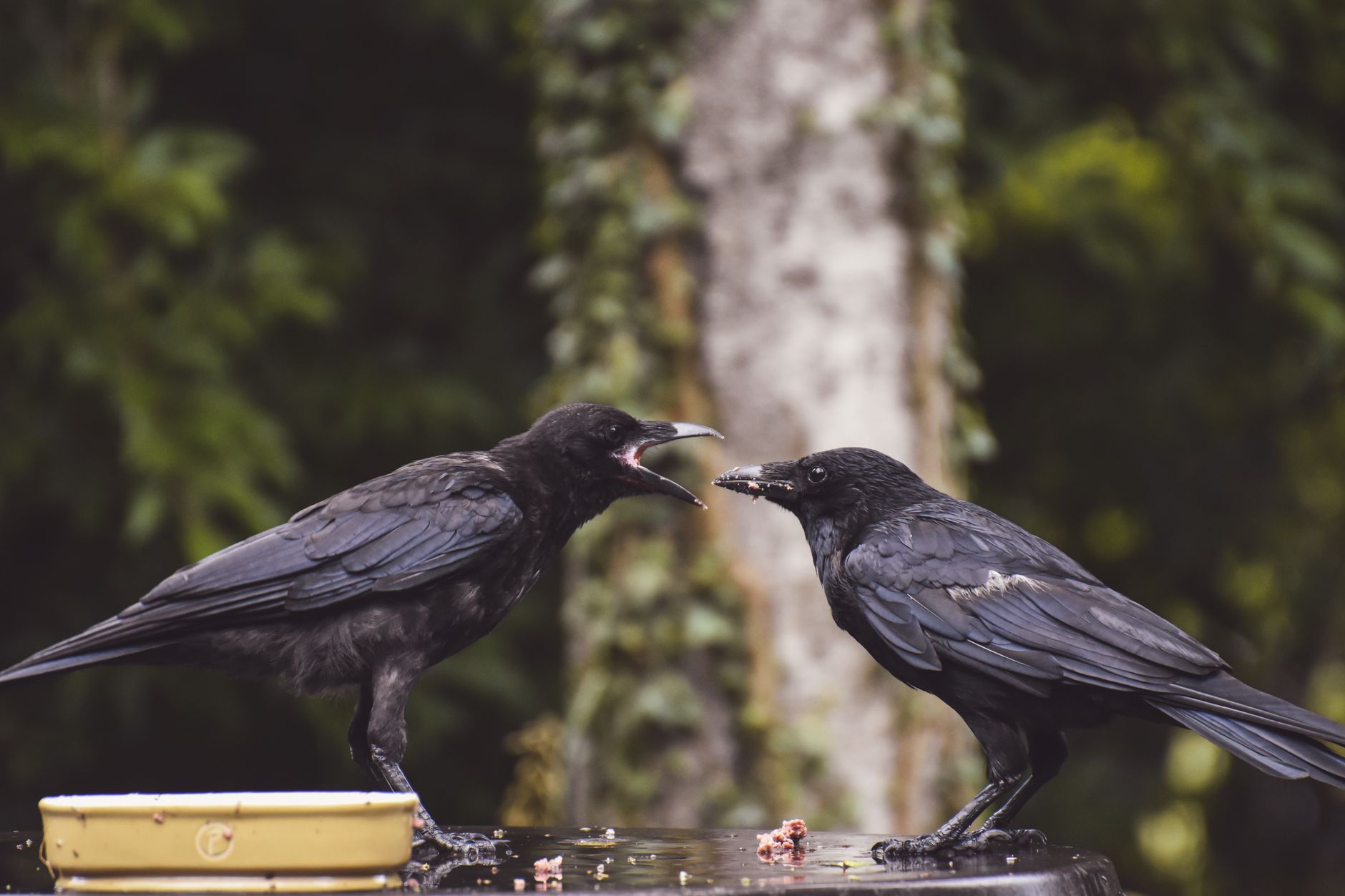
Do Crows Recognize Humans? The Surprising Intelligence of Corvus
Do crows recognize humans? Yes, and this ability is far more sophisticated than you might imagine. Crows possess remarkable cognitive abilities, allowing them to identify, remember, and even communicate about specific individuals.

Introduction: Beyond Bird Brains
For centuries, crows have been shrouded in myth and folklore, often associated with omens and ill tidings. But beneath the feathered exterior lies an intelligence that continues to astound scientists. Research has revealed that crows are not simply birds; they are highly intelligent creatures capable of complex problem-solving, tool use, and, perhaps most surprisingly, facial recognition. Do crows recognize humans? The answer is a resounding yes, with significant implications for understanding animal cognition and human-wildlife interactions.

What colours are fish most attracted to?
Can you put your finger in a trout's mouth?
Is methylene blue anti bacterial?
Does aquarium salt raise pH in aquarium?
The Neuroscience of Recognition

The ability of crows to recognize individual humans is rooted in their brain structure and function. Unlike primates, crows lack a complex neocortex. However, they possess a region called the nidopallium caudolaterale (NCL), which is analogous to the prefrontal cortex in mammals. This area is crucial for higher-level cognitive functions, including facial recognition and associative learning.
Studies using fMRI have shown that when crows are presented with images of faces they recognize, the NCL exhibits heightened activity. This suggests that the NCL plays a significant role in the neural processing of facial information. Furthermore, crows appear to encode not just visual features but also emotional associations with particular individuals.
How Crows Learn to Recognize Faces
Crows don’t simply inherit the ability to recognize faces; they learn it through experience. This learning process often involves associating a specific face with a particular event or emotion.
-
Negative Associations: Crows are particularly adept at remembering faces associated with negative experiences. For example, if someone consistently harasses or captures crows, they will quickly learn to identify that individual and avoid them.
-
Positive Associations: Crows can also learn to recognize faces associated with positive experiences, such as being fed or offered water.
-
Social Learning: Crucially, crows can also learn to recognize faces vicariously, by observing the interactions of other crows. This social learning is critical for transmitting knowledge across generations.
Communicating About Humans: Crow Gossip
Do crows recognize humans? Yes, and they also communicate about them. Crows can vocalize specific warnings about individuals they perceive as threats. These vocalizations differ depending on the context and the identity of the perceived threat.
-
Specific Alarm Calls: Researchers have found that crows use distinct alarm calls to warn other crows about specific individuals. These calls can even vary in intensity depending on the perceived level of threat.
-
Facial Masks Experiments: Clever experiments involving wearing masks have shown crows can distinguish between individuals wearing the same mask, demonstrating their ability to associate the mask with a specific person and past behavior.
-
Mobbing Behavior: Crows will often engage in “mobbing” behavior, where they collectively harass or pursue a perceived threat. This behavior serves to deter the threat and alert other crows to the danger.
The Evolutionary Advantages of Facial Recognition
The ability of crows to recognize humans likely evolved as a result of their close interactions with human populations.
-
Resource Acquisition: Being able to identify individuals who provide food or water can be a significant advantage in urban environments.
-
Predator Avoidance: Identifying individuals who pose a threat allows crows to avoid dangerous encounters and protect their offspring.
-
Social Cohesion: Facial recognition may also play a role in maintaining social cohesion within crow communities, allowing them to identify and remember members of their own group.
The Implications for Human-Wildlife Interactions
Understanding the cognitive abilities of crows has significant implications for how we interact with these intelligent creatures.
-
Ethical Considerations: Recognizing that crows are capable of complex thought and emotion raises ethical questions about how we treat them.
-
Conservation Efforts: Protecting crow populations requires understanding their behavior and social dynamics. Facial recognition may play a role in these conservation efforts.
-
Urban Planning: Designing urban environments that are both habitable for humans and safe for crows requires considering their cognitive abilities and behavior.
Comparing Crows to Other Intelligent Animals
While crows are exceptionally intelligent, they are not the only animals capable of facial recognition.
| Animal | Facial Recognition Ability | Other Cognitive Abilities |
|---|---|---|
| Primates | Highly developed | Tool use, problem-solving, social learning |
| Dolphins | Well-developed | Communication, echolocation, social complexity |
| Elephants | Excellent | Memory, empathy, social intelligence |
| Dogs | Good | Obedience, emotional understanding, social bonding |
| Crows | Excellent | Tool use, problem-solving, social learning, communication |
Frequently Asked Questions About Crow Recognition
Do crows recognize humans? Yes, but let’s delve deeper into the fascinating details.
Can crows recognize me even if I wear a hat or sunglasses?
Yes, crows can still recognize you even if you alter your appearance with a hat or sunglasses. They look for a combination of facial features, body language, and other cues to identify individuals. While disguises can make it slightly more difficult, they are unlikely to completely fool a crow.
How long do crows remember faces?
Crows can remember faces for years, possibly even a lifetime. Studies have shown that crows can recognize individuals who harassed them years after the initial encounter. This long-term memory is a testament to their remarkable cognitive abilities.
Do all crows recognize humans, or is it just certain populations?
The ability to recognize humans is likely present in all crow populations, but the extent to which they utilize this ability may vary depending on their interactions with humans. Crows living in urban areas, where they have frequent contact with people, may be more adept at facial recognition than those living in more remote areas.
Are crows able to distinguish between genders?
While research on this specific question is limited, it is likely that crows can distinguish between genders. They are highly observant and capable of learning subtle differences in appearance and behavior.
Do crows recognize other animals besides humans?
Yes, crows can recognize other animals, including predators and members of their own species. They use facial recognition and other cues to identify and interact with a variety of animals in their environment.
Is there a way to befriend a crow?
Yes, you can befriend a crow by consistently providing it with food and water. However, it is important to do so responsibly and avoid creating dependency. Consistent, positive interactions can lead to the crow recognizing you as a non-threatening individual.
What happens if a crow mistakes me for someone else?
If a crow mistakes you for someone else, it may exhibit behavior appropriate for that individual. For example, if a crow mistakes you for someone who has harassed it in the past, it may exhibit aggressive behavior towards you. Avoid direct eye contact and slowly move away from the area.
How do scientists study facial recognition in crows?
Scientists study facial recognition in crows through a variety of methods, including behavioral experiments and neuroimaging techniques. Behavioral experiments often involve presenting crows with images of faces or observing their reactions to different individuals. Neuroimaging techniques, such as fMRI, allow scientists to examine the brain activity of crows as they process facial information.
Are crows more intelligent than other birds?
Crows are considered to be among the most intelligent birds, along with ravens, parrots, and some species of jays. They exhibit a wide range of cognitive abilities, including tool use, problem-solving, and social learning. Their brain-to-body size ratio is also relatively high compared to other birds.
Can crows recognize their own reflection?
Some studies suggest that crows may be able to recognize themselves in a mirror, although the evidence is not conclusive. This is a complex cognitive ability that is typically only seen in highly intelligent animals, such as primates and dolphins.
What can I do if I am being targeted by crows?
If you are being targeted by crows, it is important to avoid provoking them further. Try to identify what may have triggered their behavior and address the issue. For example, if they are targeting you because they believe you are a threat to their nest, try to avoid the area.
Are crows dangerous to humans?
Generally, crows are not dangerous to humans. However, they may become aggressive if they feel threatened or if they are protecting their young. It is important to respect their space and avoid provoking them. In rare cases, crows may dive-bomb individuals during nesting season.