

Do Chipmunks and Squirrels Really Get Along? Unveiling the Rodent Relationship
The relationship between chipmunks and squirrels is complex, and answering the question ” Do chipmunks and squirrels get along? ” isn’t a simple yes or no. While they often coexist in the same habitats, the dynamic is better described as one of competitive tolerance rather than harmonious friendship.
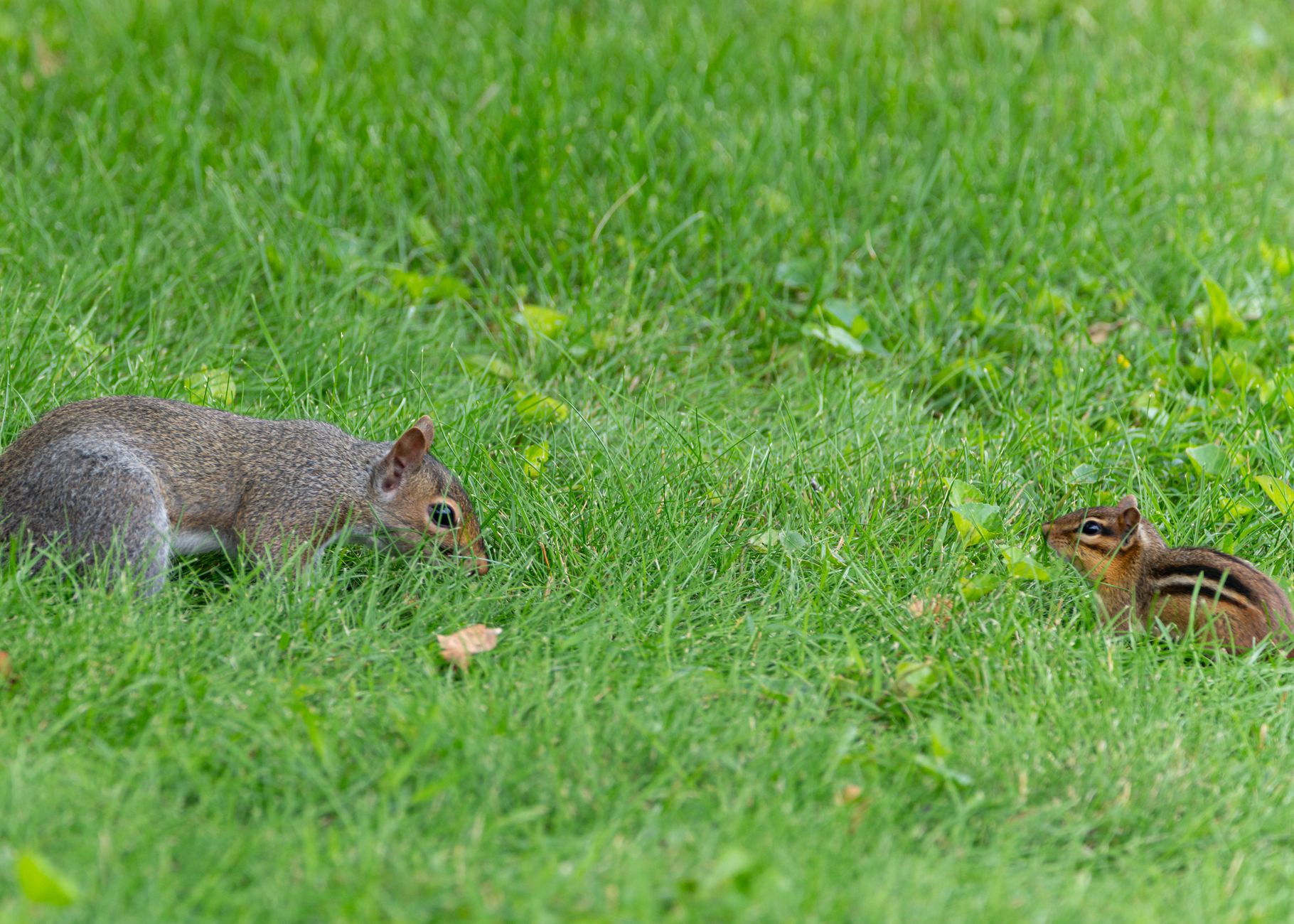
Shared Habitats, Divergent Needs: An Introduction to the Squirrel-Chipmunk Dynamic
Understanding the relationship between chipmunks and squirrels requires acknowledging their shared environment and differing ecological niches. Both belong to the Sciuridae family (the squirrel family), but their habits, diets, and social structures vary considerably, influencing their interactions. While resource overlap creates the potential for conflict, mechanisms also exist that enable them to coexist.

Is distilled water good for goldfish?
What colours are fish most attracted to?
Can you put your finger in a trout's mouth?
Is methylene blue anti bacterial?
Understanding the Chipmunk Lifestyle

Chipmunks are typically smaller than squirrels, with distinctive stripes running down their backs. They are ground-dwelling creatures who excel at burrowing and primarily forage on the ground, gathering seeds, nuts, and insects. Their behavior can be characterized as:
- Solitary Foragers: Typically, chipmunks forage alone, defending individual territories surrounding their burrows.
- Food Storers: Chipmunks are diligent hoarders, stuffing food into their cheek pouches and storing it in underground caches for the winter. This habit is critical for their survival.
- Hibernators: While not true hibernators, chipmunks enter periods of dormancy during the coldest months, relying on their stored food reserves.
Exploring Squirrel Social Structures and Feeding Habits
Squirrels exhibit a broader range of behaviors and social structures compared to chipmunks. Species like the gray squirrel are highly adaptable and can thrive in various habitats, including forests, parks, and even urban environments. Characteristics of squirrels include:
- Arboreal Acrobats: Squirrels are adept at climbing trees and often spend a significant amount of time foraging in the canopy.
- Variable Diets: Squirrels are opportunistic omnivores, consuming nuts, seeds, fruits, fungi, insects, and even occasionally bird eggs.
- Social Dynamics: Some squirrel species, like the gray squirrel, are more social than chipmunks, forming loose aggregations or even hierarchies.
Resource Competition: The Source of Tension
The primary reason chipmunks and squirrels sometimes clash is resource competition. Both rely on similar food sources, particularly nuts and seeds, and occupy overlapping territories. This competition can manifest as:
- Direct Confrontations: While not frequently observed, squirrels may chase chipmunks away from food sources or attempt to steal stored food.
- Indirect Competition: The presence of a large squirrel population can deplete the availability of resources, indirectly impacting chipmunk survival.
- Territorial Disputes: While chipmunks are generally territorial towards their own species, they may also defend their territory against squirrels if resources are scarce.
Coexistence Strategies: Minimizing Conflict
Despite the potential for conflict, chipmunks and squirrels often manage to coexist through several mechanisms:
- Temporal Partitioning: Chipmunks and squirrels may forage at different times of day to reduce direct competition.
- Spatial Partitioning: Chipmunks may focus their foraging efforts in areas less accessible to squirrels, such as dense undergrowth.
- Dietary Flexibility: Both species can adapt their diets to take advantage of available resources, reducing their reliance on specific food items.
- Different Burrowing Depths: This avoids them fighting over nesting spaces, as chipmunks have shallower burrows.
Mitigation Strategies for Gardeners
Homeowners often observe squirrels and chipmunks in their gardens. Some steps can be taken to mitigate potential damage while allowing these creatures to coexist peaceably:
- Offer Supplemental Food: Providing a designated feeding area for squirrels can reduce their incentive to raid bird feeders or gardens.
- Use Squirrel-Proof Feeders: Bird feeders designed to deter squirrels can prevent them from dominating the food supply.
- Protect Young Plants: Installing fencing around vulnerable plants can protect them from being eaten.
- Provide Water Source: A water source can reduce the likelihood that squirrels and chipmunks will damage your irrigation system.
Understanding the Role of Habitat
The type and quality of the habitat significantly influence the relationship between chipmunks and squirrels. In areas with abundant resources and ample cover, competition may be less intense. Conversely, in fragmented or resource-poor habitats, conflict may escalate.
The Urban Environment: An Altered Ecosystem
In urban environments, the dynamics between chipmunks and squirrels can be significantly altered. Human activities, such as feeding wildlife and providing artificial food sources, can disrupt natural foraging patterns and increase population densities. This can lead to heightened competition and even aggressive interactions.
Long Term Population Effects
While short-term interactions are observed, the long-term population effects of squirrels on chipmunks and vice versa depend greatly on habitat conditions, resource availability, and competition intensity. Studies of population trends in these species are rare.
Ethical Considerations for Wildlife Management
When managing wildlife populations, including squirrels and chipmunks, it’s important to consider ethical implications. Trapping and relocating animals can be stressful and may not be effective in the long run. Promoting natural habitats and reducing reliance on artificial food sources are generally more sustainable approaches.
Frequently Asked Questions (FAQs)
Do chipmunks and squirrels get along in the wild?
The relationship between chipmunks and squirrels in the wild is usually one of competitive coexistence. They are both competing for the same food resources in many cases, yet are also quite different in terms of their social behaviours and natural history, therefore direct conflicts are relatively rare.
Are squirrels bigger than chipmunks?
Yes, generally speaking, squirrels are significantly larger than chipmunks. This size difference can give squirrels a competitive advantage in certain situations, such as when competing for food.
Do chipmunks and squirrels share the same diet?
Chipmunks and squirrels share a similar diet, primarily consisting of nuts, seeds, fruits, and insects. However, squirrels may be more opportunistic and consume a wider range of food items, including fungi and occasionally bird eggs.
Can squirrels and chipmunks interbreed?
No, squirrels and chipmunks belong to different genera within the Sciuridae family, making interbreeding biologically impossible.
Do squirrels steal food from chipmunks?
Yes, it is not uncommon for squirrels to attempt to steal food from chipmunks, especially if resources are scarce. However, chipmunks are often adept at defending their food caches, particularly within their territories.
Do chipmunks and squirrels have different predators?
Chipmunks and squirrels share many of the same predators, including hawks, owls, foxes, coyotes, and snakes. The specific predators will vary depending on the geographic location and habitat.
Do chipmunks and squirrels build nests together?
No, chipmunks and squirrels do not build nests together. Chipmunks typically create underground burrows, while squirrels build nests called “dreys” in trees or other above-ground structures.
How do chipmunks and squirrels survive the winter?
Chipmunks enter periods of dormancy during the winter, relying on food stores in their cheek pouches in underground caches. While squirrels remain active throughout the winter, they find food they’ve stored and rely on their fat reserves.
Why do squirrels chase chipmunks?
Squirrels may chase chipmunks to assert dominance, defend territory, or steal food. However, these chases are often brief and don’t result in serious injury.
Do chipmunks and squirrels affect each other’s populations?
The presence of a large squirrel population can negatively affect chipmunk populations by reducing food availability and increasing competition. Conversely, a large chipmunk population may have a less pronounced effect on squirrels.
How can I attract chipmunks and squirrels to my yard?
You can attract chipmunks and squirrels to your yard by providing food sources such as nuts, seeds, and fruits. You can also create habitat by planting trees and shrubs and providing suitable nesting locations.
Are chipmunks or squirrels more destructive in gardens?
Both chipmunks and squirrels can cause damage in gardens, but squirrels are often considered more destructive due to their tendency to dig up plants, raid bird feeders, and chew on structures. Chipmunks tend to cause less overall damage.