
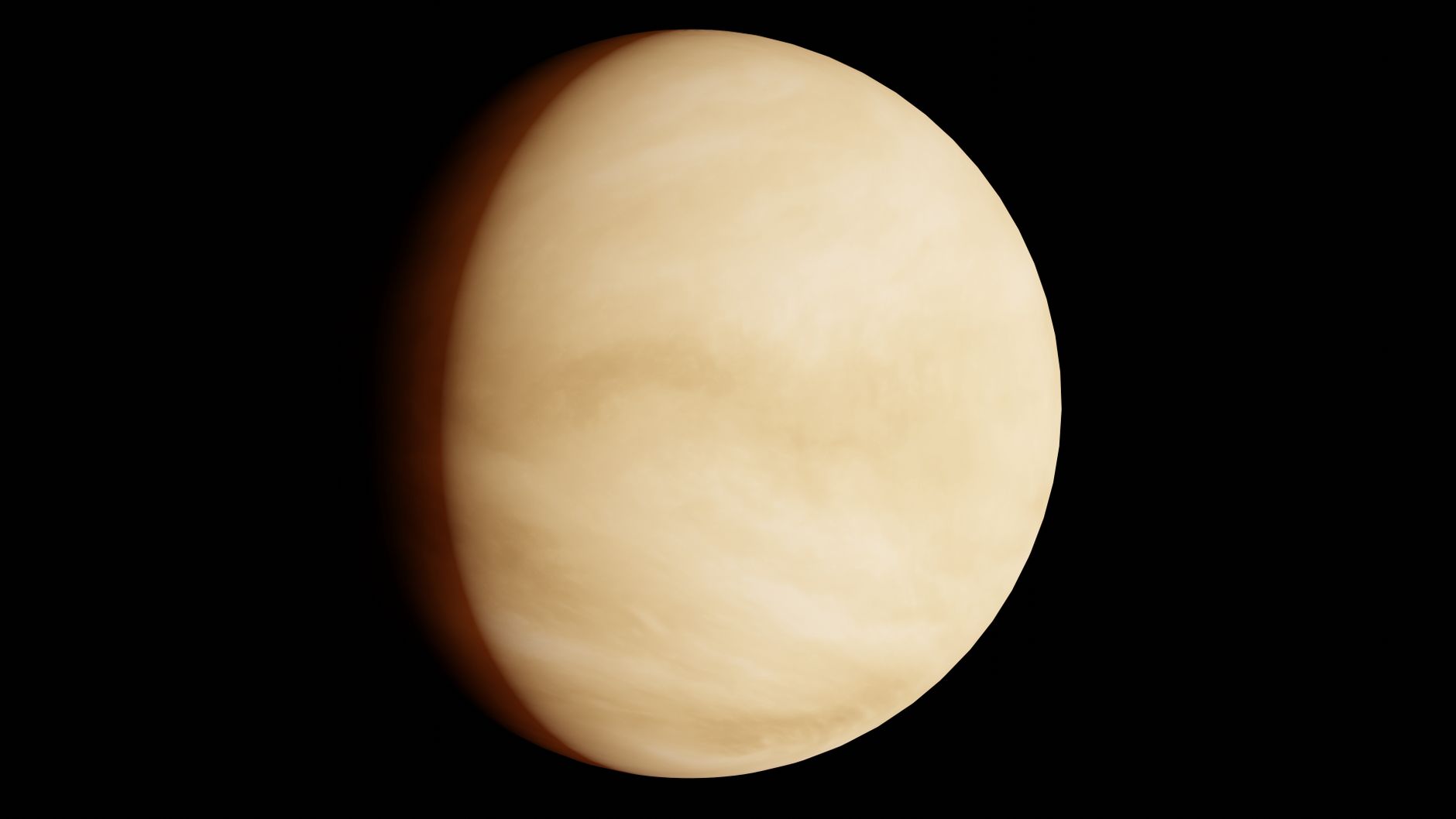
Did Venus Used to Be Like Earth? The Scorching Truth Behind Venus’s Lost Paradise
Did Venus used to be like Earth? Potentially, yes. Evidence suggests Venus may have once harbored liquid water oceans and a more temperate climate, but a runaway greenhouse effect transformed it into the hellish landscape we see today.
A Twin Gone Rogue: Venus’s Earth-Like Beginnings
For decades, scientists have pondered the divergent paths of Earth and Venus. Both planets formed in the habitable zone of our solar system, have similar size and density, and likely possessed similar early compositions. The burning question is: Did Venus used to be like Earth? If so, what went so drastically wrong? Understanding Venus’s past could provide invaluable insights into the fragility of habitability and the potential fates of other Earth-like planets in the universe.

What colours are fish most attracted to?
Can you put your finger in a trout's mouth?
Is methylene blue anti bacterial?
Does aquarium salt raise pH in aquarium?
The Case for an Ancient Ocean

Several lines of evidence support the hypothesis that Venus once possessed a liquid water ocean.
- Deuterium to Hydrogen Ratio: High levels of deuterium (a heavier isotope of hydrogen) compared to hydrogen in Venus’s atmosphere suggest that much of the planet’s original water has been lost to space. The lighter hydrogen escaped more easily, leaving behind a higher concentration of deuterium.
- Geological Clues: Some geological features on Venus, interpreted from radar data, hint at the existence of ancient shorelines and sedimentary deposits. These features are still debated, but they provide tantalizing clues.
- Climate Models: Climate models suggest that a young Venus, with slightly lower solar luminosity and a different atmospheric composition, could have supported liquid water on its surface.
- Rock Composition: Analysis of rocks on Venus hints at the possibility of ancient volcanic activity that could have released water vapor into the atmosphere.
However, the evidence is far from conclusive, and alternative explanations exist for each of these observations.
The Runaway Greenhouse Effect: Venus’s Downfall
The prevailing theory is that Venus experienced a runaway greenhouse effect, driven by an overabundance of carbon dioxide in its atmosphere.
- Solar Radiation: As the Sun’s luminosity increased over billions of years, more solar radiation reached Venus.
- Carbon Dioxide Release: Volcanic activity released massive amounts of carbon dioxide into the atmosphere.
- Water Vapor Feedback: Increased solar radiation caused more water to evaporate, further trapping heat. Water vapor is a powerful greenhouse gas.
- Loss of Water: As temperatures rose, water vapor reached higher altitudes in the atmosphere, where it was broken down by solar radiation, and hydrogen escaped into space.
- No Carbon Cycle: Unlike Earth, Venus lacks a robust carbon cycle. Without plate tectonics and liquid water, it couldn’t efficiently remove carbon dioxide from its atmosphere.
This positive feedback loop led to an unstoppable rise in temperature, boiling away any remaining oceans and transforming Venus into a scorching, inhospitable world. The surface temperature on Venus is now hot enough to melt lead.
Lessons for Earth: A Warning from Our Sister Planet
The story of Venus serves as a cautionary tale for Earth. Understanding the mechanisms that led to Venus’s climate catastrophe can help us better understand and mitigate the potential impacts of climate change on our own planet.
- Carbon Dioxide Control: Emphasizes the urgent need to reduce carbon dioxide emissions and develop technologies to remove carbon dioxide from the atmosphere.
- Feedback Loops: Highlights the importance of understanding and managing complex climate feedback loops.
- Planetary Habitability: Provides valuable insights into the factors that determine planetary habitability and the conditions under which a planet can transition from a habitable to an uninhabitable state.
Comparing Earth and Venus: A Tale of Two Planets
| Feature | Earth | Venus |
|---|---|---|
| Size | ~12,742 km diameter | ~12,104 km diameter |
| Atmosphere | Nitrogen, Oxygen | Carbon Dioxide |
| Surface Temp. | ~15°C (59°F) | ~464°C (867°F) |
| Water | Abundant liquid water | Virtually none |
| Plate Tectonics | Active | Absent |
| Magnetic Field | Present | Absent |
| Habitability | Habitable | Uninhabitable |
Frequently Asked Questions (FAQs)
Why is Venus so much hotter than Earth?
Venus’s extreme heat is primarily due to a runaway greenhouse effect, caused by its dense atmosphere of carbon dioxide. This atmosphere traps heat from the Sun, creating surface temperatures that are high enough to melt lead. Unlike Earth, Venus lacks a mechanism to effectively remove carbon dioxide from its atmosphere.
What is the evidence that Venus once had liquid water?
Evidence suggesting past liquid water on Venus includes a high deuterium-to-hydrogen ratio in its atmosphere, hinting at the loss of significant amounts of water to space. Some geological features also resemble ancient shorelines and sedimentary deposits, though these interpretations are still debated.
How did Venus lose its water?
It is believed that as Venus’s temperature increased due to the runaway greenhouse effect, water evaporated into the atmosphere. In the upper atmosphere, solar radiation broke down water molecules into hydrogen and oxygen. The lighter hydrogen then escaped into space, leading to the gradual loss of Venus’s water supply.
Does Venus have a magnetic field?
No, Venus does not have a significant global magnetic field. Earth’s magnetic field is generated by the movement of molten iron in its core. The absence of a magnetic field on Venus may be related to a slow or absent rotation in its core.
Could Venus ever be terraformed to make it habitable?
Terraforming Venus is a daunting, technologically challenging, and potentially impossible task with current technologies. It would require drastically reducing the atmospheric pressure and temperature, removing excess carbon dioxide, and establishing a stable water cycle. Several proposals exist, but none are currently feasible.
What role did volcanic activity play in Venus’s climate catastrophe?
Massive volcanic eruptions likely released vast amounts of carbon dioxide into Venus’s atmosphere, contributing to the runaway greenhouse effect. Unlike Earth, Venus lacks plate tectonics, which on Earth helps regulate carbon dioxide levels through the carbon cycle.
Is there any possibility of life on Venus today?
The surface conditions on Venus are extremely hostile to life as we know it, with scorching temperatures and a highly acidic atmosphere. However, some scientists speculate that microbial life could potentially exist in cooler, higher-altitude regions of the atmosphere, where temperatures and pressures are more moderate.
What can we learn from Venus about climate change on Earth?
Venus serves as a stark warning about the potential consequences of unchecked greenhouse gas emissions. Its history highlights the importance of understanding and managing complex climate feedback loops and the fragility of planetary habitability.
How do scientists study Venus?
Scientists study Venus using a combination of Earth-based telescopes, spacecraft orbiters, and, in the past, landers. Radar imaging is crucial for mapping the surface of Venus, as its thick cloud cover obscures visible light. Future missions are planned to further investigate Venus’s atmosphere and geology.
What are some of the challenges of studying Venus?
The extreme heat and pressure on Venus make it challenging to operate spacecraft and landers for extended periods. The thick cloud cover also limits direct visual observation of the surface. Data collection requires specialized instruments and techniques.
What future missions are planned to study Venus?
Several missions are planned to study Venus in the coming years, including NASA’s VERITAS and DAVINCI missions and ESA’s EnVision mission. These missions aim to provide more detailed data on Venus’s atmosphere, geology, and potential for past habitability.
Did Venus used to be like Earth? is a question that still perplexes scientists. Despite the challenges of observing and studying this hellish planet, these future missions may well provide the answers that reveal Venus’s true and perhaps habitable past.