
Did Humans Evolve From Kangaroos?
The notion that humans evolved from kangaroos is demonstrably false. The evolutionary paths of humans and kangaroos diverged millions of years ago, long before the emergence of either species in their current forms.

Evolutionary Lineage: A Clear Distinction
The question of whether did humans evolve from kangaroos? is easily answered by examining the established phylogenetic trees constructed by evolutionary biologists. These trees illustrate the relationships between different species and their common ancestors.
- Humans belong to the order Primates, which includes monkeys, apes, and lemurs.
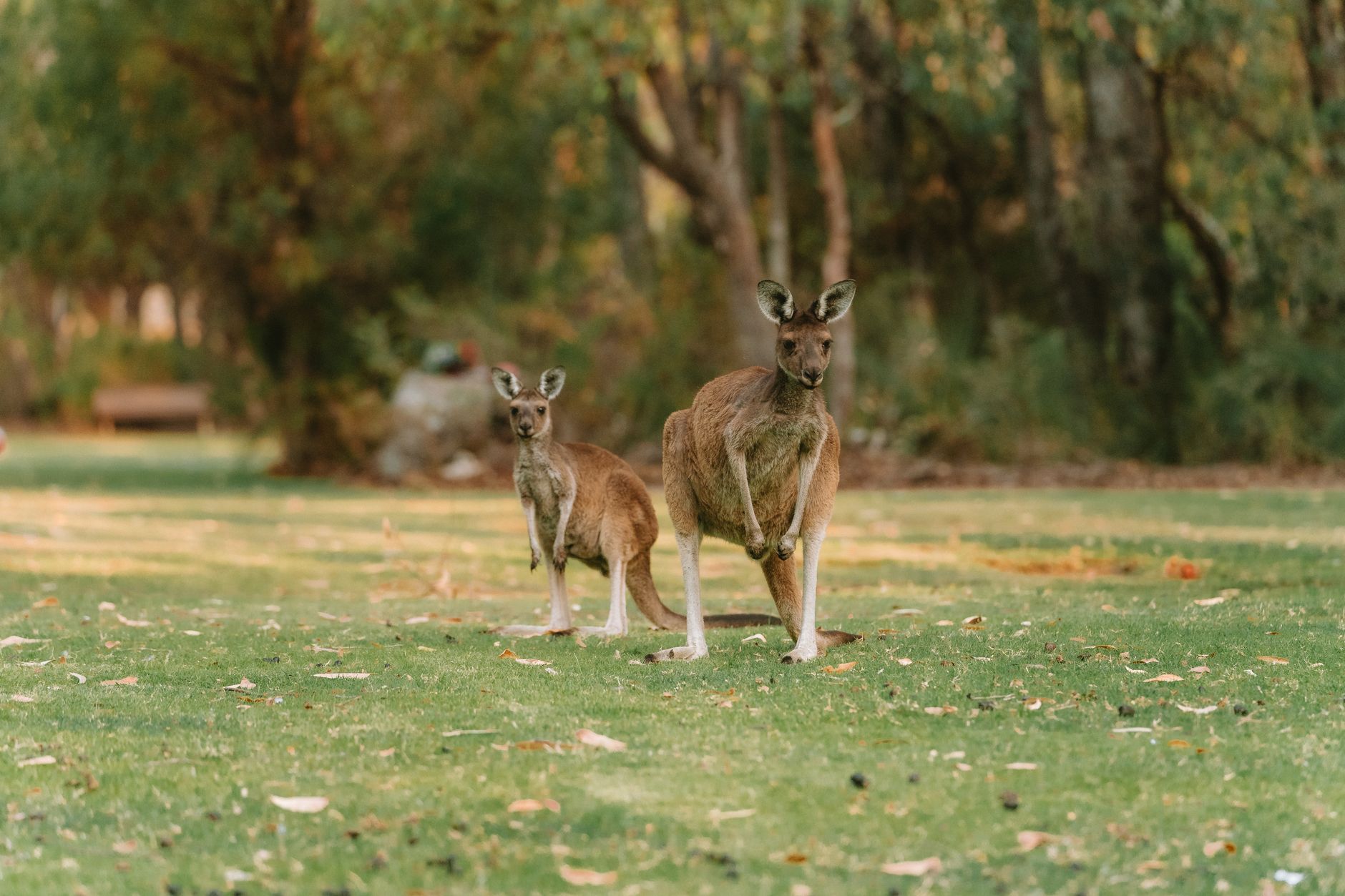
- Kangaroos, on the other hand, are marsupials, a group characterized by the presence of a pouch in which they rear their young.
These two groups separated very early in mammalian evolution. Humans share a common ancestor with other primates within the placental mammal lineage, whereas kangaroos branched off much earlier, evolving along a distinctly different path.

What colours are fish most attracted to?
Can you put your finger in a trout's mouth?
Is methylene blue anti bacterial?
Does aquarium salt raise pH in aquarium?
Tracing Back Common Ancestry

While did humans evolve from kangaroos? is a misleading question, it’s important to understand the concept of common ancestry. All life on Earth shares a common ancestor, a single-celled organism that existed billions of years ago. As life evolved, species diverged, leading to the incredible diversity we see today.
However, the most recent common ancestor between humans and kangaroos lived hundreds of millions of years ago, long before the development of features that characterize either group. This ancestor was a very early mammal, not resembling either modern human or kangaroo.
Understanding the Marsupial-Placental Split
The key divergence between humans and kangaroos lies in the marsupial-placental split. Marsupials, like kangaroos, give birth to relatively underdeveloped young, which then complete their development in a pouch. Placental mammals, including humans, nourish their developing offspring inside the mother’s uterus via a placenta.
This evolutionary split occurred during the Cretaceous period, roughly 100 million years ago. Therefore, did humans evolve from kangaroos? is incorrect, as both groups evolved along separate pathways after this crucial divergence.
Genetic Evidence: An Unambiguous Story
The genetic evidence further confirms the separate evolutionary trajectories of humans and kangaroos. Analysis of DNA and other genetic material reveals that humans are more closely related to other primates, such as chimpanzees and gorillas, than they are to kangaroos. The genetic distance between humans and kangaroos is significant, reflecting the millions of years of independent evolution.
The Fossil Record: A Tale of Two Continents
The fossil record provides further support for the distinct evolutionary histories of humans and kangaroos. Human fossils are primarily found in Africa and Eurasia, while kangaroo fossils are almost exclusively found in Australia and New Guinea. This geographic separation reflects the evolutionary history of marsupials, which diversified and thrived in isolation on the Australian continent. The fossil record clearly shows that did humans evolve from kangaroos? is unfounded because there is no evidence of shared ancestry in the fossil record between these two groups after the marsupial placental split.
Frequently Asked Questions (FAQs)
If humans didn’t evolve from kangaroos, then what are we related to?
Humans are most closely related to other primates, such as chimpanzees, gorillas, orangutans, and monkeys. These relationships are supported by genetic, anatomical, and fossil evidence, demonstrating a shared evolutionary history within the primate lineage.
What is the difference between marsupials and placental mammals?
The primary difference lies in the method of reproduction. Marsupials give birth to relatively underdeveloped young, which then complete their development in a pouch. Placental mammals nourish their developing offspring inside the mother’s uterus via a placenta, resulting in a more developed newborn.
When did marsupials and placental mammals diverge?
The evolutionary split between marsupials and placental mammals occurred during the Cretaceous period, approximately 100 million years ago. This divergence led to distinct evolutionary paths and the development of unique characteristics in each group.
Is there any scientific basis for the claim that humans evolved from kangaroos?
No, there is no scientific basis for the claim that humans evolved from kangaroos. The evidence from genetics, anatomy, and the fossil record unequivocally demonstrates separate evolutionary lineages.
What is a phylogenetic tree?
A phylogenetic tree is a diagram that represents the evolutionary relationships between different species. It shows how different groups are related to each other based on shared ancestry and evolutionary history. These trees are constructed using various types of data, including genetic information, anatomical features, and fossil records.
Why do people sometimes believe inaccurate information about evolution?
Misconceptions about evolution can arise from a lack of understanding of the scientific process, misunderstandings of complex concepts like natural selection and common ancestry, and the spread of misinformation through popular culture or unreliable sources.
What is the significance of the fossil record in understanding evolution?
The fossil record provides tangible evidence of past life forms and their evolutionary history. By studying fossils, scientists can trace the changes in species over time and understand the relationships between extinct and extant organisms. It helps confirm or deny hypothesized relationships.
How does genetic evidence support the theory of evolution?
Genetic evidence, particularly DNA analysis, provides a powerful tool for understanding evolutionary relationships. The degree of similarity between the DNA of different species reflects their relatedness and the time since they diverged from a common ancestor.
What role does natural selection play in evolution?
Natural selection is the driving force behind adaptation and evolution. It is the process by which organisms with traits that are better suited to their environment are more likely to survive and reproduce, passing those advantageous traits on to their offspring. This process leads to gradual changes in populations over time.
If we didn’t evolve from kangaroos, what did kangaroos evolve from?
Kangaroos evolved from early marsupials that diversified in Australia after the continent separated from other landmasses. These early marsupials were likely small, arboreal creatures that gradually adapted to different ecological niches, eventually giving rise to the diverse range of kangaroo species we see today.
How can I learn more about human evolution and the evolutionary history of other species?
There are many resources available for learning more about evolution, including reputable scientific websites, university courses, museum exhibits, and books written by experts in the field. Seek information from trusted sources.
Is it possible for humans and kangaroos to ever interbreed?
No, it is not possible for humans and kangaroos to interbreed. They are too distantly related, with vastly different genetic makeups and reproductive systems. Interspecies breeding is typically only possible between closely related species.
In conclusion, the question of did humans evolve from kangaroos? can be definitively answered: no. The evolutionary pathways of these two groups diverged millions of years ago, with humans belonging to the primate lineage and kangaroos evolving within the marsupial group. The evidence from genetics, the fossil record, and comparative anatomy all point to a clear and distinct evolutionary history for each species.