
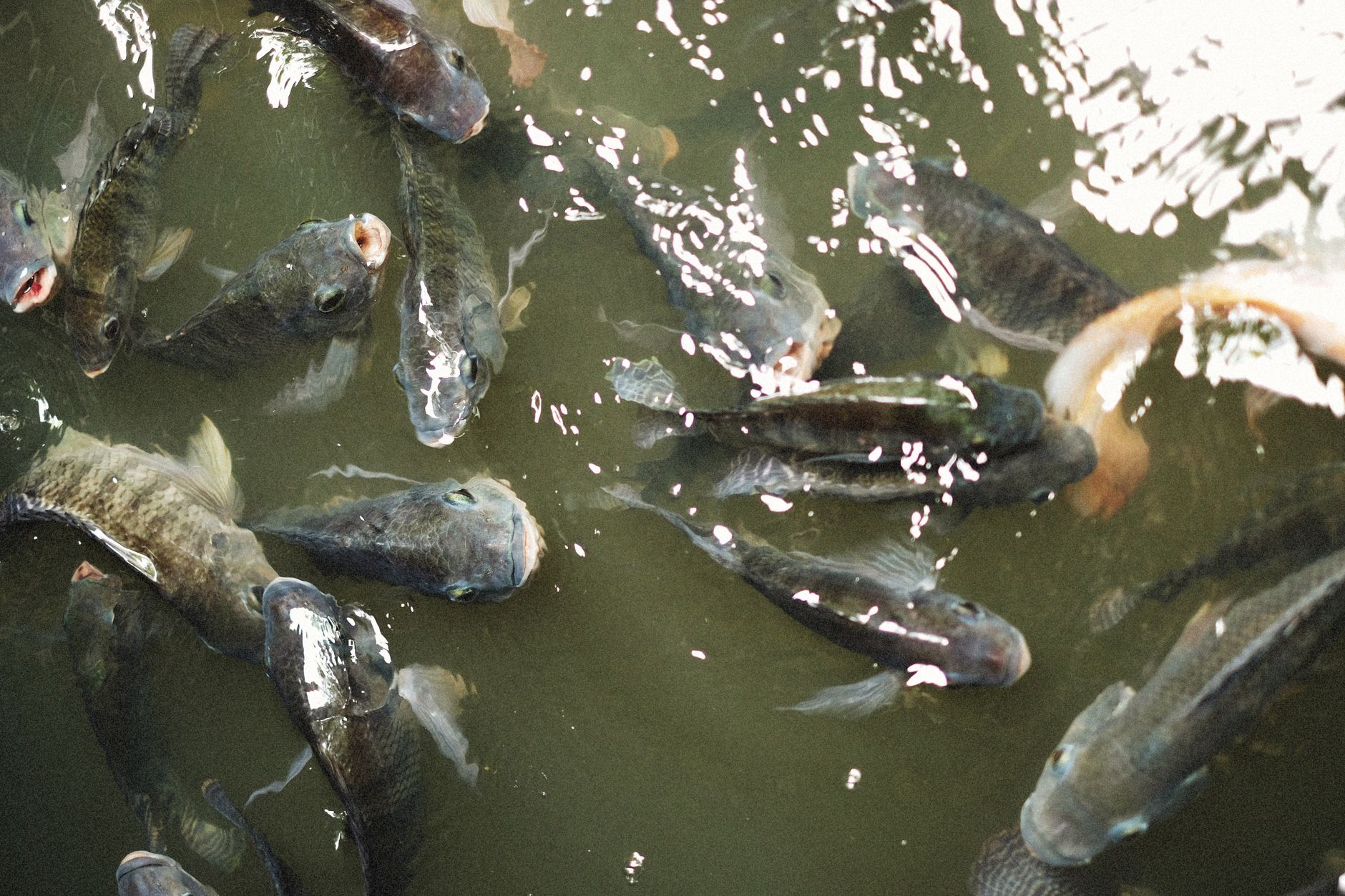
Can Dead Fish Swim? Unveiling the Truth About Aquatic Movement
The definitive answer is no. While a dead fish might appear to move due to currents or external forces, it cannot actively swim because it lacks the muscle control and energy necessary for propulsion.

Introduction: The Illusion of Movement
The sight of a fish floating in water often triggers the question: Can dead fish swim? The query arises from the observed movement of lifeless fish bodies in aquatic environments. What appears to be swimming, however, is typically the result of external factors mimicking the act of swimming rather than genuine, self-propelled motion. Understanding the biological mechanisms behind swimming, and the cessation of those mechanisms upon death, is crucial to understanding why dead fish are simply unable to swim.

How intelligent are fish?
Are fish heads good for the garden?
Can fish hear water?
What is cotton rot in fish?
The Mechanics of Fish Swimming

Living fish possess a sophisticated system for swimming. This system relies on the following key components:
- Muscles: Fish primarily use muscles located along their bodies (myomeres) to generate propulsive force. These muscles contract and relax rhythmically, creating a wave-like motion that pushes the fish through the water.
- Nervous System: The brain and spinal cord coordinate the muscle contractions, ensuring the swimming motion is controlled and efficient.
- Fins: Fins act as stabilizers, rudders, and brakes, allowing the fish to maintain balance, change direction, and control its speed.
- Swim Bladder: Many fish species possess a swim bladder, an internal gas-filled organ that helps regulate buoyancy, allowing the fish to remain at a desired depth with minimal effort.
- Energy: Swimming requires a constant supply of energy, derived from the breakdown of food through cellular respiration.
Without the integrated function of these components, a fish is incapable of generating the necessary forces for swimming.
What Happens When a Fish Dies?
Upon death, the biological processes that enable swimming cease:
- Muscle Rigidity (Rigor Mortis): Shortly after death, the muscles stiffen due to a buildup of calcium ions, resulting in rigor mortis. This rigidity prevents coordinated movement.
- Nervous System Shutdown: The nervous system stops functioning, eliminating the ability to control muscle contractions.
- Decomposition: As decomposition begins, tissues break down, further compromising the structural integrity and ability of the body to move purposefully.
- Loss of Buoyancy Control: The swim bladder, if present, loses its ability to regulate buoyancy as gases are either released or produced by decomposition.
- Energy Depletion: The supply of energy needed for muscle contractions is exhausted.
Factors Mimicking Swimming in Dead Fish
Several external factors can cause a dead fish to appear as though it is swimming:
- Water Currents: Even gentle currents can move a floating fish body, creating the illusion of swimming.
- Wind Action: Wind blowing across the water’s surface can generate surface currents that move a dead fish.
- Wave Action: Waves can cause a dead fish to bob up and down, and potentially drift in a specific direction.
- Predator Activity: Some smaller scavengers might nibble or tug at a dead fish, creating small movements that might appear as swimming.
- Decomposition Gases: As a dead fish decomposes, gases may build up inside its body, increasing its buoyancy and causing it to float to the surface, possibly shifting and appearing to move.
These external forces can easily mimic the movements of a living fish, contributing to the misconception that dead fish can swim.
Identifying a Dead Fish
Distinguishing between a living and a dead fish is often straightforward:
- Lack of Movement: A dead fish will not exhibit purposeful, coordinated swimming movements.
- Lack of Gill Movement: Gills will not be moving or “breathing.”
- Cloudy Eyes: The eyes of a dead fish often become cloudy.
- Floating Upside Down: Due to loss of buoyancy control, a dead fish often floats upside down or sideways.
- Physical Damage: The fish might have visible injuries or signs of decay.
| Feature | Living Fish | Dead Fish |
|---|---|---|
| Movement | Purposeful, coordinated | Random, influenced by currents |
| Gill Movement | Present | Absent |
| Eye Clarity | Clear | Cloudy |
| Orientation | Upright | Upside down or sideways |
| Decomposition | Absent | Present (eventually) |
Frequently Asked Questions (FAQs)
Why do dead fish often float upside down?
The primary reason dead fish float upside down is due to the loss of buoyancy control. The swim bladder, if present, no longer functions to regulate the fish’s position in the water column. Additionally, gases produced during decomposition can cause the fish to become more buoyant.
Can a fish that is severely injured but still alive swim?
A fish that is severely injured but still alive may be able to swim, but its movements will likely be weak, erratic, and uncoordinated. The extent of its ability to swim depends on the severity and location of the injury.
Does the size of the fish affect whether it floats or sinks when it dies?
Yes, the size of the fish can affect whether it initially floats or sinks. Smaller fish, with less muscle mass and a higher surface area to volume ratio, tend to float more readily. Larger fish, with denser bones and tissues, may initially sink before decomposition gases cause them to float.
Do different species of fish decompose at different rates?
Yes, different species of fish decompose at different rates. Factors such as water temperature, body composition, and the presence of bacteria affect the decomposition process. Fish with higher fat content tend to decompose more slowly.
What happens if a fish dies in a deep part of a lake or ocean?
If a fish dies in a deep part of a lake or ocean, it may initially sink to the bottom. However, as decomposition proceeds, gases produced within the body will eventually increase its buoyancy, causing it to rise to the surface. This process can take days, weeks, or even months depending on the water temperature and other factors.
Is it possible for a dead fish to be mistaken for a living one from a distance?
Yes, from a distance, the movements of a dead fish caused by currents or wind can easily be mistaken for the swimming motions of a living fish. This is especially true in murky or choppy water.
How does the water temperature affect the movement of a dead fish?
Water temperature significantly affects the movement of a dead fish. Warmer water accelerates decomposition, leading to faster gas production and increased buoyancy. This can cause the fish to float and be more easily moved by currents. Colder water slows decomposition, so the fish may sink and decompose slower.
Does the presence of predators or scavengers affect the movement of a dead fish?
Yes, the presence of predators or scavengers can significantly affect the movement of a dead fish. These animals may consume parts of the fish, dismember the body, or drag it to different locations. Their actions can create the illusion of movement or dramatically alter the fish’s position.
Can the salinity of the water affect whether a dead fish floats or sinks?
Yes, the salinity of the water can affect whether a dead fish floats or sinks. Saltwater is denser than freshwater, so a dead fish is more likely to float in saltwater than in freshwater. This is because the buoyant force is greater in denser fluids.
What role does the swim bladder play in the movement (or lack thereof) of a dead fish?
The swim bladder, in living fish, is crucial for buoyancy control. In a dead fish, the swim bladder can contribute to buoyancy only if it remains intact and filled with gas. However, if the swim bladder ruptures or deflates, the fish will lose this buoyancy aid, impacting its movement and position in the water.
Is there any scientific evidence that a dead fish can actively swim?
There is no scientific evidence to support the claim that a dead fish can actively swim. All observed movements are attributable to external forces acting on the body. Thus, can dead fish swim? The answer remains definitively no.
What are some common misconceptions about dead fish and their movement?
A common misconception is that if a dead fish’s mouth is open, it’s trying to swim or breathe. In reality, an open mouth on a dead fish is simply due to muscle relaxation and has no connection to active swimming. Another misconception is that if a dead fish is seen drifting, it must be moving under its own power.