

Are Staffies Good With Other Dogs?: Unveiling the Truth
The answer to Are Staffies good with other dogs? isn’t a simple yes or no. While individual temperament plays a significant role, the breed, Staffordshire Bull Terrier, possesses a history and characteristics that can influence their interactions, requiring responsible ownership and careful management.

Understanding the Staffordshire Bull Terrier: A Complex History
The Staffordshire Bull Terrier, often affectionately called the “Staffie,” is a breed with a rich but complex history. Originally bred in 19th-century England from bulldogs and terriers, they were designed for blood sports like bull-baiting and dogfighting. While these activities are now illegal, understanding this heritage is crucial to appreciating the breed’s inherent traits. This history has instilled in some Staffies a strong prey drive and a tenacity that, if not properly managed, can contribute to dog aggression. Are Staffies good with other dogs? depends largely on how these instincts are channeled.

What colours are fish most attracted to?
Can you put your finger in a trout's mouth?
Is methylene blue anti bacterial?
Does aquarium salt raise pH in aquarium?
Temperament and Individual Variation
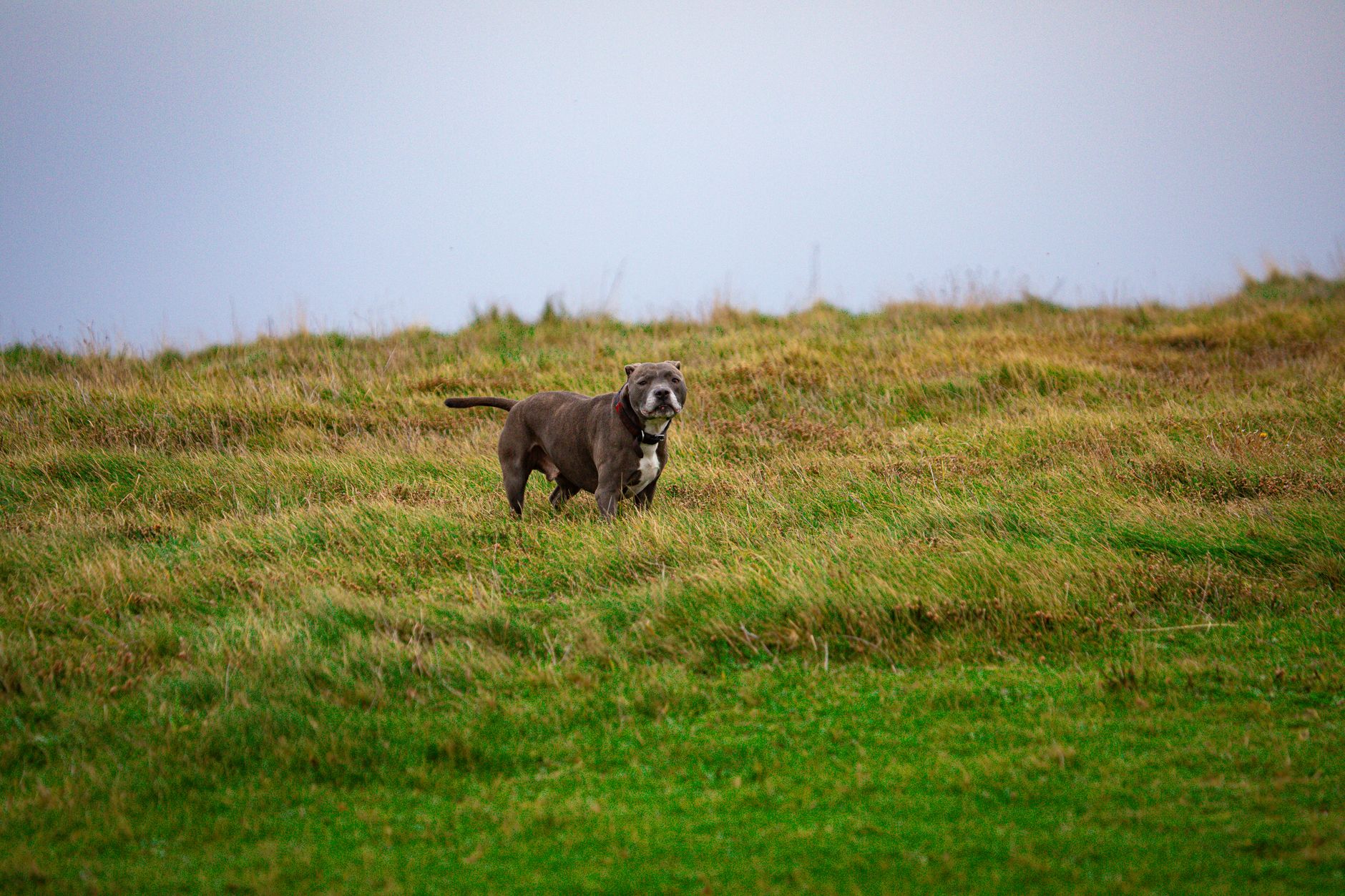
While breed characteristics offer a general understanding, individual temperament is paramount. Not all Staffies are the same. Some are naturally social and enjoy the company of other dogs, while others may be more reserved or selectively social. Early socialization and consistent training play a vital role in shaping a Staffie’s behavior.
The Importance of Early Socialization
Early socialization is critical for all dogs, but particularly for breeds like the Staffordshire Bull Terrier. Exposing puppies to a wide range of sights, sounds, people, and, crucially, other well-behaved dogs during their formative months (roughly 3-16 weeks of age) can significantly impact their future social skills. Positive experiences during this period help them learn appropriate dog-dog interaction and communication. This directly addresses the question of Are Staffies good with other dogs? by laying a strong foundation for positive interactions.
Responsible Ownership and Training
Regardless of a Staffie’s inherent temperament, responsible ownership is non-negotiable. This includes:
- Consistent Training: Using positive reinforcement methods to teach basic obedience commands is essential. A well-trained Staffie is easier to control and manage in various situations.
- Leash Skills: Staffies should be trained to walk politely on a leash, preventing them from pulling or lunging at other dogs.
- Supervision: Always supervise interactions between a Staffie and other dogs, especially in the initial stages.
- Understanding Body Language: Learning to recognize canine body language is crucial for identifying potential conflicts and intervening before they escalate.
Potential Challenges and Considerations
Despite best efforts, some Staffies may still exhibit reactivity or aggression towards other dogs. This can be due to a variety of factors, including genetics, past experiences (e.g., a negative encounter with another dog), or simply a lack of proper socialization. Owners should be prepared to address these challenges with the help of a qualified dog trainer or behaviorist. Are Staffies good with other dogs? Sometimes, the answer is a qualified “with proper management.”
Creating a Multi-Dog Household
Introducing a Staffie into a household with existing dogs requires careful planning and execution.
- Controlled Introductions: Introduce the dogs gradually, starting with supervised meetings in neutral territory.
- Separate Resources: Provide each dog with their own food bowls, water bowls, beds, and toys to minimize competition.
- Equal Attention: Ensure that each dog receives equal attention and affection to prevent jealousy and resentment.
- Safe Spaces: Create separate “safe spaces” where each dog can retreat to if they feel overwhelmed or stressed.
Factors Influencing Compatibility
Certain factors can influence whether a Staffie will get along with other dogs:
- Sex: Some Staffies, particularly males, may be more prone to same-sex aggression.
- Age: Puppies are generally more accepting of other dogs than older, established adults.
- Personality: A confident, assertive Staffie may clash with another dog of similar temperament.
| Factor | Potential Impact |
|---|---|
| Sex | Same-sex aggression more common, especially males |
| Age | Puppies often more adaptable than adults |
| Personality | Confident dogs may clash with similar temperaments |
The Role of Genetics
Genetics play a role, however, environment and upbringing can override many inherent tendencies. Choosing a reputable breeder who carefully selects for temperament can increase the likelihood of obtaining a Staffie with a more stable and sociable disposition. Reputable breeders focus on temperament testing and often evaluate how their dogs interact with other animals. This is part of why finding a good breeder is vital in the discussion of Are Staffies good with other dogs?
Seeking Professional Guidance
If you are considering getting a Staffie, or if you already own one and are experiencing challenges with dog-dog interactions, seeking professional guidance is highly recommended. A qualified dog trainer or behaviorist can assess your dog’s temperament, identify any underlying issues, and develop a customized training plan to address your specific needs.
The Verdict: A Balanced Perspective
So, Are Staffies good with other dogs? The answer isn’t a simple yes or no. It’s a complex question influenced by genetics, socialization, training, and individual personality. Responsible ownership, careful management, and a willingness to seek professional guidance are essential for ensuring harmonious relationships between Staffies and other dogs.
FAQs About Staffies and Other Dogs
Why are Staffies sometimes labeled as “aggressive”?
Staffies have a history as fighting dogs, which has unfortunately led to a negative stereotype. While some Staffies may exhibit dog aggression, this is not true of all members of the breed. Responsible breeding and training can help mitigate this tendency. This misconception adds to the confusion surrounding the question, Are Staffies good with other dogs?
Can Staffies live with cats?
Some Staffies can coexist peacefully with cats, especially if they are raised together from a young age. However, Staffies have a strong prey drive, so careful supervision and management are crucial. Never leave a Staffie unsupervised with a cat, and ensure the cat has safe escape routes.
What are the signs that a Staffie is not comfortable around another dog?
Signs of discomfort or stress in a Staffie include stiff body posture, lip licking, whale eye (showing the whites of the eyes), tucked tail, growling, and snapping. It’s crucial to recognize these signals and remove the Staffie from the situation before it escalates.
How do I properly introduce my Staffie to a new dog?
Start with parallel walks, allowing the dogs to get used to each other’s scent and presence. Then, progress to short, supervised meetings in a neutral location, such as a park. Keep the dogs on leashes initially, and gradually allow them more freedom to interact, while closely monitoring their body language.
Is it better to get a male or female Staffie if I already have a dog?
Generally, opposite-sex pairings are more likely to be successful than same-sex pairings, especially with male Staffies. However, individual personalities are the most important factor.
What kind of training is best for a Staffie who is reactive towards other dogs?
Positive reinforcement-based training is the most effective approach. Focus on teaching your Staffie to focus on you in the presence of other dogs, using high-value rewards. Counter-conditioning and desensitization techniques can also be helpful.
What is counter-conditioning?
Counter-conditioning involves changing a dog’s emotional response to a stimulus (in this case, other dogs) from negative to positive. This is typically done by pairing the stimulus with something pleasant, such as treats or praise.
What is desensitization?
Desensitization involves gradually exposing a dog to a stimulus (other dogs) at a low intensity and gradually increasing the intensity as the dog becomes more comfortable.
How can I prevent my Staffie from becoming reactive towards other dogs?
Early and ongoing socialization, positive reinforcement training, and responsible management are key. Avoid exposing your Staffie to negative experiences with other dogs, and seek professional guidance if you notice any signs of reactivity.
Are neutered Staffies less likely to be aggressive towards other dogs?
Neutering can sometimes reduce aggression in male dogs, particularly aggression related to testosterone. However, it is not a guaranteed solution and may not have any effect on some dogs. Ultimately, answering Are Staffies good with other dogs? goes beyond neutering.
My Staffie was fine with other dogs as a puppy, but now he is becoming reactive. Why?
Social maturity, which typically occurs between 1 and 3 years of age, can sometimes trigger changes in a dog’s behavior, including increased reactivity towards other dogs. Hormonal changes and a growing sense of territoriality can contribute to this.
What resources are available to help me train my reactive Staffie?
Many resources are available, including certified professional dog trainers, behaviorists, and online training programs. The Association of Professional Dog Trainers (APDT) and the Certification Council for Professional Dog Trainers (CCPDT) are good places to find qualified professionals.