
Are Sharks in the Dead Sea? Exploring Marine Life in Extreme Environments
The definitive answer is no. Absolutely no sharks can survive in the Dead Sea due to its extreme salinity. The unique chemical composition and exceptionally high salt concentration create an environment completely inhospitable to these ocean predators.

Understanding the Dead Sea: A Unique Environment
The Dead Sea, bordering Jordan and Israel, is one of the most saline bodies of water on Earth. Its name speaks volumes about its ability to support life. Unlike typical marine environments, the Dead Sea presents formidable challenges to aquatic organisms, primarily due to its:
- Extreme Salinity: Approximately 34% salinity, nearly 10 times that of the ocean.
- Mineral Composition: High concentrations of minerals like magnesium chloride, calcium chloride, and potassium chloride, in addition to sodium chloride.
- Density: Significantly denser than freshwater or regular seawater.
- Limited Oxygen: Deep layers can become anaerobic, devoid of dissolved oxygen.
These factors combine to create a harsh environment that few organisms can tolerate.

What colours are fish most attracted to?
Can you put your finger in a trout's mouth?
Is methylene blue anti bacterial?
Does aquarium salt raise pH in aquarium?
Shark Physiology and Salinity Tolerance
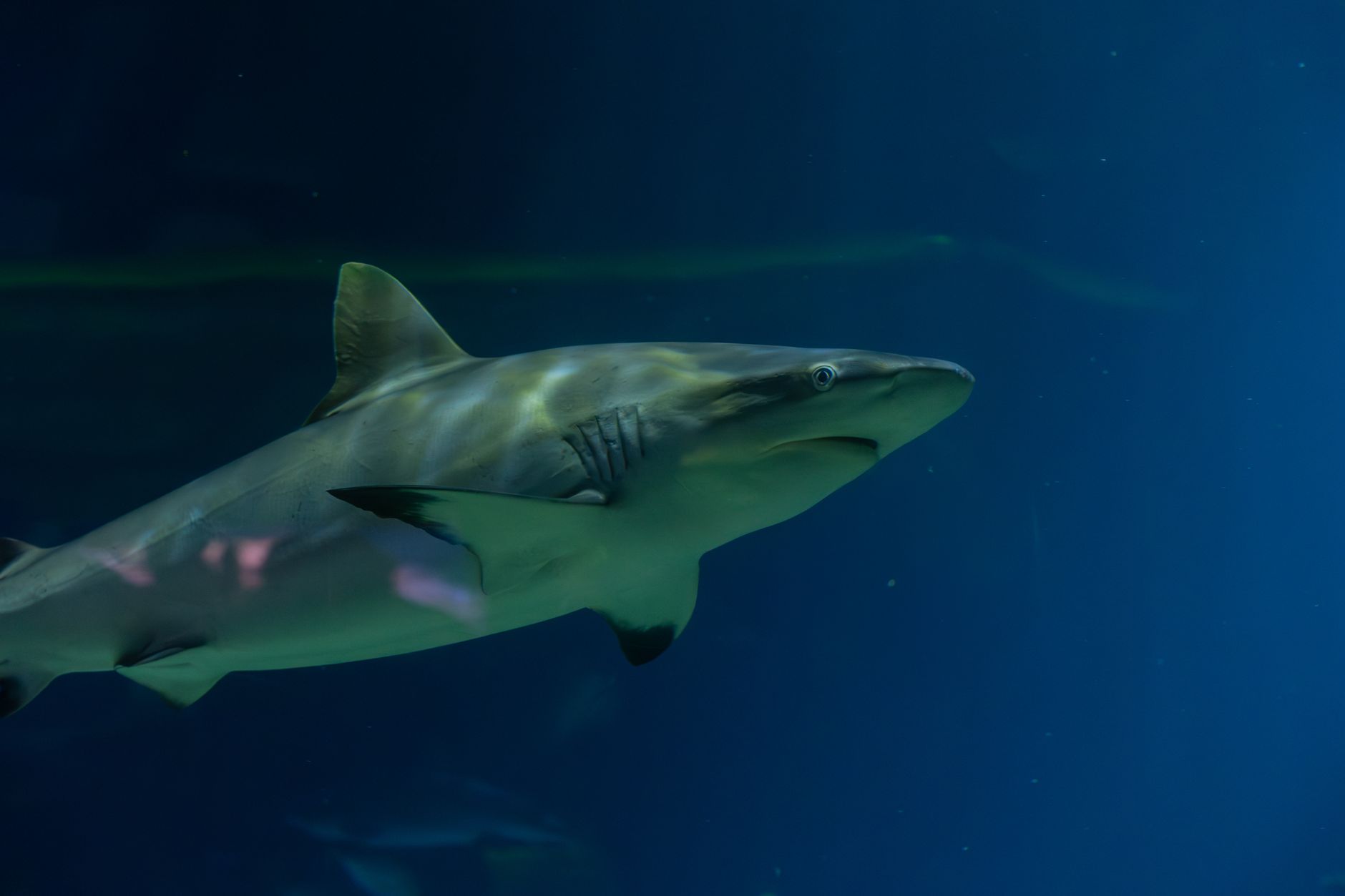
Sharks, as elasmobranchs (cartilaginous fish), have evolved mechanisms to regulate their internal salt balance (osmoregulation). However, these mechanisms have their limits.
- Urea Retention: Sharks retain urea in their blood to increase their internal solute concentration, reducing the osmotic gradient between their bodies and the surrounding seawater.
- Rectal Gland: This gland helps excrete excess salt from the body.
Despite these adaptations, sharks cannot cope with the extremely high salinity of the Dead Sea. The osmotic stress would be too great, leading to dehydration and ultimately, death. Their physiological systems are not equipped to maintain internal balance in such an extreme environment.
Why Sharks Can’t Survive in the Dead Sea: A Breakdown
Several critical factors prevent sharks from thriving in the Dead Sea:
- Osmotic Imbalance: The extremely high salinity draws water out of the shark’s body through osmosis, leading to severe dehydration.
- Organ Failure: The excessive salt concentration can damage vital organs, including the kidneys and gills.
- Lack of Food Source: The Dead Sea’s extreme environment supports very limited life, offering no food for sharks.
- Density Problems: While density helps them float, navigating through extremely dense water can expend excessive energy, especially if trying to hunt.
What Can Survive in the Dead Sea?
While sharks cannot survive in the Dead Sea, a few specialized microorganisms have adapted to this harsh environment.
- Halophilic Archaea: These salt-loving archaea are some of the most common inhabitants.
- Halophilic Bacteria: Some bacteria species have also adapted to survive the extreme salinity.
- Dunaliella Algae: Under specific conditions (diluted salinity after heavy rainfall) this alga may bloom.
These organisms are uniquely adapted to tolerate the extreme conditions and form the base of the very limited food web in the Dead Sea.
Examples of Extreme Environments and Marine Life
The Dead Sea is not the only example of an extreme environment with limited marine life. Similar principles apply in other highly saline or otherwise challenging environments.
| Environment | Salinity (‰) | Notable Inhabitants |
|---|---|---|
| Open Ocean | ~35 | Diverse range of marine life, including sharks |
| Baltic Sea | 3-8 | Brackish water species, some tolerant fish and invertebrates |
| Great Salt Lake | 5-27% | Brine shrimp, algae, bacteria |
| Dead Sea | ~34% | Halophilic archaea, bacteria, Dunaliella algae |
This table illustrates the relationship between salinity and the diversity of marine life. As salinity increases beyond the tolerance levels of most organisms, only highly specialized species can survive.
Frequently Asked Questions (FAQs)
Could a shark be introduced to the Dead Sea and adapt over time?
No, it is extremely unlikely that a shark could adapt to the Dead Sea’s conditions, even over generations. The salinity difference is far too extreme for a shark to gradually acclimatize through evolutionary means within a reasonable timeframe. The physiological demands would be insurmountable.
Are there any saltwater fish that could survive in the Dead Sea?
No, there are no saltwater fish that could naturally survive in the Dead Sea’s extreme salinity. Even highly salt-tolerant fish species require salinity levels significantly lower than those found in the Dead Sea. It is the unique cocktail of minerals, not just the salt, that also impacts survival.
Has anyone ever tried to introduce sharks into the Dead Sea?
To the best of available knowledge and published research, there are no credible reports of anyone attempting to introduce sharks into the Dead Sea. Such an attempt would be both unethical and scientifically pointless, as the outcome would be predictably fatal for the shark.
What is the highest salinity a shark can tolerate?
The highest salinity that most shark species can tolerate is around 40-50 parts per thousand (‰). While some species are more adaptable than others, the Dead Sea’s salinity of around 340‰ is far beyond this limit.
What other marine animals cannot survive in the Dead Sea?
Besides sharks, virtually all other marine animals, including fish, crustaceans, mollusks, and marine mammals, cannot survive in the Dead Sea. The extreme conditions are simply too harsh for any but the most specialized microorganisms.
Does the Dead Sea contain any other dangerous marine animals?
Because the Dead Sea cannot support most life, there are no dangerous marine animals present. The only potential risks are related to the mineral content of the water, which can cause skin irritation or eye damage if ingested.
What would happen to a shark if it were placed in the Dead Sea?
If a shark were placed in the Dead Sea, it would experience rapid dehydration due to osmosis. Its organs would begin to fail, and it would likely die within a matter of hours, or even sooner depending on the shark’s size and species.
Is the Dead Sea actually dead?
While the Dead Sea cannot support most life, it is not entirely dead. As mentioned earlier, halophilic archaea, bacteria, and some algae thrive in this extreme environment, albeit in limited numbers.
Are there any efforts to increase biodiversity in the Dead Sea?
There are limited efforts aimed at increasing biodiversity in the Dead Sea directly, as the extreme conditions pose a significant challenge. However, some research focuses on understanding the existing microbial communities and the impact of environmental changes on their survival. Protecting the inflows into the Dead Sea helps manage its mineral content and stability.
Could climate change affect the Dead Sea’s suitability for shark life in the future?
Even with climate change, the Dead Sea’s fundamental characteristics—its extreme salinity and unique mineral composition—are unlikely to change enough to make it habitable for sharks. Some dilution might occur, but the concentrations would remain lethally high.
What makes the Dead Sea different from other salt lakes?
The Dead Sea is unique not only for its exceptionally high salinity but also for its mineral composition. The presence of high concentrations of magnesium chloride, calcium chloride, and potassium chloride, in addition to sodium chloride, distinguishes it from other salt lakes like the Great Salt Lake, which is primarily sodium chloride-based.
If not the Dead Sea, where can one find diverse shark populations?
Diverse shark populations can be found in many of the world’s oceans, particularly in tropical and subtropical regions. Popular locations include the Bahamas, South Africa, Australia’s Great Barrier Reef, and various locations in the Pacific Ocean. These areas offer suitable habitats and abundant food sources for various shark species.