

Are Ray-Finned Fish and Sharks Similar? Exploring the Divergent Paths of Aquatic Vertebrates
While both ray-finned fish and sharks are undeniably fish inhabiting our oceans, the answer to Are ray-finned fish and sharks similar? is largely no, stemming from their distinct evolutionary lineages and significant differences in skeletal structure, reproductive strategies, and other key biological traits.

A Tale of Two Fish: Unveiling Evolutionary Divergences
To understand why the similarities between ray-finned fish and sharks are superficial at best, we must delve into their evolutionary history. Both belong to the phylum Chordata and the superclass Gnathostomata (jawed vertebrates), but their paths diverged hundreds of millions of years ago. Sharks belong to the class Chondrichthyes, characterized by their cartilaginous skeletons. Ray-finned fish, comprising the class Actinopterygii, possess bony skeletons. This fundamental difference dictates much of their anatomy and physiology.

Are fish heads good for the garden?
Can fish hear water?
What is cotton rot in fish?
What colours are fish most attracted to?
Cartilage vs. Bone: The Foundation of Disparity
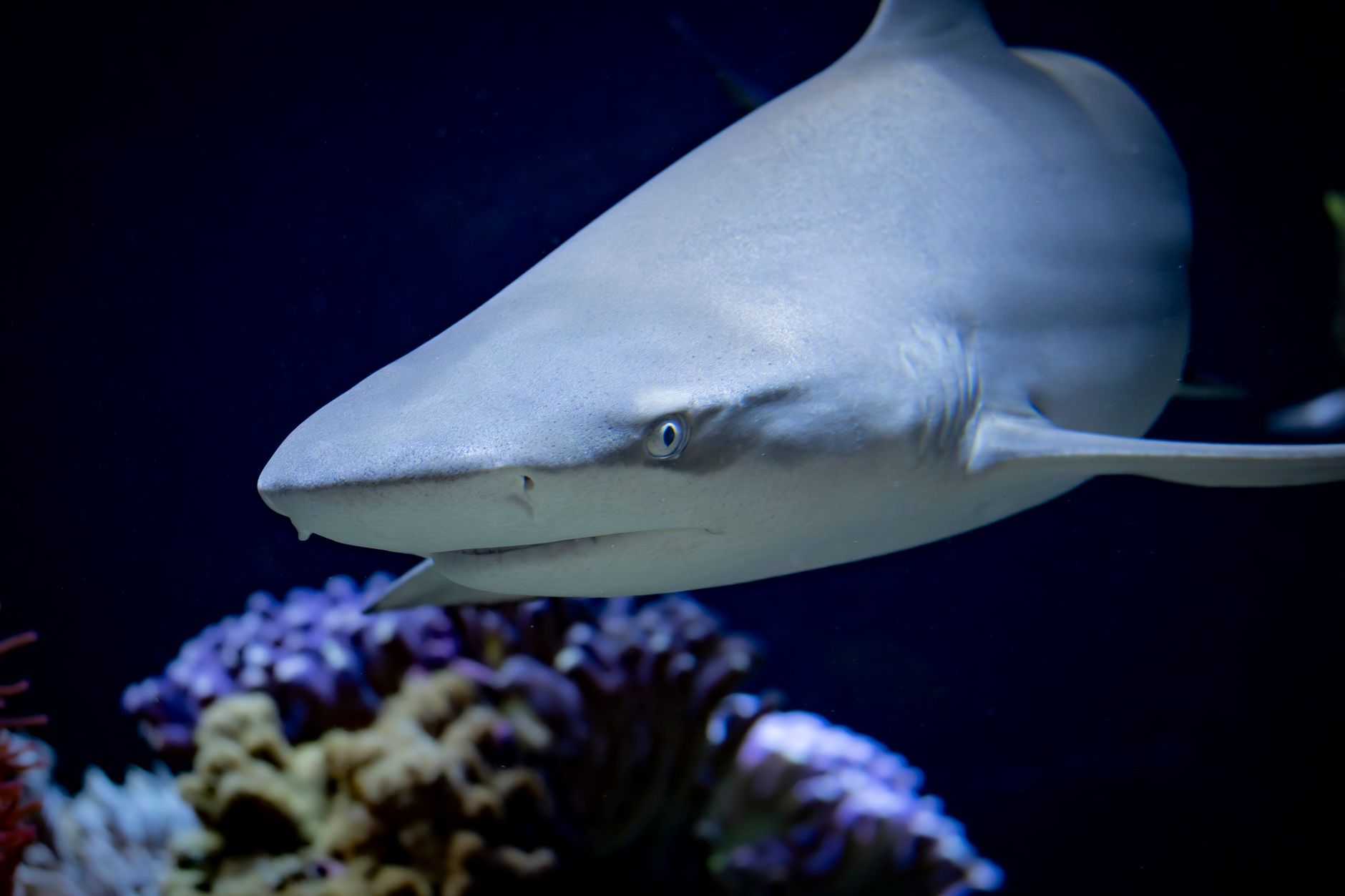
The skeletal composition is a crucial difference:
- Sharks (Chondrichthyes): Their skeletons are entirely made of cartilage, a flexible and lightweight tissue. Cartilage provides buoyancy benefits and agility. However, it is not as strong as bone. They also lack rib cages.
- Ray-Finned Fish (Actinopterygii): They possess bony skeletons, offering greater rigidity and support. Bones are also a reservoir for calcium and phosphate.
This structural divergence influences their swimming styles, buoyancy control, and overall body mechanics.
Respiratory Systems: Different Approaches to Oxygen Extraction
While both groups extract oxygen from water using gills, the mechanisms differ:
- Sharks: They typically have five to seven gill slits on each side of their head. Some sharks must swim constantly to force water over their gills (ram ventilation), while others can pump water over them (buccal pumping).
- Ray-Finned Fish: Most ray-finned fish have a bony operculum, or gill cover, that protects the gills and aids in water flow. The operculum allows them to breathe without constant swimming, increasing their energy efficiency.
Reproductive Strategies: A Spectrum of Approaches
Reproduction in ray-finned fish and sharks showcases a wide range of strategies, further highlighting their differences:
- Sharks: Exhibit a range of reproductive modes, including oviparity (laying eggs), viviparity (live birth), and ovoviviparity (eggs hatch internally). They typically produce few, well-developed offspring. Many show parental care.
- Ray-Finned Fish: Most are oviparous, releasing vast numbers of eggs that are fertilized externally. Parental care is less common, and mortality rates among offspring are high.
Buoyancy Regulation: Masters of the Depths
Maintaining buoyancy is essential for aquatic survival, and ray-finned fish and sharks employ different methods:
- Sharks: Rely on a large, oil-filled liver for buoyancy. The oil is less dense than water, providing lift. They also have heterocercal tails (asymmetrical tail) which creates lift.
- Ray-Finned Fish: Possess a swim bladder, a gas-filled sac that allows them to adjust their buoyancy and remain at specific depths without expending energy. Some species have lost this entirely, and rely on swimming to maintain their position in the water column.
Skin and Scales: Protective Layers
The outer covering also differs:
- Sharks: Their skin is covered in dermal denticles, tiny tooth-like structures that reduce drag and provide protection.
- Ray-Finned Fish: Possess bony scales, which come in various forms (ctenoid, cycloid, ganoid) depending on the species. These scales provide protection and reduce drag.
A Summary Table of Key Differences
| Feature | Sharks (Chondrichthyes) | Ray-Finned Fish (Actinopterygii) |
|---|---|---|
| Skeleton | Cartilaginous | Bony |
| Gill Openings | Gill Slits | Operculum (Gill Cover) |
| Buoyancy | Oil-Filled Liver, Heterocercal Tail | Swim Bladder |
| Skin | Dermal Denticles | Bony Scales |
| Reproduction | Oviparity, Viviparity, Ovoviviparity | Mostly Oviparity |
Frequently Asked Questions (FAQs)
What are the defining characteristics of ray-finned fish?
Ray-finned fish, belonging to the class Actinopterygii, are characterized by their bony skeletons, ray-like fins supported by bony spines, and a swim bladder for buoyancy control. Most also possess an operculum covering their gills. They represent the vast majority of fish species.
Are sharks considered “primitive” fish?
While sharks have existed for hundreds of millions of years, predating ray-finned fish, the term “primitive” is often misleading. Sharks are highly specialized predators adapted to their environments. They possess complex sensory systems and efficient hunting strategies. “Primitive” implies they haven’t evolved, which is incorrect.
How do ray-finned fish find their prey?
Ray-finned fish employ a variety of hunting strategies and sensory systems to locate prey. These include vision, olfaction (smell), lateral line (detecting vibrations in the water), and in some species, electroreception (detecting electrical fields).
Do sharks have bones at all?
No, sharks do not have any true bones. Their entire skeleton is composed of cartilage, a flexible connective tissue. Cartilage is lighter than bone, contributing to their buoyancy and agility. While not bone, their jaws and vertebrae are heavily calcified to increase strength.
Can ray-finned fish survive out of water?
Most ray-finned fish cannot survive for long periods out of water because their gills require water to extract oxygen. However, some species, like mudskippers, have adaptations that allow them to breathe air for short periods.
What is the largest ray-finned fish?
The largest ray-finned fish is the ocean sunfish (Mola mola), which can reach over 10 feet in length and weigh over 2,200 pounds.
How do sharks stay afloat without a swim bladder?
Sharks rely on several mechanisms to maintain buoyancy. Their large, oil-filled liver provides significant lift. Their cartilaginous skeleton is also less dense than bone. Furthermore, their pectoral fins provide lift like the wings of an airplane. Finally, their heterocercal tail (asymmetrical tail), where the upper lobe is longer than the lower lobe, generates upward thrust.
What is the lifespan of a ray-finned fish?
The lifespan of ray-finned fish varies greatly depending on the species. Some small fish may only live for a few months, while larger species like sturgeon can live for over 100 years.
How many different species of ray-finned fish are there?
Ray-finned fish are the most diverse group of vertebrates, with over 30,000 known species. This represents approximately half of all vertebrate species on Earth.
What is the role of sharks in the marine ecosystem?
Sharks are apex predators that play a crucial role in regulating marine ecosystems. They help to maintain the balance of populations by preying on weaker or sick individuals, preventing overpopulation and ensuring the health of prey species.
Are ray-finned fish and sharks susceptible to the same diseases?
While both ray-finned fish and sharks can be affected by diseases, they are generally susceptible to different pathogens. Sharks have a relatively strong immune system, but can be vulnerable to parasites and certain bacterial infections. Ray-finned fish are susceptible to a wider range of bacterial, viral, and fungal diseases.
What are the biggest threats facing ray-finned fish and sharks today?
Both ray-finned fish and sharks face significant threats from overfishing, habitat destruction, and climate change. Sharks are particularly vulnerable to finning, where their fins are removed for shark fin soup, and the rest of the body is discarded. Many ray-finned fish populations are declining due to unsustainable fishing practices and pollution. Understanding the diverse roles of these animals is imperative to conservation efforts.