

Are Deer and Horses in the Same Family? Unveiling the Evolutionary Truth
No, deer and horses are not in the same family. While both are ungulates (hooved mammals), deer belong to the family Cervidae, while horses belong to the family Equidae, highlighting significant differences in their evolutionary history and biological characteristics.

Understanding Ungulates: A Shared Ancestry
The animal kingdom is a vast tapestry of life, organized into hierarchical groups based on evolutionary relationships. Both deer and horses find their place within the order Artiodactyla and Perissodactyla respectively, which fall under the broader umbrella of ungulates, or hooved mammals. This shared classification reflects a distant common ancestor, but over millions of years, divergent evolutionary paths have led to the distinct animals we know today.
- Artiodactyla (Even-Toed Ungulates): Deer, cattle, sheep, pigs, and hippos. These animals bear weight primarily on their third and fourth toes.
- Perissodactyla (Odd-Toed Ungulates): Horses, rhinoceroses, and tapirs. These animals bear weight primarily on their third toe, with horses uniquely evolving a single functional digit.
What colours are fish most attracted to?
Can you put your finger in a trout's mouth?
Is methylene blue anti bacterial?
Does aquarium salt raise pH in aquarium?
The Cervidae Family: Home to the Deer

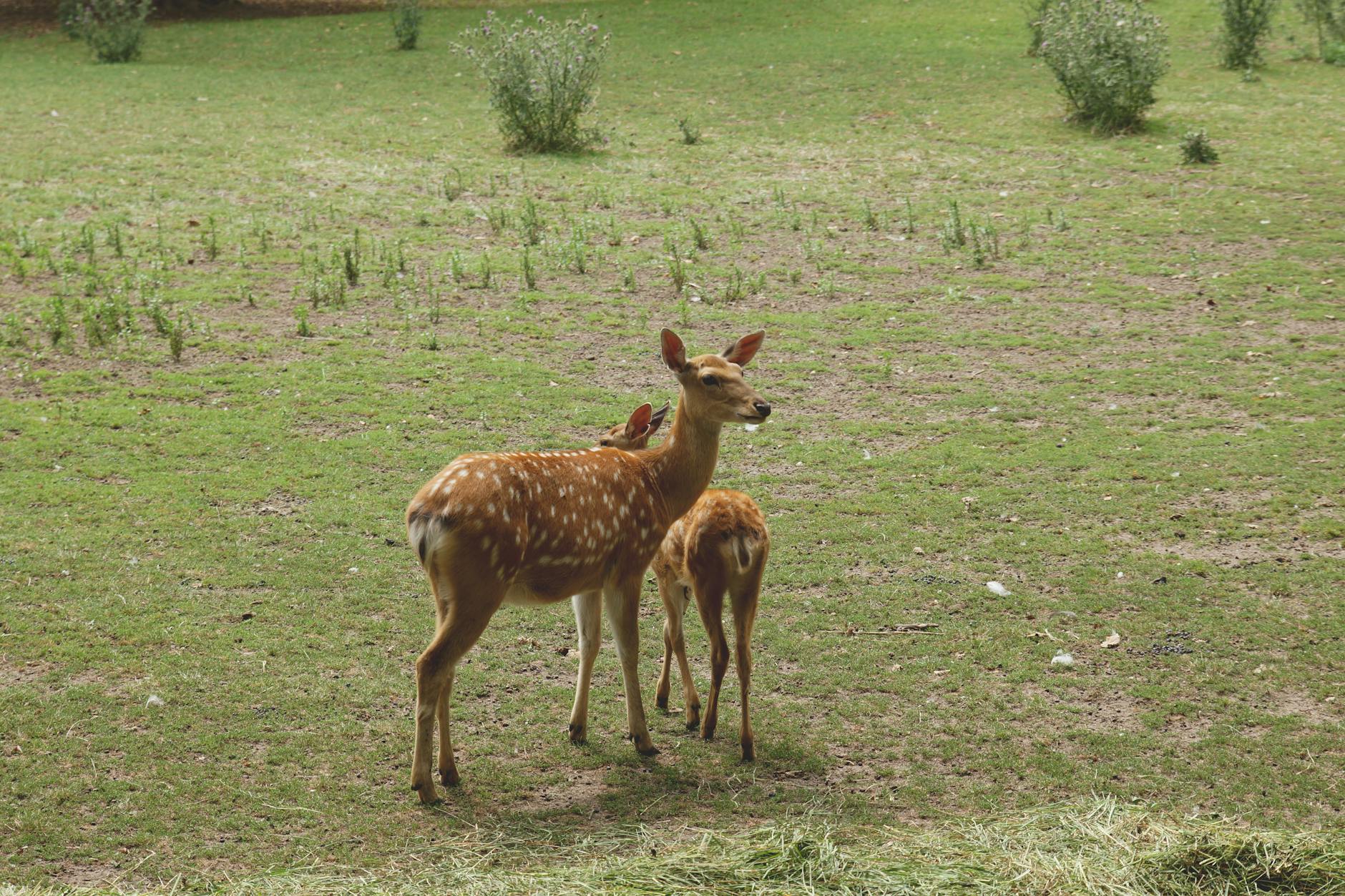
The family Cervidae encompasses all species of deer, from the diminutive pudu to the majestic moose. Deer are primarily characterized by their antlers (in most species, males only), which are bony structures that are shed and regrown annually.
- Key Characteristics of Cervidae:
- Antlers (usually present in males).
- Typically herbivorous, browsing on leaves, twigs, and fruits.
- Ruminant digestive systems, allowing them to efficiently extract nutrients from plant matter.
- Worldwide distribution, adapted to a variety of habitats.
The Equidae Family: The Realm of Horses
The family Equidae includes horses, zebras, and asses. These animals are distinguished by their single-toed hooves, long legs, and grazing lifestyle. The evolutionary history of horses is exceptionally well-documented, revealing a gradual transition from small, multi-toed forest dwellers to the large, single-toed grazers we see today.
- Key Characteristics of Equidae:
- Single-toed hooves on each foot.
- Long legs and a streamlined body built for running.
- Herbivorous, primarily grazing on grasses.
- Highly social animals, living in herds.
Comparing Deer and Horses: A Tale of Two Families
While both deer and horses are ungulates, significant differences exist that firmly place them in separate families. These differences extend beyond their toe count and include variations in skeletal structure, digestive systems, and social behavior. The fact that are deer and horses in the same family is demonstrably false based on these clear distinctions.
| Feature | Deer (Cervidae) | Horses (Equidae) |
|---|---|---|
| Toes | Two main toes | One toe |
| Antlers/Horns | Antlers (usually present in males) | Neither |
| Digestive System | Ruminant | Hindgut Fermenter |
| Social Structure | Varies (solitary to herds) | Herds with dominance hierarchies |
| Primary Diet | Browsing | Grazing |
Evolutionary Distance: Branching Out on the Tree of Life
Genetic analysis further confirms the separation of deer and horses into distinct families. DNA sequencing reveals significant genetic divergence between Cervidae and Equidae, supporting the classification based on anatomical and physiological differences. The question of “Are deer and horses in the same family?” is answered through these scientific analyses.
Frequently Asked Questions (FAQs)
Why are both deer and horses called ungulates?
Both deer and horses are classified as ungulates because they share a common ancestor that possessed hooves. This means their weight is primarily supported by the tips of their toes, which are encased in hardened keratinous structures (hooves). While their hooves have evolved differently, this shared characteristic reflects their related, albeit distant, evolutionary past.
What is the difference between antlers and horns?
Antlers are bony structures found primarily in male deer (with the exception of reindeer, where females also possess them). They are shed and regrown annually. Horns, on the other hand, are permanent structures consisting of a bony core covered by a keratin sheath. They are found in animals such as cattle, sheep, and goats. Horses have neither antlers nor horns.
Do any animals belong to the same family as horses?
Yes, horses belong to the Equidae family, which also includes zebras, asses (donkeys), and various extinct species. These animals share a common ancestor and possess similar characteristics, such as single-toed hooves and a grazing lifestyle.
Are deer more closely related to cows or horses?
Deer are more closely related to cows than to horses. Both deer and cows belong to the order Artiodactyla (even-toed ungulates), whereas horses belong to the order Perissodactyla (odd-toed ungulates). This closer relationship is supported by anatomical, physiological, and genetic evidence.
Why are horses considered odd-toed ungulates?
Horses are considered odd-toed ungulates because they bear their weight primarily on their third toe, which has evolved into a single hoof. While other perissodactyls, such as rhinoceroses and tapirs, have multiple toes, horses have uniquely adapted to a single, weight-bearing digit.
What is the evolutionary advantage of having hooves?
Hooves provide several evolutionary advantages. They offer protection to the toes, enhance locomotion over various terrains, and provide support for the animal’s weight. The specific advantages may vary depending on the species and its environment.
How do deer and horses differ in their digestive systems?
Deer have a ruminant digestive system, which involves a four-chambered stomach that allows them to efficiently digest plant matter. Horses, on the other hand, have a hindgut fermenter digestive system, which relies on microbial fermentation in the cecum to break down plant fiber. This difference reflects their different dietary preferences.
What habitats do deer and horses typically occupy?
Deer occupy a wide range of habitats, from forests and grasslands to mountains and wetlands. Horses, in their wild form, primarily inhabit grasslands and open plains. However, domesticated horses can be found in a variety of environments around the world.
How does knowing the classification of animals help us?
Knowing the classification of animals helps us understand their evolutionary relationships, ecological roles, and conservation needs. By understanding how different species are related, we can better appreciate the diversity of life on Earth and develop effective strategies for protecting it.
Is it possible for deer and horses to interbreed?
No, it is not possible for deer and horses to interbreed. They are too distantly related and have incompatible genetic material. Even within the same family, interbreeding is often impossible or results in sterile offspring. So, are deer and horses in the same family or able to reproduce? No.
Are there any similarities between deer and horse behavior?
While they are not closely related, both deer and horses exhibit social behavior. Deer may form herds or live solitary lives, while horses live in herds with established dominance hierarchies. Both species are also known for their agility and ability to escape predators.
How has domestication affected horses, and is it relevant to comparing them to deer?
Domestication has profoundly affected horses, leading to significant changes in their morphology, behavior, and genetics. Through selective breeding, humans have created a wide variety of horse breeds adapted for different purposes. While deer have not been domesticated to the same extent, comparing domesticated horses to wild deer can still provide valuable insights into the evolutionary pressures that have shaped these animals. Understanding that are deer and horses in the same family is critical to correctly applying evolutionary selection processes to these two animal groups.