
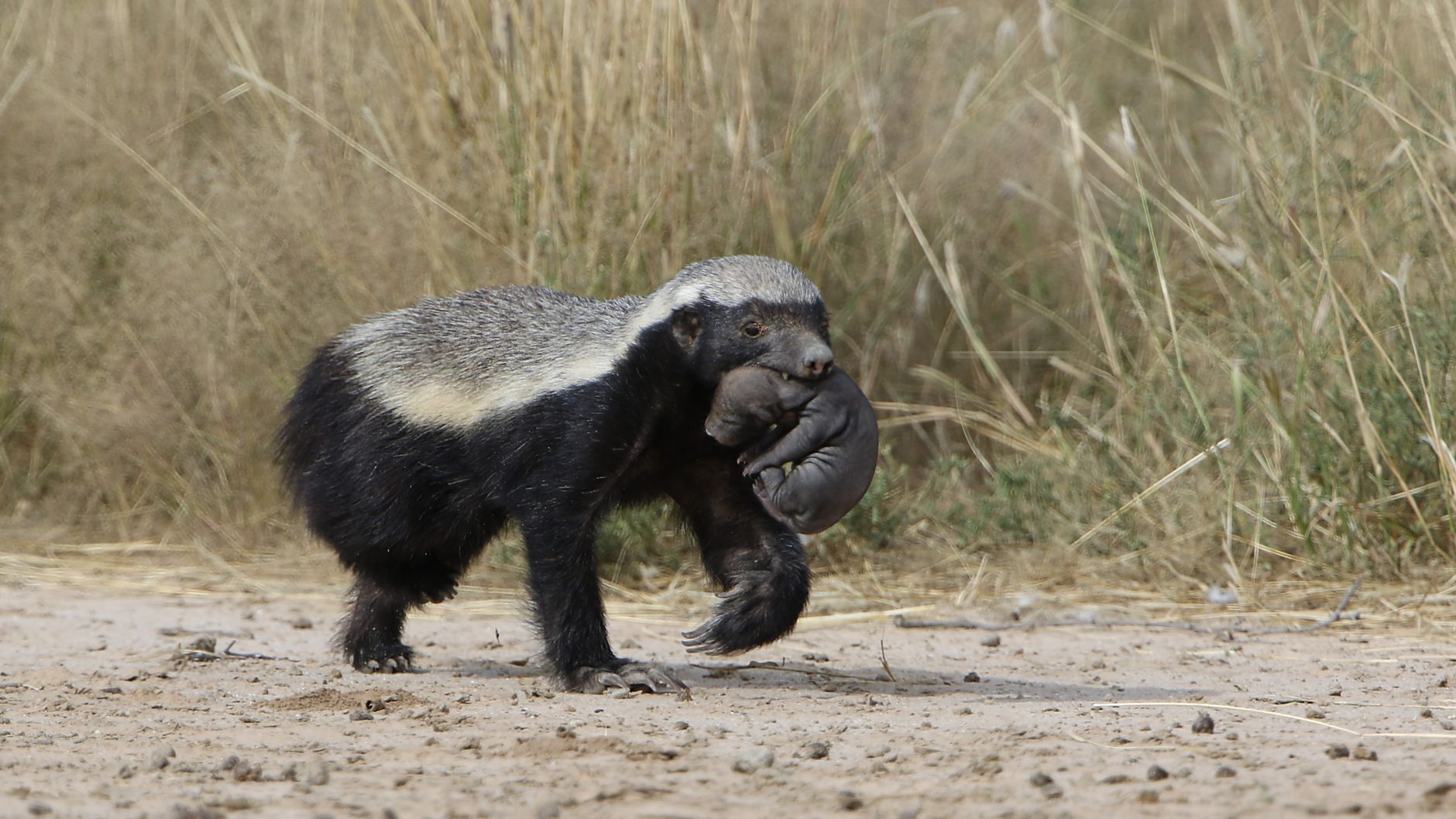
Why is the Honey Badger Immune to Venom? Unpacking Nature’s Armored Warrior
The honey badger’s legendary resistance boils down to specific genetic mutations and adaptations in its nicotinic acetylcholine receptors (nAChRs), making them far less susceptible to venom binding. This, coupled with other physiological defense mechanisms, explains why the honey badger is immune to venom from many snakes and scorpions.

Introduction: The Fearless Ratel and its Venomous Foes
The honey badger, Mellivora capensis, also known as the ratel, is renowned for its incredible tenacity, fearlessness, and almost unbelievable resistance to venom. Found across Africa and Asia, this small but mighty mammal routinely confronts predators such as cobras, puff adders, and scorpions – creatures whose venom could prove lethal to most other animals its size. The seemingly impervious nature of the honey badger to these potent toxins has captivated scientists and nature enthusiasts alike. Understanding why is the honey badger immune to venom? provides insights into evolutionary adaptations and potential biomedical applications.

What is the GREY African clawed frog?
Is distilled water good for goldfish?
What colours are fish most attracted to?
Can you put your finger in a trout's mouth?
The Cellular Basis of Venom Resistance

Venomous snakes and scorpions primarily use neurotoxins to paralyze or kill their prey. These neurotoxins often target the nicotinic acetylcholine receptors (nAChRs) at the neuromuscular junction, disrupting the transmission of nerve signals and leading to paralysis. The honey badger’s resistance stems from alterations in these very receptors.
- Mutations in nAChRs: Research has revealed that honey badgers possess specific genetic mutations within the gene encoding their nAChRs. These mutations alter the receptor’s structure, making it significantly harder for venom toxins to bind effectively.
- Reduced Binding Affinity: Because of these mutations, the affinity of the venom toxins for the honey badger’s nAChRs is greatly reduced. Even if some toxins manage to bind, the effect is significantly weaker and less likely to cause paralysis.
Other Physiological Defense Mechanisms
While the modified nAChRs are crucial, they are not the only component of the honey badger’s venom resistance. Several other physiological factors contribute to its survival after envenomation:
- Thick Skin and Loose Hide: The honey badger’s incredibly thick skin and remarkably loose hide provide a degree of physical protection. Snake fangs often struggle to penetrate the skin fully, and the loose hide allows the badger to twist and turn, potentially reducing the amount of venom injected.
- Cardiovascular Robustness: Honey badgers possess a robust cardiovascular system that allows them to withstand the physiological stress associated with venom exposure. Their heart and blood vessels are better equipped to maintain circulation even when the nervous system is compromised.
- Detoxification Enzymes: While not fully understood, it’s suspected that honey badgers may have enhanced levels of detoxification enzymes in their bodies. These enzymes could help break down venom toxins, further mitigating their effects.
The Evolutionary Advantage of Venom Resistance
Why is the honey badger immune to venom? Understanding the selective pressures that drove this evolution is key.
- Predation: Honey badgers are opportunistic predators and often raid beehives and prey on venomous snakes and scorpions. Facing constant exposure to venom, those individuals with even slightly better resistance would have had a survival advantage, passing on their genes to subsequent generations.
- Competition: In harsh environments where food resources are scarce, the ability to kill and consume venomous prey without succumbing to the venom would have given honey badgers a competitive edge over other predators.
- Natural Selection: Over countless generations, natural selection favored individuals with increasingly effective venom resistance, leading to the high level of immunity seen in honey badgers today.
Limitations to Honey Badger Venom Immunity
It’s important to note that honey badger venom resistance isn’t absolute.
- Venom Dose: Extremely large doses of venom can still overwhelm the honey badger’s defenses.
- Venom Type: The honey badger is more resistant to certain types of venom than others. It’s not immune to all venoms.
- Individual Variation: There can be variation in venom resistance among individual honey badgers.
FAQs: Unveiling Further Mysteries of the Honey Badger’s Venom Resistance
Here are some frequently asked questions about the remarkable venom resistance of honey badgers:
Why is the honey badger immune to venom from all snakes?
The honey badger is not immune to all snake venoms. Its resistance is most effective against the neurotoxic venoms of snakes like cobras and puff adders, which are common in its habitat. Some snake venoms, particularly those with a strong cytotoxic component, may still pose a significant threat.
Does this mean honey badgers are never affected by snake bites?
While highly resistant, honey badgers can still be affected by snake bites. They may experience localized pain, swelling, and even temporary paralysis. However, they usually recover quickly and fully, demonstrating the effectiveness of their venom resistance mechanisms.
How do scientists study the honey badger’s venom resistance?
Scientists use a variety of methods to study this phenomenon, including in vitro experiments with honey badger cells and venom toxins, genetic sequencing to identify mutations in nAChRs, and in vivo studies (conducted ethically and responsibly) to observe the effects of venom on live honey badgers.
Are there other animals with similar venom resistance?
Yes, several other animals exhibit some degree of venom resistance. Examples include:
- Opossums: Possess a neutralizing factor in their blood that binds to snake venom.
- Mongooses: Have similar mutations in their nAChRs as honey badgers.
- Ground Squirrels: Can neutralize rattlesnake venom.
Can humans develop venom resistance like honey badgers?
It is highly unlikely that humans could develop the same level of venom resistance as honey badgers naturally. The genetic mutations required would take countless generations to evolve. However, research into the mechanisms behind venom resistance in animals like honey badgers could potentially lead to the development of new antivenoms or therapies for snakebite victims.
How does the honey badger survive scorpion stings?
Similar to their snake venom resistance, honey badgers are resistant to scorpion venom because of mutations in their nAChRs, making the venom less effective. Also, its thick skin provides a measure of protection against scorpion stings.
Are honey badgers immune to any other types of toxins?
While their venom resistance is the most well-known aspect, it is suspected that they may have some level of tolerance to other toxins, though this is an area that requires further research.
Does the honey badger’s diet contribute to its venom resistance?
It’s unlikely that their diet directly contributes to their venom resistance. The venom resistance is primarily due to genetic and physiological adaptations.
What happens to a honey badger if it gets bitten by a highly venomous snake?
Even if bitten by a highly venomous snake, the honey badger’s resistance mechanisms kick in. It might experience temporary paralysis, pain, and swelling, but its body will work to neutralize the venom. It usually recovers within a few hours.
Why are baby honey badgers immune to venom?
Baby honey badgers are thought to possess some level of inherited venom resistance from their parents. This would increase their survival chances until they can fully develop their own resistance.
What is the lifespan of a honey badger in the wild?
Honey badgers typically live for about 7-10 years in the wild. In captivity, they can live for over 20 years.
Is the honey badger endangered?
The honey badger is not currently listed as endangered. However, they face threats such as habitat loss, persecution by farmers, and the bushmeat trade. Conservation efforts are important to ensure their long-term survival.