
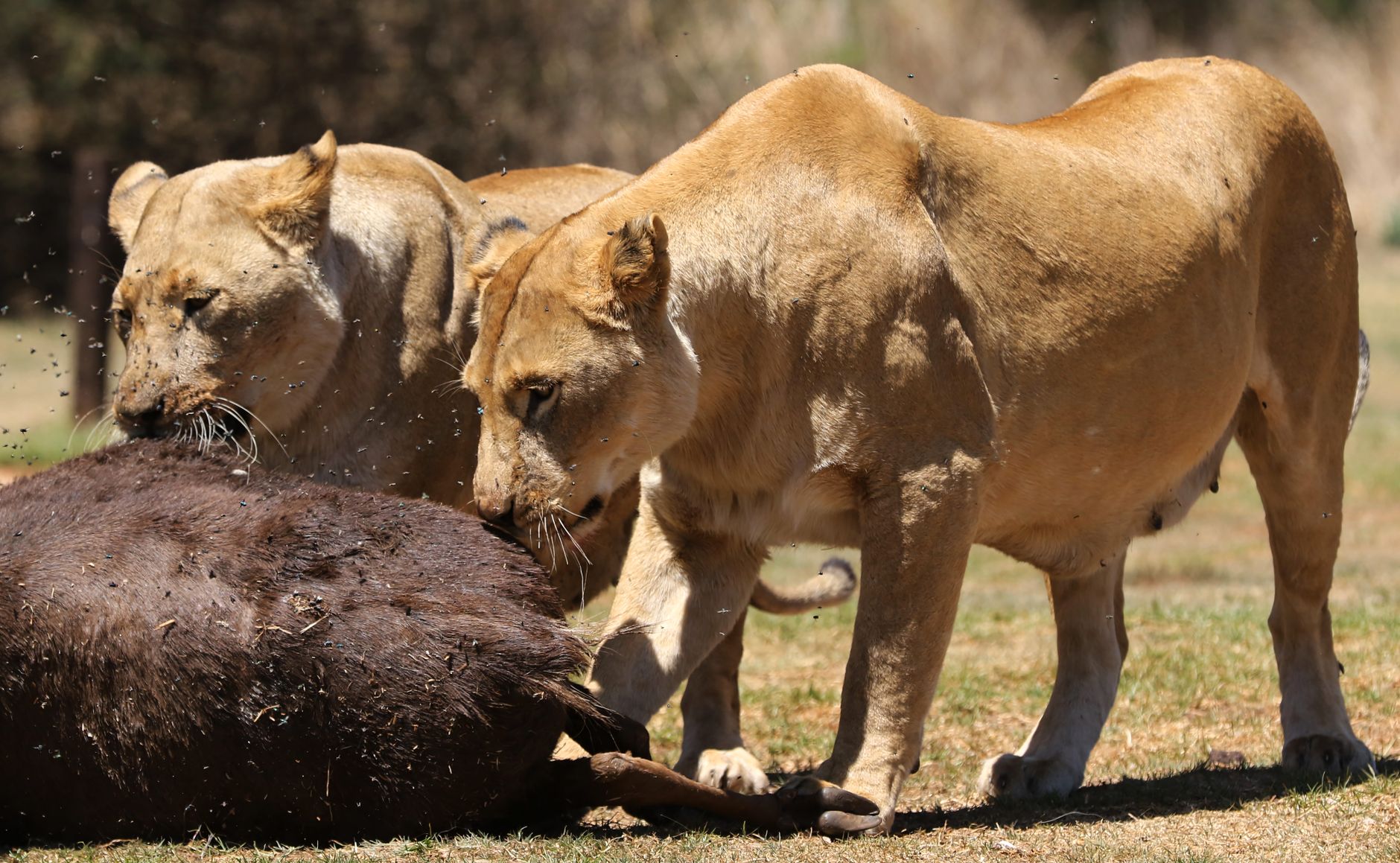
Why Don’t Lions Eat Wild Dogs? Unraveling the Complex Relationship
The answer to the question, Why don’t lions eat wild dogs? lies in a combination of ecological competition, the risk-reward ratio involved in hunting them, and the unpredictable nature of these painted predators; while lions are apex predators, they often find that hunting African wild dogs simply isn’t worth the effort.

Introduction: The Apex Predator Paradox
The African savanna is a brutal arena, a stage where survival depends on strength, cunning, and a healthy dose of luck. At the top of this food chain reigns the lion, Panthera leo, a symbol of power and dominance. Yet, a surprising anomaly exists: lions often coexist with African wild dogs, Lycaon pictus, without consistently preying on them. Why don’t lions eat wild dogs? The answer is more nuanced than simple predator-prey dynamics. It involves intricate strategies of survival, competition for resources, and the very definition of what constitutes a worthwhile meal in the harsh African landscape.

What is the GREY African clawed frog?
Is distilled water good for goldfish?
What colours are fish most attracted to?
Can you put your finger in a trout's mouth?
Resource Competition and Territorial Dynamics

Lions and wild dogs occupy similar niches as apex predators, hunting similar prey, primarily medium-sized ungulates like antelopes and gazelles. This overlap in diet leads to direct competition for resources.
- Competition for Prey: Lions and wild dogs both target species like impala, wildebeest calves, and smaller gazelles.
- Territorial Disputes: While lions have established territories, wild dogs range widely, crossing into lion territories, often leading to clashes.
- Kleptoparasitism: Lions may steal kills from wild dogs, a behavior known as kleptoparasitism, rather than hunting the dogs themselves.
This competition, however, doesn’t automatically translate into predation. Instead, it often manifests as avoidance and, occasionally, violent confrontation. The cost of hunting a pack of determined wild dogs can outweigh the potential benefits.
The Risk-Reward Ratio of Hunting Wild Dogs
Hunting is inherently risky. Even for a predator as powerful as a lion, injuries sustained during a hunt can be debilitating, leading to starvation or vulnerability to other predators. When it comes to hunting African wild dogs, the risks are often disproportionately high compared to the reward.
- Wild Dogs are Formidable in Packs: Wild dogs hunt in highly organized packs, using speed, endurance, and coordinated strategies to bring down prey much larger than themselves. A pack can be incredibly aggressive and defensive.
- High Energy Expenditure: Chasing down wild dogs requires significant energy expenditure. If the hunt is unsuccessful, the lion has wasted valuable resources.
- Potential for Injury: Wild dogs are known to defend themselves fiercely. A lion could sustain bites, scratches, or other injuries that could compromise its ability to hunt other prey.
Therefore, lions often prioritize hunting larger, slower, and less risky prey. Hunting buffalo, for instance, provides a much higher caloric return with a potentially lower risk of injury, despite the difficulties involved.
The Opportunistic Nature of Lion Predation
While lions may not actively seek out wild dogs as a primary food source, they are, above all, opportunistic predators. If a lion encounters a solitary, injured, or young wild dog, it is likely to kill it.
- Vulnerability: A lone wild dog is significantly more vulnerable than one traveling with its pack.
- Easy Target: An injured or weakened wild dog represents an easy meal with minimal risk.
- Competition Reduction: Killing a wild dog eliminates a competitor for resources, which can be advantageous in the long run.
However, these instances are relatively rare. The strength and cohesion of wild dog packs usually deter lions from attempting an attack.
Evolutionary Implications
The complex relationship between lions and wild dogs has shaped their evolutionary trajectories.
- Wild Dog Hunting Strategies: The need to avoid lions has likely contributed to the evolution of their sophisticated pack hunting strategies and alarm calls.
- Lion Prey Selection: Lions have evolved to prioritize prey that offers the best balance of caloric intake and minimal risk.
- Coexistence: Despite the potential for conflict, lions and wild dogs have coexisted for millennia, demonstrating the intricate balance of the African savanna ecosystem.
Frequently Asked Questions (FAQs)
Why don’t lions simply wipe out all the wild dogs in their territory?
Lions, despite their predatory prowess, are energy conservationists. Wiping out a population of wild dogs would require a sustained effort that simply isn’t worth the energy expenditure. Lions prioritize larger, easier prey that offers a more substantial return. Furthermore, eliminating wild dogs could disrupt the delicate balance of the ecosystem, with unpredictable consequences.
Do lions ever kill wild dogs, even if they don’t eat them?
Yes, lions sometimes kill wild dogs without consuming them. This often happens during territorial disputes or when lions perceive wild dogs as a threat to their cubs or their dominance. This act, known as competitive exclusion, is a means of reducing competition for resources.
Are there any documented cases of lions eating wild dogs?
Yes, there are documented cases, but they are relatively rare. Lions typically only consume wild dogs when they are desperate for food or when they encounter an exceptionally vulnerable individual. These incidents are usually opportunistic rather than a deliberate hunting strategy.
How do wild dogs avoid being preyed upon by lions?
Wild dogs employ several strategies to avoid lion predation. Their highly coordinated pack hunting skills, exceptional speed and endurance, and alarm calls all contribute to their survival. They also tend to avoid areas where lions are present, minimizing the risk of encounters.
Do lion cubs ever prey on wild dog pups?
This is unlikely. Lion cubs are typically reliant on their mothers for food and protection. While they might investigate a wild dog pup out of curiosity, they lack the hunting skills to successfully kill one on their own. Also, the wild dog pack would defend their pups ferociously.
Does the size of the lion pride or wild dog pack affect their interactions?
Yes, the size of both the lion pride and the wild dog pack plays a role. A larger lion pride may be more likely to confront a smaller wild dog pack, while a larger wild dog pack may be better equipped to defend itself against a smaller lion pride.
Are lions and wild dogs always in direct competition with each other?
Not always. While they compete for resources, they also play different roles in the ecosystem. Wild dogs are highly efficient hunters of smaller prey, while lions often target larger animals. This allows them to coexist, albeit uneasily.
Do other predators, besides lions, prey on wild dogs?
Yes, hyenas are another significant predator of wild dogs, especially pups. Hyenas compete with wild dogs for prey and will readily scavenge or steal their kills. They are also known to kill wild dogs during encounters.
How has human encroachment affected the relationship between lions and wild dogs?
Human encroachment has significantly impacted both lion and wild dog populations, often leading to habitat loss and fragmentation. This increases competition for resources and intensifies the potential for conflict between these two species.
What is the current conservation status of lions and wild dogs?
Lions are currently listed as vulnerable by the International Union for Conservation of Nature (IUCN), while African wild dogs are listed as endangered. Both species face numerous threats, including habitat loss, human-wildlife conflict, and disease.
Are there any specific regions where lion-wild dog interactions are more common?
Lion-wild dog interactions are more commonly observed in areas where their ranges overlap and where prey densities are relatively low. This can occur in various parts of sub-Saharan Africa, including Botswana, Tanzania, and Zimbabwe.
What can be done to mitigate conflict between lions and wild dogs?
Mitigating conflict between lions and wild dogs requires a multi-faceted approach. This includes habitat conservation, reducing human-wildlife conflict through livestock management strategies, and promoting community-based conservation initiatives. Protecting both species is crucial for maintaining the biodiversity of the African savanna.